What Are You Afraid Of?

fear-1172407_640In the 1991 film Defending Your Life, Albert Brooks plays a man named Daniel Miller. Daniel dies in a car accident and finds himself in Judgement City, a way-station for the recently departed. It is here that souls are assigned a defender and, through a series of interviews, must demonstrate they have overcome the fears that govern most human behavior in order to be granted access into heaven. Those found to still be struggling with fear are sent back to earth, reincarnated so they can try again. Daniel is forced to relive several incidents from his life, played back on a large video screen, and attempts to justify his often less than heroic actions.

I don’t know what the afterlife might hold for us, but I am convinced that fear is one of our most formidable opponents here on earth. While motivation drives us forward, fear is what holds us back. The most exciting goals and meaningful activities can be easily thwarted by fear. It’s only by overcoming our fears that we can break through the barriers keeping us from realizing our fullest potential.[Tweet “It’s only by overcoming our fears that we can realize our fullest potential.”]

Some people have a fear of rejection. They fear their ideas will be deemed insignificant, insufficient, or even laughable. They worry about not fitting in. Rather than seeking to stand out, they seek to blend in. Their desire for acceptance overshadows their desire to grow and achieve.

Some people have a fear of failure. They fear falling short of the goal and ultimately decide it is better not to tempt fate. After all, if you never make the attempt, you don’t have to worry about losing. And for them, the potential pain of losing overrides the potential benefits of winning.

Still others have a fear of success. They fear actually achieving the goal. They’ll never admit it, but successfully attaining their goal is causes great anxiety. Reaching a new level of performance brings on a lot of pressure. You might be expected to continue performing at a high level. You might find yourself with a new set of challenges and responsibilities you don’t necessarily want. Pursuing a goal is often more comforting than actually reaching it.

These fears manifest themselves in various ways. Worry, anxiety, timidity, disengagement, lack of communication, procrastination, low performance, missed opportunities, decreased trust. Any of these sound familiar?

As leaders, it’s critical that we help team members overcome the fears that are holding them back; but that process has to start with facing our own. Those in leadership positions are often the most susceptible to fear. Their position adds a different dimension to the motivation vs. fear equation. It can be difficult to help someone else move forward when I’m being held back myself.

Overcoming fear is a process. It occurs to me that there are three key steps to mastering the fears that hold us back.

  1. Name it. When you feel yourself reluctant to take that next step, it’s important to identify exactly what’s causing that hesitation.
    • Why am I reluctant to take the next necessary step?
    • What negative consequences do I feel might result?
    • Why do I feel these negative consequences are likely to occur?
  2. Quantify it. Once you’ve named your fear, identify its impact on your progress.
    • What’s the cost to me should the negative consequences come to pass?
    • What’s the cost to me of not moving forward? What positive outcomes am I giving up?
    • What’s the worst case scenario? Do the benefits of moving forward outweigh the consequences?
  3. Address it. Assuming the potential benefits outweigh the potential negative consequences, identify the best way forward.
    • What steps should/could be taken to minimize the potential negative consequences?
    • Who can I confide in/work with to help me make the most of this opportunity?
    • How can I use this experience to propel my performance forward and lay the groundwork for even more success in the future?

Overcoming fear is a very real component of motivation. Without addressing the internal reservations that hold us back, we can’t fully embrace the challenges ahead. Without confronting that part of us that creates doubt, we’ll never realize our full potential. Ultimately, you may find that overcoming fear is the most motivating move of all.


JOIN THE CONVERSATION:

How has fear held you back? Share your thoughts on our facebook page.

Fighting the Future

AntisuffragistsTuesday was Election Day. Did you vote? All across the country, men and women took to the polls in order to make sure their voice was heard. Officials were elected or re-elected to a variety of federal, state, and local positions.

Voting is considered an important right in the United States. Once a privilege available to only a favored few, hard fought battles in our history have extended the right to vote to all citizens, regardless of race, gender, or religious affiliation. Sadly, voter turnout is often poor. Many of those eligible to vote choose not to. Some even oppose the very right they’ve been given.

For example, a key milestone in voter rights was the successful women’s suffrage movement. The 19th amendment, which provided women the right to vote, wasn’t passed until 1920. For decades prior, groups opposed to the idea of women having a voice in elections (referred to as anti-suffragists) successfully held off the change.

And many of these anti-suffragists were women.

Groups such as the New York State Association Opposed to Woman Suffrage and the Women’s National Anti-Suffrage League (started in Great Britain) were founded by women. These individuals felt political discourse and important decisions related to public policy were best left to men. They wrote and spoke at length about the various reasons women could not, or should not, vote.

It’s amazing how hard some people will fight against that which is good for them; how hard they will look to find excuses to keep from moving forward. Of course, the harder you look for excuses, the more you find. The more you focus on obstacles, real or perceived, the more you come to believe in them. Over time, people can come to fear the new; the innovative; the unknown. Eventually they become numb to any concept of progress, preferring the warm safety of their self-imposed limitations.

This is how people become unengaged. This is why teams, organizations, and even countries become stagnant. This is why goals aren’t met, customers are underserved, and employees are frustrated.

It’s because individuals check out; sometimes without even knowing it.

Isn’t it time we reverse the trend? Isn’t it time we let go of the fear, stop making excuses, and get engaged?

Permit me to issue a challenge:

  • If you’re one of those who looks first for the reasons why something won’t work, I challenge you to find just as many reasons why it will.
  • If you’re one of those who actively fight against growth and innovation, I challenge you to try being a voice for it.
  • If you’re one of those who have chosen to disengage, I challenge you to get involved.

Politicians often talk about the need for change. But change doesn’t typically happen in huge, sweeping waves. It happens slowly, building momentum over time. It starts with individuals – you and me – taking responsibility for our own actions and choosing to do things differently. Small changes by each of us in the way we approach our work and our lives, expand outward – turning a small ripple into large waves of progress.

So plug in, get engaged, decide right now to make a difference. Oh, and come next Election Day – don’t forget to vote.

Up, Up, and Away

Larry Walters, Balloon ManLarry Walters had always wanted to fly.

As a boy, he became fascinated with airplanes and dreamed of soaring among the clouds. Once he reached adulthood, he joined the Air Force – intent on becoming a pilot. However, his poor eyesight disqualified him from his dream job. He served his time and, after his discharge, took a job as a truck driver.

Larry spent evenings in his backyard watching as jets from nearby Los Angelos International Airport flew overhead. He’d spent 20 years wrestling with his dream of flight, and as the days passed, his frustration only grew. If he didn’t do something about it soon, he feared he’d go crazy. As Larry sat and watched the planes and birds pass by, a plan slowly began to form in his head. Then on July 2, 1982, he put his plan into action.

He’d purchased 42 weather balloons a few weeks before. Now, with help from his girlfriend and a couple of others, he filled each one with helium and tied it to an aluminum lawn chair. A tether tied to the bumper of his friend’s car kept the contraption (dubbed Inspiration I) from blowing away while he filled the balloons and gathered the rest of his supplies. Armed with a CB radio, a camera, some sandwiches, and a pellet gun; Larry strapped himself into the chair, said a quick prayer, and cut the tether.

His goal was to float lazily over town for a while, seeing the world as a bird does from 30-40 feet, then shoot a few balloons and descend. If he couldn’t be a pilot, he figured he would at least experience the thrill of flight for a brief time. Maybe then the dreams would stop.

But things didn’t quite go as Larry had planned.

With the tether cut, Inspiration I rocketed into the air – the jolt caused Larry to lose his glasses. He ascended at the rate of around 1,000 per minute, finally leveling off around 16,000 feet. At this altitude, Larry feared shooting a balloon would unbalance the chair and send him tumbling to the ground, so he drifter for several minutes before a TWA pilot passed him and called in a report of a man floating in a Lawn chair.

Larry drifted into controlled airspace over the airport and managed to contact a civilian radio group over his CB. After 45 minutes shivering in the cold, he finally worked up the nerve to shoot a balloon or two and began to descend. His dangling ropes tangled in some electrical lines causing a power outage. Larry climbed down the pole to safety and a $1,500 fine for piloting an unlicensed aircraft.

Have you ever had a dream you just couldn’t shake?

What if you acted on your dream and the reality was much more than you could ever hope for? What if you set a goal, acted on it, and the result made you wonder why you were so limiting in your expectations? What if you are capable of more than you can imagine?

Think of the goals you have for yourself, your family, and your business. How many of those goals remain unrealized because you’ve yet to act on them? The timing and circumstances may never be ideal, but why let that stop you? Why not start right now?

“All men dream, but not equally. Those who dream by night in the dusty recesses of their minds wake in the day to find that it was vanity; but the dreamers of the day are dangerous men, for they may act their dreams with open eyes, to make it possible.” T.E. Lawrence


Climbing Into the Wheelbarrow

Jean BlondinIn 1859, Jean Francois Blondin became the first man to walk across Niagara Falls on a tightrope. As the crowd watched, he stopped halfway, sat down, and pulled up a bottle from the water below. After refreshing himself with a drink he stood and executed a back somersault before walking the rest of the way across.

In later stunts, Blondin walked across the falls blindfolded, in a sack, rode a bicycle, walked across with his hands and feet in cuffs, on stilts, and even carried his manager across on his back. Once, he even stopped in the middle to cook and eat an omelet. With each crossing, the crowds grew in expectation of his latest amazing stunt.

Then came the day when Blondin walked across the falls pushing a wheelbarrow. As he finished the walk, he addressed the crowd of 25,000 people. “Who here thinks I can walk across with someone sitting in the wheelbarrow?” The crowd exploded into cheers and applause. But when Blondin asked for a volunteer, the crowd fell silent. Finally, after a few tension-filled moments, one man quietly stepped out of the crowd and climbed into the wheelbarrow.

This is a story about three types of people. The first is the tightrope walker – the innovator. Many dream of playing this role – the one with the big idea who achieves fame by turning conventional thinking upside down. The notion of being the next Steve Jobs is attractive and the world definitely needs those people. We need individuals who raise the bar and blaze new trails. But people with the skill, daring, and resources to fill this role are few and far between.

The second role in this story is the crowd. Most people are content to be part of the crowd. They cheer on the innovator, watching in awe as he introduces radical new concepts. They buy tickets and watch the show from the sidelines.

What the world needs is more volunteers – people who make the decision to step out of the crowd and become part of the larger story. It’s a scary move. Think about the volunteer who stepped into Blondin’s wheelbarrow. What if things had gone wrong? Now, admittedly most risks we take aren’t life threatening. Typically the things that hold us back are embarrassment, fear of failure, apathy and even resentment.

But without the volunteer in the wheelbarrow, there’d be no story. Successful innovation requires people willing to play a supportive role. It requires members of the team who can participate without necessarily taking on the lead role. When people are willing to lead by following they allow great things to happen. Besides, the best view of Niagara Falls that day was from the wheelbarrow.

Pressed to Death

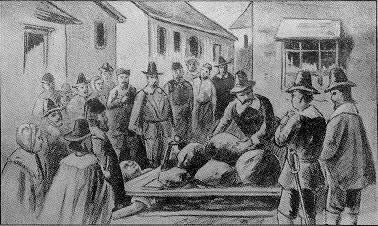
Three hundred and twenty years ago, Giles Corey was accused of being a wizard, or warlock, during the infamous Salem Witch Trials. Among the accusations were that he had been seen serving sacrament at a gathering of witches and his “spectre” had been witnessed harassing supposedly innocent citizens. Corey refused to admit guilt or proclaim innocence, an act that was required in order for him to stand trial.

In order to force a plea from him, Corey was forced to undergo “pressing.” He was stripped naked and staked to the ground with a large sheet of wood over his torso. Large boulders, some so heavy it took six men to move, were then placed on the board. Over the course of two days, more and more boulders were added, crushing his chest. Steadfastly refusing to answer the court’s accusations, Corey died from the pressing.

Ever feel like you are being pressed to death?

Everyone feels stressed or even somewhat overwhelmed from time to time. But I’m talking about the kind of pressure that weighs down on you so heavily that you can’t move. You can’t think straight. You find yourself immobilized, unable to take action because your mind keeps worrying about the various issues on your plate.

Left unchecked, this kind of pressure can impact your job, your family, your relationships with friends, and even your health.

I don’t claim to be an expert in stress-management, but I’d like to share some of the strategies I use to help relieve the pressure when I feel the weight of the world pressing down on me.

1. I write it out. I’m a list person. I need to see just how big the mountain is before I can tackle it. So I try to keep a master list of projects updated at all times. It’s nothing fancy, just a legal pad where I write down each project and the major steps that need to take place in order to get it completed. Writing things down helps me to organize the chaos in my head that leads to stress and worry.

2. I eliminate it. Sometimes the best answer to relieving stress is to remove the root cause, literally. I can’t tell you how many pet projects I’ve had languishing on my list, causing me angst every time I see how much I haven’t worked on them. Each time I’ve made the decision to cross one off as “not worthy of my stress right now” have been liberating. Some things just aren’t worth the price tag.

3. I delegate it. Sometimes it can be hard to let go of certain projects. For my own sanity, though, I’ve learned to hand off various tasks to other equally or more capable people. This involves a degree of trust and the ability to live with results that may not be quite like you’d prefer, but the sense of relief I gain from getting certain things off of my plate is usually worth it.

4. I build some momentum. Now I’m down to those things that are both worth pursuing and require my personal attention. Some of these are big projects with many steps. It can be intimidating to see just how long that list still is. To help me get started on the things that really matter, I cheat a little. I add a few smaller items to my to-do list – things I’ve already accomplished – and then cross them off. This visual sense of accomplishment often helps give me the mental boost I need to tackle a few of the others.

Unlike Giles Corey, you and I have a choice when it comes to stress. When it feels like a ton of rocks are piled on your chest, you can choose to remove a few. Obviously, my tips apply to work-related stress. There are other, more serious, types of pressure out there and many more ways to alleviate or cope.

Got a great stress-reduction technique? Shoot me an email. I’d love to hear it.

Olympic-sized Inspiration

The Olympic games are always a big deal in the Voland household. We each have our favorite sports and we love learning the back stories on each of the athletes. And while we cheer heartily for the American competitors, we have such a multicultural household that it’s easy to appreciate any outcome.

The Olympics may be over, but the competition in London is just heating up. The 2012 Paralympics started this past week and run through Sunday the 9th. I’m always inspired by the stories of sacrifice and dedication that are so prevalent during the Olympics. But for real inspiration, nothing beats the Paralympics.

Sometimes I get to feeling sorry for myself. Things don’t go the way I planned. Someone I trust lets me down. Circumstances beyond my control set me back in ways I never anticipated.

I feel myself feeling inadequate, unprepared, even handicapped.

Then I watch some of these people in action. And I feel ashamed. Here are people who have overcome setbacks I can’t begin to imagine in order to achieve a level of excellence that’s incredible. They could sure kick my butt! How dare I allow any of my lame excuses keep me from reaching my full potential.

If you haven’t had a chance to see some of these amazing athletes in action, you are definitely missing out. Unfortunately, the Paralympic games aren’t being broadcast on TV here in the states, but you can watch events, both recorded and streamed live, on the internet.

For a little preview, and a lot of inspiration, watch this:

Smooth Sailing or Time to Batten Down the Hatches?

“Anyone can hold the helm when the sea is calm.” – Publilius Syrus

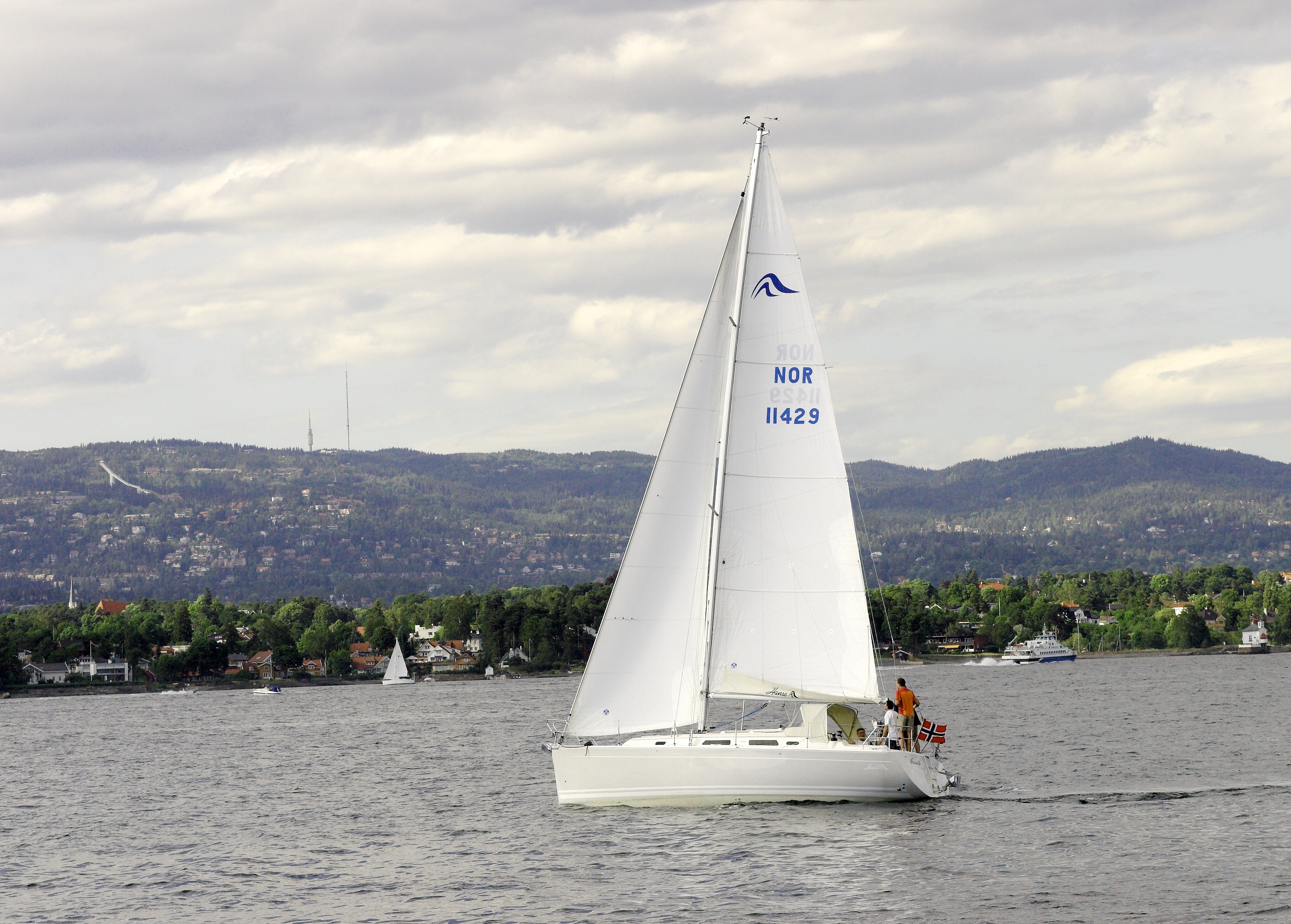
Every summer, I dedicate some of my vacation time to helping out our local Boy Scout troop with their Summer Camp. While I’ve taught a number of classes over the years, my favorite is always Advanced Sailing. It’s not a merit badge class, and participating in it doesn’t help the scouts advance in rank. However, the troop has a fairly nice sailboat. It’s a 22’ Windstar christened the “Red Rooster” (complete with Jolly Roger), and those who take the class really enjoy it.

Working with these young men is both an honor and a challenge. Learning to sail involves a variety of things. There are the technical aspects of maneuvering a boat, learning to work as a team and cool sailing jargon like “jib sheet” and “coming about.” One of the hardest lessons we tackle, though, involves managing fear.

And it usually happens on day three.

Day one involves rigging the boat and learning the rules of safe boating. I typically maintain control of the rudder so we don’t run into something – like another boat. The scouts take turns manning the jib sheets and trimming the mainsail as I steer and coach them through the various steps required to keep us moving (sailing is only fun if you’re actually moving across the water).

On day two, I turn the rudder over to one of the scouts and assume a position as part of the crew. It’s now their job to decide where we’re going and how we’ll get there. There’s no faster way to learn sailing than by doing it, so I let them make mistakes and figure their way out of it. By the end of the sail, things are starting to click.

By day three the critical learning has taken place. Knowledge of basic sailing mechanics has sunk in and the boys want to see just how fast they can get the boat moving. So the “captain” sets a good course and instructs the crew to trim the sails to maximize the available wind. The sails fill with air, the centerboard starts to hum and … the boat starts to heel.

Heeling occurs when the boat begins to lean over in the water. Unless you’re sailing with it directly behind you, the wind is trying to push you to the side. As you position your sails to maximize the wind’s power in order to move forward, you’re also increasing it’s ability to push you over.

Heeling is an uneasy sensation for new sailors and learning to manage the fear of falling over is part of learning to sail fast. Naturally, some are more comfortable with fear and like to see just how close to the edge they can get. Others would rather float aimlessly and lounge on the deck. If the man on the rudder is one of the latter, he panics and lets go. The boat turns back into the wind, loses all momentum and comes to a stop. Things are stable, but we’re not going anywhere.

Fear is a powerful force. It can cause seemingly smart people to do stupid things. They’ll lie about company results out of fear of looking incompetent. They’ll refuse to add a little more on the expense side of the general ledger for fear that it won’t pay off. They’ll hoard information and hamstring their employees for fear of losing personal value.

Fear is a huge issue for many in leadership positions right now – fear of failure, fear of losing control, fear of looking foolish or out of touch. Real leaders understand that sometimes you have to take a stand – you have to face your fear in order to be successful. Not to overcome it, but to use it to your advantage.

By the end of summer camp, the crew of the Red Rooster has learned how to tie a bowline knot. They’ve learned the difference between “port” and “starboard.” And, judging by the speeds at which our boat is moving forward, they’ve learned how to work with fear rather than run from it. They’ve come to rely on their training and the collective wisdom of the crew to keep them upright and moving in the right direction.

So, question time. How are things on your ship? Are you heeled over a little, but flying towards your destination? Or are you floating listlessly, hoping the tide will gently rock you to the shore?

It’s your call, Captain.