The Ten Essentials (Part 2)

BootsLast week I introduced the idea of “Ten Essentials” for surviving the business world, a modification of the Ten Essentials list used by the Boy Scouts of America and other outdoor adventure groups. As a quick review, the first five items on the list are:

1. Clearly defined goals and a strategy to meet them.
2. Regular education to help you stay sharp.
3. Positive influences.
4. A supportive supervisor.
5. An effective support team.

This week, we conclude the list. Here are items six through ten.

[table caption=”The Ten Essentials” width=”600″ colwidth=”150|225|225″ colalign=”left|left|left”]
,Backcountry Explanation,Business Version
6. Knife/Multi-tool,Useful for tasks as large as building an emergency shelter or as small as repairing a damaged backpack.,Job aids and worksheets – resources that help make the important jobs easier.
7. Sun Protection,Includes items such and sunscreen and a wide-brimmed hat. Used to prevent sunburn and possibly heat exhaustion.,A healthy dose of determination to keep you going when the heat is on.
8. First Aid Kit,A basic first aid kit can help prevent small injuries from becoming large problems and buy time when more advanced treatment is not readily available.,A bag of resources(people and/or procedures) you can call upon to help fix a damaged project or broken customer relationship.
9. Flashlight,Important for finding one’s way at night.,Core values to help you find your way when the decision isn’t easy or the way forward isn’t clear.
10. Fire Starter,Used to light fires for heat or cooking and for signaling purposes.,Something (or someone)to provide a motivational spark when you need it.
[/table].

Many who review the Ten Essentials list quickly conclude it’s incomplete. “What about shelter?” they ask. “Why isn’t a cell phone on the list, or at least a knowledgeable companion?” When reviewing my list of the Ten Essentials for business, you could ascertain that it’s incomplete as well. Training isn’t listed; nor is a valuable product or advanced technological resources.

Keep in mind that neither list is intended to be comprehensive. The Ten Essentials list is meant to serve as a starting point. Using these items, and nothing else, you can survive in the wilderness for a time (ideally until you are rescued or able to navigate back to civilization). The business essentials list is similarly just a starting point. Many working men and women survive each day by relying on the meager resources I’ve laid out.

Sadly, many people today see survival as the end goal. But who wants to simply survive? Survival isn’t fun. It’s hard work, requiring a constant expenditure of energy just to exist. It involves avoiding risk and adventure in favor of (hopefully) protecting what you already have. Survival is a defensive, paranoid way of thinking.

I don’t want to survive. I want to thrive. I want to grow and expand. I want to create an environment that’s comfortable and attractive. I want to build a set of circumstances where the odds are stacked in my favor, not against me. “Thrival,” not survival, is my goal.

But in order to move from survival to thrival, you have to equip yourself with more than the bare minimum. You can’t be satisfied with “good enough” or avoid taking risks. You have to adopt a growth mindset and set your eyes on a better future state. In the world of survival, the Ten Essentials list is all you need. In the world of thrival, it’s just the beginning.

Which world do you want to live in?


The Ten Essentials (Part 1)

Scott BackpackFor the past two weeks, while you read about tightrope walkers Jean Francois Blondin and Karl Wallenda, I was backpacking around north central New Mexico with a bunch of Boy Scouts. We were at Philmont Scout Ranch, a high adventure base covering approximately 214 square miles of the Sangre de Cristo range of the Rocky Mountains. We didn’t cover the whole ranch; but we did hike almost 70 miles of the north section, including a grueling ascent of Baldy Mountain.

As part of preparations for our trek, and any outdoor adventure for that matter, we always make sure to carry the “Ten Essentials.” This list of survival items makes up the bare minimum recommended for anyone embarking on a trip into the wild. The list was first put together in the 1930’s by an outdoor recreation group called The Mountaineers. Despite advances in technology the original list has seen relatively few changes, although different groups tend to alter or add to the list to fit their specific needs.

Navigating the business world can be a lot like adventuring into the backcountry. After all, it is a jungle out there. But there are a few things you can arm yourself with in order to increase your odds of surviving – and even thriving – in the wilderness of business. So let’s walk through the Ten Essentials (The Boy Scout Version) and their working world counterparts – items I suggest you carry with you at all times. We’ll start with the first five today and finish up the list next week.

[table caption=”The Ten Essentials” width=”600″ colwidth=”150|225|225″ colalign=”left|left|left”]
,Backcountry Explanation,Business Version
1. Map & Compass,Used to determine one’s location and the best route to reach another location.,Clearly defined goals and a workable strategy to meet them.
2. Trail Food,Good for maintaining your energy.,A steady diet of education to help you stay on top of your game.
3. Water,The human body can only survive for a few days without water. Water filters or purifying tablets can be used to obtain potable water from virtually any source.,A regular stream of positive messages from those around you. Without it even the strongest wither and dry up.
4. Rain Gear,Being wet from rain may result in hypothermia – a potentially fatal condition.,Someone you can turn to who will protect you from the rainy days – ideally your immediate supervisor.
5. Extra Clothing,Multiple layers are superior to a single massive jacket. Layered clothing is adaptable to a wide range of temperatures.,A cross-functional team you can call upon as needed to help you successfully manage the various challenges you face.
[/table].

Climbing Into the Wheelbarrow

Jean BlondinIn 1859, Jean Francois Blondin became the first man to walk across Niagara Falls on a tightrope. As the crowd watched, he stopped halfway, sat down, and pulled up a bottle from the water below. After refreshing himself with a drink he stood and executed a back somersault before walking the rest of the way across.

In later stunts, Blondin walked across the falls blindfolded, in a sack, rode a bicycle, walked across with his hands and feet in cuffs, on stilts, and even carried his manager across on his back. Once, he even stopped in the middle to cook and eat an omelet. With each crossing, the crowds grew in expectation of his latest amazing stunt.

Then came the day when Blondin walked across the falls pushing a wheelbarrow. As he finished the walk, he addressed the crowd of 25,000 people. “Who here thinks I can walk across with someone sitting in the wheelbarrow?” The crowd exploded into cheers and applause. But when Blondin asked for a volunteer, the crowd fell silent. Finally, after a few tension-filled moments, one man quietly stepped out of the crowd and climbed into the wheelbarrow.

This is a story about three types of people. The first is the tightrope walker – the innovator. Many dream of playing this role – the one with the big idea who achieves fame by turning conventional thinking upside down. The notion of being the next Steve Jobs is attractive and the world definitely needs those people. We need individuals who raise the bar and blaze new trails. But people with the skill, daring, and resources to fill this role are few and far between.

The second role in this story is the crowd. Most people are content to be part of the crowd. They cheer on the innovator, watching in awe as he introduces radical new concepts. They buy tickets and watch the show from the sidelines.

What the world needs is more volunteers – people who make the decision to step out of the crowd and become part of the larger story. It’s a scary move. Think about the volunteer who stepped into Blondin’s wheelbarrow. What if things had gone wrong? Now, admittedly most risks we take aren’t life threatening. Typically the things that hold us back are embarrassment, fear of failure, apathy and even resentment.

But without the volunteer in the wheelbarrow, there’d be no story. Successful innovation requires people willing to play a supportive role. It requires members of the team who can participate without necessarily taking on the lead role. When people are willing to lead by following they allow great things to happen. Besides, the best view of Niagara Falls that day was from the wheelbarrow.

The Sacrifice of Service

american-flag-1Like many businesses across the United States, we are closed today in observance of Memorial Day. This holiday serves to commemorate the men and women who died while serving in our nation’s armed forces. However you utilize this time off, please take a moment to pay your respects to those Americans who made the ultimate sacrifice for our freedom.

Serving has always been about sacrifice. Whether its serving your country, your customers, or your employees; real service is more than just a job. Sure, you may be paid to work in a service occupation. You may serve out of obligation. You may even be forced to serve against your will (my kids would nod their heads vigorously at this point); but that’s not what service is about.

The word “servise” first entered the English language in the early 1100’s it referred to a public celebration of worship or an act of homage to God or a guest. So service is something we extend to someone else in order to honor them. As service providers, we should place the one being served in a position above our own. We’re supposed to serve from the heart.

Somewhere along the way, our culture began to view serving as an obligation rather than a choice. We’ve replaced the idea of service with the concept of servitude. Is it any wonder that good service is hard to find?

What if we made a conscious decision to return to the true meaning of service? What if each and every one of us reading this decided to approach service as an act of homage and celebration vs. a job? What kind of impact would that have on our business? What kind of impact would that have on us?

The men and women we honor today gave their all in pursuit of service. Should you and I really be expected to give anything less? Let’s agree to honor them by honoring each other. Happy Memorial Day.

Winning Against the Odds

battle-of-pueblaThey were outmanned and outgunned, but the Mexican troops made up for the lack of numbers and firepower with grit and determination. An expensive civil war had left Mexico in debt to Britain, Spain and France. But shortly after the war ended, Mexico was forced to suspend repayments in order to rebuild their infrastructure. This didn’t make their benefactors happy and now the French were coming to either collect or take over.

After suffering heavy casualties, the Mexican Commander General, Ignacio Zaragoza Seguin, withdrew his army to Puebla. The small town was still heavily fortified, having survived the civil war, and Zaragoza’s troops immediately began additional preparations, digging trenches to connect the two hill-top forts sitting just north. When the French force of 8,000 infantry and cavalry arrived on the fifth of May, 1862, they assumed their victory would be swift. The inferior Mexican garrison of only 4,000 men now had no way to retreat.

 But when a show of arms failed to intimidate the Mexican troops, the French attacked. They foolishly expended most of their ammunition in an initial, ill-timed advance and quickly ran out. They were surprised by the strong showing put forth by the Mexican army, who spilled out of the forts and fought hand-to-hand on the hillside between them. After three infantry advances the French retreated, having lost more than five times as many men as their underestimated foes. Today, El Dia de la Batalia de Puebla (The Day of the Battle of Puebla) is known simply as Cinco de Mayo, and serves as a reminder of the power of determination and teamwork against overwhelming odds.

Sometimes it’s easy to lose hope when faced with a foe who seems to have everything working in their favor. The competition can seem too organized, prepared and well-funded. But history is full of stories illustrating the power of the underdog. Those who most desire to win the day often find that their own creativity and ability to pull together are all they need.

Who’s your biggest competition?

What advantages do they have over you?

How can your team overcome the competition despite their apparent advantage?

The Power of Positive Feedback

This morning my phone rang on the way in to the office. It was my wife. Her first words made my heart sink. “I just got a call from Abby’s Principal.” Instantly I assumed the worst – either my daughter is hurt or in trouble. Parents rarely get good news from the school principal.

But it was good news. A new student had transferred in and Abby had taken it upon herself to befriend her and make her feel welcome – showing her around and introducing her to a circle of friends. The new student’s first few days of school, understandably full of anxiety, had been made wonderful. The parents couldn’t say enough about how grateful they were and the principal wanted us to know.

Obviously I’m proud. As I hung up the phone, I pictured the scene that will likely take place as my wife tells Abby what her principal had to say. I can already see the smile on her face and the pep in her step that she always gets when she receives a pat on the back. And her behavior, which isn’t bad to begin with, will ratchet up a few notches for several days.

Come to think of it, we’re all like Abby. We all like to hear good news, especially when it’s about us. Receiving positive feedback for something you’ve done can turn an average afternoon into a great one. I know that a single positive word regarding one of my projects can significantly affect my mood long after the event has passed.

From a leadership perspective, I’ve noticed three key benefits from the positive feedback I give to members of my team.

1. Morale improves. Something magical happens to a person’s attitude when you pay them a compliment. It’s amazing how many times I’ve given someone a bit of positive feedback only to have them say “Wow. You just made my day.” For some reason, our human tendency is to focus on the negative aspects of work. Telling someone “thank you” followed by a sincere explanation of your gratitude, is often enough to break the cycle of negative thought.

I believe that most people genuinely want to produce good work. The problem is, they never get any feedback to indicate their work is, indeed, good. They hear about what’s wrong, missing or late. As a result, the average employee focuses on staying out of trouble (a negative outlook) rather than on producing good (or even great) work.

2. People reciprocate. Any time I give my daughter some positive feedback, I get some in return. If I thank her for cleaning her room and brag about how great it looks, she thanks me for helping her with her homework. In addition, I’ve noticed that positive feedback I give to one of my children results in positive feedback they give to someone else. So not only do I get to enjoy the boost from reciprocal back-patting, the rest of the family does too.

This phenomenon also plays out at the office. Recognizing one team member’s contribution to a project almost always results in their recognition of someone else’s effort. From the outside it must look like a mini love-fest with everyone thanking and congratulating each other on a job well done. But the psychological impact of just a little positive reinforcement is often enough to lift the whole team. It’s like a wildfire – light a match and pretty soon the place is burning with pride.

3. Team productivity goes up. Long ago I realized the potential of positive feedback to produce better work from an individual. Recognize someone’s effort toward a successful project ”A” and watch how much better project “B” turns out. It’s like a little productivity switch gets pushed into overdrive. I’ve even noticed this effect on my own psyche. When someone says “thank you” it makes me feel great. And it makes me want to work harder in order to get more of that great feeling.

You’ve probably heard that praise should be given in public while corrective actions should always be done privately. One of the reasons behind this is because the feelings underlying your feedback (positive or negative) get transmitted to everyone around – not just the person receiving the feedback. So people who witness a coworker receiving kudos for their efforts instinctively begin to act in ways they perceive will result in getting their share of the praise.

For years I’ve said “You will receive an abundance of what you praise or tolerate.” I honestly believe positive feedback is one of the most powerful tools at a leader’s disposal. Unfortunately, positive feedback is difficult for most people. Like most skills, you have to work at it in order to get good at it. Thankfully, the reward is well worth the effort.

I’ll bet you can think of someone in your organization that could use some positive feedback. Imagine the good that you’ll receive when you stop reading this article and go deliver it. In fact, why don’t you go do it right now?

The Power of Mission

On July 21st 1969, Neil Armstrong became the first human being to walk on the moon. Most of the people reading to this weren’t even born when this happened and don’t understand the significance of the event. They don’t remember the grainy TV pictures or the excitement in the air as people around the world listened to Armstrong declare “That’s one small step for a man, one giant leap for mankind.”

And it was a giant leap. Just eight years earlier, President Kennedy had presented the challenge of placing a man on the moon by the end of the decade. Almost before the words had escaped his lips the skeptics appeared. It’s a waste of time. It’s too expensive. It’s too dangerous. It’s impossible.

But for those who believed, the challenge became a mission. They dedicated themselves to seeing the dream become a reality. Some made the ultimate sacrifice for the mission; men like Ed White, the first American to walk in space who later died in a launch pad fire along with fellow astronauts Virgil Grissom and Roger Chaffee.

However, most of those involved were mission specialists and controllers, men and women operating behind the scenes, each playing some small part in accomplishing the mission even though they themselves would never personally experience gazing back at the planet Earth from the surface of the moon. It was the combination of hundreds and thousands of contributions that led ultimately to Armstrong’s moonwalk. Without everyone playing their part, it never would have happened.

Sometimes it’s hard for people to see how their small contribution fits into the overall mission. It’s the job of the leader to help them see it. Leaders have to “connect the dots” so that everyone understands how important they are to achieving the larger goal. It’s not enough to just delegate tasks. You have to paint the “big picture” in order to draw people in.

Does everyone on your team understand the mission?
Do they each understand their role in achieving that goal?
What will you do today to help connect the dots?

Survivor In the Workplace: 3 Behaviors You Don’t Want on Your Island (and 3 You Do)!

I find it hard to believe, but it’s been 12 years since Mark Burnett introduced American television audiences to Survivor. This is the show where contestants vie to win $1 million by navigating the physical, mental and social challenges associated with spending 39 days stranded on an island with a group of strangers. One by one, players are voted off by their “tribe mates” until the finale, when those who’ve been kicked out of the game have to vote for the winner.

Survivor proved to be incredibly popular, spawning international versions and copycat shows. It launched the era of reality television, an era that just doesn’t want to die. Across the world, schools and church groups regularly adopt the Survivor theme for parties and events.

But there’s one playing field where playing Survivor can be devastating – the workplace. Unfortunately, employees around the world go to work every day feeling as if they are fighting to survive. There may not be a million dollars on the line, but the stakes are just as high. For many, office politics, popularity contests and hidden agendas create an atmosphere that causes good people to feel they have to play the game just to stay in the game.

Here, mirrored in the slogan of Survivor, are three things employees shouldn’t have to do in order to win.

1. OUTWIT
Winning on Survivor often hinges on having the best information. Those in the know – the ones with knowledge and insight that others don’t – tend to go the farthest in the game. Players who are out of the loop are quickly picked off. When a contestant gains a key piece of information, they keep it secret, only sharing it if and when they stand to receive the greatest personal benefit.

Sadly, many players at work seek to get ahead the same way. They hoard information, releasing it bit by bit as it suits their purpose. They may use information against a perceived opponent, trying to raise their own worth by damaging others.

2. OUTPLAY
Survivor contestants have to move fast. In order to win the game, they have to constantly reassess the lay of the land – who’s stirring up trouble and which players might be trying to orchestrate a bold move. Everyone lives on edge, and alliances are shaky. The game can change at any moment and to win, you have to stay on your toes.

Many employees live in a constant state of paranoia as well. Workplace alliances can be just as shaky as those on a Survivor island. Even within the context of teamwork, individuals often jockey for position in an attempt to remain in control of the outcome. Opportunism and betrayal are commonplace in the office environment.


3. OUTLAST
Some Survivor players operate by laying low. They do their best to stay out of the spotlight, doing just enough to get by but not enough to draw too much attention. They don’t take risks, and never voice a controversial opinion. Eventually, a key player makes a mistake and exits the game, allowing the quiet one to seize control.

Competitors in the workplace often utilize this same strategy. They ride along quietly, doing steady but unimpressive work. They seem content to let others take the lead while they ride on coattails. When crisis hits and someone takes a fall, they’re the first ones to say “I knew that would happen.” Amazingly, they know just how to fix things and suddenly, they’re on top.

Things don’t have to be this bad. Survivor is a game that only one person can win. Winning at work doesn’t have to be an individual contest. Teams can win together. This makes success much more likely and enjoyable. But it’s up to the leadership to create an environment in which teamwork is a valued commodity. Here are three survivor strategies for leaders who want to win.

1. INFORM
As opposed to hoarding information, try sharing it. Well informed work teams make better decisions, both collectively and as individuals. Employees who feel included and informed reciprocate by sharing what they know. Knowledge grows synergistically and everyone advances. But those in charge have to model this behavior. Leaders who withhold information will find themselves with employees who feel they must do the same in order to survive.

  • Share data, statistics and other results.
  • Provide clearly defined individual and team goals.
  • Outline steps that clearly lead to success.


2. INCLUDE

Teamwork, by definition, involves inclusion. Leaders have to believe that every member is valuable and expect them to contribute. Employees who seem reluctant to participate and share ownership in team projects need to be drawn in. When each member of the team has a stake its success, they work harder to make that success happen. Collaboration comes easier when fates and rewards are shared.

  • Make sure everyone involved in a project is input regarding its design.
  • Make a point to seek out those who may be reluctant to voice an opinion.
  • Delegate tasks appropriately so that everyone plays a role.


3. INSPIRE

Leaders have to be constant communicators of the shared vision. When people lose sight of the ultimate goal, it’s easy for them to turn inward, focusing on short-term survival. The key to effective teamwork lies in keeping the big picture front and center.

  • Communicate the team’s vision often and passionately.
  • Ask others to share their interpretation of the vision with regard to their specific job duties.
  • Share feedback from customers and other stakeholders that illustrate the importance of achieving the stated vision.

Survivor is a lot of fun to watch. But drama that makes for great television creates a horrible work environment. Keep your tribe strong and successful by actively drawing people in and they won’t vote themselves out.

Smooth Sailing or Time to Batten Down the Hatches?

“Anyone can hold the helm when the sea is calm.” – Publilius Syrus

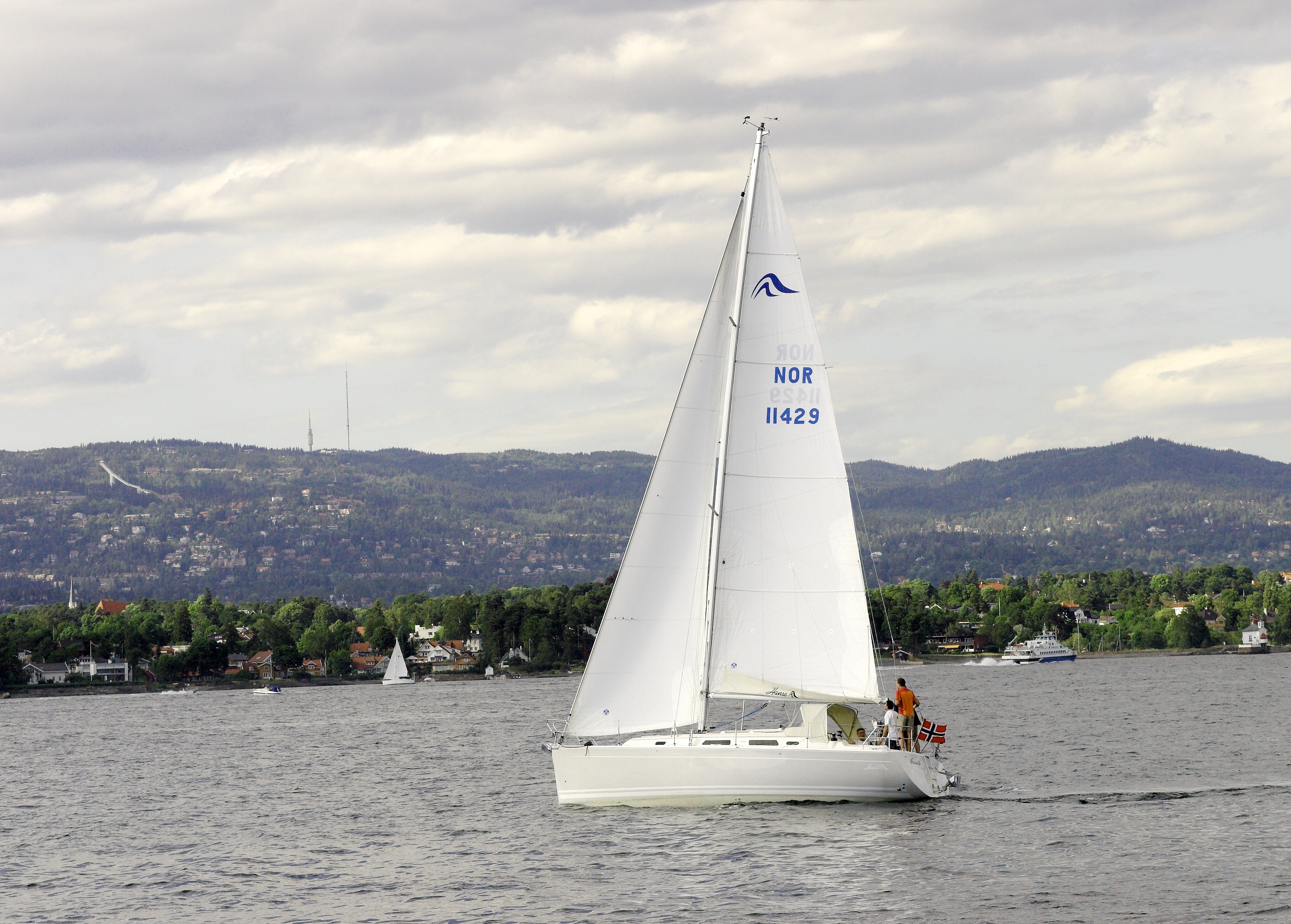
Every summer, I dedicate some of my vacation time to helping out our local Boy Scout troop with their Summer Camp. While I’ve taught a number of classes over the years, my favorite is always Advanced Sailing. It’s not a merit badge class, and participating in it doesn’t help the scouts advance in rank. However, the troop has a fairly nice sailboat. It’s a 22’ Windstar christened the “Red Rooster” (complete with Jolly Roger), and those who take the class really enjoy it.

Working with these young men is both an honor and a challenge. Learning to sail involves a variety of things. There are the technical aspects of maneuvering a boat, learning to work as a team and cool sailing jargon like “jib sheet” and “coming about.” One of the hardest lessons we tackle, though, involves managing fear.

And it usually happens on day three.

Day one involves rigging the boat and learning the rules of safe boating. I typically maintain control of the rudder so we don’t run into something – like another boat. The scouts take turns manning the jib sheets and trimming the mainsail as I steer and coach them through the various steps required to keep us moving (sailing is only fun if you’re actually moving across the water).

On day two, I turn the rudder over to one of the scouts and assume a position as part of the crew. It’s now their job to decide where we’re going and how we’ll get there. There’s no faster way to learn sailing than by doing it, so I let them make mistakes and figure their way out of it. By the end of the sail, things are starting to click.

By day three the critical learning has taken place. Knowledge of basic sailing mechanics has sunk in and the boys want to see just how fast they can get the boat moving. So the “captain” sets a good course and instructs the crew to trim the sails to maximize the available wind. The sails fill with air, the centerboard starts to hum and … the boat starts to heel.

Heeling occurs when the boat begins to lean over in the water. Unless you’re sailing with it directly behind you, the wind is trying to push you to the side. As you position your sails to maximize the wind’s power in order to move forward, you’re also increasing it’s ability to push you over.

Heeling is an uneasy sensation for new sailors and learning to manage the fear of falling over is part of learning to sail fast. Naturally, some are more comfortable with fear and like to see just how close to the edge they can get. Others would rather float aimlessly and lounge on the deck. If the man on the rudder is one of the latter, he panics and lets go. The boat turns back into the wind, loses all momentum and comes to a stop. Things are stable, but we’re not going anywhere.

Fear is a powerful force. It can cause seemingly smart people to do stupid things. They’ll lie about company results out of fear of looking incompetent. They’ll refuse to add a little more on the expense side of the general ledger for fear that it won’t pay off. They’ll hoard information and hamstring their employees for fear of losing personal value.

Fear is a huge issue for many in leadership positions right now – fear of failure, fear of losing control, fear of looking foolish or out of touch. Real leaders understand that sometimes you have to take a stand – you have to face your fear in order to be successful. Not to overcome it, but to use it to your advantage.

By the end of summer camp, the crew of the Red Rooster has learned how to tie a bowline knot. They’ve learned the difference between “port” and “starboard.” And, judging by the speeds at which our boat is moving forward, they’ve learned how to work with fear rather than run from it. They’ve come to rely on their training and the collective wisdom of the crew to keep them upright and moving in the right direction.

So, question time. How are things on your ship? Are you heeled over a little, but flying towards your destination? Or are you floating listlessly, hoping the tide will gently rock you to the shore?

It’s your call, Captain.

Coaching Styles, Part 3 – The Director

Last fall my wife accompanied me on a business trip to New York City. The trip took place a couple of months before our 20th anniversary so it just made sense to tack on a few days to celebrate. During the day, while I was involved in meetings, she explored the city – shopping and scouting out sites she wanted me to see. At night, after my work for the day was finished, we joined the rest of the tourists in taking in the various cultural experiences the city has to offer.

We are typically not advance planners. Most of our vacation plans are made on a whim and each day begins with someone asking “So, what are we going to do today?” But this time was different. Knowledge from my previous trips, combined with advice from friends and family, resulted in a short list of “must-do’s” while in the Big Apple. One of our destinations was the Gershwin Theater to see “Wicked.”

This is a fantastic show. Everything you see and hear from the minute the lights go down is superb – the sets, the music, and obviously the acting. But what you don’t see is just as important as what you do. Obviously, in a production this spectacular there are lots of things going on behind the scenes – and even more work taking place in advance of the show. And right in the middle of all the moving parts is The Director.

Staging a successful venture, whether it is a theater production, a symphony performance or a business, is the job of the Director. While the Visionary creates and communicates the overall vision, the Director must turn that vision into a reality. It is their responsibility to translate the big picture into specific job roles, executable steps and timelines.

In its simplest form, the role of the Director can be boiled down into two words: delegation and accountability. The Director assigns the work and then makes sure the work gets done. Obviously, things are a bit more complicated than that, so let’s look at the concept of delegation a little more closely.

The first step is finding the right person (or people) for each role. Directors must understand the core competencies required for the each position. Different jobs require different skills and abilities. The role of cashier has a different set of associated tasks, and necessary competencies, than the role of security guard. So Directors must know what abilities are needed for each job to be performed properly.

The Director must also be able to articulate the strengths and weaknesses of the staff at his or her disposal. Since the cashier role involves interaction with customers, the Director knows that an outgoing personality and effective communication skills are necessary competencies. They therefore would not assign this role to someone who is introverted and uncomfortable engaging with others.

The Director also needs to know what motivates each employee and under which circumstances they work best. One person may be excited at the prospect of being given individual responsibility for a project while another may cringe at the though, preferring to work in a support role or as part of a team. By understanding the engagement needs of their staff members, the Director can then assign roles with the best interest of the team and the individuals in mind.

How well do you understand the core competencies needed for each of the roles you oversee? How well do you understand the abilities and motivators of your team members? And how successful are you at matching the right person with the right job?