A Matter of Ownership

My wife Susan recently shared a sad customer service experience with me. She and my oldest son Andrew were in the middle of a full-days’ worth of appointments. They realized that in order to have anything to eat before dinner, they would have to pick up something and eat on the run. Spying a fast food chain nearby, they pulled into the driveway. Susan ran into the restroom while Andrew approached the empty counter to place their order.

Well, my wife came out and Andrew was still standing at the counter. No one had taken his order. No one had even acknowledged him standing there. They waited for a few more minutes, watching as employees busied themselves with cleaning, stocking and other chores. Finally, they turned and walked out of the restaurant.

Most organizations say they put the customer at the center of everything they do. But when you experience the service provided by the average business, you see this just isn’t the case. In all honesty, most businesses enact processes and policies designed to maximize their convenience, not the customer’s. Why is there such a disparity between what’s promised and what actually takes place?

Part of the problem is a lack of ownership.

Ownership involves seeing your job and the service you provide from the outside and taking personal responsibility for the satisfaction of your customer. It means putting someone else’s needs and satisfaction before your own. Ownership occurs when you take on someone else’s burden as if it were your own. You quite literally own it.

Ownership is at the heart of customer service. When ownership is present, customers see you as an advocate or a partner. They want to do more business with you. When ownership is missing, customers want to leave and never come back.

Identifying a lack of ownership is easy.

Ever contacted a business with an issue only to be transferred around several times? That’s a lack of ownership.

Ever left a voicemail for a coworker without receiving a return call? That’s a lack of ownership.

Ever left a place of business because no one acknowledged your presence, or asked to help you? Needless to say, that’s a lack of ownership.

Ownership is both an individual trait and part of an organization’s culture. Effective leaders know the value of ownership and cultivate it in their organization. So how do you build a culture of ownership? Start by asking yourself these three questions:

What does ownership look like in my organization, department or job?

What policies and procedures do we have in place that prevent people from taking ownership?

What can I do today to model the concept of ownership to my team?

The Art of Simplicity

You’ve probably heard of the old adage “Keep It Simple Stupid.” Commonly known as the KISS principle, this timeless piece of advice suggests that, in most cases, the simplest solution is the best. When you think about it, this makes sense. The more complicated an idea is – the more moving parts it has – the more likely something will go wrong.

This is a concept most commonly voiced in engineering and manufacturing circles. Machines with more moving parts have more potential points of failure. Software loaded with bells and whistles often has more bugs in it than code focused on a few core features. As a result, we constantly have to juggle patches and updates to shore up the short-comings inherent in complicated products and processes.

I believe the idea of simplicity has a lot of relevance in the world of organizational management as well. As leaders, it’s very easy to over-complicate things for those looking to us for direction.

In my experience, leaders tend to fail when they try to achieve too much at one time. You’ll be far more effective when you break complex ideas into simple, easy-to-digest parts.

If you want to communicate effectively, keep the message simple.

If you want employees to learn, keep instructions simple.

If you want your team to perform, keep goals simple.

If you want customers to respond, keep the value proposition simple.

I’m a talker by nature and by trade. I often have a great deal of information to share, and could probably write a book about any given subject when all that’s needed is a couple of short sentences. I’ve found that I’m much more effective as a speaker, leader, and consultant when I keep things simple.

In fact, I’m having to resist writing too much right now on the subject of simplicity. So I’ll sum things up with a few simple questions.

What part of your business could use simplifying?

How can you simplify things for your employees or your customers?

And what steps will you take today to incorporate the KISS principle into your day-to-day activities?

Pressed to Death

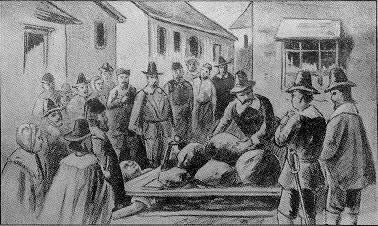
Three hundred and twenty years ago, Giles Corey was accused of being a wizard, or warlock, during the infamous Salem Witch Trials. Among the accusations were that he had been seen serving sacrament at a gathering of witches and his “spectre” had been witnessed harassing supposedly innocent citizens. Corey refused to admit guilt or proclaim innocence, an act that was required in order for him to stand trial.

In order to force a plea from him, Corey was forced to undergo “pressing.” He was stripped naked and staked to the ground with a large sheet of wood over his torso. Large boulders, some so heavy it took six men to move, were then placed on the board. Over the course of two days, more and more boulders were added, crushing his chest. Steadfastly refusing to answer the court’s accusations, Corey died from the pressing.

Ever feel like you are being pressed to death?

Everyone feels stressed or even somewhat overwhelmed from time to time. But I’m talking about the kind of pressure that weighs down on you so heavily that you can’t move. You can’t think straight. You find yourself immobilized, unable to take action because your mind keeps worrying about the various issues on your plate.

Left unchecked, this kind of pressure can impact your job, your family, your relationships with friends, and even your health.

I don’t claim to be an expert in stress-management, but I’d like to share some of the strategies I use to help relieve the pressure when I feel the weight of the world pressing down on me.

1. I write it out. I’m a list person. I need to see just how big the mountain is before I can tackle it. So I try to keep a master list of projects updated at all times. It’s nothing fancy, just a legal pad where I write down each project and the major steps that need to take place in order to get it completed. Writing things down helps me to organize the chaos in my head that leads to stress and worry.

2. I eliminate it. Sometimes the best answer to relieving stress is to remove the root cause, literally. I can’t tell you how many pet projects I’ve had languishing on my list, causing me angst every time I see how much I haven’t worked on them. Each time I’ve made the decision to cross one off as “not worthy of my stress right now” have been liberating. Some things just aren’t worth the price tag.

3. I delegate it. Sometimes it can be hard to let go of certain projects. For my own sanity, though, I’ve learned to hand off various tasks to other equally or more capable people. This involves a degree of trust and the ability to live with results that may not be quite like you’d prefer, but the sense of relief I gain from getting certain things off of my plate is usually worth it.

4. I build some momentum. Now I’m down to those things that are both worth pursuing and require my personal attention. Some of these are big projects with many steps. It can be intimidating to see just how long that list still is. To help me get started on the things that really matter, I cheat a little. I add a few smaller items to my to-do list – things I’ve already accomplished – and then cross them off. This visual sense of accomplishment often helps give me the mental boost I need to tackle a few of the others.

Unlike Giles Corey, you and I have a choice when it comes to stress. When it feels like a ton of rocks are piled on your chest, you can choose to remove a few. Obviously, my tips apply to work-related stress. There are other, more serious, types of pressure out there and many more ways to alleviate or cope.

Got a great stress-reduction technique? Shoot me an email. I’d love to hear it.

Once In A Blue Moon

Tonight’s full moon is a Blue Moon – not because it’s blue, but because it’s the second full moon in a given month. Because blue moons only occur once every 2.7 years or so, they are relatively rare. Even rarer are full moons that actually appear to have a bluish tint. This typically occurs when dust or smoke refracts light in such a way that the blue spectrum is most prominent.

The phrase “once in a blue moon” entered the English lexicon as a way of describing an event which happens rarely. While some events are prized because they are rare, some things need to happen more frequently to be truly valued. Exercising frequently is obviously more beneficial than occasional spurts of exertion. Ongoing home maintenance is less costly than massive repair projects.

And certain leadership actions have greater impact when performed regularly. Here are 10 easy things you can do as a leader that will have a tremendous effect on those around you.

1. Challenge someone with a project outside of their comfort zone.
2. Encourage someone who’s feeling discouraged after a letdown.
3. Coach someone who’s struggling to improve an aspect of their performance.
4. Recognize someone for their recent achievement.
5. Thank someone who’s helped you out of a bind.
6. Tell someone how important their job is to the team and your customers.
7. Apologize for something you messed up.
8. Ask someone about their professional goal and how you can help them achieve it.
9. Share an article, book or other resource related to someone’s area of responsibility.
10. Spend time brainstorming with people about possibilities that don’t exist yet.

Effective leadership involves building relationships. And you can’t build relationships if your interactions with other people are superficial and random. I promise that if you make an effort to engage with people on a deeper level as indicated by these suggestions you’ll find yourself connecting – and leading – in ways you never thought possible.

The next blue moon will take place on July 31, 2015. Where will you have taken your leadership skills by then?

Survivor In the Workplace: 3 Behaviors You Don’t Want on Your Island (and 3 You Do)!

I find it hard to believe, but it’s been 12 years since Mark Burnett introduced American television audiences to Survivor. This is the show where contestants vie to win $1 million by navigating the physical, mental and social challenges associated with spending 39 days stranded on an island with a group of strangers. One by one, players are voted off by their “tribe mates” until the finale, when those who’ve been kicked out of the game have to vote for the winner.

Survivor proved to be incredibly popular, spawning international versions and copycat shows. It launched the era of reality television, an era that just doesn’t want to die. Across the world, schools and church groups regularly adopt the Survivor theme for parties and events.

But there’s one playing field where playing Survivor can be devastating – the workplace. Unfortunately, employees around the world go to work every day feeling as if they are fighting to survive. There may not be a million dollars on the line, but the stakes are just as high. For many, office politics, popularity contests and hidden agendas create an atmosphere that causes good people to feel they have to play the game just to stay in the game.

Here, mirrored in the slogan of Survivor, are three things employees shouldn’t have to do in order to win.

1. OUTWIT
Winning on Survivor often hinges on having the best information. Those in the know – the ones with knowledge and insight that others don’t – tend to go the farthest in the game. Players who are out of the loop are quickly picked off. When a contestant gains a key piece of information, they keep it secret, only sharing it if and when they stand to receive the greatest personal benefit.

Sadly, many players at work seek to get ahead the same way. They hoard information, releasing it bit by bit as it suits their purpose. They may use information against a perceived opponent, trying to raise their own worth by damaging others.

2. OUTPLAY
Survivor contestants have to move fast. In order to win the game, they have to constantly reassess the lay of the land – who’s stirring up trouble and which players might be trying to orchestrate a bold move. Everyone lives on edge, and alliances are shaky. The game can change at any moment and to win, you have to stay on your toes.

Many employees live in a constant state of paranoia as well. Workplace alliances can be just as shaky as those on a Survivor island. Even within the context of teamwork, individuals often jockey for position in an attempt to remain in control of the outcome. Opportunism and betrayal are commonplace in the office environment.


3. OUTLAST
Some Survivor players operate by laying low. They do their best to stay out of the spotlight, doing just enough to get by but not enough to draw too much attention. They don’t take risks, and never voice a controversial opinion. Eventually, a key player makes a mistake and exits the game, allowing the quiet one to seize control.

Competitors in the workplace often utilize this same strategy. They ride along quietly, doing steady but unimpressive work. They seem content to let others take the lead while they ride on coattails. When crisis hits and someone takes a fall, they’re the first ones to say “I knew that would happen.” Amazingly, they know just how to fix things and suddenly, they’re on top.

Things don’t have to be this bad. Survivor is a game that only one person can win. Winning at work doesn’t have to be an individual contest. Teams can win together. This makes success much more likely and enjoyable. But it’s up to the leadership to create an environment in which teamwork is a valued commodity. Here are three survivor strategies for leaders who want to win.

1. INFORM
As opposed to hoarding information, try sharing it. Well informed work teams make better decisions, both collectively and as individuals. Employees who feel included and informed reciprocate by sharing what they know. Knowledge grows synergistically and everyone advances. But those in charge have to model this behavior. Leaders who withhold information will find themselves with employees who feel they must do the same in order to survive.

  • Share data, statistics and other results.
  • Provide clearly defined individual and team goals.
  • Outline steps that clearly lead to success.


2. INCLUDE

Teamwork, by definition, involves inclusion. Leaders have to believe that every member is valuable and expect them to contribute. Employees who seem reluctant to participate and share ownership in team projects need to be drawn in. When each member of the team has a stake its success, they work harder to make that success happen. Collaboration comes easier when fates and rewards are shared.

  • Make sure everyone involved in a project is input regarding its design.
  • Make a point to seek out those who may be reluctant to voice an opinion.
  • Delegate tasks appropriately so that everyone plays a role.


3. INSPIRE

Leaders have to be constant communicators of the shared vision. When people lose sight of the ultimate goal, it’s easy for them to turn inward, focusing on short-term survival. The key to effective teamwork lies in keeping the big picture front and center.

  • Communicate the team’s vision often and passionately.
  • Ask others to share their interpretation of the vision with regard to their specific job duties.
  • Share feedback from customers and other stakeholders that illustrate the importance of achieving the stated vision.

Survivor is a lot of fun to watch. But drama that makes for great television creates a horrible work environment. Keep your tribe strong and successful by actively drawing people in and they won’t vote themselves out.

Smooth Sailing or Time to Batten Down the Hatches?

“Anyone can hold the helm when the sea is calm.” – Publilius Syrus

Every summer, I dedicate some of my vacation time to helping out our local Boy Scout troop with their Summer Camp. While I’ve taught a number of classes over the years, my favorite is always Advanced Sailing. It’s not a merit badge class, and participating in it doesn’t help the scouts advance in rank. However, the troop has a fairly nice sailboat. It’s a 22’ Windstar christened the “Red Rooster” (complete with Jolly Roger), and those who take the class really enjoy it.

Working with these young men is both an honor and a challenge. Learning to sail involves a variety of things. There are the technical aspects of maneuvering a boat, learning to work as a team and cool sailing jargon like “jib sheet” and “coming about.” One of the hardest lessons we tackle, though, involves managing fear.

And it usually happens on day three.

Day one involves rigging the boat and learning the rules of safe boating. I typically maintain control of the rudder so we don’t run into something – like another boat. The scouts take turns manning the jib sheets and trimming the mainsail as I steer and coach them through the various steps required to keep us moving (sailing is only fun if you’re actually moving across the water).

On day two, I turn the rudder over to one of the scouts and assume a position as part of the crew. It’s now their job to decide where we’re going and how we’ll get there. There’s no faster way to learn sailing than by doing it, so I let them make mistakes and figure their way out of it. By the end of the sail, things are starting to click.

By day three the critical learning has taken place. Knowledge of basic sailing mechanics has sunk in and the boys want to see just how fast they can get the boat moving. So the “captain” sets a good course and instructs the crew to trim the sails to maximize the available wind. The sails fill with air, the centerboard starts to hum and … the boat starts to heel.

Heeling occurs when the boat begins to lean over in the water. Unless you’re sailing with it directly behind you, the wind is trying to push you to the side. As you position your sails to maximize the wind’s power in order to move forward, you’re also increasing it’s ability to push you over.

Heeling is an uneasy sensation for new sailors and learning to manage the fear of falling over is part of learning to sail fast. Naturally, some are more comfortable with fear and like to see just how close to the edge they can get. Others would rather float aimlessly and lounge on the deck. If the man on the rudder is one of the latter, he panics and lets go. The boat turns back into the wind, loses all momentum and comes to a stop. Things are stable, but we’re not going anywhere.

Fear is a powerful force. It can cause seemingly smart people to do stupid things. They’ll lie about company results out of fear of looking incompetent. They’ll refuse to add a little more on the expense side of the general ledger for fear that it won’t pay off. They’ll hoard information and hamstring their employees for fear of losing personal value.

Fear is a huge issue for many in leadership positions right now – fear of failure, fear of losing control, fear of looking foolish or out of touch. Real leaders understand that sometimes you have to take a stand – you have to face your fear in order to be successful. Not to overcome it, but to use it to your advantage.

By the end of summer camp, the crew of the Red Rooster has learned how to tie a bowline knot. They’ve learned the difference between “port” and “starboard.” And, judging by the speeds at which our boat is moving forward, they’ve learned how to work with fear rather than run from it. They’ve come to rely on their training and the collective wisdom of the crew to keep them upright and moving in the right direction.

So, question time. How are things on your ship? Are you heeled over a little, but flying towards your destination? Or are you floating listlessly, hoping the tide will gently rock you to the shore?

It’s your call, Captain.

The Yin & Yang of Sales & Service

Wells Fargo made headlines this week after bank analyst Dick Bove went on record regarding a series of frustrating experiences. After wrangling with the bank for months, Bove finally concluded that they are only interested in “seeking new customers and selling them more products and not getting bogged down by offering service.”

A Wells Fargo spokesperson downplayed the issue by citing an ambiguous customer satisfaction number. But having worked in the banking business for several years, I’ve heard many reports from former Wells Fargo employees about the heavy-handed sales management tactics that force employees to shortcut service for the sake of meeting their sales quota. This story illustrates the often contentious relationship between sales and service. Many believe that the ideas work in opposition – that selling and providing good service can’t be achieved simultaneously.

As a sales manager, I believe strongly in having clearly defined goals. But service does not have to be sacrificed in order to achieve sales targets. Here are three tips to make the marriage between sales and service work.

1. Focus on service. Nobody likes being sold to, and selling is an aspect of business that is hard for many employees to get comfortable with. So when the focus of an interaction is on selling something, nobody walks away feeling good about it. But service is different. Customers want help. They want someone who’s on their side – working to help solve their problem.

And most employees naturally want to be of service. Helping people feels good. It just so happens that helping a customer often includes educating them about a product or service that they don’t have. When viewed as part of customer service, selling becomes easy.

2. Set sales goals with the customer in mind. When you set sales quotas for specific products, it pressures employees to sell customers things they don’t need. For example, setting a goal of 10 credit card applications a day for a banker can cause them to feel as if they have to shove an application in front of every customer they meet, even if a credit card is not right for them. This is not customer-focused selling.

Rather, set goals that give the employee leeway in what products are offered to each customer. Train them to engage the customer in a conversation about their needs and drams in order to uncover products that help move them closer to their own financial goals. Focus on helping the customer reach their goals and you’ll reach yours.

3. Remember when not to sell. Selling is important, but not at the risk of offending, and potentially driving away, your customer. There are times when selling is not appropriate. For example:

  • Your company has made a mistake that has caused the customer inconvenience.
  • The customer is distracted, agitated or in a hurry.
  • The customer has waited an abnormally long period of time for service.
  • Any situation in which you would not appreciate a sales pitch.

Selling is an important part of the growth process for an organization. But so is service. Try viewing the concepts of sales and service as complementary, rather than opposing parts of the customer experience and you’ll achieve sales and service harmony.

Coaching Styles, Part 6 – Which Style Is Best?

A few weeks ago, I began a series focusing on the four different coaching styles; the Visionary, the Director, the Mentor, and the Cheerleader. If you’ve been following along you probably have a pretty good idea of your dominant style. So here’s a question for you? Which style makes the best coach?

Some may say it’s the Visionary due to their ability to paint a vision of the future and inspire people to take action.

Some might choose the Director for their tendency to recognize the strengths in others, assign job tasks appropriately and hold people accountable.

Others might vote for the Mentor. Teaching a skill is very empowering and a critical component of employee growth.

Or perhaps your vote is for the Cheerleader. After all, no one wants to work without recognition for their efforts and a little motivation goes a long way.

The answer, as you might have guessed, is that there is no one style that rises above the rest. Each style of coaching has its place and an effective coach has the ability to switch styles as needed. You see, it really doesn’t matter which style you prefer or are best suited for. The secret to being an effective coach is understanding which style your employee needs at any given time.

The best coaches know that the employee is the focus, not them. They view coaching as a service rather than a job or an item on their to-do list. Great coaches don’t see coaching as something they do to their employees. They see it as something they do for their employees.

Think about the purpose of coaching. The goal isn’t self-improvement; it’s the betterment of your employees. Sure, you benefit in a variety of ways, but the real goal of coaching is to help someone else grow. When you look at coaching as a service rather than a job, it changes your approach to it. To really be effective at coaching, you have to have a true desire to help the employee.

I’m speaking from experience here. Once I changed my view of coaching, it changed my approach to it as well.
– Instead of focusing on what I need to get off of my plate, I focus on what the members of my team need to grow.
– Instead of telling them what I think they need to do in order to accomplish a task, I ask them what they need in order to excel.
– Instead of viewing them as employees, I value them as partners.
– Instead of talking at them, I collaborate with them.

This approach has provided much deeper and more meaningful relationships with the people who report to me. As the relationships evolve, I get to know what makes them tick. I get to know their strengths and their weakness, I learn about their dreams and their fears. And I come to understand what they need from me. As a result, I’m able to adjust my coaching style to provide the right kind of leadership for each person as the situation dictates.

This makes coaching so much easier than it used to be. I’m no longer frustrated by employees who just don’t seem to understand the big picture. I don’t pull my hair out over work that’s not getting done. I don’t have to spend a lot of time coaching any more. It just seems to come naturally.

Here’s the best part – as I’ve learned to provide the kind of leadership my team needs, when they need it – they’ve responded by rising to the challenge. They go beyond what’s asked of them in order to help me out. They know I’m doing everything in my power to hold them up, so they work extra hard in order to not let me down.

Think about your dominant coaching style. Do you coach everyone the same way, under every circumstance?

Do your employees see you as a member of the team, or just “the boss?”

What changes do you need to make to your coaching style in order to get better results?

I hope you’ll consider these questions as you anticipate your next encounter with your team. Good luck coach.

Coaching Styles, Part 5 – The Cheerleader

“We’ve got spirit, yes we do. We’ve got spirit, how ‘bout you?”

Cheerleaders date back to the late 1800’s. A university of Minnesota student named Johnny Campbell recruited a few of his buddies, grabbed megaphone and hit the field to lead the home crowd in chanting the school anthem as a way of showing school spirit and energizing the team. Other schools soon adopted the practice, organizing their own “pep clubs” with motivated “yell leaders.” Eventually, women joined in the fun and, as a result of World War II, began to dominate the activity. Today, cheerleading is considered a sport in its own right with teams competing all over the world.

When it comes to coaching, the Cheerleader has three key goals. The first is keeping the team energized and focused on moving forward. Some people have a natural inclination to stay on task, while others are easily distracted or discouraged. Sometimes the finish line is so far off, it’s difficult to see. This can be the result of a long campaign cycle or a project with an extreme level of complexity. Sometimes setbacks occur and individual or team morale takes a hit. It’s the job of the Cheerleader to step in and rally the troops when they sense energy levels getting low.

Cheerleaders are also responsible for recognizing and reinforcing positive results. When something goes right, it’s important to capitalize on that forward momentum. Recognizing one accomplishment can catapult a team member into the next one. Individuals who receive positive feedback are more likely to repeat the reinforced behavior. So when you see someone doing something you like tell them – cheer them on.

A third goal of the Cheerleader is highlighting examples of desired behavior for others to emulate. Make no mistake; your employees are watching to see what behaviors and results get your attention. I once publicly recognized an employee’s weekly sales production on a particular product line. I didn’t offer a reward – I simply mentioned their name during our weekly sales meeting and told them how impressed I was with their efforts. I shared with the team how one person could make a big impact on the organization and let them in a short round of applause for the highlighted individual. The next week, every single salesperson posted improved numbers.

Being an effective Cheerleader requires you to be on the lookout for good things that happen and act on them. Sadly, most managers struggle with providing positive reinforcement. For some reason, most find it easier to identify issues that need fixing. But the results from positive reinforcement always overshadow those from punitive action.

So grab your pom-poms and let’s hit the field. Are you with me? Two, four, six, eight; who do you appreciate?

Coaching Styles, Part 4 – The Mentor

Any child of the 80’s will recall “The Karate Kid.” It’s a campy movie about a young boy named Daniel who befriends his apartment’s maintenance man, Mr. Miyagi. Daniel is a novice practitioner of karate who is regularly bullied by a group of thugs who also practice the sport. After witnessing Miyagi’s expertise in martial arts, Daniel pleads with him to become his trainer and help him prepare for an upcoming tournament.

In many ways, the film does a great job of exploring the relationship between a student and the teacher. Daniel often becomes frustrated with Miyagi’s techniques and his own perceived lack of progress. Miyagi, on the other hand, utilizes a very specific plan to impart his wisdom and ensure the knowledge transfer is both effective and long-term.

Even if you haven’t seen the film, you’ve probably heard someone quoting Miyagi’s instructions to “wax on, wax off.” In order to build muscle memory for the basic karate moves, Miyagi has Daniel perform a series of chores around his house. He starts by having him wax the car, or rather, a fleet of cars using a specific set of movements with his right and left hands. Once that chore is complete, he has Daniel stain his fence, wax the floor, and paint his house – each time requiring a particular set of motions to accomplish the task.

While Daniel assumes he’s being used as a pawn to complete Miyagi’s dirty work, he’s actually using the power of repetition to ingrain very basic movements into his subconscious memory. Miyagi has broken complex sets of movements into their most basic elements to help Daniel perfect each one in isolation. Each time, Miyagi models the correct movement, observes Daniel for a time and corrects him until he performs each move as desired. He then leaves him to practice the learned behavior – with enough repetition to ensure it’s not easily forgotten.

Eventually, Daniel reaches the end of his patience. He confronts Miyagi, accusing him of reneging on his promise to teach him karate. In one of the movie’s most iconic moments, Miyagi attacks Daniel. Suddenly, all of the movements come to the surface as Daniel reflexively defends against each attack by his mentor. Daniel suddenly realizes that he has actually been learning all along. Miyagi tells him “Tomorrow, we begin training.” The rest of the move follows the pair as they work to combine the core skills into complex sequences that ultimately result in Daniel’s victory at the tournament.

An effective Mentor uses these same techniques during coaching. Skill drills are used to build understanding and perfection of core skills. The Mentor models the desired behavior and then observes as the employee practices, making adjustments to help them perfect their technique. Eventually, core skills are combined into sequences and practiced through role plays – full-blown practice sessions designed to prepare the employee for the real show, on-the-job performance.

Think about the skills and behaviors your team members need to master in order to be effective. What are the core competencies underlying those skills? Are your coaching methods adequate enough to help them achieve mastery? It’s your move Coach – time to channel your inner Miyagi.