The Power of Small Moves


shoes

Last week I bought a pair of running shoes.

It’s a small thing really. Many of you may shrug it off as insignificant. But for me it’s huge. I’ve never thought of myself as an athlete, much less a runner. I still don’t. My pursuits generally lean in a more leisurely direction. Running was something I did when one of my children cried out in pain. I’m not a total couch potato. My involvement with the Boy Scouts of America occasionally found me camping, hiking, or canoeing. Other than that though, I was pretty sedentary. And it showed.

I’m one of the millions of Americans who would moan about the unhealthy state of my body, suck in to button my pants, and then reach for a second helping of some greasy, fattening junk food. I regularly promised myself that this would be the week I did something about my health. This would be the week I finally got serious about exercising and eating better. But like so many others, I never did it.

Then a couple of months ago I participated in a Color Run. I walked the event, huffing and puffing the entire way. With each step, I grew more and more frustrated with myself and my lack of discipline. I was surrounded by hundreds of people at least as unhealthy as me, but all I saw were the strong, toned bodies running seemingly effortlessly ahead of me. I thoroughly enjoyed the event, but it made an impression on me. Something clicked and spurred me to action. I decided to stop wishing and start doing.

I began by searching for beginner workout plans. I came across one called “90 Days of Action” that looked fairly easy. It features two or three exercises a day using only your body weight. The total time investment is maybe ten minutes. Surely, I thought, I can commit to ten minutes a day. I’m motivated by seeing clear progress, so I made a chart and started marking off the days.

As promised, the workouts were short and not so difficult that I couldn’t manage them. After a week or so of crossing off the days, I read about the American Heart Association’s recommendation to take 10,000 steps per day. I downloaded an app to my phone and started walking. That led to discussions with a couple of people about the Fitbit bands they were wearing. I ordered one. A recommended companion app got me to tracking my calorie intake. Almost subconsciously, I started adjusting – ever so slightly – what and how much I ate. Then one day last week, in the midst of walking around the park, the thought came to me …

“I think I could run for a little bit.”


It’s often said that people are afraid of change. That’s not true. If people feared change we would never buy new clothes, trade in our cars, or rearrange the furniture in our house. No, people don’t fear change. What we fear is transition; the work it takes to move from one state to another. We want the change to take place – we just balk at the act of changing.

I think most transitions fail because we try to take on too much at once. There’s a reason gym membership goes up right after New Year’s Day and falls off less than three months later. There’s a reason most attempts at dieting don’t stick. It’s because those moves are too big. They involve too much change at once. The finish line is too far off and the mountain just seems too high. All it takes is one small slip and we feel like we’ve failed. Game over.

The secret to successful change, I believe, lies in small moves. It requires taking a long-term view as opposed to our typical “I want it now” expectations of instant gratification. It means taking things slow and focusing our energy on the first small step – the first small chunk. That allows us to more easily get back up if we stumble. It also allows us to achieve victory, however small, a lot sooner. And each small victory provides the boost you need to tackle the next step.

Chinese philosopher Laozi once said “A journey of a thousand miles begins with a single step.” That makes more and more sense to me. Taking the first step is always the hardest, so why not make it a small one – a downhill step if you will. That makes step two easier. Step three becomes easier still. Pretty soon you look back and gaze in wonder at how far you’ve traveled.

I didn’t set out to become a runner. All I did was take the first step. And then last week… I bought a pair of running shoes.

Leading From the Back

imageThis weekend I joined a group of Boy Scouts from Troop 157 for a mountain biking trip to beautiful Palo Duro Canyon. This is one of my favorite trips of the year and, thanks to all of the rain we’ve received in West Texas recently, the views were spectacular. I’ve also recently purchased a new bike and was eager to try it out on some of my favorite trails.

The group this year was small. It seems a perfect storm of robotics meets, band competitions, and other competing activities had culled out many of the troop’s more experienced riders. At 15, my son Alex was the oldest to set out on first morning ride. I found myself in charge of a young, mostly untested gang of riders.

So, as the leader, I took a position that would best help the group achieve a successful ride … I led from the back. That’s right, I let the scouts hit the trail and I followed behind them.

Many leaders assume their place is in the front – and there are often times when the one in charge has to be out front. But I find that in the majority of cases, teams work better when the leader lets the others go first. Here are some of the advantage to leading from the back.

  • Leading from the back allows others to experience leadership. I had Alex, as the most experienced rider, try his hand at being the lead rider. This gave him an opportunity to choose the trail and experience the thrills before anyone else. But it also gave him a taste of the responsibility leaders carry. He had to set a pace the group could match. He had to scout out obstacles and relay warnings to rest of the team. By taking a turn at the front, he got to grow his leadership skills.
  • Leading from the back allows you to coach the team. From the rear of our group, I was able to assess the skill level of each rider. This allowed me to make recommendations that improved their performance and helped them enjoy the ride. For some, it was changing the height of their seat post. For others, it was suggesting a different gear to use during an uphill climb. And for others, a little encouragement was needed to help them hop back on the bike after a fall. By leading form the back, I was able to observe, coach, and motivate – things I couldn’t have done from the front.
  • Leading from the back allows you to enjoy the team’s success. As the last rider in the pack, I got to witness a variety of achievements. Alex set a new personal best time to the end of the Lighthouse trail. Another scout, who’d failed to finish the ride last year, made it all the way to the end this time, grinning ear-to-ear at his improvement. And all along the trail, I was able to witness small victories – incredible moments I would have missed had I been the lead rider. Seeing the members of the team succeed felt better than finishing the trip myself.

Leading is a responsibility, not a privilege. By taking on the mantle of leadership, you agree to take on the challenge of developing the skills and abilities of others. You put your desire for personal gain to the side in order to achieve something greater for the team. It may seem counterintuitive, but a successful leader is always the one who puts others first. The man in front may get the best look at the scenery, but for a leader, the view from the back can’t be beat.

The Ten Essentials (Part 2)

BootsLast week I introduced the idea of “Ten Essentials” for surviving the business world, a modification of the Ten Essentials list used by the Boy Scouts of America and other outdoor adventure groups. As a quick review, the first five items on the list are:

1. Clearly defined goals and a strategy to meet them.
2. Regular education to help you stay sharp.
3. Positive influences.
4. A supportive supervisor.
5. An effective support team.

This week, we conclude the list. Here are items six through ten.

[table caption=”The Ten Essentials” width=”600″ colwidth=”150|225|225″ colalign=”left|left|left”]
,Backcountry Explanation,Business Version
6. Knife/Multi-tool,Useful for tasks as large as building an emergency shelter or as small as repairing a damaged backpack.,Job aids and worksheets – resources that help make the important jobs easier.
7. Sun Protection,Includes items such and sunscreen and a wide-brimmed hat. Used to prevent sunburn and possibly heat exhaustion.,A healthy dose of determination to keep you going when the heat is on.
8. First Aid Kit,A basic first aid kit can help prevent small injuries from becoming large problems and buy time when more advanced treatment is not readily available.,A bag of resources(people and/or procedures) you can call upon to help fix a damaged project or broken customer relationship.
9. Flashlight,Important for finding one’s way at night.,Core values to help you find your way when the decision isn’t easy or the way forward isn’t clear.
10. Fire Starter,Used to light fires for heat or cooking and for signaling purposes.,Something (or someone)to provide a motivational spark when you need it.
[/table].

Many who review the Ten Essentials list quickly conclude it’s incomplete. “What about shelter?” they ask. “Why isn’t a cell phone on the list, or at least a knowledgeable companion?” When reviewing my list of the Ten Essentials for business, you could ascertain that it’s incomplete as well. Training isn’t listed; nor is a valuable product or advanced technological resources.

Keep in mind that neither list is intended to be comprehensive. The Ten Essentials list is meant to serve as a starting point. Using these items, and nothing else, you can survive in the wilderness for a time (ideally until you are rescued or able to navigate back to civilization). The business essentials list is similarly just a starting point. Many working men and women survive each day by relying on the meager resources I’ve laid out.

Sadly, many people today see survival as the end goal. But who wants to simply survive? Survival isn’t fun. It’s hard work, requiring a constant expenditure of energy just to exist. It involves avoiding risk and adventure in favor of (hopefully) protecting what you already have. Survival is a defensive, paranoid way of thinking.

I don’t want to survive. I want to thrive. I want to grow and expand. I want to create an environment that’s comfortable and attractive. I want to build a set of circumstances where the odds are stacked in my favor, not against me. “Thrival,” not survival, is my goal.

But in order to move from survival to thrival, you have to equip yourself with more than the bare minimum. You can’t be satisfied with “good enough” or avoid taking risks. You have to adopt a growth mindset and set your eyes on a better future state. In the world of survival, the Ten Essentials list is all you need. In the world of thrival, it’s just the beginning.

Which world do you want to live in?


The Ten Essentials (Part 1)

Scott BackpackFor the past two weeks, while you read about tightrope walkers Jean Francois Blondin and Karl Wallenda, I was backpacking around north central New Mexico with a bunch of Boy Scouts. We were at Philmont Scout Ranch, a high adventure base covering approximately 214 square miles of the Sangre de Cristo range of the Rocky Mountains. We didn’t cover the whole ranch; but we did hike almost 70 miles of the north section, including a grueling ascent of Baldy Mountain.

As part of preparations for our trek, and any outdoor adventure for that matter, we always make sure to carry the “Ten Essentials.” This list of survival items makes up the bare minimum recommended for anyone embarking on a trip into the wild. The list was first put together in the 1930’s by an outdoor recreation group called The Mountaineers. Despite advances in technology the original list has seen relatively few changes, although different groups tend to alter or add to the list to fit their specific needs.

Navigating the business world can be a lot like adventuring into the backcountry. After all, it is a jungle out there. But there are a few things you can arm yourself with in order to increase your odds of surviving – and even thriving – in the wilderness of business. So let’s walk through the Ten Essentials (The Boy Scout Version) and their working world counterparts – items I suggest you carry with you at all times. We’ll start with the first five today and finish up the list next week.

[table caption=”The Ten Essentials” width=”600″ colwidth=”150|225|225″ colalign=”left|left|left”]
,Backcountry Explanation,Business Version
1. Map & Compass,Used to determine one’s location and the best route to reach another location.,Clearly defined goals and a workable strategy to meet them.
2. Trail Food,Good for maintaining your energy.,A steady diet of education to help you stay on top of your game.
3. Water,The human body can only survive for a few days without water. Water filters or purifying tablets can be used to obtain potable water from virtually any source.,A regular stream of positive messages from those around you. Without it even the strongest wither and dry up.
4. Rain Gear,Being wet from rain may result in hypothermia – a potentially fatal condition.,Someone you can turn to who will protect you from the rainy days – ideally your immediate supervisor.
5. Extra Clothing,Multiple layers are superior to a single massive jacket. Layered clothing is adaptable to a wide range of temperatures.,A cross-functional team you can call upon as needed to help you successfully manage the various challenges you face.
[/table].

Doctor’s Orders

Andrew ScrubsI recently read that 80% of U.S. adults do not meet federal recommendations for aerobic activity and muscle-strengthening exercise. In other words, they’re out of shape. Sadly, I’m one of them.

Now, before you get the wrong idea; I’m not a total couch potato. I spend a lot of time outdoors through my involvement with the Boy Scouts. In fact, my son Alex and I are about to leave town for a two week backpacking trip in the mountains of northern New Mexico. But unfortunately, I don’t get out as often as I’d like (or need) to. And the closest I get to regular aerobic exercise is watching “The Biggest Loser” with a bowl of ice cream in my lap.

I’m not happy with the way I look or feel – haven’t been in a long time. Just like most of the other people making up the 80% in the opening statistic, I know what to do. I’ve just lacked the motivation to do anything about it. Sometimes I ask myself “What will it take for me to change? Perhaps if a doctor were to deliver some bad news, it would inspire me to get serious.” Well last month I got my wish.

One minute, I was conducting a webinar. The next, I was doubled over in pain. It got worse and worse until I finally went to the local walk-in clinic. After a number of tests and a trip to the emergency room for a CT scan, I was diagnosed with kidney stones. I was treated with intravenous fluids and pain medication. If you know anything about kidney stones, you know they’re not life-threatening, but cause a great deal of pain. Furthermore, they can be symptomatic of larger health problems.

My doctor shared that I was at risk for additional kidney stones and suggested I make some changes in my diet and level of activity. Nothing he suggested was new to me. But thanks to the pain I’d just gone through, I committed myself to acting differently going forward. I’ve been drinking more water, watching what I eat and moving more – not rocket science; just simple actions I’ve known about all along.

Sometimes we have to receive some bad news before we make even the most simple changes. Operational tweaks, management priorities, even basic acts of customer service – they’re all easy to ignore, overlook or put off. But in the face of negative feedback, the basics take on a renewed sense of importance.

Earlier this year, I helped an organization develop a set of Customer Experience Standards. The standards outline basic expectations regarding how customers and coworkers are to be treated. Nothing included is revolutionary. In fact, most of the document is common sense – many employees even complained about the simplistic nature of the contents. As a result, some chose to ignore them or assumed they were covered.

About a month ago, they introduced a customer feedback survey and the results began pouring in. As you can imagine, some of the feedback was negative. Time will tell if the pain of negative feedback is enough to finally motivate them to action.

How do you react to bad news?

The Rewards of Service

2014 Autism WalkA couple of weeks ago, the Burkhart Center for Autism Education & Research held their annual Walk for Autism Awareness. This fantastic event draws people from all over Texas to celebrate the lives of those who are touched by Autism. I was there with Boy Scout Troop 157. Since 2010, we have supported this event by providing the muscle needed to set up, operate and take down a variety of areas. What began as one scout’s Eagle project has turned into an annual opportunity to serve.

Every year, I am surprised by the number of scouts and scout leaders who show up to help. After all, this isn’t an easy job. The Walk starts at 2 pm and ends at 4:00, but we start setting up at 10:00. We usually break the day into shifts, allowing the guys to choose when they want to serve. Typically though, almost everyone shows up at the beginning and stays until the end, giving up their Sunday of rest in exchange for manual labor and sunburn. And they’re happy to do it.

But why?

It seems there are a number of benefits to serving others. For instance, a great deal of research over the past 20 years reveals significant health benefits associated with serving. Studies show people who serve live longer, recover faster from chronic or serious illnesses, report fewer instances of depression, handle stress better and demonstrate stronger resistance to disease. Serving others keeps you healthy.

But I think it goes even deeper than that. Serving others addresses a deep need we all have to fulfill a higher sense of purpose. Humans are inherently selfish. But there’s a void that can only be filled when we shift from selfishness to selflessness. We need to give of ourselves to be fully satisfied with ourselves. Serving is good for the soul.

So whether you’re serving your community, your customer, or your coworker – keep in mind that you get what you give.

Smooth Sailing or Time to Batten Down the Hatches?

“Anyone can hold the helm when the sea is calm.” – Publilius Syrus

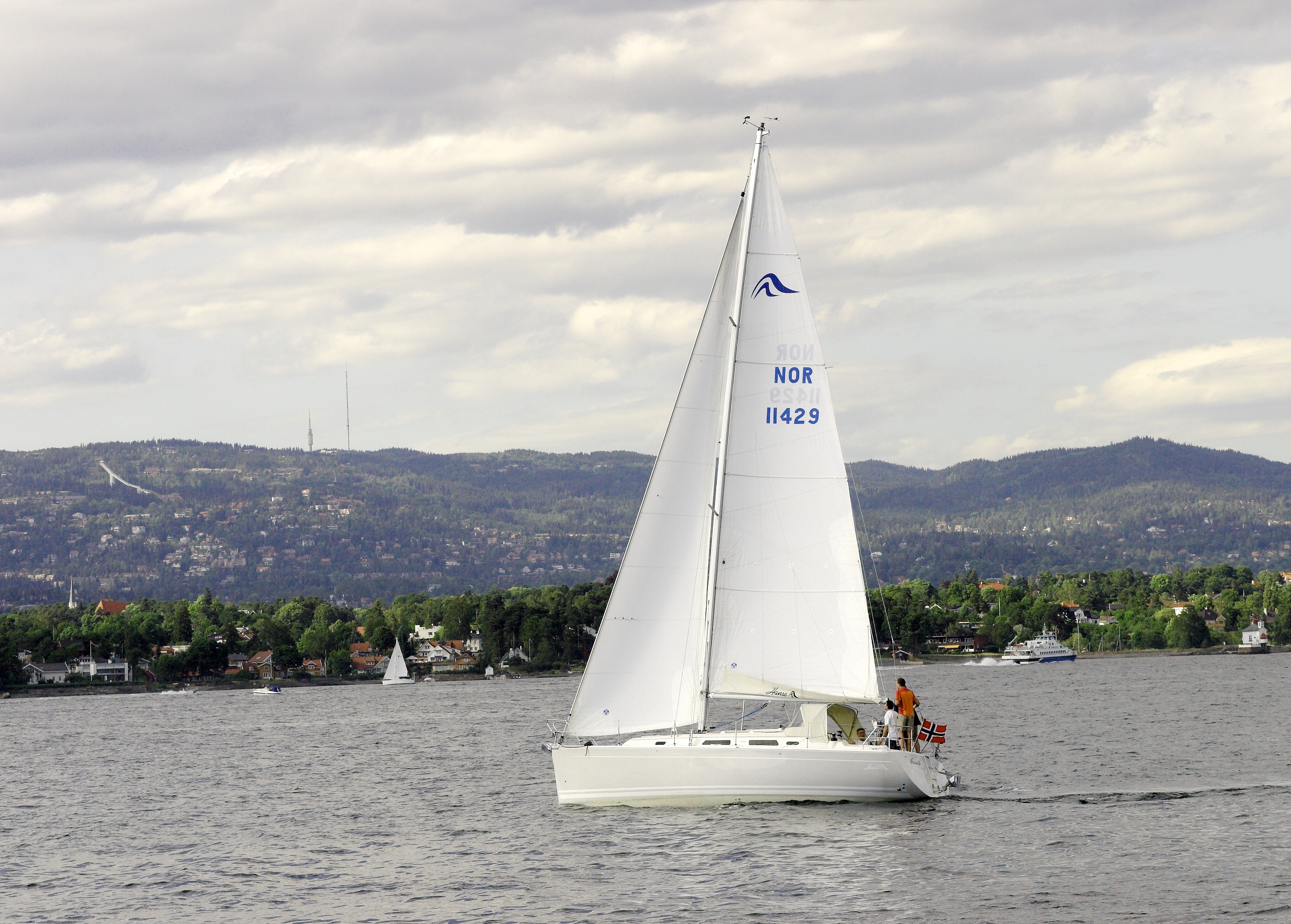
Every summer, I dedicate some of my vacation time to helping out our local Boy Scout troop with their Summer Camp. While I’ve taught a number of classes over the years, my favorite is always Advanced Sailing. It’s not a merit badge class, and participating in it doesn’t help the scouts advance in rank. However, the troop has a fairly nice sailboat. It’s a 22’ Windstar christened the “Red Rooster” (complete with Jolly Roger), and those who take the class really enjoy it.

Working with these young men is both an honor and a challenge. Learning to sail involves a variety of things. There are the technical aspects of maneuvering a boat, learning to work as a team and cool sailing jargon like “jib sheet” and “coming about.” One of the hardest lessons we tackle, though, involves managing fear.

And it usually happens on day three.

Day one involves rigging the boat and learning the rules of safe boating. I typically maintain control of the rudder so we don’t run into something – like another boat. The scouts take turns manning the jib sheets and trimming the mainsail as I steer and coach them through the various steps required to keep us moving (sailing is only fun if you’re actually moving across the water).

On day two, I turn the rudder over to one of the scouts and assume a position as part of the crew. It’s now their job to decide where we’re going and how we’ll get there. There’s no faster way to learn sailing than by doing it, so I let them make mistakes and figure their way out of it. By the end of the sail, things are starting to click.

By day three the critical learning has taken place. Knowledge of basic sailing mechanics has sunk in and the boys want to see just how fast they can get the boat moving. So the “captain” sets a good course and instructs the crew to trim the sails to maximize the available wind. The sails fill with air, the centerboard starts to hum and … the boat starts to heel.

Heeling occurs when the boat begins to lean over in the water. Unless you’re sailing with it directly behind you, the wind is trying to push you to the side. As you position your sails to maximize the wind’s power in order to move forward, you’re also increasing it’s ability to push you over.

Heeling is an uneasy sensation for new sailors and learning to manage the fear of falling over is part of learning to sail fast. Naturally, some are more comfortable with fear and like to see just how close to the edge they can get. Others would rather float aimlessly and lounge on the deck. If the man on the rudder is one of the latter, he panics and lets go. The boat turns back into the wind, loses all momentum and comes to a stop. Things are stable, but we’re not going anywhere.

Fear is a powerful force. It can cause seemingly smart people to do stupid things. They’ll lie about company results out of fear of looking incompetent. They’ll refuse to add a little more on the expense side of the general ledger for fear that it won’t pay off. They’ll hoard information and hamstring their employees for fear of losing personal value.

Fear is a huge issue for many in leadership positions right now – fear of failure, fear of losing control, fear of looking foolish or out of touch. Real leaders understand that sometimes you have to take a stand – you have to face your fear in order to be successful. Not to overcome it, but to use it to your advantage.

By the end of summer camp, the crew of the Red Rooster has learned how to tie a bowline knot. They’ve learned the difference between “port” and “starboard.” And, judging by the speeds at which our boat is moving forward, they’ve learned how to work with fear rather than run from it. They’ve come to rely on their training and the collective wisdom of the crew to keep them upright and moving in the right direction.

So, question time. How are things on your ship? Are you heeled over a little, but flying towards your destination? Or are you floating listlessly, hoping the tide will gently rock you to the shore?

It’s your call, Captain.