Managers vs. Leaders

business boxingWhat’s the difference between a manager and a leader? Here are a few ideas.

Managers seek to organize and standardize.
Leaders seek to grow and innovate.

Managers focus on processes.
Leaders focus on potential.

Managers try to find the right answers.
Leaders try to ask the right questions.

Managers rely on policies to control the business.
Leaders rely on people to transform the business.

Managers ask “What do we stand to lose?”
Leaders ask “What do we stand to gain?”

D-6 Does Not Work

This afternoon I made a trip to the office vending machine for a little chocolate fix. I tend to go for Snickers, occasionally opting for Twix. If chocolate doesn’t feel right, I’ll go with a PayDay. Well, as you can see from the picture, an earlier visitor had gone looking for their favorite snack and left disappointed. So they left a note. “D-6 does not work” They even dated it 11-27.

Instantly, I felt a wave of panic. “Oh no, what if D-6 holds the Snickers? I’ve got to have my Snickers!” It turns out slot D-6 holds salty peanuts. There were plenty of peanut bags in the slot, so I imagine the issue is mechanical. Lucky, Snickers are in slot D-0. I breathed a sigh of relief.

Dropping my quarters into the coin slot, I began to feel sympathy pains for my unfortunate co-snacker. I’ve been in their shoes plenty of times. You probably have too. Remember?

It’s mid-afternoon and you’re sitting at your desk when the craving kicks in. “I need something sweet,” you think. “Just a little something to take the edge off and tide me over until dinner.” You check your pockets to make sure you have change. And on your way to the vending machine, your mind settles on a choice.

Then you arrive only to find that the machine is out of order. Or your number choice is all emptied out. Or the machine keeps spitting your crumpled dollar bill back out at you. Or, occasionally, the worst fate of all. Your selection gets hung up. It dangles there – resistant to any amount of machine shaking – until you cough up another round of payment.

A trip to the vending machine encompasses the myriad range of emotions a customer can feel when interacting with any business. These emotions can be broken into three distinct phases of the interaction.

Initially, there’s the lead-up. This phase involves everything that happens prior to the actual interaction. In the case of a vending machine visit, there’s the craving for somethign sweet, the frantic search for spare change and the eventual settling of the mind on a desired product.

Next comes the actual interaction. In the case of my frustrated co-worker, I imagine emotions such as surprise and confusion came into play as their preferred selection proved to be unavailable.

Finally, there’s the post-interaction phase. Walking away from the vending machine, you might feel satisfaction or even elation (like when someone else leaves their change in or an extra candy bar drops into the bin). Of course my coworker felt dissatisfied, frustrated and possibly even angry.

It may seem like a small thing, but empathizing with a person’s emotional state as they interact with your business is an important part of designing a superior customer experience. The key is imagine the emotions you want the customer to feel at each stage and then put strategies in place to ensure they encounter a scenario in which those emotions come into play. You also need to imagine the emotions you don’t want a customer to feel and design processes that keep them from evolving.

Were I a vending machine owner, I would want my customers to feel satisfied with not only their purchase, but their experience. I would not want them to feel frustrated or angry. Therefore I would design processes to ensure the best emotions come into play and reinforce their decision to visit my machine. After all, I’d love for them to come back day after day.

Here are a couple of things I might do to ensure the best emotions were felt by users of my vending machine.
• I’d keep track of inventory to know how often I needed to restock to ensure everyone’s favorites were available when they wanted them.
• I’d check the mechanics of each button frequently to make sure delivery was actually taking place.
• I’d post a note letting users know how to get their money back in case of a malfunction.
• I might even run periodic “sales” by discounting certain products to provide an element of surprise every now and then.

All of this ran through my head in the seconds it took for my coins to fall into the machine. I pressed D-0 and the machine’s display instructed me to try another selection. Uh, oh. I tried again thinking perhaps I’d accidentally hit two buttons at once with the same result. So I tried D-1 (Peanut M&M’s), D-2 (Twix) and D-3 (Plain M&M’s) all with the same result. The entire D section is out of commission.

Frustrated and still hungry, I decided to punt. I pressed E-4 and a PayDay dropped down. I walked away an unhappy customer.

What emotions do your customers feel as they anticipate interacting with you? What about during or after the interaction?

What emotions would you like for them to feel?

What steps will you take to ensure your customers feel the emotions necessary to reinforce their buying decision?

The Power of Positive Feedback

This morning my phone rang on the way in to the office. It was my wife. Her first words made my heart sink. “I just got a call from Abby’s Principal.” Instantly I assumed the worst – either my daughter is hurt or in trouble. Parents rarely get good news from the school principal.

But it was good news. A new student had transferred in and Abby had taken it upon herself to befriend her and make her feel welcome – showing her around and introducing her to a circle of friends. The new student’s first few days of school, understandably full of anxiety, had been made wonderful. The parents couldn’t say enough about how grateful they were and the principal wanted us to know.

Obviously I’m proud. As I hung up the phone, I pictured the scene that will likely take place as my wife tells Abby what her principal had to say. I can already see the smile on her face and the pep in her step that she always gets when she receives a pat on the back. And her behavior, which isn’t bad to begin with, will ratchet up a few notches for several days.

Come to think of it, we’re all like Abby. We all like to hear good news, especially when it’s about us. Receiving positive feedback for something you’ve done can turn an average afternoon into a great one. I know that a single positive word regarding one of my projects can significantly affect my mood long after the event has passed.

From a leadership perspective, I’ve noticed three key benefits from the positive feedback I give to members of my team.

1. Morale improves. Something magical happens to a person’s attitude when you pay them a compliment. It’s amazing how many times I’ve given someone a bit of positive feedback only to have them say “Wow. You just made my day.” For some reason, our human tendency is to focus on the negative aspects of work. Telling someone “thank you” followed by a sincere explanation of your gratitude, is often enough to break the cycle of negative thought.

I believe that most people genuinely want to produce good work. The problem is, they never get any feedback to indicate their work is, indeed, good. They hear about what’s wrong, missing or late. As a result, the average employee focuses on staying out of trouble (a negative outlook) rather than on producing good (or even great) work.

2. People reciprocate. Any time I give my daughter some positive feedback, I get some in return. If I thank her for cleaning her room and brag about how great it looks, she thanks me for helping her with her homework. In addition, I’ve noticed that positive feedback I give to one of my children results in positive feedback they give to someone else. So not only do I get to enjoy the boost from reciprocal back-patting, the rest of the family does too.

This phenomenon also plays out at the office. Recognizing one team member’s contribution to a project almost always results in their recognition of someone else’s effort. From the outside it must look like a mini love-fest with everyone thanking and congratulating each other on a job well done. But the psychological impact of just a little positive reinforcement is often enough to lift the whole team. It’s like a wildfire – light a match and pretty soon the place is burning with pride.

3. Team productivity goes up. Long ago I realized the potential of positive feedback to produce better work from an individual. Recognize someone’s effort toward a successful project ”A” and watch how much better project “B” turns out. It’s like a little productivity switch gets pushed into overdrive. I’ve even noticed this effect on my own psyche. When someone says “thank you” it makes me feel great. And it makes me want to work harder in order to get more of that great feeling.

You’ve probably heard that praise should be given in public while corrective actions should always be done privately. One of the reasons behind this is because the feelings underlying your feedback (positive or negative) get transmitted to everyone around – not just the person receiving the feedback. So people who witness a coworker receiving kudos for their efforts instinctively begin to act in ways they perceive will result in getting their share of the praise.

For years I’ve said “You will receive an abundance of what you praise or tolerate.” I honestly believe positive feedback is one of the most powerful tools at a leader’s disposal. Unfortunately, positive feedback is difficult for most people. Like most skills, you have to work at it in order to get good at it. Thankfully, the reward is well worth the effort.

I’ll bet you can think of someone in your organization that could use some positive feedback. Imagine the good that you’ll receive when you stop reading this article and go deliver it. In fact, why don’t you go do it right now?

A Matter of Ownership

My wife Susan recently shared a sad customer service experience with me. She and my oldest son Andrew were in the middle of a full-days’ worth of appointments. They realized that in order to have anything to eat before dinner, they would have to pick up something and eat on the run. Spying a fast food chain nearby, they pulled into the driveway. Susan ran into the restroom while Andrew approached the empty counter to place their order.

Well, my wife came out and Andrew was still standing at the counter. No one had taken his order. No one had even acknowledged him standing there. They waited for a few more minutes, watching as employees busied themselves with cleaning, stocking and other chores. Finally, they turned and walked out of the restaurant.

Most organizations say they put the customer at the center of everything they do. But when you experience the service provided by the average business, you see this just isn’t the case. In all honesty, most businesses enact processes and policies designed to maximize their convenience, not the customer’s. Why is there such a disparity between what’s promised and what actually takes place?

Part of the problem is a lack of ownership.

Ownership involves seeing your job and the service you provide from the outside and taking personal responsibility for the satisfaction of your customer. It means putting someone else’s needs and satisfaction before your own. Ownership occurs when you take on someone else’s burden as if it were your own. You quite literally own it.

Ownership is at the heart of customer service. When ownership is present, customers see you as an advocate or a partner. They want to do more business with you. When ownership is missing, customers want to leave and never come back.

Identifying a lack of ownership is easy.

Ever contacted a business with an issue only to be transferred around several times? That’s a lack of ownership.

Ever left a voicemail for a coworker without receiving a return call? That’s a lack of ownership.

Ever left a place of business because no one acknowledged your presence, or asked to help you? Needless to say, that’s a lack of ownership.

Ownership is both an individual trait and part of an organization’s culture. Effective leaders know the value of ownership and cultivate it in their organization. So how do you build a culture of ownership? Start by asking yourself these three questions:

What does ownership look like in my organization, department or job?

What policies and procedures do we have in place that prevent people from taking ownership?

What can I do today to model the concept of ownership to my team?

Passing the Baton

Coming into the 2004 Summer Olympics in Athens, the American 4X100 relay teams seemed like a lock to win gold. The women’s team had recently posted the best time of the year and had their eyes set on a new world record. The men’s team boasted some of the fastest 100 meter sprinters in the world. In the end, though both teams came up short. The men finished second. The women didn’t even finish the race.

The deciding factor in both races? A botched hand-off. You see, in relay racing, passing the baton is everything. A smooth hand-off takes timing, skill and communication between the runners. A smooth hand-off helps maintain speed as one runner takes over for another. The slightest hiccup can be costly.

The men’s team was certainly faster than their competition. But they hadn’t practiced passing the baton and didn’t communicate well. The poorly executed hand-off put them in third place going into the anchor leg. Maurice Greene ran an incredible lap, quickly moving into second place. He was about to pass the leader but ran out of track. Britain’s team beat the United States men by one one-hundredth of a second.

The women’s relay team took three attempts to pass the baton following the race’s second leg. By the time they got it right, they were outside the allowed hand-off zone and were immediately disqualified. They could only watch in tears as the other three teams finished the race without them.

Four years later, the USA teams looked poised for a huge comeback. But apparently neither had learned their lesson. Amazingly, both the men’s and women’s 4×100 relay teams not only failed to pass the baton, but actually dropped it. Once again, they’d underestimated the importance of the handoff.

Now think about your team. How well do they pass the baton?

I’ll bet you have some star players on your team. But it doesn’t matter how much talent you have on board if the hand-offs aren’t smooth. Do you lose sales because of poor communication between front-line and support staff? Do your customers get frustrated because their issue takes too long to resolve? Do projects get stalled because someone doesn’t know when to let go of or accept the baton? Does the competition seem to beat you in spite of inferior talent or products?

Here are three steps for improving your hand-offs:

1. Identify the hand-offs that are critical to your business.
Ask yourself (better yet, ask your team) these questions:
~ Where does the sales/service delivery process most often get stuck?
~ What are the biggest sources of customer frustration?
~ Why does it take so long to get ______ done?

2. Determine the best way to execute them.
~ Map out the process as it exists today.
~ Zero in on the steps that cause the delay/breakdown/frustration.
~ Map out a new process to eliminate/improve the problem area.

3. Practice, practice, practice.
~ Communicate clearly how hand-offs are to be conducted.
~ Make sure every player on the team understands their role in the process.
~ Hold team members accountable for executing the process as communicated.

Everyone wants to be on a winning team. Your customers are no different. Make perfecting hand-offs part of your game plan and they’ll reward you with a gold medal.

Leadership Lessons from Paul Revere

“Listen, my children, and you shall hear
Of the midnight ride of Paul Revere…”
Henry Wadsworth Longfellow

It was 237 years ago today that Paul Revere mounted his horse and took the ride that made him famous. For years, the American colonists had been trying to shrug off the rules and heavy taxes imposed by the British. Thanks to incidents such as the Boston Massacre and the Boston Tea Party, tensions between the American militia and British occupational forces had reached a boiling point. Revere and other members of the “Mechanics” served as couriers, relaying information between leaders of the American resistance in Massachusetts, Pennsylvania and New York.

Revere and his colleagues kept careful watch over the movements of the British, looking for signs that further oppression, in the form of military action, was imminent. When word came that British troops were advancing from Boston to Lexington with the intent of arresting John Hancock and Samuel Adams, Revere was sent to spread the word – alerting the colonial militias along the way. The ride was successful and set the stage for the American Revolution.

The success of Paul Revere’s mission hinged on the ability to communicate quickly and effectively in a time of crisis. Sound familiar? In today’s business environment, where news travels around the world in an instant, timely and effective communication is critical. Here are three lessons in communication I feel we can learn from this historic event.

1. Be prepared to communicate. The time to plan your communication strategy is before a crisis hits, not in the heat of the moment. Revere and others had been watching the British for some time. They knew their own vulnerabilities and spent some time thinking like the enemy. By anticipating likely scenarios, they were able to develop response plans – including what and how to communicate.

Several months earlier, the colonists had been caught by surprise when British soldiers marched on the Powder House, removing a cache of gunpowder. The reaction was widespread panic and leaders established a series of communication strategies to prevent this type of unanticipated movement from happening again. When the time came to act, Revere and his companions knew exactly what to do. No time was wasted figuring out what needed to be said or who would deliver the message. Everything had been determined in advance.

2. Keep the message simple. Popular belief holds that Revere rode through the countryside shouting “the British are coming!” While this is false (British troops were everywhere and secrecy was critical to ensure the message reached as many people as possible), his actual message was just as simple. Going door-to-door, Revere and the other riders passed the message “The Regulars are coming out.”

This simple message conveyed everything a local militiaman needed to know. The British troops – Regulars – were on the move. Gather your weapons and prepare to defend your family, your land, and your property. The simplicity of the message also meant that it could easily be passed from town to town. A more complicated description of the British movements could easily have been confused resulting in misinformation and disorganization.

3. Plan multiple ways to communicate. Boston was the hotbed of British activity. Revere knew that, should events escalate quickly, he might not be able to escape the city to pass the word along. So another rider, William Dawes, also carried the message; leaving Boston by a different route. Having more than one communicator increased the chances that the message would get through. And should both manage to deliver their message, as was the case, communication would be achieved even more rapidly.

In addition, Revere also planned for an alternate method of communication should no one be able to leave Boston. He had arranged for a simple set of signals to alert the “Sons of Liberty” located across the Charles River to any British movement. He knew that the troops would either advance “by land,” marching to the west and then north toward Lexington, or “by sea,” crossing the Charles River in order to shorten their march. Once the British intentions became clear, Revere ordered two lanterns hung in the bell-tower of Christ Church in Boston.

Effective communication is difficult under any circumstance. Communicating in a time of crisis, when others are counting on swift and accurate information is even harder. But by preparing in advance, you can be ready to meet the challenge – just like Paul Revere.

A Comeback Story: How to Bounce Back From Service Defects

Last night, my alma mater, Western Kentucky University, played in the first round of the NCAA tournament. The Hilltoppers played Mississippi Valley State for the 16th seed in their bracket and a chance to face Kentucky in the second round.

By all accounts, it was an ugly game. With 28 turnovers and 30% shooting, WKU played the part of a losing team – right up until the final five minutes. That’s when the comeback happened. Down 16 points, the team managed to rally and came away with a 59-58 win.

Comeback wins are exciting to see. While it’s stressful to see your team fall apart, the thrill you get watching them pull it back together is priceless. Comebacks happen in business too. Whether the breakdown occurs with a single customer or is widespread, a well executed recovery can make things right. In fact, research has shown that a customer who experiences a problem, but has that issue resolved to their satisfaction, becomes more loyal than someone who never experiences a problem in the first place.

Here are a few tips to help you pull off a come-from-behind win.

1. Apologize. Occasionally I run into self professed “experts” who claim you should never apologize to a customer. They say that admitting you are wrong leads to concessions and a customer base that takes advantage ot you. Apologizing, they say, shows weakness and hurts your place in the competitive landscape.

What a bunch of malarky. When you screw up, the customer knows you screwed up. Refusing to apologize doesn’t hide the fact that something went wrong. Saying your sorry simply communicates that you acknowledge the error. It allows you to move from stating the problem to solving it. When you dismiss the issue (or worse, try to spin it as the customer’s fault), you show that you are out of touch have no concern for the value your customer is supposed to be receiving from their relationship with you. Apologizing doesn’t make you look weak; it shows you care.

2. Acknowledge the impact. Have you ever had someone who keeps explaining the problem even after you’ve apologized for it? That’s an indication that you haven’t properly shown enough empathy. In order for you to move the conversation past the customer’s frustration and into an agreeable resolution, you have to demonstrate your understanding of the extent to which the problem affects them.

Vocalize one or two of the impacts this issue will have on your customer’s time, finances, reputation or family. This gives your apology some meat and aligns you with the customer so that you can start working together again. You can;t start down the road toward a resolution until you’re both on the same page.

3. Explain what happened. There’s a tendency when resolving a customer’s issue to move directly from issue identification to problem solving. But customers want to know that we recognize the root cause. They want to see that we’ve determined the gap in the process that caused the breakdown. Otherwise, they may assume that we’ve simply applied a band-aid solution to a much bigger problem. There’s no confidence that the issue won’t arise again in the future.

I’m not advocating that you engage in a mole hunt or start blaming other departments in fron tof your customer. That shows a fractured organization – one that is likely to encounter additional problems. But a simple explanation of the underlying events that led to the issue can show your customer that you’ve done your due diligence and start to restore their confidence.

4. Agree on a solution. It’s important that you communicate with the customer in a way that allows them to agree to the course of action being taken to resolve the problem. Even if your response is painfully clear, you still need to ask for their agreement.

Customers often feel out of control when they bring a problem to your attention. They feel victimized. Asking for their agreement to a solution restores a measure of control. It also positions you as a partner rather than an adversary.

5. Thank them for bringing the issue to your attention. A customer who alerts you to a problem is doing you a favor. Most of them grumble, walk away and take their business elsewhere – never giving you the opportunity to salvage the relationship. To make matters worse, they start to tell their friends about the rotten service your company has provided. Your reputation is taking hit after hit and you still don;t even know there was a problem.

When a customer tells you about a gap in your service, consider it a gift. And since every gift deserves a “thank you,” give them one. Let your customer know how much you appreciate the fact that they brought this problem to your attention so that it can be addressed. Let them know how other customers will benefit thanks to their action. Let them know how much you value their business.

Even the best organizations have bad days. Problems are bound to arise. Service stumbles happen. But if handled properly, the realationships involved can be strengthened as a result. Oh, and Go Hilltoppers!

The Power of a Leader’s Influence

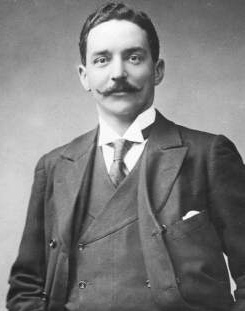
IsmayOn April 12, 1912, The RMS Titanic, then the largest passenger steamship in the world, struck on iceberg while traveling on its maiden voyage from Southampton, England to New York City. Two hours and forty minutes later, Titanic slipped beneath the waves and into history. 1,517 people lost their lives, while survivors and families struggled to make sense of the tragedy.

In the days that followed, newspapers across the world relayed stories from the disaster – stories of heroic acts of bravery and stories of incredible acts of cowardice. One of the most publicized villains was Bruce Ismay – the managing director of the White Star Line and one of the designers of the Titanic.

Ismay was onboard the Titanic, but managed to escape on a lifeboat and survived. Following the disaster, Ismay was blamed for the incident and labeled a coward. It was reported that he drove the captain to push the Titanic faster than was necessary in order to prove the power of his creation. It was said that he scrambled aboard a lifeboat ahead of women and children while other men willingly stayed behind. And Ismay was condemned for resigning shortly after the sinking, disappearing from public view so he wouldn’t have to face scrutiny for his actions.

By all accounts, Bruce Ismay epitomized the greedy, cut-throat capitalist who, in the end, turns out to be a gutless coward. But the newspapers had it wrong. You see, Bruce Ismay was none of these things. And during the official inquiries into the sinking of Titanic the real truth came out.

Letters surfaced in which Ismay advised Captain Smith to sail only as fast as prudent and safe. Other letters from Ismay discouraged altering the timelines of other voyages in order to facilitate an earlier arrival. Witnesses during the inquiry testified that Ismay spent nearly two hours assisting other passengers, namely women and children, into lifeboats before being ordered into one himself. Only then, finding no women in the vicinity to take his place, did he enter the lifeboat.

Ismay did retire following the sinking, but this move had been announced months before the voyage. Following the disaster, he petitioned the board to keep his post, but the negative publicity was too overwhelming. So Ismay took a position on the board of an insurance company whose primary clients were Titanic victims and their families. For 25 years, he relived the disaster at every meeting.

So what happened? How did the press get the facts so horribly wrong? It seems that early in his career, a newspaper writer and publisher named William Randolph Hearst approached Ismay for an interview. Being a shy, private man, Ismay refused and Hearst held a grudge. When the Titanic went down, he saw an opportunity to vent his anger. It was his papers that printed the first – and worst – stories. Other publications followed his lead and Ismay’s reputation was forever ruined despite his heroism.

I’ve heard leadership described as influence. Effective leaders understand the power their influence has over others. Used properly, a leader’s influence can solve problems, mobilize others and effect positive change. Used irresponsibly though, this same influence can be terribly destructive.

Here are three steps to properly leveraging your influence as a leader:

  1. Put your emotions aside. As a professional journalist, Hearst should have been able to put his emotions aside. He should have known that when you speak or write from a negative emotion, you usually wind up saying something out of line. Make sure your intentions are honorable before acting.
  2. Do your research. Check the facts before passing along something second-hand information. It’s extremely embarrassing to find out you’ve been party to rumor or innuendo. So focus on facts rather than assumption or hearsay. Although Hearst’s papers were the first to wrongly accuse Ismay, others quickly followed suit without checking the facts.
  3. Go overboard on apologies. When you do misspeak, quickly correct the mistake. I don’t know if Hearst ever published a retraction, but if he did it was probably very small and buried in an obscure part of the paper. I suspect even a front-page apology wouldn’t be enough to undo the damage done to Ismay’s reputation.

Credibility is easy to lose, and very hard to regain. The best leaders do their best to preserve their own credibility and protect the credibility of others.