
He Ain’t Heavy

Kevan Chandler lives with spinal muscular atrophy. It’s a genetic disease that attacks the motor nerve cells, slowly robbing you of the ability to move. Your strength begins to fade as muscles waste away. SMA is the number one genetic cause of death for infants, claiming most lives by the age of 18 months. Making it to adulthood was only one of Kevan’s many challenges.

The condition has forced Kevan to spend his life in a wheelchair. That means he’s typically unable to join his friends on many of their adventures. The guys Kevan is closet to enjoy “urban exploring;” the practice of climbing through tunnels and old, abandoned buildings. As you can imagine, this type of activity isn’t exactly ideal for someone with extremely limited mobility.

So when the gang devised a plan for a new adventure, a backpacking trip across Europe, you can imagine how Kevan must have felt. But the group declared that they wanted everyone to participate – everyone including Kevan. They couldn’t imagine leaving him behind. The challenge became how to overcome the limitations posed by SMA in order to experience the trip as a team.

Over the course of several months, a special backpack was designed – one that would allow Kevan’s able-bodied friends to carry his 65 pound frame through France, Ireland, and the other countries on their itinerary. Four of the men took turns carrying Kevan, while another three managed handled the gear and recorded a trip that has evolved into a mission.

Upon their return, the group founded a special organization called “We Carry Kevan.” This nonprofit seeks to rethink the idea of accessibility. Their goal is to pursue new ways of equipping not just those with disabilities, but their support systems as well. They realized that the backpack they designed for their friend represented a doorway to inclusion and teamwork never seen before.

What strikes me about this story is the mindset of those involved. And I think there a few lessons for those of us operating as part of any team.

1. The team is better when everyone participates. Like many of us, this group dreamed of overseas travel. But for these guys, the trip simply wasn’t worth taking unless everyone could go. They didn’t want to leave anyone behind. From the get-go, the idea was to travel together. How many of us look at our journey as an individual effort? We may call those around us a team, but do we really desire to be part of the group? Does our default vision of success involve others?

2. They felt a responsibility to carry Kevan. Teams that work together are teams that succeed together. Kevan’s friends didn’t simply dangle the prospect of a trip in front of him and suggest he find a way to join them. They invested themselves in his success. When you see the other members of your team as vital parts of your circle, you start to see their challenges as yours. The team succeeded by figuring out a way for one individual to move forward. Without everyone’s participation, it’s unlikely the effort would have ended in a positive result.

3. Kevan was worth carrying. I can’t imagine the physical challenges Kevan Chandler faces every day. I do know that small setbacks often cause my attitude to turn sour. When your outlook is negative, no one wants to be around you, much less help you. When your first instinct is to complain, people will move away from you, not toward you. Kevan is obviously someone people want to associate with. His friends want him in their lives, so they instinctively stepped up to help.

I love finding out about stories like this. I love being inspired. Naturally, I’m now thinking about the people in my circle that might need a hand. I’m wondering what I can do to help. And I’m wondering if the members my team are ready to carry me should the opportunity arise.
All That Matters

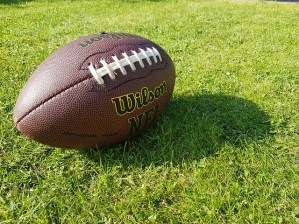
american-football-2940149_640In case you haven’t heard, the Philadelphia Eagles beat the New England Patriots to win the Super Bowl last night. The final score was 41-33 in a game full of surprises and new football records. While many were rooting for the Eagles, the seemed stacked against them.

This was only the third Super Bowl appearance for the Eagles; they’d lost the first two. By contrast, the Patriots were playing in their 10th championship game, having won five of the previous nine.

Eagles quarterback Nick Foles was a backup player. He’d replaced Philadelphia’s injured starter just before the playoffs started. He had no Super Bowl experience. In fact, just a few years ago he almost quit the game. New England quarterback Tom Brady, on the other hand, walked in with loads of experience. Each of those five Patriot titles were won with him at the QB spot. He’s often referred to as the “GOAT” – the greatest of all time.

Las Vegas odd-makers didn’t expect the Eagles to win; the Patriots were favored by 4.5 points. Although many people said they were ready to see the Patriot dynasty come to a close, but most predicted a New England victory.

Yes, it seems like everything and everyone had lines up against the Eagles – everyone except for the Eagles that is.

To them, the odds didn’t matter. History didn’t matter. Public opinion didn’t matter. All that mattered was their shared desire to succeed. They scored quickly and they scored often. They came up with an answer for everything the competition threw at them. They kept their eyes on the prize and moved steadily toward it.

There are million reasons why you should fall short of your goal this year. There are obstacles in your path, shortages of resources, and gaps in experience. There are setbacks around every corner. And yet, none of that matters.

All that matters is the desire to be successful. Do you have it?

In Search of the A-Team

team-spirit-2447163_640Last Tuesday marked the 35th anniversary of the premier of The A-Team. This NBC sitcom featured the exploits of of an ex-military group that operated as soldiers of fortune. Each week, they would assist an individual or group in rectifying an injustice or solving a seemingly impossible problem. Episodes always featured a crazy plan, unforeseen obstacles, and plenty of explosions.

The team was comprised of four members, each possessing unique abilities. Leading the group was John “Hannibal” Smith (George Peppard). He was the brains of the outfit and excelled at devising strategies that made the most of team member’s skill set. Initial plans were always straightforward, but he often had to think outside the box in order to come up with a solution to outwit the competition.

Dirk Benedict played Templeton”Faceman”Peck. He was a master appropriator. Stranded in the desert and need an ice cream truck? Face was your man. His job was to figure out what resources the team needed to succeed and get them. He was also the chief salesman of the bunch, hence the nickname.

“Howling Mad” Murdock, portrayed by Dwight Schultz, was the team’s pilot and resident crazy. He could drive or fly any vehicle and always pushed to get the team where they needed to be at any given time. His desire to move fast also meant he offered up some of the show’s most hair-brained ideas. Time after time though, those ideas proved to be just what was needed to save the day.

Rounding out the group was Bosco “B.A.” Baracus. Mr. T. played the gruff but lovable mechanic and strongman. B.A. was the skeptic, never quite sure what was going on. However, he always trusted that his teammates were moving in the right direction, he jumped in and applied his muscle to the task at hand.

Members of the team often found themselves at odds with each other. B.A. doesn’t like flying, so he usually had to be sedated or tricked in order to get him on the plane. Murdock’s off-the-wall antics tended to annoy the others, if not cause them to fear for their safety. Hannibal’s plans didn’t always make sense at first, and the other members of the team would groan about particular assignments they were given.

In the end, they always succeeded – because they performed as a team. Each member respected the others. They contributed their individual talents to the team objective, and appreciated the talents of the others. They respected Hannibal as their leader and trusted him to guide them appropriately. In return, Hannibal made sure that each one was given work that engaged them and focused on their strengths.

As much as I loved watching The A-Team back in the 1980’s, I love being part of an A-Team today even more. There’s nothing like working with a group of people you respect, admire, and know you can depend on. Together, we come up with some crazy plans.We tackle unforeseen obstacles. To date, there haven’t been any explosions, but nonetheless, we succeed together.

Not every team is an A-Team, but it can be. All it takes is a commitment from each member to do their part – to become A-players with regard to their own performance. I’ve seen sports teams make incredible turnarounds without any changes in personnel or outside influence. The same has happened to work teams I’ve been a part of.

Anytime the A-Team successfully completed a mission, Hannibal would light up a cigar and say “I love it when a plan comes together.” There’s simply no feeling like seeing your team succeed. I hope that’s part of your plan for this year.

Pull Up a Chair

tableThis is Thanksgiving week. For most of us, the holiday presents an opportunity to sit down at a table with family and enjoy a meal together. This is something that rarely happens in my house. Most meals tend to be on-the-go, a hasty interruption to our individual agendas. Days go by without the entire family even being in the same house, much less at the same table. When we are all home, meals are typically devoured in front of the television; meaningful conversation can be hard to come by.

So when we do sit down together, without interruption, and visit as a family, it’s a special occasion – and a weird one. Spending time together like this feels awkward. It’s as if we’ve forgotten how to be a family. We don’t know how to engage each other. We don’t know how to ask good questions or how to really listen to the answers. I think silently, we’ve all been most thankful when the day of thanksgiving finally comes to a close and we can turn our attention to Christmas.

And that is a sad revelation to make.

We do the same thing in the work place. We like to think of our work teams as family; I’ve heard a lot of managers use that terminology when speaking about their team culture. But rarely do we act like one. We operate as individuals. We work in siloes. We pursue our own agendas and tolerate the periodic interruptions that force our attention to the team.

What if we changed the paradigm? What if we made every day Thanksgiving? What if we shifted our normal ways of operating to include more sharing with, laughing with, and listening to the people that (should) mean the most to us? Yeah, it would feel awkward at first, but so does everything else that moves us forward.

This Thanksgiving, I’m especially thankful for my team. I’m thankful for the way they pursue their jobs and look to make things better for all of us. I’m thankful for the times we share, discuss, argue, disagree, and ultimately decide to move forward together. Each member of the team has a unique perspective that they bring to the table. But I’d never know it without sitting down at the table with them.

My challenge to you this week is three-fold:

  1. Tell the members of your team how thankful you are for them.
  2. Schedule time to get together – sit at the table – and discuss the future of the team.
  3. Repeat steps 1 and 2 as often as you can going forward.

Happy Thanksgiving!

Can You Hear Me, or Aren’t You Listening?

listeningThe human body truly is amazing. Take your ears, for example. So many of us take them for granted. Yet these odd looking appendages allow us to enjoy music, recognize friend from foe, and engage in meaningful communication. In fact, we rely on verbal communication to such an extent that references to ears and hearing are everywhere.

“Do you hear what I hear?”

“Friends, Romans, countrymen, lend me your ears.”

“Can you hear me now?”

Here are a few facts about our ears that you may find interesting:

  • The outer ear, the part hanging on the side of your head, is designed in a way that funnels the variety of sound waves around us and channels them to the middle ear.
  • Incoming sound moves from the outer ear to the eardrum, causing it to vibrate. These vibrations are picked up by three bones that amplify the sound.
  • These three bones (the malleus, the incus, and the stapes) make up the middle ear and are the smallest in the human body. All three could fit on the face of a penny.
  • After leaving the middle ear, sound waves are picked up by tiny hairs in the liquid medium of our inner ear. These hairs release chemicals that send signals to the brain which interprets the sound.
  • Humans are capable of detecting sounds as low as 20 Hz and as high as 20,000 Hz.
  • We need both ears to help determine the direction from which sounds originate. Using both ears also makes it easier to pick out someone’s speech in noisy environments.
  • The human ear continues to function even while we are asleep. The brain simply blocks out most of the input.

As incredible as our ears are, we don’t do a very good of using them. As far back as 1957, researchers have been studying the difference between hearing and listening. That’s when Ralph G. Nichols and Leonard A. Stevens from the University of Minnesota conducted tests to find the connection between hearing information and retaining it.

They tested several thousand people by having them listen to a short talk and then testing them on the content. Their tests revealed that “immediately after the average person has listened to someone talk, he remembers only about half of what he has heard – no matter how carefully he thought he was listening.” Within two months, the average participant in their study could only recall about 25% of what had been said during the short talk they had listened to.

You would expect that, over time, we’d retain less and less of the material we’d been exposed to, but the University of Minnesota study found otherwise. After one year, Nichols and Stevens reported that we tend to forget more during the first, shortest interval than we do over the next six months or more. The most significant retention loss occurs within the first eight hours.

Their conclusion was rather blunt: people simply do not know how to listen.

Hearing and listening are two very different activities. Hearing is a passive activity. It happens without me doing anything. Without any effort on my part, sound waves are entering my outer ear, hitting my eardrum and vibrating the bones of my middle ear, and then creating chemical secretions in the hair of my inner ear which then travel to my brain. This complex process is effortless.

Listening, however, is not a passive activity. Listening is intentional. It requires me to concentrate on specific sounds in order to analyze them. Listening involves more than just the ears. The brain must be engaged in order to create context, meaning, and application. This complex process is anything but effortless.

But remember, Nichols and Stevens found that the no matter how hard participants in their study worked at listening, the results were still the same. Listening “harder” did not help anyone retain more information or hold onto it for a longer period of time. The problem, they said, is that our brains are just too powerful.

Most Americans speak at a rate of around 125 words per minute. Our brains, on the other hand, process information significantly faster. We still know all there is to know about the brain, but suffice it say 125 words a minute barely registers. Our minds simply have a lot of extra time to ponder other things even while listening intently to someone else.

I myself am often distracted while trying to listen to other people. For instance, during a walk around my neighborhood, I like to download a podcast or two in order to help pass the time. I hit the play button and focus my mind on the speaker’s content, intent on learning something new and interesting. But within seconds, my mind has drifted. Something that’s said sends causes my thoughts to wander. Sometimes I start thinking about how I can apply one of principles they’ve shared. Other times, a word or phrase jogs my memory about an unrelated topic and my mind is off to the races – moving in a different direction even as the speaker shares valuable and intriguing information. I’m hearing, but I’m not listening.

They key to improved listening has nothing to do with our ears. Obviously, the answer doesn’t lie in slowing our brains down either. We’ve got to arm ourselves with tools that help focus our minds in a way that listening is improved. We have to discover methods of actively participating with the information being received so that it makes a bigger impact.

That’s why the term “active listening” is so appropriate. Listening is not a passive activity. It requires action on our part in order to work. The next time you find your mind drifting during a conversation, don’t just sit there. Take action!

The Thing About Walls


stone-wallFor thirty years, a twelve foot high wall of concrete divided the cities of East and West Berlin. Its official name was the “Anti-Fascist Protective Wall,” but to the world it was simply the “Berlin Wall.” It served as both a physical barrier and a visual reminder of the differences in ideology held by the governing powers of post-World War II Germany. Families were split apart, their houses torn down, and 300 watch towers were erected to guard against unauthorized border crossings.

For those of us who remember, the dismantling of the wall in the early 1990’s represented a new era. It allowed for the free exchange of both goods and ideas. It ignited a cultural shift in Germany that resonated around the world. Today, what remains of the wall provides a sobering reminder of just how much damage walls can create.

Of course, we don’t need steel or concrete to build walls do we? It seems we’ll use just about any excuse to separate ourselves from others – politics, economics, religion, race, gender – pick a reason, and we’ll build a wall to keep the sides apart. Our side is the best, and anyone who doesn’t agree must be the enemy, right?

Sadly, our businesses aren’t immune from this tendency to wall ourselves off. A difference of opinion is all it takes to create a difference of identity. Departments square off against each other. The frontline opposes management. This group knows better than the others. No one wants to budge, and while we continue our détente, the business suffers. The employees suffer. The customers suffer.

I see it, and I know you do too. I talk to too many of you every week who bemoan the state of the organization. “If only we could all get on the same page, we could do so much more…” The problem is real, and it’s ours to solve.

We have to stop viewing unity in terms of what we have to lose. We have a selfishness problem in corporate America. We seem to think that compromising equates to losing. We have an all-or-nothing perspective. “If I can’t have it 100% my way then I won’t play at all.” We hold on to what used to be or what ought to be. But by holding on tight to the past, or ignoring anything but the perfect solution, we miss out on what could be. While we sit and stew about our differences, opportunity for a better future passes us by.

A couple of years ago, I took a trip to Tennessee and got to spend a couple of days hanging out with family. One afternoon, I was playing with my nephews and one of them asked me for a candy bar. He’s pretty young, so I declined to give it to him, feeling my brother and sister-in-law wouldn’t want him to have so much sugar. Without missing a beat, my nephew looked at me and suggested “we could share.” I asked him what that word ‘sharing’ meant. He replied “sharing means everybody gets some.”

We’ve simply got to learn how to get along. We’ve got to stop looking for the differences, and start looking for the similarities. You find what you go looking for – what are you looking for?

We have to stop choosing to do things differently. I wish I had a dollar for every time someone’s told me “We do things differently out here.” This makes no sense. Unless there’s a very real reason – like differences in technology or significant variances in market conditions – there’s no excuse for similar functions within the same company to operate differently. Heck, I can go to any fast food restaurant and order a meal that tastes just like it would in a location across the country. If they can get their act together, why can’t we?

You know what the issue is? Pride. We get our feelings hurt when something we like isn’t viewed as important by the rest of the organization. We get defensive when a practice we’ve come to value is in danger of being changed. So we make up excuses to be different. We convince ourselves that, for the good of the customer, or the employee, or the business, we just have to operate differently. While we espouse diversity, our actions create division.

We’ve simply got to start moving together. We’ve got to stop doing things our own way when there’s no good reason to. I’m reminded of an old proverb, “If you want to go fast, go alone. If you want to go far, go together.” I want to go far! Don’t you?

We have to stop withholding information from others. I have a relatively small work group, but recently we’ve really struggled with communicating effectively. We have weekly meetings and email back and forth constantly; yet not a month goes by that I don’t hear about some new initiative that someone’s been working on for weeks without sharing. By the time the rest of us are brought into the loop, large amounts of time and effort have been expended. Input that could have led to a better result goes unspoken and others miss out on benefiting from a great idea. The most frustrating part is – we’re on the same team!

I get it. Some people like to hold on to things out of ownership. There’s a sense of pride in crafting an idea, or document, or process. Sometimes, too, we forget that there might be others who have a stake in what we’re creating. But unless we’re dealing with a contract negotiation or nuclear codes, we should seek out ways to bring more people into the fold. Working on a strategic growth plan? Involve the team. Got a slick new resource in mind? Seek out an extra brain or two. Working to solve a problem? Ask those impacted to lend a hand. Great ideas are like dollar bills – they’re useless until you start spreading them around. While we hold on to information, we lose hold of potential.

We’ve simply got to start communicating better. We’ve got to stop leaving key players out of the conversation or waiting until the last “I” is dotted before sharing. Two heads are better than one, right? Isn’t work more fun and effective when you bring others in?

It’s so easy to build walls; and so very difficult to tear them down. If we’re to ever see real, sustainable improvement in the work culture, we have to stop erecting the very barriers that get in our way. Instead of building something that keeps us in place, let’s put our energy toward creating something that moves us forward. What do you say we build a bridge?


JOIN THE CONVERSATION:

Have an opinion on this post? Share your thoughts on our facebook page.

How to Keep Your Meetings (And Your Team) Moving Forward

rails-253134_640Over the past few weeks, I’ve been writing on the topic of team meetings. This series of articles started with a review of 3 meetings you should stop having. That was followed by 4 meeting types that you should be having. I touched on 3 elements that make for a productive meeting, and then last week the focus was on using questions to prepare for a meeting – regardless of whether you are the meeting’s organizer or a participant.

Today, I’m wrapping up the series with a look at meeting effectiveness. How can you be sure your meeting actually helps move the team forward? That’s really the reason why we have meetings in the first place, isn’t it … to help move things along? If people are spending their time in a meeting rather than engaged in performing the actual job tasks they were hired to do, then the meeting ought to help improve the way they perform those tasks. For example, if my job is selling widgets, any time spent away from that specific task (like attending a meeting) should serve to make me a better widget sales person.

It’s critical that we start here. You have to understand that meetings are a disruption. They keep people from completing their core job responsibilities. I’m not saying meetings aren’t important; they absolutely are. But too many managers put more planning and energy into a meeting than they do the work our meetings are intended to support. We have to keep meetings in their proper place. The first and most critical step to better meetings is to view them as a vehicle that enables people to do their best work. When you start looking at meetings through this lens, the rest of your meeting-related decisions become much easier.

Starting with the belief that a meeting’s purpose is to improve the ability of people to perform, here are three ways to ensure the right things happen once the meeting is adjourned.

Expect active participation from everyone. Effective meetings do not have attendees, they have participants. If your meeting is considered a spectator sport, it’s time to clarify expectations. Active participation includes asking questions, taking notes, and sharing personal insights to improve everyone’s understanding of whatever topic is on the table. Active participation requires preparation, such as reviewing related material or completing pre-meeting assignments.

Active participation does not include looking at your phone, holding side conversations, or multi-tasking. These are signs that people are bored, uninterested, or simply disrespectful. If the meeting organizer has done their part to prepare an engaging agenda, then the rest of the team should honor that commitment by participating.

Focus on what’s important. Effective meetings stay focused. Inevitably, participants will bring up tangential topics. It’s like browsing the internet – you start off searching for something very specific, but get distracted by links to other topics that are somewhat related. Before you know it, your search for a good apple pie recipe has morphed into an hour-long review of bad plastic surgery pics. To keep your meeting on track, you have to recognize when things are getting off topic and step in before it goes too far.

Keep a running list of “parking lot” items; topics that come up, but aren’t germane to the core discussion. These can be tackled offline, or added to the next meeting’s agenda. I once worked with an organization that kept a small bell in the middle of the conference room table. Each participant in a meeting had permission to ring the bell when they felt a discussion was drifting too far off-topic. They then made a note on a white board so the related-but-separate concept wasn’t lost and pulled the team back on track.

Hold people accountable. Discussion of each agenda item should conclude with the assignment of next steps. If a topic doesn’t inherently require one or more specific actions, then it shouldn’t be on the agenda. Simply sharing general information shouldn’t be the focus of a meeting discussion – it should be an email. Remember, the purpose of a meeting is to enable participants to better perform their core job tasks.

If a topic is on your team’s meeting agenda, meaning it’s taking people away from their job, it’s because people need to start (or stop) doing something related to that job. End each meeting with a review of action items. Use this format to keep assignments clear: [Who] will [do what] by [when]. Start each subsequent meeting with a review of the action items from the prior one. Do this consistently, and hold people accountable for fulfilling their commitments.

Workplace meetings aren’t going away anytime soon. Most people consider them a necessary evil. Top teams see them as a critical way to stay focused, united, and moving in the right direction. How your meetings are perceived, and how productive they are, is up to you.


JOIN THE CONVERSATION:

Have an opinion on this post? Share your thoughts on our facebook page.

Do Your Meetings Disappoint? Try Adding These 3 Elements

king-penguin-384252_640I don’t know about you, but I’m sick of bad meetings. I’m tired of listening to a talking head drone on about topics I already know about, have no interest in, or have no influence over. I’m tired of being bored, uninspired, and generally less informed than when the meeting started. In short, I’m tired of wasting my time in unproductive meetings.

And I’m talking about my meetings.

That’s right, the meetings I’ve presided over lately have been some of the worst. My team counts on me for direction, information, and motivation. As their leader, it’s my job to ensure that our interactions provide them with what they need to enthusiastically conquer the world, or at least their weekly objectives. And to this point, I’ve generally failed them. I’ve allowed our weekly meetings to devolve into something we all tolerate rather than something we look forward to.

That’s unfortunate, because team members should look forward to the opportunity to gather together. Team meetings should be sacred – events cherished for their ability to unite the team, recharge the batteries, and refine the mission. They should be something people enjoy, not something they endure. That’s my charge as the leader. I’m the one who has to make sure that happens.

In particular, there are three elements that have been missing from most of my team meetings. These elements are concepts that I preach about on a regular basis, but have failed to consistently incorporate into my team’s meetings. Shame on me.

  1. Focus: If there’s any one thing that defines leadership, it’s providing focus. Most people spend their day in one of two ways. They either rush from task to task, desperately trying to put out fires; or they wander from task to task, aimlessly wiling away the hours until it’s time to head home. Without focus, people are left to figure out on their own what’s most important at any given time. It’s the job of the leader to provide that focus. Team meetings are a key vehicle to accomplish that. Meetings present an opportunity to align the efforts of the team, to get the group’s collective effort channeled in the right direction. It’s a chance for everyone to hear, right from the horse’s mouth, what their priorities should be right now. Focus clears away the clutter and confusion that accompanies competing agendas. Meetings should always clarify focus.
  2. Interaction: A team cannot succeed together unless they work together. Working together requires communication. Whether your team’s focus is the accomplishment of sales goals, completing a project, or solving a particular problem; interaction is critical. Team members who don’t regularly interact with each other miss out on the whole purpose of having a team. Team members are meant to work with each other. Not just in close proximity to each other or just on related projects, but with each other. That requires interaction, and team meetings are a great way to facilitate that. Meetings should be a time when people come together to learn from each other and collaborate. Nothing solidifies the bonds of a team more than working together to solve the same problem or achieve the same goal. Meetings should always foster interaction.
  3. Accountability: Another core aspect of leadership is the application of accountability. Without it, commitments are often forgotten, ignored, or minimized. Top performers love to win. They love moving forward and achieving the goal. For that reason, they relish accountability. Want to see your best employees scale back their efforts? Drop the ball when it comes to accountability. Letting things slide is a surefire way to lose the commitment of your top performers. Why should they continue working so hard when others are regularly let off the hook? Team meetings are a great way to establish a culture of accountability. Make sure to clarify expectations before the meeting is adjourned. Follow up as necessary and be prepared to conduct an accountability check as part of the next one. When everyone is held accountable, everyone will be. Meetings should always provide accountability.

I’ve never claimed to be a great leader, but I’m working on it. I’m going to give more attention to the way I conduct my team meetings going forward. I know that by using them as a vehicle to clarify the team’s focus, foster interaction between the fantastic individuals that make up the staff, and providing an appropriate level of accountability; I can help move the whole group forward. That’s what leadership is all about.


JOIN THE CONVERSATION:

Have an opinion on this post? Share your thoughts on our facebook page.

Four Meetings You Should Be Having Now

workplace-1245776_640Just as there are plenty of meetings that don’t need to take place, there are times when it’s vitally important to bring the team together. Certain things need to be handled in a group setting, not via email or a series of one-on-one conversations. For these, you need to hold a meeting.

You may need to hold an information-sharing meeting. In this case, you have something that needs to be communicated in a way that ensures everyone gets the same message. Emails can be interpreted in a variety of ways. There’s no way to gauge the intensity of emotion while merely reading an email. Individual conversations can easily veer off into the weeds. Discussion of unrelated topics could alter or cloud the information being discussed.

By disseminating information during a meeting, you can ensure everyone hears the same message. You only need one conversation and can easily check for understanding by asking questions as well as gauging body language and facial expressions. Attendees have the opportunity to ask clarifying questions and the entire group benefits from hearing the answers.

You may need to hold a decision-making meeting. Here, there’s a problem to solve and you are looking to gather input. Those in attendance have a stake in the outcome of this decision and should therefore be willing to help make sure all necessary information is provided so that the best possible move can be settled on. The interaction of the group is important. Stakeholders will have differing opinions and the interplay of various viewpoints allows everyone to understand the bigger picture.

Decisions could be made by the group, via a vote or compromise, or by the leader after considering all potential inputs. Attendees should understand the role they are to play and the timeline of the decision being made so that critical information is not withheld or delayed. By including everyone in the meeting, no feels left out and all should agree to support the decision once made.

You may need to hold a brainstorming meeting. These meetings are designed to generate ideas and bring out the creativity in people. A meeting such as this could be held as a precursor to making a decision or to help specify details related to decisions already made. Allowing people to innovate in a group setting helps solidify team bonds, boost engagement, and ramp up energy levels.

Brainstorming can be difficult to facilitate, especially if participants have no foreknowledge of the task. Be sure to prepare people ahead of time by providing as much information as possible and allowing time for individuals to research and develop ideas on their own. Once the group is together, this will provide a head start to idea generation and fertile ground for group interaction.

You may need to hold a skill-development meeting. Team meetings are a great opportunity for coaching. Participants can improve their skill set either by taking an active role in skill practice or by observing and providing feedback. Learning from the example of peers is a great way to speed up skill development, especially when the trial-and-error aspect of practice is shared.

Facilitating skill-development meetings can be tricky and requires adequate preparation on the part of the meeting facilitator. Make sure to plan enough time for everyone to participate. Ensure any job aids or necessary materials are on hand. And be ready to demonstrate the skill yourself in order to provide attendees with an example to work from.

There are definitely times when a meeting is not the right solution; but there are plenty of times when a meeting is just what the team needs. Use meetings effectively so that your team responds enthusiastically, contributing more than just their presence. Do you have regularly-scheduled team meetings? What aspects could be improved?


JOIN THE CONVERSATION:

Have an opinion on this post? Share your thoughts on our facebook page.

Surviving the Storm

storm-1406218_640On June 1, 1989, four men set sail from New Zealand aboard a trimaran called the Rose Noelle. They were headed for Tonga – a trip that should have taken them just a couple of weeks.  But three days into their voyage, a rogue wave stuck the Rose Noelle, capsizing it and trapping the men inside the main hull. They had little food and a rapidly diminishing water supply. To stay dry, they were forced to share a space no larger than a full-sized bed. They’d managed to salvage the boat’s EPIRB locator beacon, but its batteries ran out on June 13th. The men were now on their own, adrift with nothing but their wits to help them survive. And survive they did – for 119 days.

Catastrophe can strike without warning. Sometimes, it’s an internal failure that slows you down. Sometimes, it’s a change in market conditions that blows you off course. Sometimes, it’s a rogue wave that turns your entire world upside down. Regardless of the circumstances, I think the crew of the Rose Noelle can teach us a few things about recovery from disaster.

Put aside differences and work together. Once the immediate chaos from the capsizing had subsided, the men started trying to figure out what went wrong. As they looked for possible answers, they began to point fingers. Every misstep, real or perceived, caused someone to assign blame for the disaster to someone else. Tempers flared and days went by without anyone actually working on the problem. Finally, they realized that to get out of the ordeal alive, they were going to have to find a way to work together. Suddenly, they began to solve some problems. Teams won’t move forward until they stop blaming and start cooperating.

Focus on small steps. In a true survival situation, priorities are clear. Comfort takes a back seat to food, which is secondary to securing drinking water. For the crew of the Rose Noelle, drinking water was an immediate concern. The holding tanks had emptied when the boat capsized and they knew it only takes days to die of dehydration. Until that problem was solved, nothing else mattered. With all their efforts focused on a single issue, they soon had a workable solution. Now they were hydrated and ready to tackle the next challenge. Use the power of small, incremental achievements to propel the team forward.

Consider everyone (and everything) an asset. The men aboard the Rose Noelle had different degrees of sailing experience. The most seasoned, was John Glennie, the owner and builder of the boat. It was he who first suggested they construct a collection device to capture the rain water. But his idea was flawed and it was a less-experienced man – one who had been discounted as useless on the water – that dreamed up the modification that made it work. That experience led them to look at their surroundings in a whole new light. There are valuable resources all around you. Everyone on the team has value. Everyone. [Tweet “Everyone on the team has value. Everyone.”]

Maintain a positive focus. Despair was rampant in the early days aboard the upturned Rose Noelle, especially after the EPIRB stopped sending out its signal. It would have been all too easy to give in to that despair. Studies have shown that the single most important factor in survival is attitude. How you think is how you act, and what you look for is what you see. If you view the situation is hopeless, then you are doomed from the start. If you look for solutions, you’ll eventually find one. Keep your eyes – and your team – trained on what you have to gain, not on what you’ve lost.

I’ve always been fascinated by survival stories. It’s amazing what people are capable of accomplishing under the most extreme circumstances. And I think stories like this are great metaphors for any aspect of life, including business. It’s easy to lead when the sea is calm and the wind is at your back. It’s in those dark and stormy stretches that true leaders decide to take the wheel.


JOIN THE CONVERSATION:

Have an opinion on this post? Share your thoughts on our facebook page.