
Once In A Blue Moon

Tonight’s full moon is a Blue Moon – not because it’s blue, but because it’s the second full moon in a given month. Because blue moons only occur once every 2.7 years or so, they are relatively rare. Even rarer are full moons that actually appear to have a bluish tint. This typically occurs when dust or smoke refracts light in such a way that the blue spectrum is most prominent.

The phrase “once in a blue moon” entered the English lexicon as a way of describing an event which happens rarely. While some events are prized because they are rare, some things need to happen more frequently to be truly valued. Exercising frequently is obviously more beneficial than occasional spurts of exertion. Ongoing home maintenance is less costly than massive repair projects.

And certain leadership actions have greater impact when performed regularly. Here are 10 easy things you can do as a leader that will have a tremendous effect on those around you.

1. Challenge someone with a project outside of their comfort zone.
2. Encourage someone who’s feeling discouraged after a letdown.
3. Coach someone who’s struggling to improve an aspect of their performance.
4. Recognize someone for their recent achievement.
5. Thank someone who’s helped you out of a bind.
6. Tell someone how important their job is to the team and your customers.
7. Apologize for something you messed up.
8. Ask someone about their professional goal and how you can help them achieve it.
9. Share an article, book or other resource related to someone’s area of responsibility.
10. Spend time brainstorming with people about possibilities that don’t exist yet.

Effective leadership involves building relationships. And you can’t build relationships if your interactions with other people are superficial and random. I promise that if you make an effort to engage with people on a deeper level as indicated by these suggestions you’ll find yourself connecting – and leading – in ways you never thought possible.

The next blue moon will take place on July 31, 2015. Where will you have taken your leadership skills by then?

Smooth Sailing or Time to Batten Down the Hatches?

“Anyone can hold the helm when the sea is calm.” – Publilius Syrus

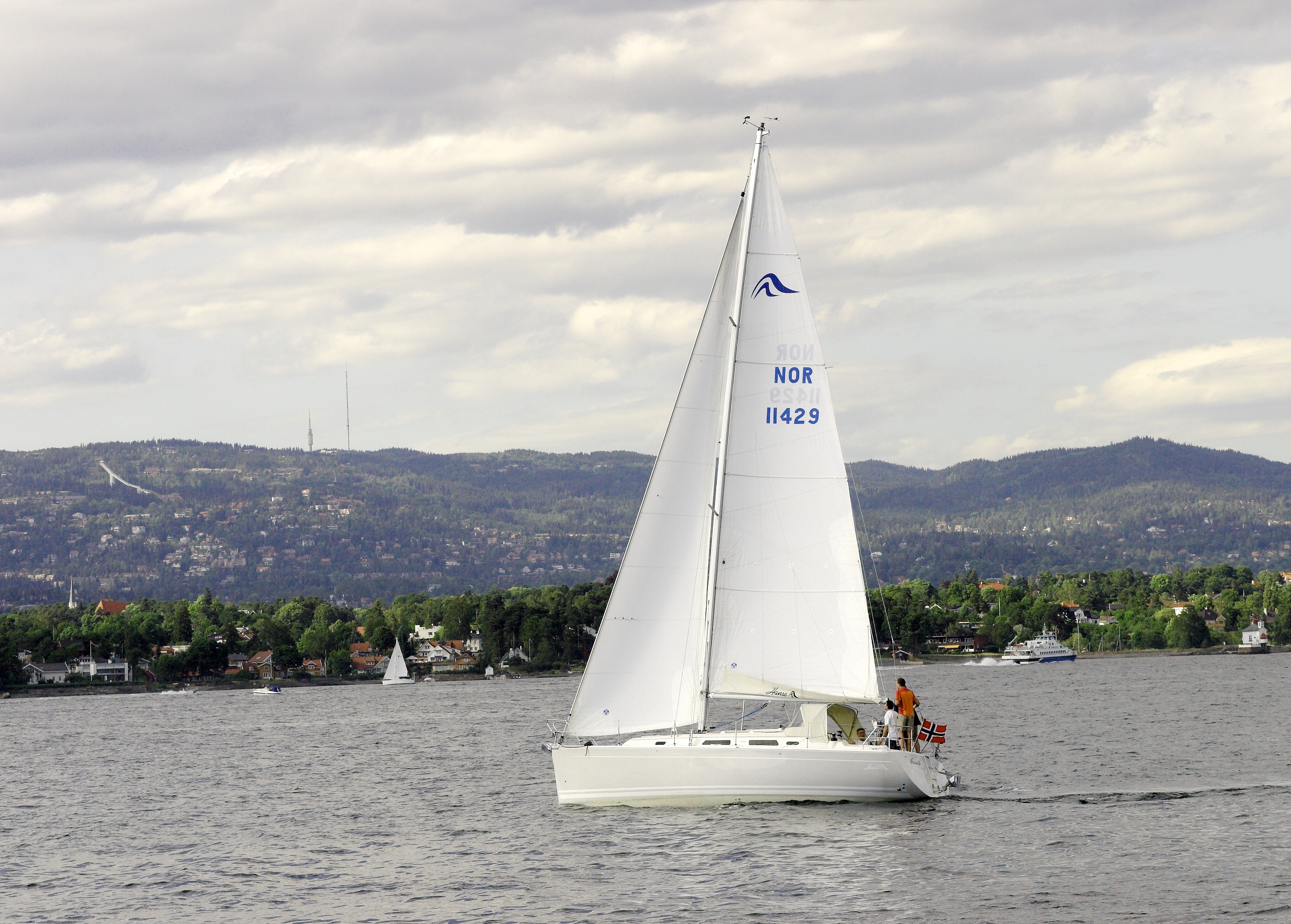
Every summer, I dedicate some of my vacation time to helping out our local Boy Scout troop with their Summer Camp. While I’ve taught a number of classes over the years, my favorite is always Advanced Sailing. It’s not a merit badge class, and participating in it doesn’t help the scouts advance in rank. However, the troop has a fairly nice sailboat. It’s a 22’ Windstar christened the “Red Rooster” (complete with Jolly Roger), and those who take the class really enjoy it.

Working with these young men is both an honor and a challenge. Learning to sail involves a variety of things. There are the technical aspects of maneuvering a boat, learning to work as a team and cool sailing jargon like “jib sheet” and “coming about.” One of the hardest lessons we tackle, though, involves managing fear.

And it usually happens on day three.

Day one involves rigging the boat and learning the rules of safe boating. I typically maintain control of the rudder so we don’t run into something – like another boat. The scouts take turns manning the jib sheets and trimming the mainsail as I steer and coach them through the various steps required to keep us moving (sailing is only fun if you’re actually moving across the water).

On day two, I turn the rudder over to one of the scouts and assume a position as part of the crew. It’s now their job to decide where we’re going and how we’ll get there. There’s no faster way to learn sailing than by doing it, so I let them make mistakes and figure their way out of it. By the end of the sail, things are starting to click.

By day three the critical learning has taken place. Knowledge of basic sailing mechanics has sunk in and the boys want to see just how fast they can get the boat moving. So the “captain” sets a good course and instructs the crew to trim the sails to maximize the available wind. The sails fill with air, the centerboard starts to hum and … the boat starts to heel.

Heeling occurs when the boat begins to lean over in the water. Unless you’re sailing with it directly behind you, the wind is trying to push you to the side. As you position your sails to maximize the wind’s power in order to move forward, you’re also increasing it’s ability to push you over.

Heeling is an uneasy sensation for new sailors and learning to manage the fear of falling over is part of learning to sail fast. Naturally, some are more comfortable with fear and like to see just how close to the edge they can get. Others would rather float aimlessly and lounge on the deck. If the man on the rudder is one of the latter, he panics and lets go. The boat turns back into the wind, loses all momentum and comes to a stop. Things are stable, but we’re not going anywhere.

Fear is a powerful force. It can cause seemingly smart people to do stupid things. They’ll lie about company results out of fear of looking incompetent. They’ll refuse to add a little more on the expense side of the general ledger for fear that it won’t pay off. They’ll hoard information and hamstring their employees for fear of losing personal value.

Fear is a huge issue for many in leadership positions right now – fear of failure, fear of losing control, fear of looking foolish or out of touch. Real leaders understand that sometimes you have to take a stand – you have to face your fear in order to be successful. Not to overcome it, but to use it to your advantage.

By the end of summer camp, the crew of the Red Rooster has learned how to tie a bowline knot. They’ve learned the difference between “port” and “starboard.” And, judging by the speeds at which our boat is moving forward, they’ve learned how to work with fear rather than run from it. They’ve come to rely on their training and the collective wisdom of the crew to keep them upright and moving in the right direction.

So, question time. How are things on your ship? Are you heeled over a little, but flying towards your destination? Or are you floating listlessly, hoping the tide will gently rock you to the shore?

It’s your call, Captain.

Coaching Styles, Part 6 – Which Style Is Best?

A few weeks ago, I began a series focusing on the four different coaching styles; the Visionary, the Director, the Mentor, and the Cheerleader. If you’ve been following along you probably have a pretty good idea of your dominant style. So here’s a question for you? Which style makes the best coach?

Some may say it’s the Visionary due to their ability to paint a vision of the future and inspire people to take action.

Some might choose the Director for their tendency to recognize the strengths in others, assign job tasks appropriately and hold people accountable.

Others might vote for the Mentor. Teaching a skill is very empowering and a critical component of employee growth.

Or perhaps your vote is for the Cheerleader. After all, no one wants to work without recognition for their efforts and a little motivation goes a long way.

The answer, as you might have guessed, is that there is no one style that rises above the rest. Each style of coaching has its place and an effective coach has the ability to switch styles as needed. You see, it really doesn’t matter which style you prefer or are best suited for. The secret to being an effective coach is understanding which style your employee needs at any given time.

The best coaches know that the employee is the focus, not them. They view coaching as a service rather than a job or an item on their to-do list. Great coaches don’t see coaching as something they do to their employees. They see it as something they do for their employees.

Think about the purpose of coaching. The goal isn’t self-improvement; it’s the betterment of your employees. Sure, you benefit in a variety of ways, but the real goal of coaching is to help someone else grow. When you look at coaching as a service rather than a job, it changes your approach to it. To really be effective at coaching, you have to have a true desire to help the employee.

I’m speaking from experience here. Once I changed my view of coaching, it changed my approach to it as well.
– Instead of focusing on what I need to get off of my plate, I focus on what the members of my team need to grow.
– Instead of telling them what I think they need to do in order to accomplish a task, I ask them what they need in order to excel.
– Instead of viewing them as employees, I value them as partners.
– Instead of talking at them, I collaborate with them.

This approach has provided much deeper and more meaningful relationships with the people who report to me. As the relationships evolve, I get to know what makes them tick. I get to know their strengths and their weakness, I learn about their dreams and their fears. And I come to understand what they need from me. As a result, I’m able to adjust my coaching style to provide the right kind of leadership for each person as the situation dictates.

This makes coaching so much easier than it used to be. I’m no longer frustrated by employees who just don’t seem to understand the big picture. I don’t pull my hair out over work that’s not getting done. I don’t have to spend a lot of time coaching any more. It just seems to come naturally.

Here’s the best part – as I’ve learned to provide the kind of leadership my team needs, when they need it – they’ve responded by rising to the challenge. They go beyond what’s asked of them in order to help me out. They know I’m doing everything in my power to hold them up, so they work extra hard in order to not let me down.

Think about your dominant coaching style. Do you coach everyone the same way, under every circumstance?

Do your employees see you as a member of the team, or just “the boss?”

What changes do you need to make to your coaching style in order to get better results?

I hope you’ll consider these questions as you anticipate your next encounter with your team. Good luck coach.

Coaching Styles, Part 5 – The Cheerleader

“We’ve got spirit, yes we do. We’ve got spirit, how ‘bout you?”

Cheerleaders date back to the late 1800’s. A university of Minnesota student named Johnny Campbell recruited a few of his buddies, grabbed megaphone and hit the field to lead the home crowd in chanting the school anthem as a way of showing school spirit and energizing the team. Other schools soon adopted the practice, organizing their own “pep clubs” with motivated “yell leaders.” Eventually, women joined in the fun and, as a result of World War II, began to dominate the activity. Today, cheerleading is considered a sport in its own right with teams competing all over the world.

When it comes to coaching, the Cheerleader has three key goals. The first is keeping the team energized and focused on moving forward. Some people have a natural inclination to stay on task, while others are easily distracted or discouraged. Sometimes the finish line is so far off, it’s difficult to see. This can be the result of a long campaign cycle or a project with an extreme level of complexity. Sometimes setbacks occur and individual or team morale takes a hit. It’s the job of the Cheerleader to step in and rally the troops when they sense energy levels getting low.

Cheerleaders are also responsible for recognizing and reinforcing positive results. When something goes right, it’s important to capitalize on that forward momentum. Recognizing one accomplishment can catapult a team member into the next one. Individuals who receive positive feedback are more likely to repeat the reinforced behavior. So when you see someone doing something you like tell them – cheer them on.

A third goal of the Cheerleader is highlighting examples of desired behavior for others to emulate. Make no mistake; your employees are watching to see what behaviors and results get your attention. I once publicly recognized an employee’s weekly sales production on a particular product line. I didn’t offer a reward – I simply mentioned their name during our weekly sales meeting and told them how impressed I was with their efforts. I shared with the team how one person could make a big impact on the organization and let them in a short round of applause for the highlighted individual. The next week, every single salesperson posted improved numbers.

Being an effective Cheerleader requires you to be on the lookout for good things that happen and act on them. Sadly, most managers struggle with providing positive reinforcement. For some reason, most find it easier to identify issues that need fixing. But the results from positive reinforcement always overshadow those from punitive action.

So grab your pom-poms and let’s hit the field. Are you with me? Two, four, six, eight; who do you appreciate?

Coaching Styles, Part 4 – The Mentor

Any child of the 80’s will recall “The Karate Kid.” It’s a campy movie about a young boy named Daniel who befriends his apartment’s maintenance man, Mr. Miyagi. Daniel is a novice practitioner of karate who is regularly bullied by a group of thugs who also practice the sport. After witnessing Miyagi’s expertise in martial arts, Daniel pleads with him to become his trainer and help him prepare for an upcoming tournament.

In many ways, the film does a great job of exploring the relationship between a student and the teacher. Daniel often becomes frustrated with Miyagi’s techniques and his own perceived lack of progress. Miyagi, on the other hand, utilizes a very specific plan to impart his wisdom and ensure the knowledge transfer is both effective and long-term.

Even if you haven’t seen the film, you’ve probably heard someone quoting Miyagi’s instructions to “wax on, wax off.” In order to build muscle memory for the basic karate moves, Miyagi has Daniel perform a series of chores around his house. He starts by having him wax the car, or rather, a fleet of cars using a specific set of movements with his right and left hands. Once that chore is complete, he has Daniel stain his fence, wax the floor, and paint his house – each time requiring a particular set of motions to accomplish the task.

While Daniel assumes he’s being used as a pawn to complete Miyagi’s dirty work, he’s actually using the power of repetition to ingrain very basic movements into his subconscious memory. Miyagi has broken complex sets of movements into their most basic elements to help Daniel perfect each one in isolation. Each time, Miyagi models the correct movement, observes Daniel for a time and corrects him until he performs each move as desired. He then leaves him to practice the learned behavior – with enough repetition to ensure it’s not easily forgotten.

Eventually, Daniel reaches the end of his patience. He confronts Miyagi, accusing him of reneging on his promise to teach him karate. In one of the movie’s most iconic moments, Miyagi attacks Daniel. Suddenly, all of the movements come to the surface as Daniel reflexively defends against each attack by his mentor. Daniel suddenly realizes that he has actually been learning all along. Miyagi tells him “Tomorrow, we begin training.” The rest of the move follows the pair as they work to combine the core skills into complex sequences that ultimately result in Daniel’s victory at the tournament.

An effective Mentor uses these same techniques during coaching. Skill drills are used to build understanding and perfection of core skills. The Mentor models the desired behavior and then observes as the employee practices, making adjustments to help them perfect their technique. Eventually, core skills are combined into sequences and practiced through role plays – full-blown practice sessions designed to prepare the employee for the real show, on-the-job performance.

Think about the skills and behaviors your team members need to master in order to be effective. What are the core competencies underlying those skills? Are your coaching methods adequate enough to help them achieve mastery? It’s your move Coach – time to channel your inner Miyagi.

Coaching Styles, Part 3 – The Director

Last fall my wife accompanied me on a business trip to New York City. The trip took place a couple of months before our 20th anniversary so it just made sense to tack on a few days to celebrate. During the day, while I was involved in meetings, she explored the city – shopping and scouting out sites she wanted me to see. At night, after my work for the day was finished, we joined the rest of the tourists in taking in the various cultural experiences the city has to offer.

We are typically not advance planners. Most of our vacation plans are made on a whim and each day begins with someone asking “So, what are we going to do today?” But this time was different. Knowledge from my previous trips, combined with advice from friends and family, resulted in a short list of “must-do’s” while in the Big Apple. One of our destinations was the Gershwin Theater to see “Wicked.”

This is a fantastic show. Everything you see and hear from the minute the lights go down is superb – the sets, the music, and obviously the acting. But what you don’t see is just as important as what you do. Obviously, in a production this spectacular there are lots of things going on behind the scenes – and even more work taking place in advance of the show. And right in the middle of all the moving parts is The Director.

Staging a successful venture, whether it is a theater production, a symphony performance or a business, is the job of the Director. While the Visionary creates and communicates the overall vision, the Director must turn that vision into a reality. It is their responsibility to translate the big picture into specific job roles, executable steps and timelines.

In its simplest form, the role of the Director can be boiled down into two words: delegation and accountability. The Director assigns the work and then makes sure the work gets done. Obviously, things are a bit more complicated than that, so let’s look at the concept of delegation a little more closely.

The first step is finding the right person (or people) for each role. Directors must understand the core competencies required for the each position. Different jobs require different skills and abilities. The role of cashier has a different set of associated tasks, and necessary competencies, than the role of security guard. So Directors must know what abilities are needed for each job to be performed properly.

The Director must also be able to articulate the strengths and weaknesses of the staff at his or her disposal. Since the cashier role involves interaction with customers, the Director knows that an outgoing personality and effective communication skills are necessary competencies. They therefore would not assign this role to someone who is introverted and uncomfortable engaging with others.

The Director also needs to know what motivates each employee and under which circumstances they work best. One person may be excited at the prospect of being given individual responsibility for a project while another may cringe at the though, preferring to work in a support role or as part of a team. By understanding the engagement needs of their staff members, the Director can then assign roles with the best interest of the team and the individuals in mind.

How well do you understand the core competencies needed for each of the roles you oversee? How well do you understand the abilities and motivators of your team members? And how successful are you at matching the right person with the right job?

Coaching Styles, Part 2 – The Visionary

I enjoy watching home improvement shows. In particular, I like the shows about landscaping. My favorites are those where the host and his/her team of experts descends on an unsuspecting homeowner and offer to remake their entire back yard. I wish that would happen to me.

Toward the beginning of the show, there’s always a point where the host reveals the master plan. They make a big deal out of unrolling an architectural drawing of their plan for the yard. This is always met with an air of excitement and anticipation by the homeowners. But if you watch carefully, you’ll see something interesting happen when they first see the drawing.

For just a second – before they remember that their reaction is being recorded for national television and they start jumping up and down – their eyes glaze over. They don’t get it. They lack the knowledge of a landscaper and can’t make the connection between the lines on the paper and the potential utopia in their back yard.

And so the host begins to describe it for them. He points out where the hot tub will go. He explains that the big cloud-like circle in the corner is a new tree. See this rectangle here? That’s a new grill for your outdoor kitchen over there.

As the host explains the plan, you sense a change. You can feel the confusion melt away and the excitement build as the picture crystalizes in the minds of the homeowners. Now that they can visualize the end result, they’re ready to get dirty.

To be an effective coach, you have to be like that host. You have to understand that not everyone sees things the way you do. You have to “connect the dots” so that the members of your team see how their individual contributions come together to create the larger picture. This is the job of The Visionary.

The role of the Visionary is often the most difficult. Many mid-level leaders don’t understand the big picture themselves and therefore have a hard time conveying it to their team. Others don’t see the importance of communicating a larger vision feeling it just distracts from the job at hand. And others simply avoid sharing too much information, preferring to keep employees in the dark for fear they will be perceived as unimportant once the masses know what’s going on.

But common sense (and a lot of research) indicates that employees who understand the big picture, and how their job contributes to it, are more engaged. Employees who see their individual role as important to the overall success of the organization are more likely to do their job well than those who feel their work has little meaning. Fundamental to the human condition is the need to feel like we’re part of something bigger than ourselves. Knowing my work means something to someone else makes it mean something more to me.

The day I realized this, my approach to coaching changed. I started talking about the big picture and how our team factors into it. I told them how their individual jobs were critical in order for the organization to achieve success. And as we talked, I could see the change in their eyes. The fog lifted and a spark was lit. They began to make better decisions. They began to identify opportunities for improvement. Now that they see the big picture, they are on fire. And I don’t dare let that fire go out. So I spend more time talking with my team about our vision than anything else.

What vision do you need to share with your team? How do each of them factor into the big picture? How can you help paint the picture for them? Answer those questions and then let’s talk about my back yard.

Coaching Styles, Part 1 – Overview

Being an effective coach is much harder than most people realize. The difficulty arises from the fact that you’re dealing with people. People are irrational, emotional and unpredictable. People have agendas that often differ from, and therefore conflict with, that of the organization. And because every person is unique, effective coaching requires you to be flexible in your approach.

That said, there are four basic coaching styles typically required during any given situation. Which style you use will depend on the individual being coached and the task or situation that forms the basis for your coaching activities. The four coaching styles are:

The Visionary
The Visionary excels at painting the big picture. They are the experts at recognizing and communicating where the team needs to go. They can explain why the direction is important and how all of the pieces fit together to produce the end result.

The Director
The Director’s job is to hand out individual work assignments. Their expertise lies in knowing the skill sets of each team member – the strengths and weaknesses – and assigning tasks to the best player for the job. They also provide accountability to make sure the job gets done.

The Mentor
Mentors are good at teaching new behaviors. They work with individuals to help them understand how to perform certain tasks and develop the skills necessary to excel at those tasks. Mentors are masters at observation and can sense what aspects of an individual’s performance require additional development.

The Cheerleader
Cheerleaders keep everyone focused on the game. They recognize when things go well and provide reward for a job well done. They also recognize when things seem to be slipping a bit and work to rally the troops.

There’s no style that trumps the rest. And while most people gravitate toward one primary style, all four are required to truly be effective. Those managers who have mastered the art of switching from one coaching style to the next will see better results from their efforts. And it follows that those who struggle to adapt their approach appropriately are more likely to be frustrated by the lack of improvement in the performance of their team.

Over the next few posts, I’ll discuss each style in more detail. I’ll offer some clues to help you identify your primary coaching style, although I bet you already know. I’ll provide you with some questions to ask to help diagnose which style is more effective for a given situation. And I’ll share some tips to help you apply each of the styles more effectively.

Passing the Baton

Coming into the 2004 Summer Olympics in Athens, the American 4X100 relay teams seemed like a lock to win gold. The women’s team had recently posted the best time of the year and had their eyes set on a new world record. The men’s team boasted some of the fastest 100 meter sprinters in the world. In the end, though both teams came up short. The men finished second. The women didn’t even finish the race.

The deciding factor in both races? A botched hand-off. You see, in relay racing, passing the baton is everything. A smooth hand-off takes timing, skill and communication between the runners. A smooth hand-off helps maintain speed as one runner takes over for another. The slightest hiccup can be costly.

The men’s team was certainly faster than their competition. But they hadn’t practiced passing the baton and didn’t communicate well. The poorly executed hand-off put them in third place going into the anchor leg. Maurice Greene ran an incredible lap, quickly moving into second place. He was about to pass the leader but ran out of track. Britain’s team beat the United States men by one one-hundredth of a second.

The women’s relay team took three attempts to pass the baton following the race’s second leg. By the time they got it right, they were outside the allowed hand-off zone and were immediately disqualified. They could only watch in tears as the other three teams finished the race without them.

Four years later, the USA teams looked poised for a huge comeback. But apparently neither had learned their lesson. Amazingly, both the men’s and women’s 4×100 relay teams not only failed to pass the baton, but actually dropped it. Once again, they’d underestimated the importance of the handoff.

Now think about your team. How well do they pass the baton?

I’ll bet you have some star players on your team. But it doesn’t matter how much talent you have on board if the hand-offs aren’t smooth. Do you lose sales because of poor communication between front-line and support staff? Do your customers get frustrated because their issue takes too long to resolve? Do projects get stalled because someone doesn’t know when to let go of or accept the baton? Does the competition seem to beat you in spite of inferior talent or products?

Here are three steps for improving your hand-offs:

1. Identify the hand-offs that are critical to your business.
Ask yourself (better yet, ask your team) these questions:
~ Where does the sales/service delivery process most often get stuck?
~ What are the biggest sources of customer frustration?
~ Why does it take so long to get ______ done?

2. Determine the best way to execute them.
~ Map out the process as it exists today.
~ Zero in on the steps that cause the delay/breakdown/frustration.
~ Map out a new process to eliminate/improve the problem area.

3. Practice, practice, practice.
~ Communicate clearly how hand-offs are to be conducted.
~ Make sure every player on the team understands their role in the process.
~ Hold team members accountable for executing the process as communicated.

Everyone wants to be on a winning team. Your customers are no different. Make perfecting hand-offs part of your game plan and they’ll reward you with a gold medal.

Why Managers Don’t Coach, Part 5

For the past several weeks, I’ve been discussing some of the most common reasons given by managers when asked why they aren’t coaching. Along the way, I’ve shared my thoughts on the relationship between coaching and training, coaching the high performer, the importance of regular coaching and time management. In this final post of the series, I’ll address the issue of coaching skill.

Excuse #5: “I don’t know how to coach.”

Typically, this excuse stems from a lack of understanding. Managers who don’t understand what a coach is, will have a hard time figuring out what a coach does. So let’s begin with some definitions. Simply put, coaching is anything you do to help someone improve their level of performance. Therefore, a coach is someone engaged in activities that help another person improve their level of performance.

Many corporate coaching programs have complicated the concept. Attend a typical class on frontline coaching and you will be inundated with complex forms, charts and processes that require any number of acronyms in order to remember them all. Back at the office, you spread out all of the materials only to find that the idea of coaching, as it was presented, is way too cumbersome. Frustration leads to procrastination and, ultimately, the idea of coaching is abandoned.

But it doesn’t have to be this way. Look at that definition of coaching again – anything you do to help someone improve their level of performance. When you think of coaching this way, as the process of helping someone vs. a complex set of activities, it frees you to act. Coaching should focus on providing a service rather than following a particular system. So with this new definition in mind, let’s look at some of the activities effective coaches engage in.

Observation: The act of observing an employee in the act of performing their job to identify patterns of behavior. During an observation, the coach makes notes regarding specific strengths and deficiencies in order to address them with the employee.

Goal-setting: The act of defining specific expectations regarding an employee’s performance. Effective goal-setting involves communicating exactly what is expected of the employee with regard to technique and results.

Role clarification: The act of communicating the importance of an employee’s particular job role in the achievement of the organization’s objectives. Role clarification helps the employee understand how the specific tasks they are charged with contribute to the big picture.

Skill drill: The act of repeating a specific behavior over and over in order to develop mastery. The goal of a skill drill is to create an automatic response to a particular set of circumstances.

Role play: The act of practicing a series of skills in preparation for performing on the job. Think of role playing as a dress rehearsal. The goal is to work out any kinks prior to going on stage. Employees who can perform as desired in repeated practice scenarios are more likely to perform when it counts.

Modeling: The act of demonstrating a set of specific behaviors so that employees can form a picture of the ideal performance. Modeling the behavior you want employees to demonstrate provides them with a visual reference to draw upon while they work to improve.

Praise: The act of recognizing when an employee performs as desired and letting them know about it. Effective praise communicates specifically what you noticed, why you liked it and how important it is to continue the desired behavior. Praise should be delivered as soon as possible after the desired behavior occurs so that the employee makes a strong connection between what they did and the positive feelings associated with your praise. Because of the positive emotions it evokes, praise should be used frequently.

Correction: The act of recognizing when an employee fails to perform as desired and letting them know about it. Effective correction communicates specifically what you noticed, why it is undesirable and how to correct the behavior. By nature, correction evokes negative emotions and should be used sparingly. The goal is to inspire improvement, not fear of failure.

These are just a few of the activities commonly associated with effective coaching. I’ll bet you already do some of these. You may be a great coach and don’t even know it. If this all seems new, start small. Get up right now and go catch someone doing something right. And praise them for it. When you come back to your office, schedule an hour within the next week to perform some observations. Remember that coaching is action oriented. So let’s go coach!