The Magic of Experience

In 1966 Walt Disney quietly began buying up swampland in central Florida. Today, millions of people every year travel from all over the world to visit that swampland – and they pay a premium to do it. Ask your kids where they want to go on vacation and odds are Disney World makes the short list.

Disney World doesn’t have the most thrilling rides. It doesn’t have the tastiest food. It doesn’t have the most convenient location. And it sure doesn’t have the lowest price tag. So why is it that 70% of the guests in the park at any given time are repeat visitors? Why is the average family willing to save for two and a half years to make the trip?

Walt Disney knew that in order to build the best theme park, he couldn’t compete the same way the other guys do. He knew that if he built a great new ride, someone else would just build a better one. If he lowered his price, the competition would simply lower theirs to stay on the game. Disney knew that these strategies were expensive and ineffective.

Disney knew that the only way to win was to provide an experience unlike any other park – an experience so engaging it could only be described as “magical.” And so Disney World remains the ultimate example of customer experience. Their culture revolves around this goal. Let,me give you a couple of examples:

– Disney cast members never say “I” or “they.” They always refer to “we” because the team as a whole is responsible for the customer’s experience.

– Street sweepers receive a minimum of 2 weeks training – not to learn how to use a broom,mbut to learn about the park – where an attractions located, the start time of the parade, etc. – so they can quickly answer a guest’s question.

– High traffic areas are painted every night, with painting timed carefully to dry by morning, so they remain clean and fresh for every guest.

– Everyone’s job description, regardless of position, includes the same two items at the top of the list:

1. Keep the property clean.
2. Create happiness.

Disney challenged his employees to examine every aspect of the customer experience and do what they could to make it better. He knew that it would take the entire team, working together, to make the “Magic Kingdom” a reality.

Now consider your last customer’s experience. Was it “magical” or forgettable?

How can your team work together to create a better experience for your customers?

And what can you do differently as an individual to create some magic for those you serve?

A Matter of Ownership

My wife Susan recently shared a sad customer service experience with me. She and my oldest son Andrew were in the middle of a full-days’ worth of appointments. They realized that in order to have anything to eat before dinner, they would have to pick up something and eat on the run. Spying a fast food chain nearby, they pulled into the driveway. Susan ran into the restroom while Andrew approached the empty counter to place their order.

Well, my wife came out and Andrew was still standing at the counter. No one had taken his order. No one had even acknowledged him standing there. They waited for a few more minutes, watching as employees busied themselves with cleaning, stocking and other chores. Finally, they turned and walked out of the restaurant.

Most organizations say they put the customer at the center of everything they do. But when you experience the service provided by the average business, you see this just isn’t the case. In all honesty, most businesses enact processes and policies designed to maximize their convenience, not the customer’s. Why is there such a disparity between what’s promised and what actually takes place?

Part of the problem is a lack of ownership.

Ownership involves seeing your job and the service you provide from the outside and taking personal responsibility for the satisfaction of your customer. It means putting someone else’s needs and satisfaction before your own. Ownership occurs when you take on someone else’s burden as if it were your own. You quite literally own it.

Ownership is at the heart of customer service. When ownership is present, customers see you as an advocate or a partner. They want to do more business with you. When ownership is missing, customers want to leave and never come back.

Identifying a lack of ownership is easy.

Ever contacted a business with an issue only to be transferred around several times? That’s a lack of ownership.

Ever left a voicemail for a coworker without receiving a return call? That’s a lack of ownership.

Ever left a place of business because no one acknowledged your presence, or asked to help you? Needless to say, that’s a lack of ownership.

Ownership is both an individual trait and part of an organization’s culture. Effective leaders know the value of ownership and cultivate it in their organization. So how do you build a culture of ownership? Start by asking yourself these three questions:

What does ownership look like in my organization, department or job?

What policies and procedures do we have in place that prevent people from taking ownership?

What can I do today to model the concept of ownership to my team?

The Art of Simplicity

You’ve probably heard of the old adage “Keep It Simple Stupid.” Commonly known as the KISS principle, this timeless piece of advice suggests that, in most cases, the simplest solution is the best. When you think about it, this makes sense. The more complicated an idea is – the more moving parts it has – the more likely something will go wrong.

This is a concept most commonly voiced in engineering and manufacturing circles. Machines with more moving parts have more potential points of failure. Software loaded with bells and whistles often has more bugs in it than code focused on a few core features. As a result, we constantly have to juggle patches and updates to shore up the short-comings inherent in complicated products and processes.

I believe the idea of simplicity has a lot of relevance in the world of organizational management as well. As leaders, it’s very easy to over-complicate things for those looking to us for direction.

In my experience, leaders tend to fail when they try to achieve too much at one time. You’ll be far more effective when you break complex ideas into simple, easy-to-digest parts.

If you want to communicate effectively, keep the message simple.

If you want employees to learn, keep instructions simple.

If you want your team to perform, keep goals simple.

If you want customers to respond, keep the value proposition simple.

I’m a talker by nature and by trade. I often have a great deal of information to share, and could probably write a book about any given subject when all that’s needed is a couple of short sentences. I’ve found that I’m much more effective as a speaker, leader, and consultant when I keep things simple.

In fact, I’m having to resist writing too much right now on the subject of simplicity. So I’ll sum things up with a few simple questions.

What part of your business could use simplifying?

How can you simplify things for your employees or your customers?

And what steps will you take today to incorporate the KISS principle into your day-to-day activities?

Smooth Sailing or Time to Batten Down the Hatches?

“Anyone can hold the helm when the sea is calm.” – Publilius Syrus

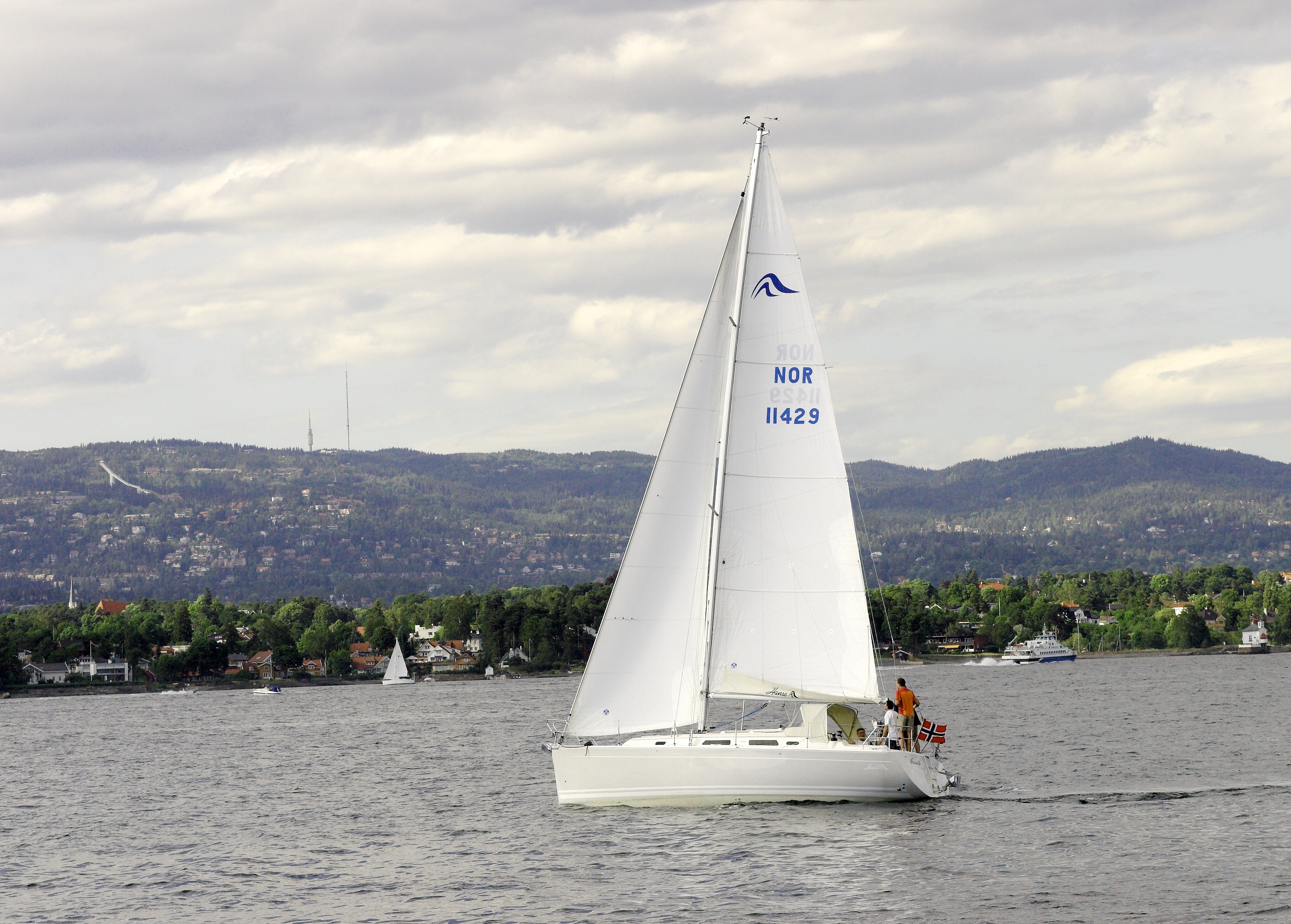
Every summer, I dedicate some of my vacation time to helping out our local Boy Scout troop with their Summer Camp. While I’ve taught a number of classes over the years, my favorite is always Advanced Sailing. It’s not a merit badge class, and participating in it doesn’t help the scouts advance in rank. However, the troop has a fairly nice sailboat. It’s a 22’ Windstar christened the “Red Rooster” (complete with Jolly Roger), and those who take the class really enjoy it.

Working with these young men is both an honor and a challenge. Learning to sail involves a variety of things. There are the technical aspects of maneuvering a boat, learning to work as a team and cool sailing jargon like “jib sheet” and “coming about.” One of the hardest lessons we tackle, though, involves managing fear.

And it usually happens on day three.

Day one involves rigging the boat and learning the rules of safe boating. I typically maintain control of the rudder so we don’t run into something – like another boat. The scouts take turns manning the jib sheets and trimming the mainsail as I steer and coach them through the various steps required to keep us moving (sailing is only fun if you’re actually moving across the water).

On day two, I turn the rudder over to one of the scouts and assume a position as part of the crew. It’s now their job to decide where we’re going and how we’ll get there. There’s no faster way to learn sailing than by doing it, so I let them make mistakes and figure their way out of it. By the end of the sail, things are starting to click.

By day three the critical learning has taken place. Knowledge of basic sailing mechanics has sunk in and the boys want to see just how fast they can get the boat moving. So the “captain” sets a good course and instructs the crew to trim the sails to maximize the available wind. The sails fill with air, the centerboard starts to hum and … the boat starts to heel.

Heeling occurs when the boat begins to lean over in the water. Unless you’re sailing with it directly behind you, the wind is trying to push you to the side. As you position your sails to maximize the wind’s power in order to move forward, you’re also increasing it’s ability to push you over.

Heeling is an uneasy sensation for new sailors and learning to manage the fear of falling over is part of learning to sail fast. Naturally, some are more comfortable with fear and like to see just how close to the edge they can get. Others would rather float aimlessly and lounge on the deck. If the man on the rudder is one of the latter, he panics and lets go. The boat turns back into the wind, loses all momentum and comes to a stop. Things are stable, but we’re not going anywhere.

Fear is a powerful force. It can cause seemingly smart people to do stupid things. They’ll lie about company results out of fear of looking incompetent. They’ll refuse to add a little more on the expense side of the general ledger for fear that it won’t pay off. They’ll hoard information and hamstring their employees for fear of losing personal value.

Fear is a huge issue for many in leadership positions right now – fear of failure, fear of losing control, fear of looking foolish or out of touch. Real leaders understand that sometimes you have to take a stand – you have to face your fear in order to be successful. Not to overcome it, but to use it to your advantage.

By the end of summer camp, the crew of the Red Rooster has learned how to tie a bowline knot. They’ve learned the difference between “port” and “starboard.” And, judging by the speeds at which our boat is moving forward, they’ve learned how to work with fear rather than run from it. They’ve come to rely on their training and the collective wisdom of the crew to keep them upright and moving in the right direction.

So, question time. How are things on your ship? Are you heeled over a little, but flying towards your destination? Or are you floating listlessly, hoping the tide will gently rock you to the shore?

It’s your call, Captain.

Coaching Styles, Part 4 – The Mentor

Any child of the 80’s will recall “The Karate Kid.” It’s a campy movie about a young boy named Daniel who befriends his apartment’s maintenance man, Mr. Miyagi. Daniel is a novice practitioner of karate who is regularly bullied by a group of thugs who also practice the sport. After witnessing Miyagi’s expertise in martial arts, Daniel pleads with him to become his trainer and help him prepare for an upcoming tournament.

In many ways, the film does a great job of exploring the relationship between a student and the teacher. Daniel often becomes frustrated with Miyagi’s techniques and his own perceived lack of progress. Miyagi, on the other hand, utilizes a very specific plan to impart his wisdom and ensure the knowledge transfer is both effective and long-term.

Even if you haven’t seen the film, you’ve probably heard someone quoting Miyagi’s instructions to “wax on, wax off.” In order to build muscle memory for the basic karate moves, Miyagi has Daniel perform a series of chores around his house. He starts by having him wax the car, or rather, a fleet of cars using a specific set of movements with his right and left hands. Once that chore is complete, he has Daniel stain his fence, wax the floor, and paint his house – each time requiring a particular set of motions to accomplish the task.

While Daniel assumes he’s being used as a pawn to complete Miyagi’s dirty work, he’s actually using the power of repetition to ingrain very basic movements into his subconscious memory. Miyagi has broken complex sets of movements into their most basic elements to help Daniel perfect each one in isolation. Each time, Miyagi models the correct movement, observes Daniel for a time and corrects him until he performs each move as desired. He then leaves him to practice the learned behavior – with enough repetition to ensure it’s not easily forgotten.

Eventually, Daniel reaches the end of his patience. He confronts Miyagi, accusing him of reneging on his promise to teach him karate. In one of the movie’s most iconic moments, Miyagi attacks Daniel. Suddenly, all of the movements come to the surface as Daniel reflexively defends against each attack by his mentor. Daniel suddenly realizes that he has actually been learning all along. Miyagi tells him “Tomorrow, we begin training.” The rest of the move follows the pair as they work to combine the core skills into complex sequences that ultimately result in Daniel’s victory at the tournament.

An effective Mentor uses these same techniques during coaching. Skill drills are used to build understanding and perfection of core skills. The Mentor models the desired behavior and then observes as the employee practices, making adjustments to help them perfect their technique. Eventually, core skills are combined into sequences and practiced through role plays – full-blown practice sessions designed to prepare the employee for the real show, on-the-job performance.

Think about the skills and behaviors your team members need to master in order to be effective. What are the core competencies underlying those skills? Are your coaching methods adequate enough to help them achieve mastery? It’s your move Coach – time to channel your inner Miyagi.

Why Managers Don’t Coach, Part 3

My first sales position entailed taking inbound phone calls from people wanting to set up new cable TV service. My job was to convince the new customer that, instead of “basic” cable, they really wanted/needed one of our packages that included premium channels, additional outlets and other extra services. Training consisted of two weeks in the classroom learning the products and software along with a few hours here and there listening to experienced reps take calls.

I finished the training class and was assigned to a cubicle. When it came to start taking calls, my supervisor plugged in and listened as I stumbled my way through the first three. As the third call ended, he unplugged his headset and said “Well, it looks like you’re good to go.” He walked away, leaving me to fend for myself. That was the extent of the coaching I received. The next time there was any discussion of my performance was during my annual evaluation – one year later.

Excuse #3: “I coached them last week/month/year.”

This excuse implies that coaching is an event; either a one-time occurrence or even a series of unrelated meetings that have to be spaced out over time. In fact, a lot of well-intentioned coaching programs support this belief. In order to provide structure and accountability to the coaching process, they advocate scheduling each coaching activity, allowing time in between for employees to practice and develop specific skills.

And, to a degree, this is true. When you dedicate time to teaching someone a new skill, it takes time for them to achieve mastery of the skill and still longer before the new behavior becomes a habit. Scheduling a specific time at some point in the future allows the employee to work on their technique and integrate the new skill or skills into their daily work style. But simply walking away until the next scheduled meeting rarely produces the desired results.

As I discussed in the first article of this series, very little of what’s discussed in a classroom training setting ever makes it into real-life practice. A number of factors contribute to this:
• Too much information was presented, so only bits and pieces are retained.
• Information focused more on theory than practical application, so the employee isn’t sure how to modify their behavior.
• The employee isn’t motivated to actually change their behavior.
• Once the employee returns to their normal work environment, they see no evidence that they are actually expected to change.

The point I’m trying to make here is that coaching is a process, not an event. As in sports, a good business coach understands that in order for the team and the individual players to perform at their best, constant coaching is required. And a variety of coaching methods, both structured and unstructured, scheduled and unscheduled, will be used.

Since we’re in the midst of March Madness, allow me to use a basketball example to illustrate. Let’s say a basketball coach wants to integrate a new offensive set into his team’s game. He’ll use a variety of tactics to accomplish this. Possible structured/scheduled coaching methods are listed here along with some unstructured methods [added in brackets afterward].

• In a meeting, the coach will explain how the set works. He’ll detail under what circumstances it makes sense and why it’s so effective. He’ll use diagrams and film of other teams to clarify expectations so that everyone can see clearly what is supposed to happen. [During and following the meeting, the coaching staff will check for understanding by periodically checking with each player to ask questions and reiterate their particular role in the new play.]

• The coach will devote specific blocks of time to practicing the new concept on the floor. He starts by walking through the movement of the ball and how each player should position themselves as the set unfolds. The team will repeat this over and over until they understand what’s required. [Members of the coaching staff will observe how the players move, provide reinforcement, and where necessary pull a player aside for individual attention. They’ll model the desired behavior, have the player practice it and then observe them as they reenter the larger group.]

• The coach will then bring in a defensive squad. This allows the team to practice the play in a slightly more realistic scenario. This will be repeated several times. [Play will start and stop as the coaches observe small tweaks that need to be made. The tempo will gradually increase so that the behavior can be practiced in increasingly game-like scenarios.]

• The new offensive strategy will then be incorporated into a full-blown scrimmage game. The new set will be mixed in with established plays so the team can get used to switching tactics as needed. [Like a dress-rehearsal, this full-blown role play will test to see how well individual players can modify their behavior on the fly. Play doesn’t stop in order to address issues. Coaching takes place in real time. By now the team will have demonstrated an understanding of what’s required and spot coaching and reinforcement takes the place of heavy coach involvement.]

• Finally, the new concepts will be implemented in the midst of an actual game against another team. Once the coach feels his players have grasped the concept to the extent that they can demonstrate the desired behavior repeatedly and consistently, he’s ready to unleash it on the other team. [Even as the game is taking place, the staff is actively engaged in coaching. Players are applauded for demonstrating their new competencies. Others are pulled to the side, or even off the floor, to receive corrective coaching after a missed opportunity. Timeouts are utilized to reinforce the need to properly execute the new skills.]

I hope you see the importance of viewing coaching as an ongoing process rather than a periodic activity. There is a definite need for a system of scheduled, well-structured coaching sessions. But it’s just as important to take advantage of the unscheduled, in-the-moment opportunities to restate expectations, provide positive reinforcement and correct undesirable behavior. Top coaches know that their number one job is the development of the individuals on their team. They never stop coaching.

Why Managers Don’t Coach, Part 1

As a kid, I didn’t participate in many organized sports. I played Little League Baseball for two or three seasons, but don’t recall much about it. I do remember the summer my parents signed me up to play soccer. I only played one year. My fascination with the game quickly waned because of one simple fact – we didn’t have a coach.

We had one at the beginning of the season, but for some reason he quit after only a few practices. Someone might have stepped up to serve as the official coach of record, but we never received any “coaching.” For the bulk of the season, our parents would drop us off and we’d just mill around on the field until the final whistle blew and we ran to the concession stand for our free snow cone. It wasn’t any fun because, without an active coach, we didn’t develop as players or as a team. And we certainly didn’t win.

I believe that one of the most important duties of a manager (if not the most important) is the development of their staff. The primary way this takes place is through regular coaching. Unfortunately, many managers fail to take advantage of the opportunities to maximize the performance of their team by engaging in this critical activity.

Over the years, I’ve heard a number of explanations (I call them excuses) as to why coaching gets placed on the back burner. Through the next few posts, I’ll share some of these excuses and provide some easy-to-implement steps for moving past them. So let’s get started.

Excuse #1 – “I don’t need to coach. They went to training, so they know what they need to do.”

Too many managers falsely believe that sending an employee to a training class will magically result in a significant change in performance. These managers are in for a big disappointment, however, because training alone rarely impacts an individual’s ability or desire to perform. Training is only one tool. And like most jobs, you need more than one tool to do it right.

Millions of dollars are invested in training every year. In fact, developing and delivering training is a big part of what I do for a living. But without the benefit of coaching, most training programs fail. Sadly, when this happens, the blame is placed either on the training curriculum, the trainer or the employee.

Training is intended to provide individuals with the information necessary to perform a certain task. But the ultimate goal is really sustained behavioral change. Following the training class, you want the participant to perform a certain way – to either modify their current behavior, or add a new set of behaviors to their current job role. Training alone simply cannot achieve this goal because information alone is not enough to cause behavior change to take place. As I mentioned in an earlier post on interviewing, there’s a difference between knowledge and skill.

Even if an employee is excited about the material being presented, they won’t remember everything they’ve been exposed to during the class. Studies show that as little as 10% of the material delivered during a typical corporate training session is retained by the time an employee returns to their usual work environment. There are ways to improve this, but you’ll never hit 100%. And remember the goal here. It’s not knowledge retention. It’s modified behavior.

No, transforming knowledge into skill takes time and repetition. For knowledge to evolve into demonstrated skill, it has to be put into practice. And to maximize the potential, this needs to happen as soon as possible. Ideally, the employee will begin implementing what they’ve learned immediately after the class is over. But too many things – customer demands, deadlines, interruptions, peer pressure, and even old habits – present barriers to the immediate integration of the new information into existing work practices.

This is where coaching comes in. Coaching provides the employee with the accountability, motivation and support necessary for them to first begin using the newly acquired knowledge and then to continue down the path toward skill mastery. Here are some steps you can take as a coach to help your employees down that path.

• Perform a training debrief. You ought to know what the training class is intended to teach before sending your team member to it. Therefore, this debrief isn’t for you to gain an understanding of what the course was about. The purpose of this meeting is to ascertain what the employee actually learned. Ideally, the two of you discussed what you wish for them to gain from the session before they attended. Now that the training is over you need to reinforce, or reintroduce, the concepts you feel are important.

• Set some expectations. Let the employee know which aspects of the training you want to see incorporated into their work routine. Reiterate why it’s important that they begin to modify their performance to meet the standards set forth in the class. Ask them what they feel they need in order to be successful and communicate what additional steps you will take to support them.

• Follow up. Especially during the period immediately following the training class, it’s critical to follow up with employees to make sure they are working to meet your expectations. This accountability will help them to focus on their behavior early – while the training is still fresh in their minds. Ignore them during this important window and old habits will quickly reassert themselves and any benefit gained from training will be lost. I’ll present some specific follow up methods in a later post.

Training is an important part of any organization’s strategy. Get the most out of your training investment by coupling it with a solid coaching program. Follow these simple steps and you’ll be well on your way.