Survivor In the Workplace: 3 Behaviors You Don’t Want on Your Island (and 3 You Do)!

I find it hard to believe, but it’s been 12 years since Mark Burnett introduced American television audiences to Survivor. This is the show where contestants vie to win $1 million by navigating the physical, mental and social challenges associated with spending 39 days stranded on an island with a group of strangers. One by one, players are voted off by their “tribe mates” until the finale, when those who’ve been kicked out of the game have to vote for the winner.

Survivor proved to be incredibly popular, spawning international versions and copycat shows. It launched the era of reality television, an era that just doesn’t want to die. Across the world, schools and church groups regularly adopt the Survivor theme for parties and events.

But there’s one playing field where playing Survivor can be devastating – the workplace. Unfortunately, employees around the world go to work every day feeling as if they are fighting to survive. There may not be a million dollars on the line, but the stakes are just as high. For many, office politics, popularity contests and hidden agendas create an atmosphere that causes good people to feel they have to play the game just to stay in the game.

Here, mirrored in the slogan of Survivor, are three things employees shouldn’t have to do in order to win.

1. OUTWIT
Winning on Survivor often hinges on having the best information. Those in the know – the ones with knowledge and insight that others don’t – tend to go the farthest in the game. Players who are out of the loop are quickly picked off. When a contestant gains a key piece of information, they keep it secret, only sharing it if and when they stand to receive the greatest personal benefit.

Sadly, many players at work seek to get ahead the same way. They hoard information, releasing it bit by bit as it suits their purpose. They may use information against a perceived opponent, trying to raise their own worth by damaging others.

2. OUTPLAY
Survivor contestants have to move fast. In order to win the game, they have to constantly reassess the lay of the land – who’s stirring up trouble and which players might be trying to orchestrate a bold move. Everyone lives on edge, and alliances are shaky. The game can change at any moment and to win, you have to stay on your toes.

Many employees live in a constant state of paranoia as well. Workplace alliances can be just as shaky as those on a Survivor island. Even within the context of teamwork, individuals often jockey for position in an attempt to remain in control of the outcome. Opportunism and betrayal are commonplace in the office environment.


3. OUTLAST
Some Survivor players operate by laying low. They do their best to stay out of the spotlight, doing just enough to get by but not enough to draw too much attention. They don’t take risks, and never voice a controversial opinion. Eventually, a key player makes a mistake and exits the game, allowing the quiet one to seize control.

Competitors in the workplace often utilize this same strategy. They ride along quietly, doing steady but unimpressive work. They seem content to let others take the lead while they ride on coattails. When crisis hits and someone takes a fall, they’re the first ones to say “I knew that would happen.” Amazingly, they know just how to fix things and suddenly, they’re on top.

Things don’t have to be this bad. Survivor is a game that only one person can win. Winning at work doesn’t have to be an individual contest. Teams can win together. This makes success much more likely and enjoyable. But it’s up to the leadership to create an environment in which teamwork is a valued commodity. Here are three survivor strategies for leaders who want to win.

1. INFORM
As opposed to hoarding information, try sharing it. Well informed work teams make better decisions, both collectively and as individuals. Employees who feel included and informed reciprocate by sharing what they know. Knowledge grows synergistically and everyone advances. But those in charge have to model this behavior. Leaders who withhold information will find themselves with employees who feel they must do the same in order to survive.

  • Share data, statistics and other results.
  • Provide clearly defined individual and team goals.
  • Outline steps that clearly lead to success.


2. INCLUDE

Teamwork, by definition, involves inclusion. Leaders have to believe that every member is valuable and expect them to contribute. Employees who seem reluctant to participate and share ownership in team projects need to be drawn in. When each member of the team has a stake its success, they work harder to make that success happen. Collaboration comes easier when fates and rewards are shared.

  • Make sure everyone involved in a project is input regarding its design.
  • Make a point to seek out those who may be reluctant to voice an opinion.
  • Delegate tasks appropriately so that everyone plays a role.


3. INSPIRE

Leaders have to be constant communicators of the shared vision. When people lose sight of the ultimate goal, it’s easy for them to turn inward, focusing on short-term survival. The key to effective teamwork lies in keeping the big picture front and center.

  • Communicate the team’s vision often and passionately.
  • Ask others to share their interpretation of the vision with regard to their specific job duties.
  • Share feedback from customers and other stakeholders that illustrate the importance of achieving the stated vision.

Survivor is a lot of fun to watch. But drama that makes for great television creates a horrible work environment. Keep your tribe strong and successful by actively drawing people in and they won’t vote themselves out.

Smooth Sailing or Time to Batten Down the Hatches?

“Anyone can hold the helm when the sea is calm.” – Publilius Syrus

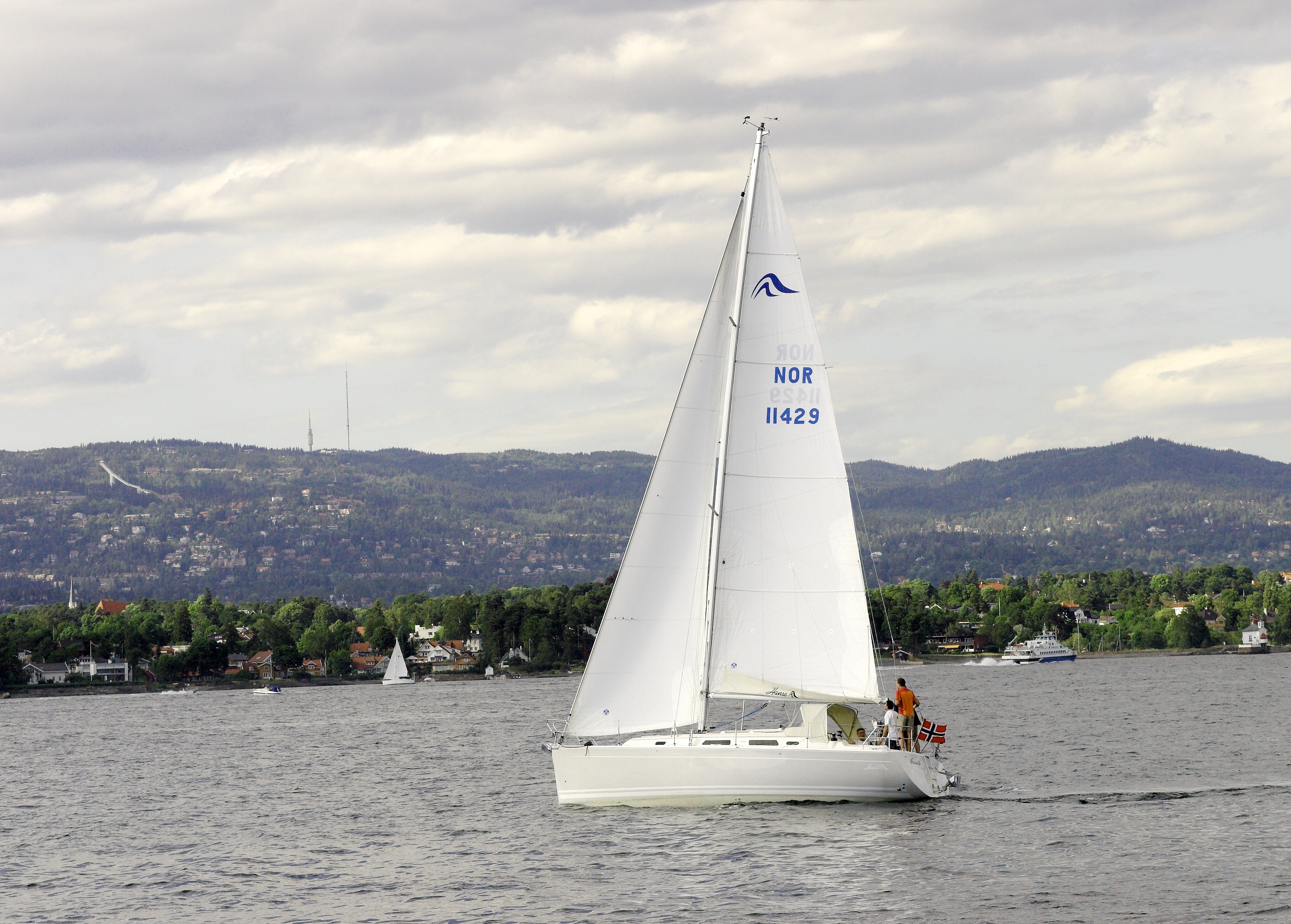
Every summer, I dedicate some of my vacation time to helping out our local Boy Scout troop with their Summer Camp. While I’ve taught a number of classes over the years, my favorite is always Advanced Sailing. It’s not a merit badge class, and participating in it doesn’t help the scouts advance in rank. However, the troop has a fairly nice sailboat. It’s a 22’ Windstar christened the “Red Rooster” (complete with Jolly Roger), and those who take the class really enjoy it.

Working with these young men is both an honor and a challenge. Learning to sail involves a variety of things. There are the technical aspects of maneuvering a boat, learning to work as a team and cool sailing jargon like “jib sheet” and “coming about.” One of the hardest lessons we tackle, though, involves managing fear.

And it usually happens on day three.

Day one involves rigging the boat and learning the rules of safe boating. I typically maintain control of the rudder so we don’t run into something – like another boat. The scouts take turns manning the jib sheets and trimming the mainsail as I steer and coach them through the various steps required to keep us moving (sailing is only fun if you’re actually moving across the water).

On day two, I turn the rudder over to one of the scouts and assume a position as part of the crew. It’s now their job to decide where we’re going and how we’ll get there. There’s no faster way to learn sailing than by doing it, so I let them make mistakes and figure their way out of it. By the end of the sail, things are starting to click.

By day three the critical learning has taken place. Knowledge of basic sailing mechanics has sunk in and the boys want to see just how fast they can get the boat moving. So the “captain” sets a good course and instructs the crew to trim the sails to maximize the available wind. The sails fill with air, the centerboard starts to hum and … the boat starts to heel.

Heeling occurs when the boat begins to lean over in the water. Unless you’re sailing with it directly behind you, the wind is trying to push you to the side. As you position your sails to maximize the wind’s power in order to move forward, you’re also increasing it’s ability to push you over.

Heeling is an uneasy sensation for new sailors and learning to manage the fear of falling over is part of learning to sail fast. Naturally, some are more comfortable with fear and like to see just how close to the edge they can get. Others would rather float aimlessly and lounge on the deck. If the man on the rudder is one of the latter, he panics and lets go. The boat turns back into the wind, loses all momentum and comes to a stop. Things are stable, but we’re not going anywhere.

Fear is a powerful force. It can cause seemingly smart people to do stupid things. They’ll lie about company results out of fear of looking incompetent. They’ll refuse to add a little more on the expense side of the general ledger for fear that it won’t pay off. They’ll hoard information and hamstring their employees for fear of losing personal value.

Fear is a huge issue for many in leadership positions right now – fear of failure, fear of losing control, fear of looking foolish or out of touch. Real leaders understand that sometimes you have to take a stand – you have to face your fear in order to be successful. Not to overcome it, but to use it to your advantage.

By the end of summer camp, the crew of the Red Rooster has learned how to tie a bowline knot. They’ve learned the difference between “port” and “starboard.” And, judging by the speeds at which our boat is moving forward, they’ve learned how to work with fear rather than run from it. They’ve come to rely on their training and the collective wisdom of the crew to keep them upright and moving in the right direction.

So, question time. How are things on your ship? Are you heeled over a little, but flying towards your destination? Or are you floating listlessly, hoping the tide will gently rock you to the shore?

It’s your call, Captain.

Coaching Styles, Part 6 – Which Style Is Best?

A few weeks ago, I began a series focusing on the four different coaching styles; the Visionary, the Director, the Mentor, and the Cheerleader. If you’ve been following along you probably have a pretty good idea of your dominant style. So here’s a question for you? Which style makes the best coach?

Some may say it’s the Visionary due to their ability to paint a vision of the future and inspire people to take action.

Some might choose the Director for their tendency to recognize the strengths in others, assign job tasks appropriately and hold people accountable.

Others might vote for the Mentor. Teaching a skill is very empowering and a critical component of employee growth.

Or perhaps your vote is for the Cheerleader. After all, no one wants to work without recognition for their efforts and a little motivation goes a long way.

The answer, as you might have guessed, is that there is no one style that rises above the rest. Each style of coaching has its place and an effective coach has the ability to switch styles as needed. You see, it really doesn’t matter which style you prefer or are best suited for. The secret to being an effective coach is understanding which style your employee needs at any given time.

The best coaches know that the employee is the focus, not them. They view coaching as a service rather than a job or an item on their to-do list. Great coaches don’t see coaching as something they do to their employees. They see it as something they do for their employees.

Think about the purpose of coaching. The goal isn’t self-improvement; it’s the betterment of your employees. Sure, you benefit in a variety of ways, but the real goal of coaching is to help someone else grow. When you look at coaching as a service rather than a job, it changes your approach to it. To really be effective at coaching, you have to have a true desire to help the employee.

I’m speaking from experience here. Once I changed my view of coaching, it changed my approach to it as well.
– Instead of focusing on what I need to get off of my plate, I focus on what the members of my team need to grow.
– Instead of telling them what I think they need to do in order to accomplish a task, I ask them what they need in order to excel.
– Instead of viewing them as employees, I value them as partners.
– Instead of talking at them, I collaborate with them.

This approach has provided much deeper and more meaningful relationships with the people who report to me. As the relationships evolve, I get to know what makes them tick. I get to know their strengths and their weakness, I learn about their dreams and their fears. And I come to understand what they need from me. As a result, I’m able to adjust my coaching style to provide the right kind of leadership for each person as the situation dictates.

This makes coaching so much easier than it used to be. I’m no longer frustrated by employees who just don’t seem to understand the big picture. I don’t pull my hair out over work that’s not getting done. I don’t have to spend a lot of time coaching any more. It just seems to come naturally.

Here’s the best part – as I’ve learned to provide the kind of leadership my team needs, when they need it – they’ve responded by rising to the challenge. They go beyond what’s asked of them in order to help me out. They know I’m doing everything in my power to hold them up, so they work extra hard in order to not let me down.

Think about your dominant coaching style. Do you coach everyone the same way, under every circumstance?

Do your employees see you as a member of the team, or just “the boss?”

What changes do you need to make to your coaching style in order to get better results?

I hope you’ll consider these questions as you anticipate your next encounter with your team. Good luck coach.

Coaching Styles, Part 3 – The Director

Last fall my wife accompanied me on a business trip to New York City. The trip took place a couple of months before our 20th anniversary so it just made sense to tack on a few days to celebrate. During the day, while I was involved in meetings, she explored the city – shopping and scouting out sites she wanted me to see. At night, after my work for the day was finished, we joined the rest of the tourists in taking in the various cultural experiences the city has to offer.

We are typically not advance planners. Most of our vacation plans are made on a whim and each day begins with someone asking “So, what are we going to do today?” But this time was different. Knowledge from my previous trips, combined with advice from friends and family, resulted in a short list of “must-do’s” while in the Big Apple. One of our destinations was the Gershwin Theater to see “Wicked.”

This is a fantastic show. Everything you see and hear from the minute the lights go down is superb – the sets, the music, and obviously the acting. But what you don’t see is just as important as what you do. Obviously, in a production this spectacular there are lots of things going on behind the scenes – and even more work taking place in advance of the show. And right in the middle of all the moving parts is The Director.

Staging a successful venture, whether it is a theater production, a symphony performance or a business, is the job of the Director. While the Visionary creates and communicates the overall vision, the Director must turn that vision into a reality. It is their responsibility to translate the big picture into specific job roles, executable steps and timelines.

In its simplest form, the role of the Director can be boiled down into two words: delegation and accountability. The Director assigns the work and then makes sure the work gets done. Obviously, things are a bit more complicated than that, so let’s look at the concept of delegation a little more closely.

The first step is finding the right person (or people) for each role. Directors must understand the core competencies required for the each position. Different jobs require different skills and abilities. The role of cashier has a different set of associated tasks, and necessary competencies, than the role of security guard. So Directors must know what abilities are needed for each job to be performed properly.

The Director must also be able to articulate the strengths and weaknesses of the staff at his or her disposal. Since the cashier role involves interaction with customers, the Director knows that an outgoing personality and effective communication skills are necessary competencies. They therefore would not assign this role to someone who is introverted and uncomfortable engaging with others.

The Director also needs to know what motivates each employee and under which circumstances they work best. One person may be excited at the prospect of being given individual responsibility for a project while another may cringe at the though, preferring to work in a support role or as part of a team. By understanding the engagement needs of their staff members, the Director can then assign roles with the best interest of the team and the individuals in mind.

How well do you understand the core competencies needed for each of the roles you oversee? How well do you understand the abilities and motivators of your team members? And how successful are you at matching the right person with the right job?

Passing the Baton

Coming into the 2004 Summer Olympics in Athens, the American 4X100 relay teams seemed like a lock to win gold. The women’s team had recently posted the best time of the year and had their eyes set on a new world record. The men’s team boasted some of the fastest 100 meter sprinters in the world. In the end, though both teams came up short. The men finished second. The women didn’t even finish the race.

The deciding factor in both races? A botched hand-off. You see, in relay racing, passing the baton is everything. A smooth hand-off takes timing, skill and communication between the runners. A smooth hand-off helps maintain speed as one runner takes over for another. The slightest hiccup can be costly.

The men’s team was certainly faster than their competition. But they hadn’t practiced passing the baton and didn’t communicate well. The poorly executed hand-off put them in third place going into the anchor leg. Maurice Greene ran an incredible lap, quickly moving into second place. He was about to pass the leader but ran out of track. Britain’s team beat the United States men by one one-hundredth of a second.

The women’s relay team took three attempts to pass the baton following the race’s second leg. By the time they got it right, they were outside the allowed hand-off zone and were immediately disqualified. They could only watch in tears as the other three teams finished the race without them.

Four years later, the USA teams looked poised for a huge comeback. But apparently neither had learned their lesson. Amazingly, both the men’s and women’s 4×100 relay teams not only failed to pass the baton, but actually dropped it. Once again, they’d underestimated the importance of the handoff.

Now think about your team. How well do they pass the baton?

I’ll bet you have some star players on your team. But it doesn’t matter how much talent you have on board if the hand-offs aren’t smooth. Do you lose sales because of poor communication between front-line and support staff? Do your customers get frustrated because their issue takes too long to resolve? Do projects get stalled because someone doesn’t know when to let go of or accept the baton? Does the competition seem to beat you in spite of inferior talent or products?

Here are three steps for improving your hand-offs:

1. Identify the hand-offs that are critical to your business.
Ask yourself (better yet, ask your team) these questions:
~ Where does the sales/service delivery process most often get stuck?
~ What are the biggest sources of customer frustration?
~ Why does it take so long to get ______ done?

2. Determine the best way to execute them.
~ Map out the process as it exists today.
~ Zero in on the steps that cause the delay/breakdown/frustration.
~ Map out a new process to eliminate/improve the problem area.

3. Practice, practice, practice.
~ Communicate clearly how hand-offs are to be conducted.
~ Make sure every player on the team understands their role in the process.
~ Hold team members accountable for executing the process as communicated.

Everyone wants to be on a winning team. Your customers are no different. Make perfecting hand-offs part of your game plan and they’ll reward you with a gold medal.

Leadership Lessons from Paul Revere

“Listen, my children, and you shall hear
Of the midnight ride of Paul Revere…”
Henry Wadsworth Longfellow

It was 237 years ago today that Paul Revere mounted his horse and took the ride that made him famous. For years, the American colonists had been trying to shrug off the rules and heavy taxes imposed by the British. Thanks to incidents such as the Boston Massacre and the Boston Tea Party, tensions between the American militia and British occupational forces had reached a boiling point. Revere and other members of the “Mechanics” served as couriers, relaying information between leaders of the American resistance in Massachusetts, Pennsylvania and New York.

Revere and his colleagues kept careful watch over the movements of the British, looking for signs that further oppression, in the form of military action, was imminent. When word came that British troops were advancing from Boston to Lexington with the intent of arresting John Hancock and Samuel Adams, Revere was sent to spread the word – alerting the colonial militias along the way. The ride was successful and set the stage for the American Revolution.

The success of Paul Revere’s mission hinged on the ability to communicate quickly and effectively in a time of crisis. Sound familiar? In today’s business environment, where news travels around the world in an instant, timely and effective communication is critical. Here are three lessons in communication I feel we can learn from this historic event.

1. Be prepared to communicate. The time to plan your communication strategy is before a crisis hits, not in the heat of the moment. Revere and others had been watching the British for some time. They knew their own vulnerabilities and spent some time thinking like the enemy. By anticipating likely scenarios, they were able to develop response plans – including what and how to communicate.

Several months earlier, the colonists had been caught by surprise when British soldiers marched on the Powder House, removing a cache of gunpowder. The reaction was widespread panic and leaders established a series of communication strategies to prevent this type of unanticipated movement from happening again. When the time came to act, Revere and his companions knew exactly what to do. No time was wasted figuring out what needed to be said or who would deliver the message. Everything had been determined in advance.

2. Keep the message simple. Popular belief holds that Revere rode through the countryside shouting “the British are coming!” While this is false (British troops were everywhere and secrecy was critical to ensure the message reached as many people as possible), his actual message was just as simple. Going door-to-door, Revere and the other riders passed the message “The Regulars are coming out.”

This simple message conveyed everything a local militiaman needed to know. The British troops – Regulars – were on the move. Gather your weapons and prepare to defend your family, your land, and your property. The simplicity of the message also meant that it could easily be passed from town to town. A more complicated description of the British movements could easily have been confused resulting in misinformation and disorganization.

3. Plan multiple ways to communicate. Boston was the hotbed of British activity. Revere knew that, should events escalate quickly, he might not be able to escape the city to pass the word along. So another rider, William Dawes, also carried the message; leaving Boston by a different route. Having more than one communicator increased the chances that the message would get through. And should both manage to deliver their message, as was the case, communication would be achieved even more rapidly.

In addition, Revere also planned for an alternate method of communication should no one be able to leave Boston. He had arranged for a simple set of signals to alert the “Sons of Liberty” located across the Charles River to any British movement. He knew that the troops would either advance “by land,” marching to the west and then north toward Lexington, or “by sea,” crossing the Charles River in order to shorten their march. Once the British intentions became clear, Revere ordered two lanterns hung in the bell-tower of Christ Church in Boston.

Effective communication is difficult under any circumstance. Communicating in a time of crisis, when others are counting on swift and accurate information is even harder. But by preparing in advance, you can be ready to meet the challenge – just like Paul Revere.

Leadership Lessons from Pocahontas

On this day, in 1614, the Indian Princess Pocahontas was married to English settler John Rolfe.

In May of 1607, 100 or so colonists from England founded Jamestown – the first permanent English settlement in America. One of these early settlers was John Smith, a captain who helped direct the settlements survival efforts. From the beginning, Jamestown found life in the new world extremely difficult. They suffered disease, famine, and frequent attacks by the native Indians led by Chief Powhatan.

In December of 1607, Smith and two others were out exploring and mapping a nearby river when they were captured and taken to Powhatan’s village. Smith’s two companions were killed, but according to his accounts he was spared and released because Pocahontas begged her father to show mercy.

Pocahontas began acting as a liaison between the natives and the settlers, bringing them food and learning their customs. A tentative peace was established. Things seemed to be looking up for the settlers.

But in 1609 Smith was injured in an accident and had to return to England. Without his influence, the relationship with Pocahontas and the Indians faltered. Things steadily deteriorated and that winter was especially hard. Many settlers died.

John Rolfe didn’t come to Jamestown until 1610. He introduced the concept of tobacco farming to the settlers and the friendly natives. Hoping to regain a peaceful relationship, Pocahontas once again took on the role of ambassador. The tenuous peace strengthened yet again.

Three years later, in 1613, a new English Captain named Samuel Argall arrived. Seeking to force a more permanent peace agreement, he took Pocahontas hostage. He then demanded the Indian Chief agree to a more favorable treaty in order to secure her release. By this time, however, Pocahontas and John Rolfe had already fallen in love. She converted to Christianity, taking the name Rebecca. And 398 years ago today they were married, solidifying the peace between their two people.

I find it interesting that one person could have so much influence. Here are two cultures that couldn’t be more different. Their customs, religions, goals, and even language were all different. But Pocahontas took it upon herself to bridge the gap. She saw the potential benefit to both groups in working together.

I don’t know about you, but I think that sounds a lot like today’s workplace. The differences between departments – differences in customs, beliefs, goals, and even language – often lead to silos. Employees can find themselves competing for resources, viewing those from other areas as the enemy. This organizational conflict usually has a negative impact on everyone involved.

It’s pretty easy to recognize these siloed workplaces. Frontline employees don’t have the resources they need to assist the customer. Support departments working in isolation develop duplicate processes and then blame each other when something goes wrong.

But all it takes is one person to reach across the gulf to change all that. One person with the desire to find common ground – that win-win scenario. Here’s how to lead like Pocahontas.

See the bigger picture. Pocahontas was able to look beyond the differences between her people and the English settlers. She could see that, despite the barriers presented by appearance, religion, and language, these were just people trying to make a life for themselves. They weren’t evil or even necessarily wrong, just different.

Be willing to stick your neck out. It had to take a lot of nerve for Pocahontas to intervene in the killing of John Smith. Going against the will of the Chief, even for his daughter, wasn’t normal. But she knew that a chance at peace and mutual benefit was more desirable than war.

Keep working at it. The on-again, off-again peace between the settlers and the Indians had to be tiring. Over the years, I’m sure she wondered if things would ever get better. It would be so much easier to just view the other side as the enemy and wipe them out. The constant threat of war, especially after her capture, had to weigh heavily on both sides. But Pocahontas was persistent in her attempts to build a relationship. She knew that the long-term benefits were worth the effort.

Realize the benefits may be far greater than you think. Pocahontas set out to build a relationship between her people and the awkwardly dressed, foreign speaking colonists. I doubt she thought love would enter the picture. In the end, she not only accomplished her objective, but reaped personal rewards as well.

I think every organization needs a Pocahontas (if not several). Is there one in your organization? Is it you?

Bad Passes & Missed Free-throws: Mistakes That Can Cost You the Game (And How To Avoid Them)

Basketball has long been my favorite sport. Although I never played organized ball, I’ve always been drawn to the fast pace, the feats of athleticism and the drama of a close game. Of course, having a high-schooler on the local basketball team probably has something to do with it too.

I’m always amazed at how many games are won by the wrong team. By that I mean that the better team, at least according to the stats (and conventional wisdom), loses. How is it that the teams with all the talent, the best coaching, and the home crowd so often come up short – hanging their heads while the underdogs celebrate?

Usually, when a championship calibre team suffers a defeat, it’s not because of some sudden explosion of talent from the other bench. Rather, it comes down to fundamentals – basics of the game that don’t receive much attention until a failure to execute them results in disaster. There are certain aspects of the game that can spell ruin for even the greatest team – whether its on the basketball court or in business. Here are three problems to watch out for, and how to avoid them.

1. Bad passes. The handoff between departments is an important part of handling any customer interaction. Whether its transferring a customer call, or the movement of documents from one area of responsibility to another, great care should be taken to ensure that “passing the ball” is handled properly. Nothing is more frustrating to a customer than to see great service suddenly go bad because someone dropped the ball.

How to avoid this problem:
– Identify your danger zones – steps where the ball is passed from one person or department to another. Engaging in some simple process mapping will force these into the open.

– Develop strategies to ensure tasks (and customers) crossing through the danger zone don’t fall through the cracks. Implement checklists, notification systems or other accountability measures to make sure important items aren’t missed and customer confidence is maintained.

– Once your new process is established, communicate its importance, making sure to emphasize how each individual contributes to the success of the team. Train everyone involved. Conduct skill drills and role plays to make sure they understand how the work is supposed to flow. Don’t forget new employees. Don’t let a service breakdown be their introduction to the desired process.

– Review the process regularly to make sure it reflects any changes to technology, regulations or customer expectations.

2. Missed free-throws. Free-throws are those easy-to-get-right transactions and activities that occur every day; things like getting the order right, showing up on time, and returning a phone call when you said you would. Customers expect you to get the little things right. Take care to hit the mark on the easy stuff and they’re more likely to trust you when it comes time for something involving a greater degree of risk. But fail to execute on the simple things and your credibility will suffer.

How to avoid this problem:
– Set expectations you know are attainable, not ones you think you can meet. Give yourself some wiggle room. Leave plenty of room for appointments to run long rather than shoe-horning meetings into every available bit of free time. If you think you can get an answer by lunch, tell your customer you’ll call them by the end of the day.

– Develop systems to make success almost guaranteed. Use your calendar to schedule return phone calls and set an alert so you won’t miss it. Design quality checks into the order-filling process so that you can deliver with confidence. Prepare back-up systems so that customers aren’t left in limbo because the one person who can help them came down with the flu.

3. Failure to rebound. Problems happen. Despite your best efforts, you will miss the mark occassionally. So, being ready to bounce back from a miss is critical. When service issues arise, your ability to rebound can turn a customer whose faith has been shaken into an advocate for life. In fact, research has shown that a customer who has experienced a problem, and has subsequently seen that problem resolved to their satisfaction, is more loyal than one who has never experienced a problem to begin with. Customers understand that mishaps occur; but they expect you to respond appropriately.

How to avoid this problem:
– Identify where service breakdowns are most likely to occur. Every business has them. You should know what your’s are. If you don’t, ask a few customers. They’ll tell you where you fall short.

– Develop automatic rebound strategies for these issues. Specify an appropriate response to each service issue. When problem “A” happens, we respond with solution “B.” When “X” occurs, we do “Y.”

– Train your employees and empower them to execute the strategies you’ve developed. If you’re smart, you included them in both the problem identification and solution development phases, so adoption should be easy. People are more likely to buy into solutions they helped develop.

Too many times, we focus on our newest product roll-out, the latest store remodel or the shiny new technology; when all our customers want is for us to execute on the little things that affect them most. Invest the time and effort necessary to shore up these base-level expectations and you’ll create a foundation of trust upon which to highlight your organization’s product or service.

Traits Of High Performing Teams

The fantastic group of top performers that make up my team live and work in a variety of locations. As a result, a lot of our team interaction takes place over the phone or via email. So its always a pleasure when we have the opportunity to work on the same project, in the same place, at the same time. You know, as a team.

Last week the group came together to facilitate a series of workshops designed to guide a group of managers through the process of setting annual goals for their staff members. Watching them work was phenomenal. After the final session was over, and every one had gone their separate ways, I had a chance to reflect on the three days we’d spent together. I thought about the things I had just witnessed and jotted down a few observations. Here are some of the things I feel contributed to an incredible team effort.

– They each perform well as individuals. Each member of the team is a superstar in their own right. You can’t have a winning team without talent, and I’m fortunate that the men and women I work with on a regular basis are each very good at what they do. They each strive to be the best at what they do, so I know that when it’s their turn to perform, I’ll get the best possible result.

– They work well together. You don’t have to look far (try the world of pro sports) to find examples of teams loaded with individual superstars, but no teamwork. A team is more than a collection of people. A team has an identity, a rhythm. This doesn’t happen overnight. It takes time and practice. But once you’ve been part of a team that works well together, you’ll spend the rest of your career trying to recapture that feeling. I have a great team. And I love it when they have the chance to work together. They do too.

– They share a common goal. Take a group of top performers, get them working together well, and you have a team. Instill a passion for excellence and focus them on the same goal, and you have something magical. We had many meetings and planning sessions before our project came about last week. Going in, everyone knew what the end result needed to be. And everyone was committed to making that result a reality.

– They “get it.” ‘Nuff said.

– They are committed to team success and that of their teammates. Top performers like to be recognized for their accomplishments. Members of high performing teams understand that their success is tied to that of the team and, by extension, the success of their teammates. As a result, they work just as hard when their role is a backseat one. They understand that when the team looks good, they look good. When a teammate is recognized, their stock rises because of their association with another top performer.

– They know their strengths and limitations (and those of their teammates). You know that guy who knows everything, already has all the skills, and can do anything? Yeah, neither do I. But too many people believe they have to be that person in order to be successful. Great teams happen when each member willingly takes the lead in their area of expertise and hands over the reins when the task at hand in best handled by someone else.

– They’re not afraid to disagree. Great teams have some great arguments. They stem from passion, from a desire to produce a superior result. If your team argues about petty issues or suffers from personality attacks, they’ll have difficulty in putting it aside to present a unified front. Healthy disagreements revolve around the project at hand, around the issues.

Over the past few days, I’ve received several complimentary emails from managers who attended our goal-setting workshops. We hit a home run on this project. But I know that wouldn’t have been possible without a great team. As I share each comment with the team, and see them complimenting each other in turn, I’m reminded of how truly blessed I am to work with such a great group.