
 The concept of selling has been around a long time. Even before the first coins were minted around 600-700 BC, selling was a common practice. The bartering of goods and services in exchange for other items of value required people to convince each other that any given item was more valuable than something similar offered by someone else. The exchange of items of value is, in essence, selling.
It wasn’t until 1886 that the idea of sales as a profession came about. John H. Patterson, the president of NCR would identify the top person in prospect companies, sell them a cash register, and then incent them to share the word with other business owners. This marked the first time that people were paid for selling something they didn’t themselves create. It didn’t take long for the practice to spread.
In 1916, the first World Salesmanship Congress was held in Detroit Michigan. President Woodrow Wilson spoke and led credence to the idea of salespeople being important professionals. The theme of the congress was “trust-based” selling, an indication that nefarious practitioners had already begun to infiltrate the profession.
Ultimately, trust is at the heart of any sales proposition. Whether bartering or exchanging products and services for currency, both parties involved have to trust the other. In today’s sales environment, the burden of trust rests most heavily on the shoulders of the salesperson. They must appear trustworthy is the customer is to believe that what they are receiving is of sufficient value to justify what they are asked to pay. You might get away with violating a customer’s trust once or twice, but that’s it. Broken trust leads to broken relationships, and sales is all about relationships.
It’s the concept of trust that allows us to function as well as we do. Researchers have identified three functions that trust performs in society and interpersonal relationships:
Trust makes social interactions predictable. When you first meet someone new, you don’t know how they are going to act. But after a very brief interaction, you begin to pick up on patterns in their behavior. It’s these patterns that determine how you anticipate their future actions. Having observed the behavioral patterns of individuals over time, you can predict how a potential interaction will unfold. We start to “trust” that people will act a certain way.
Trust creates a sense of community. We tend to associate with people who behave in ways we prefer. It’s our trust in the future actions of others that leads us to form social groups. Your circle of friends exists because you’ve come to trust this group of people will act in ways you find agreeable. We move toward people we trust and away from those we do not.
Trust helps people work together. As communities develop, you trust that any given member of that group will act within the accepted boundaries of behavior. This means we don’t really have to know a specific individual in order to develop a level of trust with them. By affiliating with a particular community, we assume an individual believes in the same things as the group. We expect their behavior to follow the predictable mold that drew us to the group in the first place.
Think about the individuals and groups you associate with. How has trust influenced the makeup of your circle? What behaviors drew you to these groups? What behaviors would betray that trust and drive you away?
As salespeople, we have chosen to align ourselves with individuals and communities that communicate particular levels of trust. You reputation depends on, and impacts, the perceived level of trust customers have in your coworkers, your organization, and even others in your same profession working elsewhere. Each of us has a responsibility to validate, and strengthen, the trust placed in us. It is trust that leads customers to willingly engage with us, join our community by purchasing our products, and continue working with others in our organization.
JOIN THE CONVERSATION:
Have an opinion on this post? Share your thoughts on our facebook page.
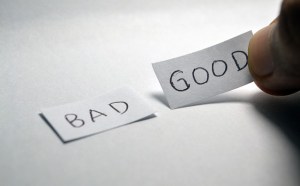 Black or white. Good or evil. Republican or democrat. Positive or negative. We’ve gotten pretty good at drawing lines in the sand, haven’t we? As a society, and a species, we love to categorize and label people, things, and activities. We somehow feel more comfortable having declared our alliance with a particular side and then view the world in terms of absolutes. You’re either on one side or the other. We have a hard time making sense of any gray area, so we stop acknowledging that it even exists.
 Whenever superheroes and supervillains clash, there will inevitably be a high degree of collateral damage. Vehicles, buildings, even entire cities are destroyed when good and evil collide. But after the battle is over, who picks up the pieces? Who cleans up the rubble, replaces lost inventory, and compensates the victims after the dust has settled?
 It was mid-October when I received the call. On the other end of the line was a manager whose tone told me he was not happy. “Something is wrong with my scorecard,” he said. “You need to get it fixed right away.”
 During a recent webinar series, I likened managers who avoid accountability to the leader in Hans Christian Anderson’s tale “The Emperor’s New Clothes.” In this story, two charlatans tell the emperor that they are master clothiers. They offer to make him a beautiful suit like none he has ever seen. Furthermore, they say, the cloth they use is so light and soft that it actually appears invisible to anyone not smart enough to appreciate its uniqueness. The emperor, unable to see the non-existent fabric himself, parades through the streets naked; attempting to ignore the murmuring of the crowd and trying to convince himself that everything is ok.
 I couldn’t believe what I was hearing.
 re-fer-ral (noun) an act of referring someone or something for consultation, review, or further action.
 He can tell where you are from just looking at your shoes. He can guess your occupation after a brief examination of your hands. He can determine your next steps based solely on clues you’ve already left behind.
 I was just about to nod off when I heard the noise. Instantly awake, I sat up in bed and strained my ears for any sound. As my mind settled, I became aware of every creek and pop. I could hear the even breathing of my dog, Spencer, at the foot of the bed. I could hear the ticking of the clock hanging in the next room. And I could hear the rustling of the branches on the tree outside my window. The sound that had startled me turned out to be a neighbor getting home late.
 A few years ago, there was a reality show that featured emergency personnel competing against each other in a variety of events designed to challenge their strength, speed, and ingenuity. One episode in particular stands out in my mind. A group of firefighters went head-to-head until only three were left to face the final test. The contestants had to navigate an obstacle course. The man who finished in the shortest amount of time would be crowned the winner.
 scottvoland.com