Why Managers Don’t Coach, Part 2

This article is the second in a series that looks into the reasons managers give for not spending more time coaching. In the first post I looked at the over-reliance some place on the role of formalized or corporate training. Today, we look at another common response.

Excuse #2 – “They’re a top performer. They don’t need coaching.”

Managers are often reluctant to coach top performers. Some of the comments I’ve heard related to this excuse include:

“They’re at the top of their game. What could they possible learn?”

“They’ll get upset. I don’t want to lose them because they feel I’m micro-managing.”

“I don’t feel comfortable coaching them. They’re better than I am.”

Lack of coaching amongst top performers typically results from a feeling of discomfort on the part of the manager. They don’t know how to approach a coaching scenario with someone who’s performing well, so they avoid the issue all together. Unfortunately, this can have less than desirable consequences.

Early in my career as a sales manager, I too held the belief that my top producers didn’t need coaching. One day, this perception was shattered by a sales rep named Linda. I was managing a large call center at the time and on this particular day I had been working with a new rep on her outbound telephone skills. We would take turns making calls so she could listen to me model the technique and then I would listen as she made a call so we could discuss the results.

Linda was one of the top producers on my team and I hadn’t spent much time with her beyond reviewing her numbers and thanking her for her efforts. She noticed I was on the floor working with another employee and during a break she asked why I never worked with her. I replied that honestly, I didn’t feel she needed help. Her production was always at the top and my time was better spent with those who need the most help. Linda convinced me to spend a couple of hours coaching her anyway and the experience was rewarding for both of us. I walked away with a new perspective on coaching that has impacted my career ever since. Here are some of the things I learned from Linda regarding coaching top performers.

They want you to coach them. One of the reasons top performers are, well, top performers is that they’re always looking for ways to improve. In fact, if you ignore them too long, you may find yourself involved in what I call scuba-diver management. This occurs when a top performer feels ignored and subconsciously lowers their level of performance so that you begin coaching them. You work them back to top performer status and then dive back down to coach another low performer. Spending time with a top performer keeps them producing at a high level.

Linda’s performance level hadn’t dropped, but I quickly began to see this pattern in another top performer, Michael. Michael would be top dog one month, but fade into the middle of the pack the next. After a couple months of this back and forth, I realized what was going on. Once I began providing him with a more consistent coaching diet, his performance stayed more consistently in the top tier.

Everyone has something to learn. My reluctance to coach Linda stemmed from a fear that I had nothing to offer. I was worried that my attempts to model would fail or that she would ask a question that I couldn’t answer. I was, in fact, intimidated by her record of performance. But I could tell that she sincerely wanted my time, so I dove in.

During the time I spent with Linda, she was able to pick up on a few techniques – phrases I used or questions I would ask – that hadn’t occurred to her before. She was able to relate specific calls where these ideas would have come in handy and helped her secure more sales. As she took notes and practiced what she’d heard, I knew without a doubt that the time had been well spent.

You get more bang for your coaching buck. Spending time with top performers allows you to capitalize on the skill set that already exists. So your time is spent fine-tuning rather than developing. Let’s say you’ve got two employees to coach. One is an average performer who produces 10 widgets per week. The other is a top performer, producing 50 widgets per week. A 10% improvement in the average performer will gain you one additional widget, but a 10% improvement from your top performer gets you 5.

I’m not suggesting that you leave new employees or low performers to fend for themselves. You need to coach everyone. Your best employees need coaching, although the approach may be different. You have to be flexible enough with your time and coaching skills to accommodate employees at all levels.

Coaching keeps them engaged. When I talk about coaching, most managers think I’m talking about a process that identifies specific skill gaps and works with employees to address them. And while this is often true, coaching isn’t always about specific skill development. I believe coaching is a multi-faceted activity. Ultimately, coaching is any activity that helps an employee do their job better. Simply spending time with a member of your team, showing them attention, illustrates their value to you and the organization. Sometimes a little attention is all that’s required to recharge someone’s batteries.

During the couple of hours Linda and I worked together that day, we discussed her feelings about the organization, her views on particular projects outside of her responsibility, and even her career aspirations. As she talked, I could see the passion she had for her job. She truly loved helping people and felt her role allowed her to match customers’ needs with products and services that would make a difference for them. The opportunity to share that with me, her boss, was obviously important to her. She had an extra skip in her step for several days afterward.

You might learn something. If your top performers are really that good, then they probably have a few tricks to share. I’ve never walked away from a coaching session with one of my best employees without a few new ideas. I pick up techniques that will help another employee, or get inspired to improve an existing process after hearing their feedback.

I was apprehensive about coaching Linda. But I’m so glad I did. She learned a lot and so did I. The things I took away from the time we spent together that afternoon have helped me become a better listener, a better coach, and ultimately a better manager. I doubt she knows just how much I benefited from her insistence that I coach her.

So what are you waiting for Coach? Get out there and spend some time with a top performer.

Bad Passes & Missed Free-throws: Mistakes That Can Cost You the Game (And How To Avoid Them)

Basketball has long been my favorite sport. Although I never played organized ball, I’ve always been drawn to the fast pace, the feats of athleticism and the drama of a close game. Of course, having a high-schooler on the local basketball team probably has something to do with it too.

I’m always amazed at how many games are won by the wrong team. By that I mean that the better team, at least according to the stats (and conventional wisdom), loses. How is it that the teams with all the talent, the best coaching, and the home crowd so often come up short – hanging their heads while the underdogs celebrate?

Usually, when a championship calibre team suffers a defeat, it’s not because of some sudden explosion of talent from the other bench. Rather, it comes down to fundamentals – basics of the game that don’t receive much attention until a failure to execute them results in disaster. There are certain aspects of the game that can spell ruin for even the greatest team – whether its on the basketball court or in business. Here are three problems to watch out for, and how to avoid them.

1. Bad passes. The handoff between departments is an important part of handling any customer interaction. Whether its transferring a customer call, or the movement of documents from one area of responsibility to another, great care should be taken to ensure that “passing the ball” is handled properly. Nothing is more frustrating to a customer than to see great service suddenly go bad because someone dropped the ball.

How to avoid this problem:
– Identify your danger zones – steps where the ball is passed from one person or department to another. Engaging in some simple process mapping will force these into the open.

– Develop strategies to ensure tasks (and customers) crossing through the danger zone don’t fall through the cracks. Implement checklists, notification systems or other accountability measures to make sure important items aren’t missed and customer confidence is maintained.

– Once your new process is established, communicate its importance, making sure to emphasize how each individual contributes to the success of the team. Train everyone involved. Conduct skill drills and role plays to make sure they understand how the work is supposed to flow. Don’t forget new employees. Don’t let a service breakdown be their introduction to the desired process.

– Review the process regularly to make sure it reflects any changes to technology, regulations or customer expectations.

2. Missed free-throws. Free-throws are those easy-to-get-right transactions and activities that occur every day; things like getting the order right, showing up on time, and returning a phone call when you said you would. Customers expect you to get the little things right. Take care to hit the mark on the easy stuff and they’re more likely to trust you when it comes time for something involving a greater degree of risk. But fail to execute on the simple things and your credibility will suffer.

How to avoid this problem:
– Set expectations you know are attainable, not ones you think you can meet. Give yourself some wiggle room. Leave plenty of room for appointments to run long rather than shoe-horning meetings into every available bit of free time. If you think you can get an answer by lunch, tell your customer you’ll call them by the end of the day.

– Develop systems to make success almost guaranteed. Use your calendar to schedule return phone calls and set an alert so you won’t miss it. Design quality checks into the order-filling process so that you can deliver with confidence. Prepare back-up systems so that customers aren’t left in limbo because the one person who can help them came down with the flu.

3. Failure to rebound. Problems happen. Despite your best efforts, you will miss the mark occassionally. So, being ready to bounce back from a miss is critical. When service issues arise, your ability to rebound can turn a customer whose faith has been shaken into an advocate for life. In fact, research has shown that a customer who has experienced a problem, and has subsequently seen that problem resolved to their satisfaction, is more loyal than one who has never experienced a problem to begin with. Customers understand that mishaps occur; but they expect you to respond appropriately.

How to avoid this problem:
– Identify where service breakdowns are most likely to occur. Every business has them. You should know what your’s are. If you don’t, ask a few customers. They’ll tell you where you fall short.

– Develop automatic rebound strategies for these issues. Specify an appropriate response to each service issue. When problem “A” happens, we respond with solution “B.” When “X” occurs, we do “Y.”

– Train your employees and empower them to execute the strategies you’ve developed. If you’re smart, you included them in both the problem identification and solution development phases, so adoption should be easy. People are more likely to buy into solutions they helped develop.

Too many times, we focus on our newest product roll-out, the latest store remodel or the shiny new technology; when all our customers want is for us to execute on the little things that affect them most. Invest the time and effort necessary to shore up these base-level expectations and you’ll create a foundation of trust upon which to highlight your organization’s product or service.

From Problem to Promise: Taking Advantage of Hidden Oportunities

I just returned from a three day business trip to San Antonio. The Alamo is the number one tourist attraction in Texas, drawing over 4 million visitors, including me, every year. But it’s the city’s number two attraction – the River Walk – that always captures my attention. What started out as a problem area became a major economic benefit.

The San Antonio River loops through downtown. When a horrible flood claimed fifty lives in 1921, plans were drawn up for a flood control system to help divert water away from the area. The downtown loop would be paved over as a storm sewer. As work began on the flood control channel, a new idea for the downtown bend was proposed. Rather than covering up the river, the new plan called for highlighting it. The new, safer loop of the river would be surrounded by shops and restaurants ushering in a wave of commercial development and tourism.

Today, an expanded River Walk is the home of numerous hotels and specialty shops. Thousands of people each day take a ride on a River Walk Taxi or Cruise Barge. And numerous conferences and events take place there year-round.

I love how this problem wasn’t just fixed, but turned into a competitive advantage. As I thought about this turnaround, I was reminded of other cases where opportunity rose from frustration.

My favorite examples of this type of innovation come from The Walt Disney Company. They have perfected the art of turning problems into opportunities.

What’s the worst part of any theme park ride? It’s the time spent waiting to get on. Well, at Disney, they recognized this source of frustration and added video monitors that explain the story upon which the ride is based. It’s done so well that the time spent in line becomes part of the attraction. They also created the Fast Pass – a system that lets you reserve a spot on the more popular rides then visit something else instead of waiting.

And when you look at your pictures from vacation, who’s always missing? The family member taking the picture. Disney addressed this by hiring hundreds of photographers and stationing them around the parks at the best photo spots. Now everyone gets to be in the picture and Disney has a new revenue stream.

And it doesn’t stop once you leave at the end of the day. Don’t know where you parked the car? Disney’s parking lot attendants can get you to the right section based on the time you arrived at the park. Lock your keys in the car? Disney has locksmiths that can get you in quickly. It’s no surprise that Disney is the number one vacation destination for families. They don’t just fix problems – they turn them into strategic opportunities to grow revenue and increase customer satisfaction.

So, what’s your problem? I’ll bet your organization has a few of these hidden opportunities as well. Every business has obstacles that get in the way, barriers to customer satisfaction, stumbling blocks that get in the way of excellence. I challenge you to identify them and then forget about fixing them. Maximize the opportunity.

A Crisis of Credibility

“A man has no more character than he can command in a time of crisis.” – Ralph W. Sockman

It seems like every day I hear another story about someone who has been victimized at the hands of malicious hackers and scam artists. Yesterday afternoon, my personal email account became the latest target. Either through a direct attack, or as the result of a trojan picked up from another poor soul’s account, thousands of emails proclaiming the glories of “working at home” went out under my name. If you’ve ever been impacted by one of these attacks, you can sympathize with the feeling of dread that came over me.

As I drove home from the office, my cell phone came alive with calls, emails and texts from concerned family, friends and colleagues. They all were pretty sure this was the result of a computer virus or some other external assault, and were kindly reaching out to make sure I knew about it. Anyone who knows me understands that I would never engage in this type of mass spam campaign – even if I had something worthy to say. But I’m sure my credibility took a hit nonetheless.

Credibility is not something to be taken lightly. If you want people – customers, coworkers, family and even strangers – to believe what you have to say when it counts, you have to speak from a foundation of trust. Credibility is built one brick at a time. Everything thing you say, everything you write, everything you do works to form the impression people have of who you are what you stand for. But it only takes one crisis to bring that wall of credibility crashing down.

How you respond to a crisis speaks volumes about your credibility. Too many companies have found themselves vilified because they did not respond appropriately when it mattered the most. When you properly address the crisis, you’ll find your credibility is maintained, or even enhanced, rather than damaged.

Here are some basic rules for managing a crisis. I’ve included the steps I took yesterday in response to my email problem. Maybe it will help you should you find yourself the victim of a similar attack.

Act quickly. Several companies have made headlines recently because they chose to sit on a problem for too long before addressing it. You have to move quickly in order to assure your customers that the problem is not being ignored. Don’t assume a crisis will pass away quietly. They rarely do. Even if your customers aren’t talking to you, they’re talking to someone. And you can be sure the conversation isn’t a positive one.

[As soon as I could safely get home, I began attacking the issue with my email account. I knew I couldn’t wait until I changed clothes or had dinner.]

Communicate early. Don’t wait until everything has been fixed before you communicate with your customers. They want (and need) to know that you are aware of the problem and actively addressing it. In the absence of any official word, people tend to fill in the blanks with their own assumptions.

[The first thing I did was communicate, in the best way I could, to those affected by the issue. I wanted them to know it was not intentional and needed to warn them against opening the spam email. I didn’t want them to suffer the same effects I did.]

Fix it. Fast. When something blows up that has the potential to impact your credibility, you can’t afford to move slowly. You need to stop the bleeding, so this is no time to appoint a committee. Your ability to quickly recognize and address the issue will speak volumes to your customers. Gather your best people, outline a plan, and execute.

[Next, I stopped any outgoing email from the affected account. Luckily I could still get in, so I changed the password. Then I deleted all contacts so that nothing could populate the To: line without me typing it in directly.]

Address the weak spot. Just because you’ve solved the immediate problem, don’t assume your work is over. While the issue is still hot, you need to take the steps necessary to keep it, or something similar, from happening down the road. Now is the time to diagnose, improve processes, and apply preventative measures. Companies that don’t take the opportunities to learn from their mistakes risk making them again. The impact to their credibility can be devastating.

[I’ll no longer be using that particular email account to send any correspondence. I don’t want future, legitimate emails I might send being viewed as spam. Since the attack occurred while my PC was powered down, I don’t think it was the result of a virus or other malicious software. But I went ahead and ran an anti-virus scan anyway. I logged in to my other accounts (facebook, linkedin, etc.) and changed the associated email address. I also changed all of my passwords to be sure those accounts won’t be compromised.]

Thankfully, my network of friends knows me well enough to realize I didn’t intentionally betray their trust. Those I’ve talked to are savvy enough to realize email scams are an unavoidable part of living in a connected world. Hopefully I’ve bolstered their trust in me by responding as best I could to my involvement in this one.

The Power of a Leader’s Influence

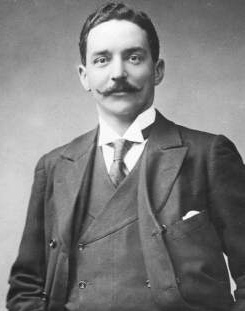
IsmayOn April 12, 1912, The RMS Titanic, then the largest passenger steamship in the world, struck on iceberg while traveling on its maiden voyage from Southampton, England to New York City. Two hours and forty minutes later, Titanic slipped beneath the waves and into history. 1,517 people lost their lives, while survivors and families struggled to make sense of the tragedy.

In the days that followed, newspapers across the world relayed stories from the disaster – stories of heroic acts of bravery and stories of incredible acts of cowardice. One of the most publicized villains was Bruce Ismay – the managing director of the White Star Line and one of the designers of the Titanic.

Ismay was onboard the Titanic, but managed to escape on a lifeboat and survived. Following the disaster, Ismay was blamed for the incident and labeled a coward. It was reported that he drove the captain to push the Titanic faster than was necessary in order to prove the power of his creation. It was said that he scrambled aboard a lifeboat ahead of women and children while other men willingly stayed behind. And Ismay was condemned for resigning shortly after the sinking, disappearing from public view so he wouldn’t have to face scrutiny for his actions.

By all accounts, Bruce Ismay epitomized the greedy, cut-throat capitalist who, in the end, turns out to be a gutless coward. But the newspapers had it wrong. You see, Bruce Ismay was none of these things. And during the official inquiries into the sinking of Titanic the real truth came out.

Letters surfaced in which Ismay advised Captain Smith to sail only as fast as prudent and safe. Other letters from Ismay discouraged altering the timelines of other voyages in order to facilitate an earlier arrival. Witnesses during the inquiry testified that Ismay spent nearly two hours assisting other passengers, namely women and children, into lifeboats before being ordered into one himself. Only then, finding no women in the vicinity to take his place, did he enter the lifeboat.

Ismay did retire following the sinking, but this move had been announced months before the voyage. Following the disaster, he petitioned the board to keep his post, but the negative publicity was too overwhelming. So Ismay took a position on the board of an insurance company whose primary clients were Titanic victims and their families. For 25 years, he relived the disaster at every meeting.

So what happened? How did the press get the facts so horribly wrong? It seems that early in his career, a newspaper writer and publisher named William Randolph Hearst approached Ismay for an interview. Being a shy, private man, Ismay refused and Hearst held a grudge. When the Titanic went down, he saw an opportunity to vent his anger. It was his papers that printed the first – and worst – stories. Other publications followed his lead and Ismay’s reputation was forever ruined despite his heroism.

I’ve heard leadership described as influence. Effective leaders understand the power their influence has over others. Used properly, a leader’s influence can solve problems, mobilize others and effect positive change. Used irresponsibly though, this same influence can be terribly destructive.

Here are three steps to properly leveraging your influence as a leader:

  1. Put your emotions aside. As a professional journalist, Hearst should have been able to put his emotions aside. He should have known that when you speak or write from a negative emotion, you usually wind up saying something out of line. Make sure your intentions are honorable before acting.
  2. Do your research. Check the facts before passing along something second-hand information. It’s extremely embarrassing to find out you’ve been party to rumor or innuendo. So focus on facts rather than assumption or hearsay. Although Hearst’s papers were the first to wrongly accuse Ismay, others quickly followed suit without checking the facts.
  3. Go overboard on apologies. When you do misspeak, quickly correct the mistake. I don’t know if Hearst ever published a retraction, but if he did it was probably very small and buried in an obscure part of the paper. I suspect even a front-page apology wouldn’t be enough to undo the damage done to Ismay’s reputation.

Credibility is easy to lose, and very hard to regain. The best leaders do their best to preserve their own credibility and protect the credibility of others.