Pull Up a Chair

tableThis is Thanksgiving week. For most of us, the holiday presents an opportunity to sit down at a table with family and enjoy a meal together. This is something that rarely happens in my house. Most meals tend to be on-the-go, a hasty interruption to our individual agendas. Days go by without the entire family even being in the same house, much less at the same table. When we are all home, meals are typically devoured in front of the television; meaningful conversation can be hard to come by.

So when we do sit down together, without interruption, and visit as a family, it’s a special occasion – and a weird one. Spending time together like this feels awkward. It’s as if we’ve forgotten how to be a family. We don’t know how to engage each other. We don’t know how to ask good questions or how to really listen to the answers. I think silently, we’ve all been most thankful when the day of thanksgiving finally comes to a close and we can turn our attention to Christmas.

And that is a sad revelation to make.

We do the same thing in the work place. We like to think of our work teams as family; I’ve heard a lot of managers use that terminology when speaking about their team culture. But rarely do we act like one. We operate as individuals. We work in siloes. We pursue our own agendas and tolerate the periodic interruptions that force our attention to the team.

What if we changed the paradigm? What if we made every day Thanksgiving? What if we shifted our normal ways of operating to include more sharing with, laughing with, and listening to the people that (should) mean the most to us? Yeah, it would feel awkward at first, but so does everything else that moves us forward.

This Thanksgiving, I’m especially thankful for my team. I’m thankful for the way they pursue their jobs and look to make things better for all of us. I’m thankful for the times we share, discuss, argue, disagree, and ultimately decide to move forward together. Each member of the team has a unique perspective that they bring to the table. But I’d never know it without sitting down at the table with them.

My challenge to you this week is three-fold:

  1. Tell the members of your team how thankful you are for them.
  2. Schedule time to get together – sit at the table – and discuss the future of the team.
  3. Repeat steps 1 and 2 as often as you can going forward.

Happy Thanksgiving!

The Benefits of Building

tools-1209764_640Last weekend I took a trip to visit family in middle Tennessee and returned with several woodworking tools that had belonged to my grandfather. I can’t tell you how honored I am to have these tools.

I was fortunate to grow up next door to my grandparents. As I exited the school bus each afternoon, I would glance toward their house to see what they were up to. Sometimes they would be working in the garden and I would run over to help them. Secretly though, I would hope to see that the doors to the wood shop were open. That meant Granddaddy was inside building something.

I loved helping out in the shop. As an adolescent, I helped out by sweeping up sawdust or organizing nuts and bolts. I built bird houses and other small projects using hand tools and off-cuts. When I got old enough, Granddaddy taught me to use the power tools.

I enjoyed holding something in my hands that I had built. More importantly, I learned to love the process of building. I created things for my family and repaired items of my own. As a young adult, I made gifts for the woman who would become my wife. I did all of this under the guidance of my grandfather and with those tools.

I received a great deal of satisfaction from the process of designing and building each piece. I felt a sense of pride as I witnessed the joy my gifts brought to others. And I cherish the memories of learning and working alongside my grandfather. Yes, these old tools mean a lot to me.

Not too many people are interested in building something these days. It takes too much work. You have to invest not just your time, but your intellect, creativity, and passion. Building is an investment of self that precious few are willing to make.

It’s much easier to take things apart. Lots of people seem to enjoy that. There’s no skill involved; no creativity. And it’s a very self-centered activity – the only ones who derive pleasure from it are those initiating it. The rest of us just get to clean up the mess and attempt to recover from the destruction.

Of course, you tend to reap what you sow. People who spend their time building attract others who want to build too. Skills are enhanced, partnerships are created , and the synergy almost always leads to something great.

Those who spend their time tearing things apart inevitably attract and teach others to do the same.

I think the world needs more builders. We need people who are not just willing, but passionate, about creating something. And, as you can probably guess, I’m not just talking about wood projects. I’m talking about teams, relationships, and cultures. I’m talking about spending your time building others up rather than tearing them down.

I like building. That’s why I built my own shop soon after moving into my first house. That’s why I taught my sons and my daughter how to design and build their own projects. And it’s why I’m excited about adding my grandfather’s tools into the mix. I anticipate some great things will be built as a result.

What about you? What can we build together?

Measure Twice, Cut Once

metro-1179249_640Growing up, I was fortunate to live next door to my maternal grandparents. As you can imagine, they were a significant influence on my life. Both of my parents worked, and I didn’t have cable TV or video games or cell phones. If I wasn’t out getting into trouble with my friends, I was at my grandparents’ house – often helping them in the garden or snapping peas on the porch.

My grandfather took up woodworking after he retired. My favorite days were when I’d exit the school bus and see the door to his workshop open. I knew that meant he was building something and I could earn some money sweeping up the sawdust he made. As we worked in the shop together, my grandad would share tips and tricks he’d learned while mastering his hobby.

One tidbit that has stuck with me through the years is this:

“Measure twice, cut once.”

You see, once you cut a board, you can’t fix a mistake. You might be able to glue a piece back on, but it won’t be the same. The grain won’t line up, the cutline will be obvious, and the whole piece will be just a little short of what it should have been. In other words, you can’t out things back the way they were. It’s better to check your measurement and make sure your marks are right before you cut. That bit of wisdom has saved me more times than I can count in my own workshop.

But even if you’re not a woodworker, I believe it stills makes sense to measure twice and cut once.

How many times have you said something that you instantly regret? How many times have you clicked Send on email only to immediately wish you hadn’t? How many times have you acted in haste and found yourself wishing you could turn back the clock?

Once the words are spoken, you can’t take them back. Once the email is sent, someone will read it. Once you act, there are unavoidable consequences.

I can’t tell you how many times I wish I’d measured twice and cut once. I’ve spent hours, even days, trying to repair damage I’ve done to relationships as a result of a hasty decision. But no matter how hard I try, the impact of my poor decisions is impossible to erase. I may have smoothed things over. I may have managed to get past the initial dustup, but the mistake is always there.

Fortunately, I’ve also saved myself on many occasions by listening to my grandfather’s advice. There have been so many interactions that could have gone badly had I not paused and thought about what I was about to say. I’ve written hundreds of emails that were deleted rather than sent simply because I thought twice about the implications of my actions.

There will always be times when you have to act quickly. There won’t always be a chance to measure twice. But those are the exception rather than the rule, aren’t they? And I’ve found that the act of pausing to think twice when I have the opportunity to helps me make better initial decisions when time becomes a significant factor.

I don’t know if my grandad knew he was feeding me life lessons as he shared his workshop wisdom. Maybe he was just reminding himself not to repeat a costly mistake. But I’m thankful for the impact his life has had on mine. And when my children join me in my workshop, I often share the lessons I’ve learned. It’s my hope that they will find value in my words as they build for the future.

What words of wisdom guide your path?

This is What Active Listening Looks Like

sculpture-1445167_640When people talk about listening skills, they typically use the phrase “active listening.” But what is active listening anyway? It makes sense that listening is different from hearing. Hearing is a passive endeavor – sound hits you and you hear it. Listening does require some effort; but isn’t it as simple as paying attention to a particular sound? Isn’t listening just the act of focusing on the person talking to you at any given moment?

Where’s the action in active listening?

According to skillsyouneed.com, the action comes in the form of feedback you’re providing to the speaker. It’s not enough that you listen, you have to be perceived to be listening. The way you respond to what’s being said lets the speaker know the extent to which you are paying attention. Your actions help reassure them that you are receptive to their message and understand what’s being said.

Much of this feedback comes in the form of nonverbal signals that you send while listening. In particular, they list the following non-verbal cues that indicate an active listening mindset:

  • Periodic smiling. Combined with small nods of the head, smiling can indicate agreement, happiness, or simply a level of understanding.
  • Eye contact. Avoiding eye contact is a signal of disinterest or even disdain for what’s being said.
  • Positive posture. Leaning forward and tilting the head communicate interest and focus.
  • Mirroring. Empathy is often displayed by unconscious mimicking of the speaker’s facial expressions.
  • Elimination of distractions. Active listeners avoid multitasking, fidgeting, or watching the clock.

As I reviewed this list I was reminded of a manager who regularly displayed poor listening skills. Whenever I visited his office (typically at his request to provide some project update), he would constantly pace the office. He shuffled papers or perused his email while I spoke. As a result, he made very little eye contact. There was no mirroring since his focus was primarily on something else, and most of the smiling was in response to his own comments.

Needless to say, I don’t feel I was really being listened to. On the contrary, I felt like I was being rushed and learned early on to keep my comments brief and positive so that I could escape the uncomfortable encounter as quickly as possible. Without saying a word, this manager let me know that I was the least valuable asset in the room.

But active listening doesn’t just involve non-verbal cues. You don’t necessarily have to remain silent. In fact, there are a few verbal cues that provide positive feedback to the speaker:

  • Remembering. Post-interaction, being able to recall the key points that were shared shows listening has been successful.
  • Questioning. Asking relevant questions to dig deeper or to uncover additional information shows a gratifying level of interest.
  • Reflection. Adding to the conversation by paraphrasing and pondering the implications of what’s being shared displays a level of personal understanding.
  • Clarification. Asking open questions make sure you receive the correct message is a sign of respect.
  • Summarization. Repeating what’s been said in your own words indicates that you’ve assimilated the message properly.

That same manager who failed to display effective non-verbal listening skills also fell short in this category. When he spoke it was to interrupt me with his opinions or to cut short my explanation in an attempt to move quickly to the next agenda item. Later on in the week, I’d typically receive an email or phone call asking for some of the same information I’d presented in person.

When you combine the right non-verbal cues with appropriate verbal signals, you put the action into active listening. Utilizing these techniques leaves little doubt that you are present, engaged, and interested in the conversation at hand. You not only put the other party at ease, you exponentially increase your own capacity to understand and recall the core message.

Effective listening doesn’t happen naturally. Listening is a skill. And as you can see, it requires muscles many of us may not be used to exercising. How would you rate your own active listening skills? Are you a champion listener, or is it time to hit the gym?

The Perils of Poor Listening

sculpture-540563_640It’s been said that listening is the most important communication skill. The ability to speak effectively and deliver a clear message is obviously important, but if no one is listening then the act is meaningless. Listening is the one aspect of communication that best demonstrates trust, understanding, and respect. The impact of poor listening skills cannot be understated.

In a survey conducted by Development Dimensions International (DDI) 35% of workers said their boss “never, or only sometimes, listens to their work-related concerns.” Obviously, this contributes to unhealthy manager/employee relationships. By not listening, the study shows that leaders withhold courtesy, honesty, and tact during interactions with their team members.

Business strategist Jocelyn Ring says the problem isn’t just with managers. Employees at all levels of the organization, and in every job role, suffer from poor listening skills. She lists the following 10 Costly Business Consequences of Not Listening:

  1. Meetings can run longer.
  2. It takes longer to communicate an idea.
  3. Next action steps are not clear; a week later you find out things were done incorrectly.
  4. It costs time.
  5. It costs money.
  6. You can lose a customer by not listening to them effectively.
  7. You spend extra time, money, and resources to win customers back.
  8. Not asking questions to clarify what was said means you miss opportunities to serve your customers and team members better.
  9. When the people on your team don’t feel understood, they are less invested in the team and its mission.
  10. People stop engaging, since what they say doesn’t matter.

I know from personal experience that each of these are indeed true. Poor listening skills have affected my own perceptions as both a customer and an employee. When representatives of an organization demonstrate an inability (or lack of desire) to listen effectively, my mood quickly shifts into annoyance or even anger. Not only does that one interaction cause me to take my business elsewhere, but the negative emotions remain for a significant period of time. I share the bad experience with others, impacting their impression of the company as well.

And think about the impact within the workplace. When managers have given me the impression that they aren’t really listening, it causes a series of negative consequences – a spiral of disengagement.

  • My trust in them is shaken. I no longer view them as an ally.
  • My self-confidence is lessened. I must not be worthy of their attention.
  • My commitment to that leader drops. I am less likely to do my best work for them.
  • My commitment to the organization drops. Why would I be loyal to an employer that doesn’t care about me?
  • My communication with peers takes a negative turn. I’ll share my experience and we’ll all commiserate about the horrible state of affairs here at work.
  • My selfish interests take precedence over helping others. If that’s the way things work around here, then I’ll just focus on taking care of #1.
  • My need for a healthy work environment fuels a desire for change. I’ll just start looking for another job.

All of these consequences are avoidable. In fact, the negatives associated with ineffective listening skills can become positives. Take a look at those same 10 consequences Ms. Ring notes. By simply becoming better listeners, we wind up with a list of 10 workplace enhancements:

  1. Meetings become shorter.
  2. It takes less time to communicate an idea.
  3. Next action steps are clear; a week later, you find everyone is on the same page.
  4. Time is saved.
  5. Money is saved.
  6. You secure a customer by making them feel valued and understood.
  7. You avoid the expense and effort to win back upset customers.
  8. Clarifying questions are asked, resulting in better service to employees and customers.
  9. Team members feel understood and invest in the team’s success.
  10. People engage, since they are heard and appreciated.

Best of all, the solution is free! All we have to do is listen effectively. There’s no expense involved, only reward. No activity carries the kind of potential that effective listening does. Invest in your team. Invest in your customers. Make the listening investment today.

Prepared to Listen

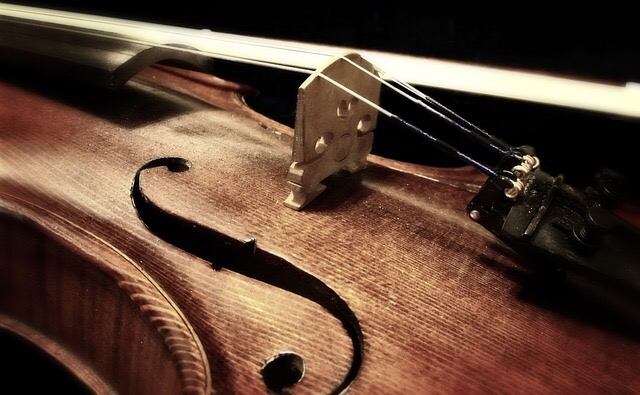
Just over 10 years ago, a young musician stepped out of a taxi cab. Making his way to the area designated for him, he opened his violin case, took out the instrument and began to play. The violin was a masterpiece, handmade by the master Antonio Stradivari in 1713. The music was some of the most beautiful ever composed; selections from Bach, Schubert, and other masters. The musician was Joshua Bell, one of the most gifted to ever play the violin. The stage was set for an incredible musical experience.

Bell played for almost 45 minutes. He threw himself into the music, his body twisting and arcing as he became one with each piece. The music swelled and, under his expert guidance, the bow danced across the strings. For those in attendance, this was one of those once-in-a-lifetime opportunities to hear something extraordinary.

Except almost no one paid any attention to the performance.

You see, Bell wasn’t playing in a concert hall. As part of an experiment conducted by the Washington Post, Bell was playing outside the entrance of L’Enfant Plaza, one of Washington DC’s Metro stations. The house was packed, but not with a crowd of classical music enthusiasts. It was early morning on a Friday, the middle of rush hour. Those who encountered Mr. Bell and his violin were on their way to work.
The experiment was an attempt to see if the average person would recognize beauty when confronted with it. A squad of reporters stood by to interview spectators after the event. Video cameras were set up to capture the scene. The question wasn’t whether or not anyone would stop to listen, but how many. The organizers anticipated traffic jams and possible violence as people crowded around to witness a true maestro in action.

But no crowd formed. For the most part, Bell’s performance was ignored. A total of 1,097 commuters passed by during the experiment. Of those, only seven stopped for any length of time to observe. His violin case, seeded with a couple of dollars from own pocket, collected just over $32 – most of it tossed in by people on the run. As the last strains of each piece faded, Bell was rewarded not with rounds of applause, but with thundering silence.

Nobody was listening.

As I read Gene Weingarten’s article about the experiment, it struck me that this wasn’t a case of beauty ignored. It’s not that the people of Washington DC have no taste in music or appreciation of a master engaged in his craft. It’s simply that they weren’t prepared to listen.

We often confuse hearing with listening. There’s no doubt the Metro riders who encountered Bell’s music heard it. The sound waves entered their ear and were transferred into signals that registered in the brain. Without expending any effort whatsoever, they became aware of the sound.

But listening is different. Listening is not a passive endeavor. It requires intent. Listening is an activity that involves not just the ears, but the focused attention of the brain and event he heart. Listening affects the emotions. It is an interactive experience that leaves an impact on those involved.

How many times do our ears hear, yet we fail to comprehend what’s happening? Is it because we can’t appreciate what’s going on? No, we’re just not prepared – mentally, physically, and emotionally – to listen. Our focus is elsewhere. It doesn’t matter if Joshua Bell is playing violin, or my wife is talking about her day; unless I am prepared to listen, the ability to experience the moment will escape me.

That’s why I have to turn off the TV. I have to put down my phone. I have to remove any distractions and orient myself physically toward the person I want to listen to. If the timing’s just not right, I need to reschedule the appointment. If my mind is preoccupied with deadlines or competing priorities, I need to clear away room to allow listening to take place.

Joshua Bell’s audience that January morning in 2007 weren’t ignorant. They were just preoccupied. They weren’t prepared to accept the gift he was offering them. They were so focused on other things, some couldn’t recall a musician playing at all when interviewed just a few hours later. Most of the money collected was offered as a matter of routine, with little regard given to the recipient.

A few passersby were prepared though. One was a man who had studied violin as a youth. At one time, he had intended to play professionally. He didn’t know Bell, but his mind had been prepared to listen for the sounds he heard that morning. He found a seat, listened, and marveled at the crowd walking by unaware.

Another observer had seen Bell perform just days earlier. That performance was fresh on her mind, unconsciously preparing her for the unexpected treat. She arrived on the scene late, but stood transfixed until the end with a huge grin on her face.

There was one group of people who seemed to understand what was going on. A review of the video shows that every single child who walked past Bell as he played tried to stop and watch. Unencumbered by someplace to be or tasks to accomplish, their minds were open to receive the experience. In each case, the parent holding their hand pulled them away toward the object of their attention.

How often do we fail to prepare ourselves for listening? How many times do we settle for just hearing? What wonders lie right in front of us, yet just beyond our grasp; waiting for us to stop and listen?

Can You Hear Me, or Aren’t You Listening?

listeningThe human body truly is amazing. Take your ears, for example. So many of us take them for granted. Yet these odd looking appendages allow us to enjoy music, recognize friend from foe, and engage in meaningful communication. In fact, we rely on verbal communication to such an extent that references to ears and hearing are everywhere.

“Do you hear what I hear?”

“Friends, Romans, countrymen, lend me your ears.”

“Can you hear me now?”

Here are a few facts about our ears that you may find interesting:

  • The outer ear, the part hanging on the side of your head, is designed in a way that funnels the variety of sound waves around us and channels them to the middle ear.
  • Incoming sound moves from the outer ear to the eardrum, causing it to vibrate. These vibrations are picked up by three bones that amplify the sound.
  • These three bones (the malleus, the incus, and the stapes) make up the middle ear and are the smallest in the human body. All three could fit on the face of a penny.
  • After leaving the middle ear, sound waves are picked up by tiny hairs in the liquid medium of our inner ear. These hairs release chemicals that send signals to the brain which interprets the sound.
  • Humans are capable of detecting sounds as low as 20 Hz and as high as 20,000 Hz.
  • We need both ears to help determine the direction from which sounds originate. Using both ears also makes it easier to pick out someone’s speech in noisy environments.
  • The human ear continues to function even while we are asleep. The brain simply blocks out most of the input.

As incredible as our ears are, we don’t do a very good of using them. As far back as 1957, researchers have been studying the difference between hearing and listening. That’s when Ralph G. Nichols and Leonard A. Stevens from the University of Minnesota conducted tests to find the connection between hearing information and retaining it.

They tested several thousand people by having them listen to a short talk and then testing them on the content. Their tests revealed that “immediately after the average person has listened to someone talk, he remembers only about half of what he has heard – no matter how carefully he thought he was listening.” Within two months, the average participant in their study could only recall about 25% of what had been said during the short talk they had listened to.

You would expect that, over time, we’d retain less and less of the material we’d been exposed to, but the University of Minnesota study found otherwise. After one year, Nichols and Stevens reported that we tend to forget more during the first, shortest interval than we do over the next six months or more. The most significant retention loss occurs within the first eight hours.

Their conclusion was rather blunt: people simply do not know how to listen.

Hearing and listening are two very different activities. Hearing is a passive activity. It happens without me doing anything. Without any effort on my part, sound waves are entering my outer ear, hitting my eardrum and vibrating the bones of my middle ear, and then creating chemical secretions in the hair of my inner ear which then travel to my brain. This complex process is effortless.

Listening, however, is not a passive activity. Listening is intentional. It requires me to concentrate on specific sounds in order to analyze them. Listening involves more than just the ears. The brain must be engaged in order to create context, meaning, and application. This complex process is anything but effortless.

But remember, Nichols and Stevens found that the no matter how hard participants in their study worked at listening, the results were still the same. Listening “harder” did not help anyone retain more information or hold onto it for a longer period of time. The problem, they said, is that our brains are just too powerful.

Most Americans speak at a rate of around 125 words per minute. Our brains, on the other hand, process information significantly faster. We still know all there is to know about the brain, but suffice it say 125 words a minute barely registers. Our minds simply have a lot of extra time to ponder other things even while listening intently to someone else.

I myself am often distracted while trying to listen to other people. For instance, during a walk around my neighborhood, I like to download a podcast or two in order to help pass the time. I hit the play button and focus my mind on the speaker’s content, intent on learning something new and interesting. But within seconds, my mind has drifted. Something that’s said sends causes my thoughts to wander. Sometimes I start thinking about how I can apply one of principles they’ve shared. Other times, a word or phrase jogs my memory about an unrelated topic and my mind is off to the races – moving in a different direction even as the speaker shares valuable and intriguing information. I’m hearing, but I’m not listening.

They key to improved listening has nothing to do with our ears. Obviously, the answer doesn’t lie in slowing our brains down either. We’ve got to arm ourselves with tools that help focus our minds in a way that listening is improved. We have to discover methods of actively participating with the information being received so that it makes a bigger impact.

That’s why the term “active listening” is so appropriate. Listening is not a passive activity. It requires action on our part in order to work. The next time you find your mind drifting during a conversation, don’t just sit there. Take action!

What Goes Around Comes Around: Why You Should Give First

adventure-1807524_640In December of 1974, Phillip Kunz and his wife sat down to write their annual Christmas cards. To some people, they wrote short notes. Other cards included a family photograph. Each envelope included their return address in the upper left hand corner. The Kuntz’s mailed hundreds of Christmas cards that year – most of them to complete strangers.

At the time, Kunz was employed as a sociologist with Brigham Young University. The 600 cards he mailed to people he had never met were part of an experiment. Their names were pulled at random from the phone books of nearby towns. “It was just, you know, a shot in the dark,” he said. He simply wanted to know what would happen.

A few days later, Kunz got his answer. A Christmas card from one of the random strangers appeared in his mailbox. Then another showed up, and another. Soon he was receiving around a dozen cards each day. Some people sent photos of their own, while others took the time to write expressions of friendship. A few included letters; page after page of updates on families he didn’t even know.

What Kunz had experienced was a phenomena called the Law of Reciprocity. It’s one of the unwritten rules that govern human interactions. This law says that we are obligated to repay a kindness that someone else shows to us. And this rule is universal – there’s not a culture on the planet that doesn’t subscribe to it.

From an early age, we are all trained to reciprocate when someone does something nice for us. When someone greets us in the hallway, we’re taught to say hello in return. If a door is held open for us, we seek to hold the next one open in return. It’s so ingrained in us, that we usually don’t even think about it. We just react.

Psychologist Robert Cialdini has done extensive research into the power of subtle triggers like this. He’s found that the law of reciprocation extends beyond our social interactions into business ones as well. For instance, he found that restaurant servers who provide a mint along with the check receive tips that are about 3% higher than those who just deliver the check. What he found particularly interesting was that a second mint, presented personally while looking the customer in the eye, sent tips “through the roof.” Those servers received 20% more in tips than their counterparts.

Cialdini’s research illuminates an interesting aspect of this law. Not only are we driven to repay a kindness that’s been extended to us, but our repayment tends to be exponentially higher than that which we received. Think about it, does a dinner mint really warrant a tip 20% larger than normal? Apparently, it does.

As a kid, I was told “It’s better to give than receive.” My parents said it, my grandparents did too. I heard it in Sunday school and from most of the people I trusted.

I didn’t understand that until I got older and found myself in a position to help out friends, family, and kids of my own. But it feels good to give. Various scientific studies have even confirmed the existence of the “helper’s high.” When we extend a kindness to someone else, our brains light up in the same regions that are activated when we receive a gift ourselves. And the effect is actually more intense than what we experience as a recipient.

Naturally, there’s a catch. In order for the law of reciprocity to kick in, the initial gift has to be perceived as genuine. The second we realize that the extra mint isn’t a sincere act on the part of our server, but rather a ploy to encourage larger tips, all bets are off. The gift actually works against you at this point. I’m likely to leave smaller tip (a lot smaller) than normal if I perceive the server is attempting to manipulate me.

But there’s more…

There’s another phenomenon at play here called the Halo Effect. When we take the initiative to offer a kind gesture, it naturally makes the recipient feel good. They not only appreciate the gift, but their view of the giver in that moment is extremely positive. The Halo Effect means that the positive impression we’ve made carries over to other actions we take. The initial act of kindness makes everything else we do appear that much more significant.

Let’s recap for a second:

  • Receiving a gift feels good.
  • Sincere giving feels better than receiving.
  • Receiving creates positive general feelings about the giver.
  • Receiving creates a sense of obligation to repay the giver.
  • The reciprocal benefit is likely to be of much greater value than what we gave.

What goes around, comes around – big time. Can you imagine the impact on our business if we’d all focus less on what we had to gain from a prospect or a customer, and put our focus on what have to offer them? I’m not talking about giving away the store here. Small acts of sincere kindness result in huge returns.

Why isn’t this our business model? Why aren’t we all giving more?

To Prepare for Your Next Meeting, Just Ask Questions

questions-2110967_640I’m constantly amazed at how ill-prepared people are for meetings. It doesn’t matter what the meeting is about, who’s in attendance, or what their particular role is – someone always shows up having not done their homework. In my opinion, a lack of preparation indicates a level of disrespect for the organization, the task at hand, and other peoples’ time. It also makes you look foolish.

There may indeed be instances when preparation is difficult. Last minute additions to the agenda, for instance, can put you at a disadvantage. Unclear expectations can lead you to focus on the wrong kind of preparation. Sometimes, you just have a hard time getting your hands on the necessary information. But, far too often, a lack of preparation isn’t due to any of these; it’s simply something people neglect to do. We assume we can walk into a meeting and wing it. Sometimes it works out. Many times, it doesn’t.

To avoid the issues of embarrassment, wasted time, and meaningless discussions, meeting organizers would do well to structure their gatherings appropriately. This includes having the right kind of meeting, as well as incorporating the right elements throughout. But to foster effective communication, everyone should engage in at least a modest level of preparation for each meeting topic. All you have to do is focus on the basics. Just ask, and answer, a series of questions.

Questions are the primary tool of an effective leader. By simply asking questions, we open up discussion, inspire new ways of thinking, and invite change. It’s not those who provide answers who create engagement, but those who ask questions. And there’s no better place to ask questions than during your team meetings. Here are a few you might consider.

WHO: Who are the key players in this task or project? Who are influencers? Who are detractors? Who has a particular role to play or information to provide?

WHAT: What is going on? What are the significant events that brought us to this discussion? What needs to change? What steps need to be taken going forward?

WHEN: When did significant events take place? When do we have to make a decision? When can we expect members to complete their assigned tasks?

WHERE: Where can information be found? Where should our focus be? Where do our significant opportunities and challenges lie?

WHY: Why is this topic important? Why is action warranted? Why should we care? Why is the right person to handle it?

HOW: How should we approach this? How can we make this continues or ceases to take place? How can we ensure compliance or action? How can we take advantage of the situation we’re in?

The next time you facilitate a meeting, try asking more than you tell. Before you attend your next meeting as a participant, prepare by reviewing the available materials and asking some questions. Jot them down…and ask them.

How well is questioning used in your team meetings? Do you have some go-to questions that help stimulate discussion and discovery? How else do you prepare for an effective meeting? I invite you to share your experience.


JOIN THE CONVERSATION:

Have an opinion on this post? Share your thoughts on our facebook page.

Four Meetings You Should Be Having Now

workplace-1245776_640Just as there are plenty of meetings that don’t need to take place, there are times when it’s vitally important to bring the team together. Certain things need to be handled in a group setting, not via email or a series of one-on-one conversations. For these, you need to hold a meeting.

You may need to hold an information-sharing meeting. In this case, you have something that needs to be communicated in a way that ensures everyone gets the same message. Emails can be interpreted in a variety of ways. There’s no way to gauge the intensity of emotion while merely reading an email. Individual conversations can easily veer off into the weeds. Discussion of unrelated topics could alter or cloud the information being discussed.

By disseminating information during a meeting, you can ensure everyone hears the same message. You only need one conversation and can easily check for understanding by asking questions as well as gauging body language and facial expressions. Attendees have the opportunity to ask clarifying questions and the entire group benefits from hearing the answers.

You may need to hold a decision-making meeting. Here, there’s a problem to solve and you are looking to gather input. Those in attendance have a stake in the outcome of this decision and should therefore be willing to help make sure all necessary information is provided so that the best possible move can be settled on. The interaction of the group is important. Stakeholders will have differing opinions and the interplay of various viewpoints allows everyone to understand the bigger picture.

Decisions could be made by the group, via a vote or compromise, or by the leader after considering all potential inputs. Attendees should understand the role they are to play and the timeline of the decision being made so that critical information is not withheld or delayed. By including everyone in the meeting, no feels left out and all should agree to support the decision once made.

You may need to hold a brainstorming meeting. These meetings are designed to generate ideas and bring out the creativity in people. A meeting such as this could be held as a precursor to making a decision or to help specify details related to decisions already made. Allowing people to innovate in a group setting helps solidify team bonds, boost engagement, and ramp up energy levels.

Brainstorming can be difficult to facilitate, especially if participants have no foreknowledge of the task. Be sure to prepare people ahead of time by providing as much information as possible and allowing time for individuals to research and develop ideas on their own. Once the group is together, this will provide a head start to idea generation and fertile ground for group interaction.

You may need to hold a skill-development meeting. Team meetings are a great opportunity for coaching. Participants can improve their skill set either by taking an active role in skill practice or by observing and providing feedback. Learning from the example of peers is a great way to speed up skill development, especially when the trial-and-error aspect of practice is shared.

Facilitating skill-development meetings can be tricky and requires adequate preparation on the part of the meeting facilitator. Make sure to plan enough time for everyone to participate. Ensure any job aids or necessary materials are on hand. And be ready to demonstrate the skill yourself in order to provide attendees with an example to work from.

There are definitely times when a meeting is not the right solution; but there are plenty of times when a meeting is just what the team needs. Use meetings effectively so that your team responds enthusiastically, contributing more than just their presence. Do you have regularly-scheduled team meetings? What aspects could be improved?


JOIN THE CONVERSATION:

Have an opinion on this post? Share your thoughts on our facebook page.