

What’s Your Plan? (Part 2)

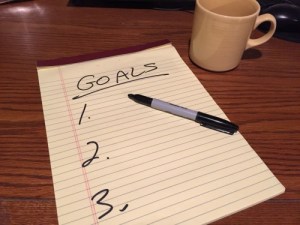
They say that the first step to success is having clearly defined goals. They should be written down and reviewed regularly. In fact, many experts speak to studies that show individuals who take the time to articulate their goals in writing have a much higher likelihood of actually achieving them.

If goals are the first step toward success, I believe having a strategy is definitely the second. A goal without a plan is just a dream. And like your goals, your strategic plan should be as clearly defined as possible. It should be written down and referred to on a regular basis.

Last week I promised to walk through the steps to creating a basic strategic plan. If you’ll follow this outline, you should wind up with a roadmap for achieving the goals that have been set out for your team. That’s what a well-written plan does. It not only points you in the right direction, but spells out the steps required to arrive at the desired destination.

There are five steps to developing your strategic plan.

1. DEFINE. Start by defining your goals as narrowly as possible. Perhaps your goal is to grow sales by 5% over the next year. Well, 5% of what, exactly? What specific products do you need to focus on? What group of customers or prospects? What are the interim goals you need to achieve so that a 5% growth becomes possible? What are the deadlines involved?

By defining the goal as much as possible, you start to break the journey down into more manageable pieces. When staring at a forest, it can be difficult to determine which tree you should cut down first. The more you define the expectations in front of you, the more you start to focus in on specific solutions

2. DESIGN. Having identified, as specifically as possible, what it is you are after, the second step is to create a rough outline of your action plan. Pull the team together and brainstorm activities that will help you achieve each goal. This process involves the entire team. Anyone involved in executing the plan ought to be part of developing it.

When brainstorming, remember that the goal of the exercise is to come up with as many ideas as possible. In order to achieve this, you must create an environment conducive to sharing ideas. Make sure the team understands the rules of brainstorming:
* No negativity. We don’t judge the ideas presented by others.

* Limit distractions. Try to eliminate outside influences that will interfere with the team’s ability to focus on the exercise.

* Crazy ideas are ok. Some ideas might be laughable, but they are still valuable as conduits to other lines of thinking.

* Keep moving. Don’t dig too deep into any the specifics of any one idea. The goal of brainstorming is volume. Talking through any one idea at length will bring the flow of ideas to a halt.

* Start individually. Have team members walk into the meeting having already written down a few ideas of their own. This will help jump start the process.


3. REFINE.
Now that you have a list of potential strategies, it’s time to start trimming it down and refining the best ones. Settle on the best ideas and then start tightening each one up by asking a series of questions.

What does that look like? What will we get? What would this strategy to fail? Keep asking questions until you have a plan of action that can’t be refined any further.

4. ALIGN. Determine what resources you need in order to execute your plan. Are there people outside the team you need to bring in? Are there marketing resources you need to create? Are there budget or approval hurdles that need to be cleared? Make sure you have all the necessary pieces aligned to help ensure your team’s success.

5. ASSIGN. The final step in developing your strategic plan is to assign responsibility for each bit. Determine who has ownership of each step and verify understanding of expectations. Don’t walk away from a great strategic plan without addressing this part.

Now that you have a plan, it may feel like the work is done, but it’s just beginning. The plan is meaningless without action. Next week, we’ll take a look at some tips for implementing your strategic plan.

What’s Your Plan?

We really are creatures of habit, aren’t we?

We humans have become extremely proficient at developing routines. We find comfort in the expected, so much so that we rely on it. We become dependent on it. Our expectations start to revolve around systematic events over which we have no control. We fall into a rut and set ourselves up for disaster.

Because, what happens when the routine breaks down? What happens when that email we’ve come to expect every Monday morning doesn’t arrive on time? How do we respond when the friend or coworker that’s been so reliable suddenly isn’t there for us anymore? What are we to do when the customer we were counting on to make our monthly numbers takes their business elsewhere?

I don’t mind a good surprise now and then, but there are some things I like to have control over. When it comes to running (and growing) my business, I don’t want to be so dependent on things outside of my control that a surprise break in the routine can cause chaos. That’s where a good strategic plan comes in.

I’ve said before that “hope is not a strategy.” However, that’s exactly how many leaders run their business. They sit back and hope enough new business will walk through the door to make their numbers. Others rely on assumptions. They assume the same customers will always come through. They assume market conditions will remain favorable. Things have always worked out in the past, so they just assume things always will.

Hope and assumptions are not sound business strategies. Having a plan is. A strategic plan outlines the results you want and the steps you and your team must take in order to achieve those results. There is no hope or assumption involved. There is action – specific, measurable action that, when executed properly, virtually guarantees your success.

A lot of leaders will say they have a strategic plan in place. Few actually do. Oh, some may have a few ideas written down on a piece of paper somewhere – typically because they’ve been forced to by someone up the food chain; but I rarely meet teams who have proper strategic plan.

A simple strategic plan includes three components.

1. Goals. What is it the team is trying to achieve?

2. Actions. What has to happen in order for the goal to be achieved?

3. Accountabilities. Who is responsible for executing the identified actions?

Over the next couple of weeks, I’m going to walk through the process of putting together a strategic plan. I’ll give you some tips for writing your first plan, or for plugging some holes that might exist in an existing one. You can follow along and have a basic strategic plan for the rest of the year completed by the end of August.

It’s not too late to take control of your year. It’s not too late to break away from the routines that might be holding you back. Now is the time to stop hoping, stop assuming, and lead your team across the finish line in championship fashion.

Now is the time to make success a habit.

How to Determine Your Focus

lens-1209823_640Four weeks. That’s all we have left. Pretty soon, 2016 will be in the history books. Is it just me, or does it seem like we were just here – staring at the end of 2015? My, how time flies.

The month of December always presents a quandary for me. Where do I put my focus? Do I double down and work hard to finish the year strong? You know, it makes sense to use the final weeks to close in on the year’s goals, finish up loose ends, or put the finishing touches on that last project. Or do I turn my sights to next year? After all, a little planning now will help me hit the ground running come January.

The answer, invariably, is both. You absolutely can’t step off of the gas now. While others are coasting through the holidays, you could be making the most of the time that’s left to focus the team and crush this last month of the year. And while you are taking care of business like the absolute boss that you are, let your mind ruminate just a bit on how to carry the right kind of momentum forward.

That’s a tall order, I know. You’d much prefer to let dreams of sugarplum fairies occupy your mind for the foreseeable future. But you’re a winner, aren’t you. You’re not going to let this opportunity slip away. To help you out, I want to provide a handful of questions you can ponder. Answering these should point you toward the focus for the next month, and clarify some goals for the next year.

  • What do I want to accomplish? That’s easy enough to answer, right? But think deeply on this one. What does victory this month look like? What does a great 2017 look like? When the final whistle blows, what specific actions will have defined success?

Research has shown that visualization has a tremendously positive impact on performance. When you paint a picture in your mind of success – in as much detail as possible – you unconsciously activate the mental and emotional triggers for victory. Just by imagining specific images of success, you prepare yourself to win. And it works with teams too.

  • What has worked in the past? What hasn’t? You’ve probably been asked these questions before. You may even have asked them yourself. But here’s the thing – most people ignore the answers. That means that, despite having identified specific steps that worked out for them in the past, people choose not to repeat them. And, having identified specific things that led to failure in the past, people choose to travel the same exact path again.

Isn’t that the definition of insanity? If something works, do it again! In fact, ramp up your efforts. Pour more time and resources into the actions that have proven successful for you. If something doesn’t work, stop doing it! Don’t keep slogging on because it’s comfortable or popular. Figure out what works and do that – only that.

  • Who will do what by when? Ultimately, it all comes down to this question. Goals aren’t achieved without action, and the key to action is specificity. So, who is going to act? What are they going to do? When will it be done?

So many great accomplishments wither and die having never left the planning stage. When opportunity knocks, you have to answer. While people wait for the right market conditions, or the work load to let up, opportunity stops knocking and walks away. And that feeling you get – you know, the one that says “maybe I should be doing something” – that’s opportunity’s knock.

Four weeks. That’s all we have left. How will you use them?


JOIN THE CONVERSATION:

Have an opinion on this post? Share your thoughts on our facebook page.

Taking Stock

chess-1464959_640My oldest son started back to school this morning. It will be his last semester of Nursing School and he’ll be an RN (hopefully) in December. My other two kids will be heading back to high school in a couple of weeks. Like a lot of families, our conversations this weekend periodically morphed into discussion of the various challenges and expectations the new school year will hold. We talked about strengths and weaknesses and bounced around strategies to try and get the most out of the fall semester.

 The transition from one season to another is also a good time to take stock of where your team stands, both individually and collectively. As everyone gears up to take on the stretch into winter, it can be beneficial to circle the troops for a discussion of team dynamics, market conditions, and customer expectations. One tool that’s proven helpful in this regard is the SWOT analysis. Using this framework, teams and individuals can develop a better understanding of the internal and external landscape they will navigate over the coming months. Here are some questions this exercise can help you answer.

[Tweet “I’ve often found that answers are just waiting for the right question to be asked.”]

FOR TEAMS:
S – Strengths.
What’s going right? Where does the team excel? What particular talents and abilities do individuals possess that make them an asset to the organization? What are the significant client relationships and areas of differentiation that make your team stand out?

W – Weaknesses. What aspects of your business model put you at a disadvantage? What cultural limitations present hurdles for you? What talents need to be shored up, and where do internal roadblocks impede the team’s ability to excel?

O – Opportunities. What external factors, such as economic conditions or market changes, stand to provide you with an unexpected leg up? What shifts in the competitive landscape will provide you with an open door? What relationships with customers and/or prospects are evolving in ways that could provide windows into new business?

T – Threats. What factors beyond your control stand in your way of success? Are there regulatory issues looming on the horizon? How will the political climate over the next several months impact your business model? How might your growth strategy (you do have one, don’t you?) be thwarted by issues you have no ability to influence?


FOR INDIVIDUALS:
S – Strengths. What are you naturally good at? What skills have you developed recently? How strong is your personal network? What positives do others see in you?

W – Weakness. What bad habits hold you back? What training or education do you need to pursue? Have constructive criticism have you received that needs to be heeded? What do others see as your primary flaws?

O – Opportunities. Where can your particular talents be of the most use? What gaps exist in the team or organization that you could help fill? What changes are coming down the road that you need to be prepared to advantage of?

T – Threats. What stands in the way of your growth? What’s keeping you from contributing at the highest possible level? What might be lurking around the corner that could derail your career plans?


Effective communication – with the team or with yourself – is about finding answers. I’ve often found that answers are just waiting for the right question to be asked. A SWOT analysis is simply a catalyst for asking those questions. By understanding your strengths, weaknesses, opportunities, and challenges, you can prepare to make the most of the days ahead.


JOIN THE CONVERSATION:

Have an opinion on this post? Share your thoughts on our facebook page.

How to Dig Yourself Out of a Hole

cave-555727_640According to a study released last summer, eight percent of patients treated in an emergency room wind up back in the ER within three days. Within 30 days of an ER visit, a full 20% of patients will have returned. To make matters worse, nearly 30% of those revisits resulted in the patient being admitted to the hospital. Their condition had gotten worse.

Researchers, who studied 53 million emergency room cases over a four-year period, say the most common reason for a second trip is a lack of follow-up. In some cases, patients dropped the ball with regard to their at-home care. In others, ER physicians failed to communicate properly – some primary care doctors were never notified that their patients had made an emergency visit. In others, important data, such as lab results and x-rays – information that could materially impact a patient’s treatment plan – was lost.

If there’s ever a need for a solid follow-up plan, it’s in the days following an emergency. While follow-up is obviously a critical component of on-going health-care, you’d think that following an episode involving a trip to the ER, attention to detail would spike. When things look most dire, everyone involved needs to be on high-alert.

The same can be said for the health of your business. Follow-up should be consistent and effective, especially when the team is facing an emergency situation. Sales are down, customers are irate, employees are disengaged, expenses are out of control; all should raise an alarm and command focus. Too often though, managers respond to a crisis by drafting a plan that’s quickly ignored. It’s as if simply identifying and communicating a course of action will solve the problem. But without action, plans are worthless. And without proper follow-up, action is temporary.[Tweet “Without action, plans are worthless. Without follow-up, action is temporary.”]

When you find your team in crisis mode, don’t let a lack of follow-up sabotage your recovery. Use these steps to keep everyone focused and in the game until the emergency is over.

COMMUNICATE

  • Make sure the whole team understands what is going on, why the situation is critical, and what the recovery plan is.
  • Don’t count on a single email to get your message across. Visit with each individual on the team to ensure they understand their role, especially if it differs from the norm during the recovery period.
  • Continue to share information about team and individual performance, using metrics specific to the task at hand.

ACT

  • Take obvious and deliberate steps yourself – as the leader – the show your commitment to the cause. Be an example the team cannot miss.
  • Eliminate extraneous tasks where necessary. Postpone or reprioritize to ensure focus is on the goal of recovery.
  • Hold people accountable for their specific part of the plan. Recognize effort and provide extra support where needed.

LEARN

  • Once the crisis has passed, gather the team for a discussion of the situation. Make sure everyone has an opportunity to share their perspective.
  • Identify triggers or early warning signs that were missed. Tweak your standard operating plan to incorporate early adjustments based on these signals to avoid a crisis recurrence.
  • Make note of particular skills your team needs to shore up with additional training and coaching.

Emergency situations are never fun, but they can be valuable experiences. Handled properly, a crisis can bring people together and better prepare the business for the days ahead. As the leader, make sure you follow-up appropriately to ensure a solid recovery and a stronger team.


JOIN THE CONVERSATION:

Have an opinion on this post? Share your thoughts on our facebook page.

How To Recover From a Setback

captain-america-861757_640Whenever superheroes and supervillains clash, there will inevitably be a high degree of collateral damage. Vehicles, buildings, even entire cities are destroyed when good and evil collide. But after the battle is over, who picks up the pieces? Who cleans up the rubble, replaces lost inventory, and compensates the victims after the dust has settled?

According to Marvel Comics, that would be Damage Control. Housed out of New York City’s Flatiron building, Damage Control was initially funded by a couple of billionaires before going public. This pseudo construction company exists to quickly get things back to normal (or as close to it as possible) following the epic showdowns that happen with regularity in a world inhabited by super-humans. Since its introduction in 1989, Damage Control has quietly come to the rescue in a number of movies, comics, and television series.

If only real-world businesses had Damage Control as back-up.

Who cleans up the mess when things go bad for your business? When good intentions have unintended consequences, who bails you out? When your best laid plans don’t pan out and you find yourself behind the growth curve, who rights the ship and gets it back on course?

As leaders, we can’t be content with developing an initial strategy and pressing the start button. Once the ship has set sail, we’re on it too. The captain has to be ready to step in when things go south in order to overcome setbacks. It’s up to us to provide the damage control. That’s because leaders – good leaders – are there for the good as well as the bad. Leaders are always leading.[Tweet “Leaders are there for the good as well as the bad. Leaders are always leading.”]

Consider the following steps to help your team get back on track following a setback.

  1. Keep your eye on the horizon. Last week I wrote about anticipating setbacks. Good leaders keep their eyes trained forward so they can see both opportunities and problems before it’s too late to act on them. When your focus shifts elsewhere for too long, say to celebrate past accomplishments or worry about some minute detail, issues can creep up on you. Pay attention to trends so you can anticipate what lies ahead.
  2. Act quickly to adjust course. Once an issue has been identified, you have to move swiftly in order to mitigate the damage. Some managers take their time analyzing the data before choosing a course of action. Some decide to wait, ignoring the problem in the hopes it will go away on its own. Neither is a good response. Waiting only allows the problem to grow and delays your ability to regain forward momentum. Develop a strategy and act on it.
  3. Use the experience to get better. Is there a way to prevent the same issue from popping up next year? Are there steps that could be taken sooner to speed up the recovery process in the future? Are there tweaks to the existing plan that need to be made that will help the business grow more efficiently? Once the problem is addressed, take a little time to incorporate what you’ve learned from the experience. That way the business will be stronger for having encountered this rough patch.

Hopefully you’ll never have to clean up after a super throw-down disrupts your business plan. Odds are, though, not everything will always go as planned. Instead of calling for Damage Control, commit to your own damage control strategy. That’s one way to make sure you and your team are the real heroes.


JOIN THE CONVERSATION:

Have an opinion on this post? Share your thoughts on our facebook page.

Anticipation vs. Expectation

psychics-1026092_640It was mid-October when I received the call. On the other end of the line was a manager whose tone told me he was not happy. “Something is wrong with my scorecard,” he said. “You need to get it fixed right away.”
Like many organizations, our company utilized a monthly performance scorecard to track a variety of sales and service metrics at a variety of levels. My team assisted managers with developing strategies for growing their business. We provided training, created job aids, and reported on the progress made toward goals. The scorecard document was our baby.

I opened the file in question and listened as the irate manager pointed out the cause of his frustration. All year long, his scorecard had reflected stellar performance. Sure, they were down a little month over month, but still well above goal. Things had been going so well that he’d stopped worrying about even looking at the report. Why waste the time when you’re ahead? But that morning, a member of his staff had taken a look at the document and noticed that the team’s performance had suddenly dropped. In fact, they were suddenly below goal and in danger of missing out on year-end performance bonuses. Since every month up to this point had been above goal, something had to be wrong with the report.

As you can see from this sample graph, the team in question had indeed been above goal for each month through August. What they didn’t account for, however, was the downward trend in performance. Focused exclusively on the current month’s production, they’d failed to anticipate the disaster looming in the fall. This was no reporting error, it was an error in judgment.

Top performers aren’t content with being ahead of goal. They are fueled by a need to stay there. This drives them to look ahead. They scan the horizon for future opportunities and potential setbacks. They definitely celebrate specific achievements, but they know they can’t assume today’s win guarantees tomorrow’s victory. Had this manager been paying attention, he would have noticed the slow decline in sales volume and been able to anticipate the eventual drop below goal. More importantly, he would have been able to do something about it.

Anticipating setbacks isn’t the same as expecting them. Victors anticipate bums in the road and create a plan to overcome them. Victims expect obstacles and adopt them as excuses. The difference is a simple matter of perspective and mindset.[Tweet “Anticipating setbacks isn’t the same as expecting them.”]

Once this manager understood what was happening with his scorecard, we turned our energy toward developing a plan to overcome the setback. We identified some underlying causes for the decline in sales and wrote up a strategy for his team to implement over the remaining two and a half months. Armed with the right information, and a game plan, he was ready to execute.

So, how does your performance look at this point in the year? We’re half-way through 2016 – are you on track, or do you need to play catch-up?

Don’t let the dog days of summer find you napping. Even if last month’s numbers were stellar, take a look ahead. See if there’s something lying just around the corner that maybe you haven’t been anticipating. Take advantage of this opportunity to shore up your plans for the next six months, and commit to finishing strong. Anticipate the worst, expect the best.


JOIN THE CONVERSATION:

Have an opinion on this post? Share your thoughts on our facebook page.

Five Steps to Take Your Resolutions from Dream to Reality

goal-list-e1452481764282Last Sunday, Facebook CEO Mark Zuckerberg announced his 2016 personal challenge. He plans to build an artificial intelligence system to run his house. In past years, he’s challenged himself to learn Mandarin, read a new book every two weeks, and to meet a new person face-to-face, every day.

While most of us don’t have the resources available to set a goal as aggressive as building a robot butler, it does make sense to set some type of personal goals for improvement. Whether you call them New Year’s resolutions or personal challenges is irrelevant. What matters is that you identify a goal to improve yourself and set out to accomplish it.

Of course, setting a goal isn’t all that difficult. You just pick some aspect of your life that you want to be better and decide to work on it. The hard part comes when the rubber meets the road – that is, when you actually have to make some kind of change in order to achieve your goal. You can’t just set a goal. You have to create a plan for success.

Last week, I presented seven different areas of your life that Career Coach Dan Miller suggests setting goals for. I also promised to share with you my personal goals/resolutions and some of my plans to achieve them. After considering all the categories and paring the list down, here’s what I came up with:

  • Get in better shape physically.
  • Spend more time on spiritual and mental growth.
  • Get more organized and manage my time better.

Now these statements probably look a lot like the resolutions most people make every year. That’s understandable. The problem is that resolutions like these just don’t work. Did you know that 25% of resolutions are abandoned after just one week? By July 1st, six months into the year, 60% of the people who made resolutions will have quit. That’s because making a resolution isn’t good enough. You have to have a plan to accomplish the goal. A New Year’s resolution without a plan is just a wish. It’s a pipe-dream. But a resolution with a well-thought out plan of action becomes a mission.

Here are five things I’ve done to give my resolutions a more-than-fair shot at actually becoming reality.

I wrote my goals down. On reason most resolutions fail is that they never make it past the stage of conception. Simply voicing a desire to improve does little to change your mindset. But there’s magic in writing down your goals. Seeing your goals in writing gives them weight. It makes them real.

I actually wrote down several versions of my 2016. What you see above is just the initial, vague concept behind those I settled on. Keep reading to see how I refined my thoughts into concrete strategies.

I thought small. Another reason resolutions fail is because people bite off more than they can chew. They set too many goals. They shoot for too much improvement too quickly. As a result, they reach too far, wind up falling short, and give up. The secret to making change stick is actually small moves. Small moves are easier to accomplish, allowing you to complete more of them and giving you the confidence to attempt something just a bit harder.

Knowing how full my plate is, and how difficult it is for me to stick to any particular routine, I first decided to whittle my list of resolutions to three. Furthermore, I chose to approach each goal using small, easy-to-accomplish steps. For instance, I know (from experience) that a gym membership is a waste of time for me. I simply don’t have the discipline or time to travel in order to work out. So I decided to focus on bodyweight exercises that I can complete at home in just a few minutes a day.

I got very specific. In order for a goal to be actionable, it has to be specific. The best way to ensure a goal is a good one, is to use the SMART Goal filter. SMART Goals are specific, measureable, attainable, time-based, and realistic. If your goal can pass this simple test, you now have a strategy. Rewrite your goals, getting more and more specific, until you can pass each of the five parts to the SMART Goal filter.

There are two parts to my fitness goal. Part one involves taking 10,000 steps daily. That number is generally regarded as a minimum target for adults. I bought a Fitbit tracker last year that keeps tabs on my progress and experience shows that with just a little extra effort, I can reach that number each day. I also found a free 90-day exercise plan that features short bodyweight movements. I created a tracking sheet and have been marking my progress as I complete each day’s routine. Now I have two fitness strategies that, based on what I know about myself, meet the SMART Goal criteria.

I’m working smarter, not harder. Change is difficult. Huge changes, such as starting a daily routine that hasn’t existed before, are even harder. In order to make it stick, you have to make it as easy as possible to engage in the new behavior. Take steps to make it almost impossible to fail by designing systems that use your natural inclinations to propel you forward.

I moved my elliptical machine into my bedroom. It doesn’t fit with my wife’s decorating, but it’s an in-my-face reminder of my goal – and it removes my excuse for walking when inclement weather keeps me inside. I also identified a series of business and spiritual audio podcasts that I can listen to while walking. This allows me to tackle two goals at the same time. I don’t have to find extra time or expend extra effort to accomplish that goal, so it becomes almost automatic for me.

I started immediately. Your biggest enemy is tomorrow, and there are a thousand reasons to wait. Ignore them. Start now. Inertia is a powerful enemy, but it can also be a powerful friend. Get moving and get inertia on your side.

One of my favorite quotes is from Karen Lamb. “A year from now, you’ll wish you had started today.” Make the commitment and get moving. Taking the first step is usually the hardest part of any new project for me. Once I take that first step, though, the next one becomes easier. Each successive step becomes easier still. The sooner you get started, the better. As of last night, I’ve got 1 days under my belt. According to my tracking sheet, I’ve hit my target each day. Some days I barely made it, but I did it. Had I waited until this week to get going, odds are I’d just keep waiting.

Obviously, I didn’t share everything about my 2016 plan – this article is already longer than I intended. If you’re interested in more details about my goals and strategies, feel free t ask. That will help keep me accountable – a topic I’ll cover next week.

Have you given up on your resolutions already, or are you still committed? It’s not too late to take charge of 2016. All you have to do is settle on a few small changes and then massage those goals into workable strategies. Let’s make this our best year so far!

What Will You Do Differently This Year?

fitness-957115_640The New Year has arrived. Are you ready for it? Are you energized and excited? Are your goals set? I’m not talking about your business goals; things like revenue and customer growth. I’m talking about your goals – the things you want to accomplish this year. Do you have them written down?

A lot of people start January with a list of New Year’s resolutions; things they want to either start or change in order to improve their quality of life. Memberships to gyms and dieting plans are skyrocketing right now. Of course, by February, most resolutions will be forgotten or abandoned. I think that’s sad, because self-improvement is not something to be taken lightly. We should honor those commitments and work hard to succeed at them.

One of my favorite business and motivational speakers, Zig Ziglar, once said “With definite goals you release your own power, and things start happening.” I believe that is true. Without personal goals, I feel like I am just meandering my way through life. Maybe good things happen, maybe they don’t; but without goals I feel like I’m subject to the whims of fate.

Setting well-defined goals is like having a GPS for life. It creates not just a target to reach for, but a set of guidelines by which to get there. Once I’ve decided where I want to go and the route I want to take, the trip becomes easier and much more enjoyable.

Career Coach Dan Miller suggests seven different areas of life in which you should set personal goals. That may be a bit much for some people; especially if you’re like me. I’m not very disciplined, so having too many goals to achieve lessens my chance of accomplishing any of them. But let’s start with his list. See what goals you come up with for each of these categories.

  1. Financial. How much do you want to be earning this time next year? How much do you want to have saved or invested? How will improving your financial well-being impact your quality of life?
  2. Physical. What bad habits do you want to shed this year? What good ones do you want to pick up? What does your physically fit self look like? How will a change in your physical well-being impact your quality of life?
  3. Personal Development: What new skills would you like to learn this year? What gifts do you have that aren’t being utilized? How will spending time on your own development impact your quality of life?
  4. Family. What changes need to be made with regard to those closest to you? What does a healthy relationship with your significant other look like? What about the relationship with your children? How will more meaningful relationships with your family impact your quality of life?
  5. Spiritual. What do you feel is God’s purpose for your life? What changes do you need to make in order to grow in your faith? How will a deeper spiritual walk impact your quality of life?
  6. Social. Are you comfortable with the number and types of people that make up your social circles? What changes do you need to make in order to be a better friend? How will richer social relationships impact your quality of life?
  7. Career. Are you utilizing your unique skills, abilities, and passions at work? What would it look like to do your best work? What would it look like if your team was operating at their best? What changes need to take place in order for this to happen? How will doing your best work impact your quality of life?

Like I said, that’s a lot to consider. I can easily conceive of at least two goals for each category; but 14 goals is just too much to carry. The list needs to be trimmed down. Personally, anything over 5 is out of the question; and even that is pushing it. So the next step is to cull the list. Look at the last question I added to each category. Prioritize your list based on the level of impact you feel each goal will have on your life. Decide how many you think you can reasonably work on and put the others aside. Those can be saved for later on, after we’ve made significant progress on the most important ones.

Of course, just having goals identified isn’t enough. We need to have a plan to help us achieve them. Next week, I’ll share the goals I’ve set for myself and the strategies I’m putting in place to achieve them. Until then, I’d love to hear what you come up with.

Ready, Set, Goal!

IMG_0891

This morning, I opened the door to let the dogs outside and was greeted by the brisk air of fall. Cooler temperatures have arrived (finally) and leaves are starting to change color and fall. Halloween is now behind us and the holidays of Thanksgiving and Christmas are quickly approaching.  It’s that time of year folks …

Goal-setting time!

That’s right, it’s time to start setting goals for 2016. Sure, we still have two months of 2015 left, but your strategies for finishing the year out strong should already be defined and well under way. Regardless of how this year looks to be shaping up for you, now is the time to put pencil to paper and map out a plan for the next one.

Goal-setting can be a tricky business. Set your goals too high and you risk demotivating staff while setting yourself up to fail. Set them too low and you might disappoint your shareholders and create apathy amongst the troops. The key is to find the sweet spot – goals that present a stretch, but are attainable.

If you are responsible for setting goals – whether it be for the business, a particular team, or just yourself – here are a few ideas to guide your thoughts as you zero in on that sweet spot.

  • Take a look at past performance trends. Is there a pattern to your performance over the past couple of years? Do customers tend to follow certain patterns? Where has new business typically come from?
  • Take a look at the marketplace. What factors might influence your existing and potential customer base over the next year? What’s happening in the local economy? Are businesses optimistic about their short-term future? Are conditions emerging that might shape the way consumers view what you have to offer?
  • Take a look at the competition. Who are the major players in your space? What have they been doing that might impact your plans? More importantly, how much of their business would you like to steal next year?
  • Take a look at the industry. Are there changes on the horizon that will impact your ability to grow next year? Are there opportunities or restrictions (personnel, technology, marketing, or strategy-based) on the horizon that need to be considered?
  • Take a look at yourself. Do you have what it takes to perform at a different level next year? Does your team? Are you willing to invest the time, energy, and resources necessary to move things to a new level?

As you and your team start to play with some initial numbers, take stock of the feelings that come over you. A good goal will have the following impacts:

  • It represents significant growth – staying flat or doing what you did this year isn’t growing.
  • It scares you a little bit – but not so much that it makes you want to run away from it.
  • It forces you to think about doing things differently – the same old tactics won’t get you there.
  • It pulls the team together – everyone should be invested in meeting it.
  • It’s attainable – everyone agrees that, while a stretch, we can do this!

Too many leaders approach the goal-setting process as a necessary evil. But don’t shortchange the process. A set of well-though-out, well-defined goals provides the marker everyone should be working toward. Proper goals set everything else in motion – training, coaching, strategy, marketing, accountability, recognition – everything. You can’t afford to approach goal-setting as a check-the-box-and-get-it-done exercise.

Of course, if I can assist in any way as you make your way through the goal-setting process, I’d love to help. I’m here to help you be successful. That’s my goal.