

Internal Service Month

girl-1186895_1920Well, we’ve made it to July. That means we are officially half-way through the year. It also means that this is Internal Service Month. You may not have heard of this celebration before, and that’s ok. In fact I doubt anyone reading this has celebrated it before. But don’t feel bad.

I just created it.

That’s right. I decided, all on my own, that we need to take a few weeks to honor those who toil away behind the scenes. We need to recognize the men and women who work hard so that the rest of us can look good in the eyes of the customer.

A quick Google search shows me there are 854 million hits for “customer service.” The vast majority of them focus on frontline service – that’s the interaction between an employee and a customer. Volumes have been written about this subject and you can’t make it through a company meeting without someone waxing poetic about the importance of customer service. There are awards and conferences dedicated to customer service. There’s even an entire week of emphasis coming up in October.

Sadly, we often neglect to address the service that takes place behind the scenes. I guess out-of-sight truly is out-of-mind. The fact is, though, none of us would be able to service our customers without these magicians behind the curtain. Our support teams provide the foundation from which we are able to deliver those WOW moments to a customer. I feel it’s time they received their due.

When you think about it, there are really only two types of jobs. There are those that support the customer, and there are those that support the people who support the customer.

Have you ever seen acrobats at a circus, or cheerleaders in pyramid formation? The focus is always on the person at the top of the formation, and understandably so. They’ve put themselves up high, in a vulnerable position, where everyone can see them. When they stretch their arms out wide, the audience gets the payoff and applauds.

But they’re always standing on the backs and shoulders of several teammates. Those who form the base of the pyramid, and who form the link between the base and the performer up top are just as critical to the successful completion of the pyramid. Remove either one and guess what happens…the team experiences failure. The pyramid collapses and the customer misses out on a potentially extraordinary experience.

Think about the work done by these miracle workers:
• They support the products you sell.
• They create the resources you use.
• They maintain the systems you utilize to do your job.
• They handle every aspect of the customer experience that you don’t.

So yeah, I’m declaring July Internal Service Month.

Over the next couple of weeks, I’ll share the stories of some unsung heroes – people who acted behind the scenes so that their teammates could succeed. By learning of their sacrifice, perhaps we can pick up a few lessons to help improve the service we provide to our own coworkers.

In the meantime, I challenge you to recognize the internal service heroes around you. Take the time to let them know how much their support means to you. Write a note…send an email…make a phone call, but let them know you care. I promise you one thing, it will mean a lot to them. Let’s make sure they know how much we appreciate the service they provide to us!

How Leaders Communicate, Part 5

play-stone-1738158_640Over the past few weeks, we’ve looked at four different types of leaders. Specifically, the focus has been on how leaders communicate. Each leadership style uses language to a particular end.

Visionaries communicate in order to share a vision and inspire the team to reach high.
Captains communicate to define goals, clarify job-roles, and provide accountability.
Mentors communicate in order to share knowledge and expand the skill sets of others.
Cheerleaders communicate in order to encourage, recognize, and reassure those around them.

The most effective leaders don’t rely on just one style of communication. The best leaders understand that they have to adopt different leadership styles depending on the people and circumstances they find around them. You may identify strongly with one style; but you can’t just rely on a single mode of communication and lead adequately.

For instance, I’m very comfortable communicating as a Visionary leader. I love talking to people about what’s possible and dreaming up solutions to problems. But if that’s all I do – if that’s the only thing I talk about – I’m not going to be an effective leader. I have to balance my communication across all four of the styles we’ve explored.

Visionaries have to step back from dreaming and help people develop the skills they need to achieve those dreams. So I have to communicate like a Mentor. People need to understand how their role fits into the big picture that I’ve drawn for them and be given a specific role to play. That means I have to communicate like a Captain. And people like to be recognized. Who wants to work in a world where there’s no reward for effort? So, even though it’s not my natural tendency, I have to communicate like a Cheerleader.

This is why true leadership is so hard. You have to work at it to be good at it. Even then, you never really feel like you’re as effective as you could be…or should be. Effective leaders are always trying to communicate more effectively. They’re never satisfied with their own performance.

So there’s yet one more way leaders communicate. They ask questions.

“What do you need from me?’
“How can I help?”
“What do you think?”
“How can we improve this?”
“What should I be doing better?”

When leaders speak, they generally ask questions. They lead us to get involved and leave us having learned as much from us as we have from them. Take a moment and think about your communication style. Do you ask enough questions? Do you seek out input on your own improvement? Do you value the words of others more than your own?

That’s how leaders communicate.


If there’s one message that I hope you received through this series, it’s this: You are a leader.

Every single one of us is born with the capacity for leadership. But not everyone chooses to make use of this gift. Actually, most people never do. They go through life wishing they were a leader, or bemoaning the lack of adequate leadership around them. Worst yet are those who understand what they are capable of, but decide to ignore this natural ability.

I hope you’ve thought about your own leadership style this month and how your communication patterns influence the people around you. We don’t need more leaders, we already have enough. They’re all around us. What we need are men and women who make the choice to lead.

Leadership is not a position. It is a choice.

How Leaders Communicate, Part 4

play-stone-1738170_640There is a leader within you. It’s not something you have to go to school for, or a degree you earn from any University. No, you were born with leadership skills. You may choose to undergo training in order to develop your leadership ability, but make no mistake – the aptitude is there. All you have to do is choose to be a leader.

Communication is the primary tool of the leader. Leaders understand that the words they speak have power. They have weight. Words carry, and create, emotion. So leaders use words to inspire people, to relay expectations, and to help others grow. They also use words to lift people up. That’s the role of a leadership style called the Cheerleader.

Cheerleaders are encouragers. They cherish relationships and are always looking to share positive outcomes.

The Cheerleader’s strength lies in boosting the energy levels of those around them. They excel at motivating the team. Their language tends to focus on:

Recognition – Cheerleaders look for the positive in other people. They try to find more good than bad.

Organization– Cheerleaders help simplify seemingly complex tasks. They focus on small, manageable steps to accomplish large goals.

Motivation – Cheerleaders have a never-say-die outlook. Even when things aren’t going so well, they encourage others to do their best.

Ultimately, success for the Cheerleader means teamwork. They’re happy when people are pulling together toward a common goal.

How Cheerleaders communicate:
* Their energy level is consistently high.
* Their enthusiasm is contagious and promotes a positive attitude in others.
* They remain positive about the future even when the going gets rough.
* They focus more on what people do right than what they do wrong.
* They create an atmosphere of cooperation vs. competition.

 Things Cheerleaders say:
“Great job!”
“Here’s what you did well.”
“This is why your contribution is so critical.”

 Questions Cheerleaders ask:
“How did you do that?”
“How can we capitalize on this?”
“What can we learn from this?”

When Cheerleaders speak, they touch our heart. They lead us to believe in ourselves and leave us motivated to achieve more. Take a moment and think about your communication style. Do you actively recognize the positive contributions of others? Do you help people find small ways to improve? Do you keep the team oriented in a forward direction, even when things aren’t going that well?

That’s how leaders communicate.

How Leaders Communicate, Part 3

play-stone-1738167_640There is a leader within you. Some people believe that unless you have an official title, you can’t be a leader. But authority does not equal leadership. Titles have nothing to do with it. In fact, some of the greatest leaders I have ever known never supervised anyone. They simply chose to tap into their natural leadership ability – the same ability that lies within each of us.

You can spot a leader by the way they sound. People who choose to lead sound different from everybody else. They realize the impact that words have on the people around them and have chosen to use theirs carefully. Visionary leaders speak in ways that inspire us. Captains are leaders who use language to provide clarity and focus. Another type of leader is the Mentor.

Mentors are teachers. They have a tendency to build close relationships and a natural inclination to dig for answers.

The Mentor’s strength is developing other people. They excel at helping others get better at their jobs. Their language tends to focus on:

Training – Mentors are good at passing along information you need to perform well.

Coaching– Mentors are good at demonstrating the proper way to perform a skill and help guide you as you improve.

Conflict resolution – Mentors are good at deciphering the source of interpersonal conflict and helping people find workable solutions.

Ultimately, success for the Mentor means improvement. They’re happy when people are growing and developing new skills.

How Mentors communicate:
* They make job-related information readily available to others.
* They deliver criticism tactfully and constructively.
* They dedicate time to developing each member of the team.
* They tailor coaching based on the needs and personalities of the individual.
* They look for on-the-job opportunities to grow the skill set of each team member.

 Things Mentors say:
“You need to know this.”
“Let me help you get better.”
“Let’s find a workable solution.”

 Questions Mentors ask:
“Who would benefit from this information?”
“How can I help someone grow today?”
“How can we overcome this barrier?”

When Mentors speak, they expand our minds. They lead us to grow beyond our self-imposed boundaries and develop skills we might not even know we have. Take a moment and think about your communication style. Do you actively share knowledge that will help others improve? Do you take advantage of opportunities to demonstrate skills your teammates would benefit from? Do people leave you with higher levels of competence and confidence?

That’s how leaders communicate.

How Leaders Communicate, Part 2

play-stone-1738163_640There is a leader within you. Some people believe that leadership is a rare gift; that only a few are born with the raw material necessary to lead others. I don’t. I believe there’s a leader inside each and every one of us. We just have to choose to activate the potential we already have.

An easy way to identify a leader is through the words they use. People who have chosen to lead talk differently. They choose their words carefully in order to positively impact those around them. But not all leaders sound alike. There are different types of leaders and language typically reflects someone’s natural leadership style. Some are Visionaries – leaders who inspire us to dream and band together in pursuit of what’s possible. Others are Captains.

Captains are doers. They have a tendency for understanding the details as well as a drive to delegate. With a focus on the endgame, they create and execute strategies that move the team closer and closer to the goal.

The Captain’s strength is focus. Like the captain on a ship, this leadership style makes sure the right people are in the right place, doing the right job. They maintain efficiency so that effort is not wasted. Their language tends to focus on:

Goal-setting – Captains very clearly articulate what defines a win. They focus not just on the end result, but on the behaviors that lead to that result.

Delegating– Captains put the right person on a job and clearly spell out what is to be done.

Accountability – Captains hold people responsible for their actions. They are not afraid to apply appropriate consequences (both good and bad).

Ultimately, success for the Captain means achieving the goal. They’re happy when the game is won.

How Captains communicate:
* They know when to stop planning and start implementing.
* They take the initiative to make things happen.
* They delegate responsibilities and clarify job roles.
* They confront performance issues that need to be addressed.
* They consider the short and long-term consequences (pro and con) of decisions.

Things Captains say:
“Here’s how we win.”
“Here’s your role.”
“Here’s how you’re doing.”

Questions Captains ask:
“What needs to get done?”
“Who is the best person to accomplish this?”
“How are the members of the team performing?”

When Captains speak, they focus our attention. They lead us to act and leave us in a state of forward motion. Take a moment and think about your communication style. Do you actively share your expectations for performance? Do your words bring clarity to the job roles of those on your team? Do people leave you focused on the task at hand?

That’s how leaders communicate.

How Leaders Communicate, Part 1

play-stone-1738160_640There is a leader within you. In fact, I believe the traits of four distinct leaders are hard-wired into your DNA. Whether you believe it or not, you were born with the capacity to lead others. Some people choose to ignore this ability, while others do what they can to develop and harness it. It’s my desire to help as many people as possible tap into this extraordinary gift. Our families, teams, and communities are desperately hungry for empowering leaders.

One way that you can recognize a leader is through their language. Leaders speak differently. They understand the power of words and utilize them to improve the people they come into contact with. Leaders are people we want to listen to because the words they use have been carefully chosen in order to have a positive effect.

So, what do leaders sound like?

Let’s take a look at the language of leadership by examining each of the four leadership styles that exists inside each of us. We’ll start with a leadership style called the Visionary.

Visionary leaders are idea generators. They carry an internal picture of a better future, and they can’t wait to see it come to fruition. They eagerly share that vision with others. But beyond simply dreaming of a better tomorrow though, a Visionary also carries a sense of what it takes to get there. They see not just potential, but the steps necessary to get from point A to point B.

The Visionary’s strength is purpose. They remind us why we’re here, what we’re fighting for, and why it’s a worthy cause. Their language tends to focus on the following:

Strategy – Visionaries quickly identify the goals that matter. They communicate the big picture plan that drives the team.

Inspiration – Visionaries paint a vivid picture of what the team is trying to accomplish. They tap into our inner desire to be part of something bigger than ourselves. They also help us see that every job matters.

Team-building – Visionaries help us see how all the pieces of the puzzle fit together. They see not just the big picture, but how each of us rely on each other in order to create it.

Ultimately, Visionaries communicate with the intention of engagement. They’re happy when the team, along with every individual, is maximizing their potential.

How Visionaries communicate:
* They approach the job with imagination and originality.
* They identify the core elements of an issue.
* They remain open to new ideas and ways of doing things.
* They communicate how each person’s job performance impacts the organization.
* They inspire each person to achieve their full potential.

Things Visionaries say:
“Here’s the plan.”
“Here’s why it is important.”
“Let’s do this!”

 Questions Visionaries ask:
“What’s missing?”
“What if?”
“What’s next?”

When Visionaries speak, they touch our soul. They lead us to dream and leave us inspired. Take a moment and think about your communication style. Do you actively share your vision of the future? Do your words encourage team-work? Do people leave you inspired to do their best work?

That’s how leaders communicate.

This is What Active Listening Looks Like

sculpture-1445167_640When people talk about listening skills, they typically use the phrase “active listening.” But what is active listening anyway? It makes sense that listening is different from hearing. Hearing is a passive endeavor – sound hits you and you hear it. Listening does require some effort; but isn’t it as simple as paying attention to a particular sound? Isn’t listening just the act of focusing on the person talking to you at any given moment?

Where’s the action in active listening?

According to skillsyouneed.com, the action comes in the form of feedback you’re providing to the speaker. It’s not enough that you listen, you have to be perceived to be listening. The way you respond to what’s being said lets the speaker know the extent to which you are paying attention. Your actions help reassure them that you are receptive to their message and understand what’s being said.

Much of this feedback comes in the form of nonverbal signals that you send while listening. In particular, they list the following non-verbal cues that indicate an active listening mindset:

  • Periodic smiling. Combined with small nods of the head, smiling can indicate agreement, happiness, or simply a level of understanding.
  • Eye contact. Avoiding eye contact is a signal of disinterest or even disdain for what’s being said.
  • Positive posture. Leaning forward and tilting the head communicate interest and focus.
  • Mirroring. Empathy is often displayed by unconscious mimicking of the speaker’s facial expressions.
  • Elimination of distractions. Active listeners avoid multitasking, fidgeting, or watching the clock.

As I reviewed this list I was reminded of a manager who regularly displayed poor listening skills. Whenever I visited his office (typically at his request to provide some project update), he would constantly pace the office. He shuffled papers or perused his email while I spoke. As a result, he made very little eye contact. There was no mirroring since his focus was primarily on something else, and most of the smiling was in response to his own comments.

Needless to say, I don’t feel I was really being listened to. On the contrary, I felt like I was being rushed and learned early on to keep my comments brief and positive so that I could escape the uncomfortable encounter as quickly as possible. Without saying a word, this manager let me know that I was the least valuable asset in the room.

But active listening doesn’t just involve non-verbal cues. You don’t necessarily have to remain silent. In fact, there are a few verbal cues that provide positive feedback to the speaker:

  • Remembering. Post-interaction, being able to recall the key points that were shared shows listening has been successful.
  • Questioning. Asking relevant questions to dig deeper or to uncover additional information shows a gratifying level of interest.
  • Reflection. Adding to the conversation by paraphrasing and pondering the implications of what’s being shared displays a level of personal understanding.
  • Clarification. Asking open questions make sure you receive the correct message is a sign of respect.
  • Summarization. Repeating what’s been said in your own words indicates that you’ve assimilated the message properly.

That same manager who failed to display effective non-verbal listening skills also fell short in this category. When he spoke it was to interrupt me with his opinions or to cut short my explanation in an attempt to move quickly to the next agenda item. Later on in the week, I’d typically receive an email or phone call asking for some of the same information I’d presented in person.

When you combine the right non-verbal cues with appropriate verbal signals, you put the action into active listening. Utilizing these techniques leaves little doubt that you are present, engaged, and interested in the conversation at hand. You not only put the other party at ease, you exponentially increase your own capacity to understand and recall the core message.

Effective listening doesn’t happen naturally. Listening is a skill. And as you can see, it requires muscles many of us may not be used to exercising. How would you rate your own active listening skills? Are you a champion listener, or is it time to hit the gym?

The Perils of Poor Listening

sculpture-540563_640It’s been said that listening is the most important communication skill. The ability to speak effectively and deliver a clear message is obviously important, but if no one is listening then the act is meaningless. Listening is the one aspect of communication that best demonstrates trust, understanding, and respect. The impact of poor listening skills cannot be understated.

In a survey conducted by Development Dimensions International (DDI) 35% of workers said their boss “never, or only sometimes, listens to their work-related concerns.” Obviously, this contributes to unhealthy manager/employee relationships. By not listening, the study shows that leaders withhold courtesy, honesty, and tact during interactions with their team members.

Business strategist Jocelyn Ring says the problem isn’t just with managers. Employees at all levels of the organization, and in every job role, suffer from poor listening skills. She lists the following 10 Costly Business Consequences of Not Listening:

  1. Meetings can run longer.
  2. It takes longer to communicate an idea.
  3. Next action steps are not clear; a week later you find out things were done incorrectly.
  4. It costs time.
  5. It costs money.
  6. You can lose a customer by not listening to them effectively.
  7. You spend extra time, money, and resources to win customers back.
  8. Not asking questions to clarify what was said means you miss opportunities to serve your customers and team members better.
  9. When the people on your team don’t feel understood, they are less invested in the team and its mission.
  10. People stop engaging, since what they say doesn’t matter.

I know from personal experience that each of these are indeed true. Poor listening skills have affected my own perceptions as both a customer and an employee. When representatives of an organization demonstrate an inability (or lack of desire) to listen effectively, my mood quickly shifts into annoyance or even anger. Not only does that one interaction cause me to take my business elsewhere, but the negative emotions remain for a significant period of time. I share the bad experience with others, impacting their impression of the company as well.

And think about the impact within the workplace. When managers have given me the impression that they aren’t really listening, it causes a series of negative consequences – a spiral of disengagement.

  • My trust in them is shaken. I no longer view them as an ally.
  • My self-confidence is lessened. I must not be worthy of their attention.
  • My commitment to that leader drops. I am less likely to do my best work for them.
  • My commitment to the organization drops. Why would I be loyal to an employer that doesn’t care about me?
  • My communication with peers takes a negative turn. I’ll share my experience and we’ll all commiserate about the horrible state of affairs here at work.
  • My selfish interests take precedence over helping others. If that’s the way things work around here, then I’ll just focus on taking care of #1.
  • My need for a healthy work environment fuels a desire for change. I’ll just start looking for another job.

All of these consequences are avoidable. In fact, the negatives associated with ineffective listening skills can become positives. Take a look at those same 10 consequences Ms. Ring notes. By simply becoming better listeners, we wind up with a list of 10 workplace enhancements:

  1. Meetings become shorter.
  2. It takes less time to communicate an idea.
  3. Next action steps are clear; a week later, you find everyone is on the same page.
  4. Time is saved.
  5. Money is saved.
  6. You secure a customer by making them feel valued and understood.
  7. You avoid the expense and effort to win back upset customers.
  8. Clarifying questions are asked, resulting in better service to employees and customers.
  9. Team members feel understood and invest in the team’s success.
  10. People engage, since they are heard and appreciated.

Best of all, the solution is free! All we have to do is listen effectively. There’s no expense involved, only reward. No activity carries the kind of potential that effective listening does. Invest in your team. Invest in your customers. Make the listening investment today.

Prepared to Listen

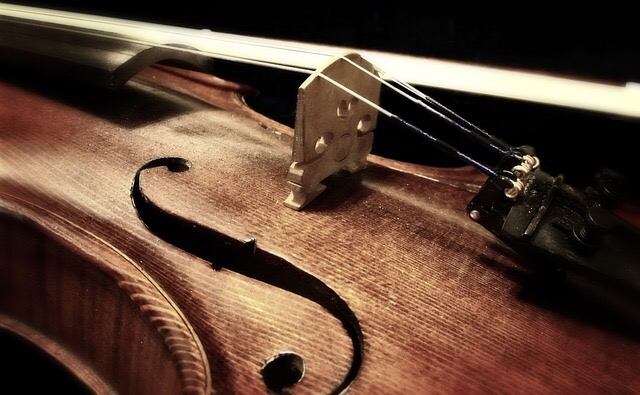
Just over 10 years ago, a young musician stepped out of a taxi cab. Making his way to the area designated for him, he opened his violin case, took out the instrument and began to play. The violin was a masterpiece, handmade by the master Antonio Stradivari in 1713. The music was some of the most beautiful ever composed; selections from Bach, Schubert, and other masters. The musician was Joshua Bell, one of the most gifted to ever play the violin. The stage was set for an incredible musical experience.

Bell played for almost 45 minutes. He threw himself into the music, his body twisting and arcing as he became one with each piece. The music swelled and, under his expert guidance, the bow danced across the strings. For those in attendance, this was one of those once-in-a-lifetime opportunities to hear something extraordinary.

Except almost no one paid any attention to the performance.

You see, Bell wasn’t playing in a concert hall. As part of an experiment conducted by the Washington Post, Bell was playing outside the entrance of L’Enfant Plaza, one of Washington DC’s Metro stations. The house was packed, but not with a crowd of classical music enthusiasts. It was early morning on a Friday, the middle of rush hour. Those who encountered Mr. Bell and his violin were on their way to work.
The experiment was an attempt to see if the average person would recognize beauty when confronted with it. A squad of reporters stood by to interview spectators after the event. Video cameras were set up to capture the scene. The question wasn’t whether or not anyone would stop to listen, but how many. The organizers anticipated traffic jams and possible violence as people crowded around to witness a true maestro in action.

But no crowd formed. For the most part, Bell’s performance was ignored. A total of 1,097 commuters passed by during the experiment. Of those, only seven stopped for any length of time to observe. His violin case, seeded with a couple of dollars from own pocket, collected just over $32 – most of it tossed in by people on the run. As the last strains of each piece faded, Bell was rewarded not with rounds of applause, but with thundering silence.

Nobody was listening.

As I read Gene Weingarten’s article about the experiment, it struck me that this wasn’t a case of beauty ignored. It’s not that the people of Washington DC have no taste in music or appreciation of a master engaged in his craft. It’s simply that they weren’t prepared to listen.

We often confuse hearing with listening. There’s no doubt the Metro riders who encountered Bell’s music heard it. The sound waves entered their ear and were transferred into signals that registered in the brain. Without expending any effort whatsoever, they became aware of the sound.

But listening is different. Listening is not a passive endeavor. It requires intent. Listening is an activity that involves not just the ears, but the focused attention of the brain and event he heart. Listening affects the emotions. It is an interactive experience that leaves an impact on those involved.

How many times do our ears hear, yet we fail to comprehend what’s happening? Is it because we can’t appreciate what’s going on? No, we’re just not prepared – mentally, physically, and emotionally – to listen. Our focus is elsewhere. It doesn’t matter if Joshua Bell is playing violin, or my wife is talking about her day; unless I am prepared to listen, the ability to experience the moment will escape me.

That’s why I have to turn off the TV. I have to put down my phone. I have to remove any distractions and orient myself physically toward the person I want to listen to. If the timing’s just not right, I need to reschedule the appointment. If my mind is preoccupied with deadlines or competing priorities, I need to clear away room to allow listening to take place.

Joshua Bell’s audience that January morning in 2007 weren’t ignorant. They were just preoccupied. They weren’t prepared to accept the gift he was offering them. They were so focused on other things, some couldn’t recall a musician playing at all when interviewed just a few hours later. Most of the money collected was offered as a matter of routine, with little regard given to the recipient.

A few passersby were prepared though. One was a man who had studied violin as a youth. At one time, he had intended to play professionally. He didn’t know Bell, but his mind had been prepared to listen for the sounds he heard that morning. He found a seat, listened, and marveled at the crowd walking by unaware.

Another observer had seen Bell perform just days earlier. That performance was fresh on her mind, unconsciously preparing her for the unexpected treat. She arrived on the scene late, but stood transfixed until the end with a huge grin on her face.

There was one group of people who seemed to understand what was going on. A review of the video shows that every single child who walked past Bell as he played tried to stop and watch. Unencumbered by someplace to be or tasks to accomplish, their minds were open to receive the experience. In each case, the parent holding their hand pulled them away toward the object of their attention.

How often do we fail to prepare ourselves for listening? How many times do we settle for just hearing? What wonders lie right in front of us, yet just beyond our grasp; waiting for us to stop and listen?

Can You Hear Me, or Aren’t You Listening?

listeningThe human body truly is amazing. Take your ears, for example. So many of us take them for granted. Yet these odd looking appendages allow us to enjoy music, recognize friend from foe, and engage in meaningful communication. In fact, we rely on verbal communication to such an extent that references to ears and hearing are everywhere.

“Do you hear what I hear?”

“Friends, Romans, countrymen, lend me your ears.”

“Can you hear me now?”

Here are a few facts about our ears that you may find interesting:

  • The outer ear, the part hanging on the side of your head, is designed in a way that funnels the variety of sound waves around us and channels them to the middle ear.
  • Incoming sound moves from the outer ear to the eardrum, causing it to vibrate. These vibrations are picked up by three bones that amplify the sound.
  • These three bones (the malleus, the incus, and the stapes) make up the middle ear and are the smallest in the human body. All three could fit on the face of a penny.
  • After leaving the middle ear, sound waves are picked up by tiny hairs in the liquid medium of our inner ear. These hairs release chemicals that send signals to the brain which interprets the sound.
  • Humans are capable of detecting sounds as low as 20 Hz and as high as 20,000 Hz.
  • We need both ears to help determine the direction from which sounds originate. Using both ears also makes it easier to pick out someone’s speech in noisy environments.
  • The human ear continues to function even while we are asleep. The brain simply blocks out most of the input.

As incredible as our ears are, we don’t do a very good of using them. As far back as 1957, researchers have been studying the difference between hearing and listening. That’s when Ralph G. Nichols and Leonard A. Stevens from the University of Minnesota conducted tests to find the connection between hearing information and retaining it.

They tested several thousand people by having them listen to a short talk and then testing them on the content. Their tests revealed that “immediately after the average person has listened to someone talk, he remembers only about half of what he has heard – no matter how carefully he thought he was listening.” Within two months, the average participant in their study could only recall about 25% of what had been said during the short talk they had listened to.

You would expect that, over time, we’d retain less and less of the material we’d been exposed to, but the University of Minnesota study found otherwise. After one year, Nichols and Stevens reported that we tend to forget more during the first, shortest interval than we do over the next six months or more. The most significant retention loss occurs within the first eight hours.

Their conclusion was rather blunt: people simply do not know how to listen.

Hearing and listening are two very different activities. Hearing is a passive activity. It happens without me doing anything. Without any effort on my part, sound waves are entering my outer ear, hitting my eardrum and vibrating the bones of my middle ear, and then creating chemical secretions in the hair of my inner ear which then travel to my brain. This complex process is effortless.

Listening, however, is not a passive activity. Listening is intentional. It requires me to concentrate on specific sounds in order to analyze them. Listening involves more than just the ears. The brain must be engaged in order to create context, meaning, and application. This complex process is anything but effortless.

But remember, Nichols and Stevens found that the no matter how hard participants in their study worked at listening, the results were still the same. Listening “harder” did not help anyone retain more information or hold onto it for a longer period of time. The problem, they said, is that our brains are just too powerful.

Most Americans speak at a rate of around 125 words per minute. Our brains, on the other hand, process information significantly faster. We still know all there is to know about the brain, but suffice it say 125 words a minute barely registers. Our minds simply have a lot of extra time to ponder other things even while listening intently to someone else.

I myself am often distracted while trying to listen to other people. For instance, during a walk around my neighborhood, I like to download a podcast or two in order to help pass the time. I hit the play button and focus my mind on the speaker’s content, intent on learning something new and interesting. But within seconds, my mind has drifted. Something that’s said sends causes my thoughts to wander. Sometimes I start thinking about how I can apply one of principles they’ve shared. Other times, a word or phrase jogs my memory about an unrelated topic and my mind is off to the races – moving in a different direction even as the speaker shares valuable and intriguing information. I’m hearing, but I’m not listening.

They key to improved listening has nothing to do with our ears. Obviously, the answer doesn’t lie in slowing our brains down either. We’ve got to arm ourselves with tools that help focus our minds in a way that listening is improved. We have to discover methods of actively participating with the information being received so that it makes a bigger impact.

That’s why the term “active listening” is so appropriate. Listening is not a passive activity. It requires action on our part in order to work. The next time you find your mind drifting during a conversation, don’t just sit there. Take action!