Worth the Effort

snail-1447233_640Thanksgiving weekend at the Voland house is typically full of activity – and I’m not talking about the kind that results from Black Friday shopping. We stay far away from that madness. No, the activity I’m talking about involves a lot of yard work and home updates. Naturally, the kids don’t like it.

First, the leaves have to be taken care of. Our handful of trees seem to produce a forest full of leaves. Our pecan tree also adds an extra element to deal with as the nuts fall like missiles during the cleanup. There’s nothing like finishing a long day’s work in the yard only to see it covered once again by another layer of leaves (they just keep falling).

Then we put up the Christmas lights. There are strings on the house and others lining the front sidewalk. No matter how carefully they were put away the year before, everything manages to get tangled up coming out of the box. We have to deal with replacing bulbs and finding extension cords. Of course, my meticulously drawn map, meant to make laying things out effortless, looks like Egyptian hieroglyphics when viewed from the top of a ladder.

Finally, we turn our attention to the inside. The tree goes up and the decorations are set out. Furniture has to be moved so that everything can find its perfect holiday location. Often, this also results in some kind of major remodeling project. Through it all, the dogs watch us fight and argue with bewildered looks on their faces.

Despite the bickering and complaining, we managed to survive the decorating ordeal. You’d think that we’d give up and just stop engaging in the behavior that causes so much stress and tension. It’s surely not worth it, right?

Ah, but it is. Once the sun goes down and the Christmas lights come on, the smiles appear. We marvel at the sight. The arguments are forgotten and everyone enjoys the warm glow. Even the boys eventually agree that the struggle was worth it.

Sometimes, in the midst of the struggle, it’s easy to lose sight of the end goal. Whether it’s completing a big work project, pushing to make your sales targets, or simply decorating the house for Christmas, our tendency is to develop a short-term focus toward a long-term goal. It can be hard to see past the immediate hardship.

But we have to remember that just on the other side of difficulty lies the reward. You have to endure the struggle to reach the payoff. The things worth fighting for do indeed require a fight.

At one point during the weekend, one of the kids noted that some of our best memories are from family trips and projects that went horribly wrong. At the time, all we wanted was for the hardship to end. Looking back though, we wouldn’t trade those times for anything. I guess that means we’ll be putting up the Christmas lights again next year.

Pull Up a Chair

tableThis is Thanksgiving week. For most of us, the holiday presents an opportunity to sit down at a table with family and enjoy a meal together. This is something that rarely happens in my house. Most meals tend to be on-the-go, a hasty interruption to our individual agendas. Days go by without the entire family even being in the same house, much less at the same table. When we are all home, meals are typically devoured in front of the television; meaningful conversation can be hard to come by.
So when we do sit down together, without interruption, and visit as a family, it’s a special occasion – and a weird one. Spending time together like this feels awkward. It’s as if we’ve forgotten how to be a family. We don’t know how to engage each other. We don’t know how to ask good questions or how to really listen to the answers. I think silently, we’ve all been most thankful when the day of thanksgiving finally comes to a close and we can turn our attention to Christmas.

And that is a sad revelation to make.

We do the same thing in the work place. We like to think of our work teams as family; I’ve heard a lot of managers use that terminology when speaking about their team culture. But rarely do we act like one. We operate as individuals. We work in siloes. We pursue our own agendas and tolerate the periodic interruptions that force our attention to the team.

What if we changed the paradigm? What if we made every day Thanksgiving? What if we shifted our normal ways of operating to include more sharing with, laughing with, and listening to the people that (should) mean the most to us? Yeah, it would feel awkward at first, but so does everything else that moves us forward.

This Thanksgiving, I’m especially thankful for my team. I’m thankful for the way they pursue their jobs and look to make things better for all of us. I’m thankful for the times we share, discuss, argue, disagree, and ultimately decide to move forward together. Each member of the team has a unique perspective that they bring to the table. But I’d never know it without sitting down at the table with them.

My challenge to you this week is three-fold:

  1. Tell the members of your team how thankful you are for them.
  2. Schedule time to get together – sit at the table – and discuss the future of the team.
  3. Repeat steps 1 and 2 as often as you can going forward.

Happy Thanksgiving!

Moving to Mastery

the-nature-is-stronger-695013_640Do you remember your first day on the job? What emotions did you feel? I bet there was excitement, nervousness, and pride all at once. There was a sense of anticipation; almost an eagerness to see what challenges you could accept.

Even before you started, in that middle ground between accepting a new job and actually starting, the mind starts racing with the possibilities. You can’t help but imagine what stepping into this new role will be like. You begin to picture yourself in action, solving problems and making a difference. In your mind’s eye, everything goes perfectly. You can’t fail.

This is called Fantasy; by definition, an idea with no basis in reality. During this fantasy stage of employment, we can’t help but think about a potential version of the journey we’re about to embark on. Our mind turns our conscious and unconscious wishes into a fantastic, and fantastical, scenario that we play over and over and over again.

But pretty soon, reality sets in. Before you know it, that perfect world imagery has been replaced with real-world … well, reality. Things don’t go exactly as we’d planned. There are obstacles we cannot overcome. There are personalities that we struggle to get along with, and job expectations that aren’t exactly the stuff of dreams. The fantasy is over. We find ourselves in a new phase of our career called Survival.

In survival mode, the emotions are much different. There’s frustration, anxiety, and disappointment. Days are filled with either fire-fighting and never-ending to-do lists, or the monotonous drudgery of repetitious, mindless button-pushing. Goals seem further and further away, with progress coming only sporadically. We begin each day, not with anticipation, but with dread.

It’s here, in survival mode, that most people spend the entirety of their careers. Decades go by. The dreams that once inspired you to step into a new adventure fade away into the fog of a daily routine and the promise of an all-too-short weekend. Good times, huh?

But what if I told you that there’s another phase of your career just around the corner? What if there was something more than just survival? Would you be interested in that? Would you be willing to do what it takes to escape from survival and embrace something more? Are you ready to turn the corner?

There’s a phase of your career called Mastery; and it’s incredibly compelling.

Mastery represents control. It is, by definition, accomplishment. Masters dominate a particular skill or skill set. They are in control of their day, not the other way around. Back in the 13th century, “mastery” meant “victory.”

Mastery represents a return of the confidence and pride that colors the Fantasy stage. This time, though, those emotions are indeed based in reality – a reality that you have created for yourself. To-do lists are replaced with systems. Fire-fighting gives way to efficiency. Stagnation becomes progress and growth.

The great thing about moving to mastery is that you don’t have to wait for it to happen. You don’t need special tools or the right circumstances. All you need is the right attitude. You see, mastery is a mind-set. It’s a belief that you have been created for a purpose and a determination to see that purpose fulfilled.

Masters are merely those who have decided that survival is not enough. They are the few who have made the choice to live their lives intentionally. Roadblocks still exist. Problems still pop up. Nothing about the job or the environment is different. That’s because mastery is not a circumstance; it is a decision.

How do you see yourself today? Are you a survivor, or a master?

Excuses vs. Experience

Palo DuroLet me tell you about Tom from Kansas City.
I had joined our Boy Scout troop for a weekend of mountain biking in Palo Duro Canyon State Park. The mornings were a little chilly; but once the sun came up, the weather was perfect for exploring the trails and viewing the wildlife. Saturday evening, as the scouts prepared dinner, I decided to take a short walk around our campsite to stretch my legs and hopefully ward off some of the stiffness that tends to follow my increasingly infrequent exercise.

We were camped near the park’s Interpretive Center and I headed that way. Rounding a bend near the center, I came upon an older gentleman standing by his van. The vehicle was sitting partially in the parking lot, but partially in the park road. As I got closer, I could see why.

The rear driver-side wheel had fallen off of the van. The axle had dug into the asphalt for several feet, destroying the brake assembly and leaving this poor guy stranded. The look on his face told a story of desperation and fear. It was growing dark fast, and without cell phone service on a Saturday night in the canyon, help seemed a long way off.

I introduced myself and, as you have deduced by now, this was Tom. He was in the middle of a solo road trip and had planned to camp in the canyon. The park was full though, so he had opted for a quick drive around before heading into the nearest town to find a good spot for the night. On his way out, the lug nuts holding his wheel in place had given way. He’d managed to find the wheel and roll it over the van, but a recent heart attack had left him weak and unable to do much else.

As we talked, several cars drove by; day visitors on their way out of the canyon. No one, Tom said, had stopped to help. There are all kinds of reasons not to stop and help someone in need; but, if we’re honest, most of them are excuses. I’ve used plenty of them myself.

“Someone else is probably already helping out.”

“I probably don’t have the expertise to be of any good.”

“I’m in a hurry, otherwise, I’d stop.”

“I don’t want to get my hands dirty.”

The problem is, none of these excuses ever made me feel better about passing by. The times I’ve decided to move along, head turned to avoid uncomfortable eye contact, my mind always returned again and again to the thought that I should have stopped to help. Maybe I could have done something – maybe not – but I should have tried.

Opportunities to lend a hand are all around us. And they don’t always come in the form of someone stranded on the side of the road. How about the coworker who needs some encouragement? What about the friend who could use a sounding board? You don’t have to be an expert to be a help. You just have to be willing.

Have you ever noticed how, following some sort of calamity, discussion inevitably turns to stories of people who stepped up to help? Natural disasters and terrorist attacks all seem to bring out the best in people as unsung heroes emerge from the shadows to help out their fellow man. People feel compelled to travel thousands of miles to deliver aid to others impacted by hurricanes and floods. Why then is it so hard for us to be the everyday hero to those within arm’s reach?

The human experience is made up of thousands of individual interactions, each one of them an experience in itself. Let those pass you by and life seems emptier…colder. Embracing them though, especially the dirty, messy, uncomfortable ones, adds a richness that can’t be described.

With the help of my son, a fellow scout dad, and Jacob (another traveler who decided to stop and help), we eventually got Tom back on the road. Our hands got dirty, but we worked and laughed together; sharing the experience willingly, while cars continued to pass us by. We shook hands and Jacob followed Tom into town to make sure our iffy repairs held while the three of us returned to camp. By this time, dinner was cold, and the rest of our party asked why we were so late.

I think we had a pretty good excuse.

The Benefits of Building

tools-1209764_640Last weekend I took a trip to visit family in middle Tennessee and returned with several woodworking tools that had belonged to my grandfather. I can’t tell you how honored I am to have these tools.

I was fortunate to grow up next door to my grandparents. As I exited the school bus each afternoon, I would glance toward their house to see what they were up to. Sometimes they would be working in the garden and I would run over to help them. Secretly though, I would hope to see that the doors to the wood shop were open. That meant Granddaddy was inside building something.

I loved helping out in the shop. As an adolescent, I helped out by sweeping up sawdust or organizing nuts and bolts. I built bird houses and other small projects using hand tools and off-cuts. When I got old enough, Granddaddy taught me to use the power tools.

I enjoyed holding something in my hands that I had built. More importantly, I learned to love the process of building. I created things for my family and repaired items of my own. As a young adult, I made gifts for the woman who would become my wife. I did all of this under the guidance of my grandfather and with those tools.

I received a great deal of satisfaction from the process of designing and building each piece. I felt a sense of pride as I witnessed the joy my gifts brought to others. And I cherish the memories of learning and working alongside my grandfather. Yes, these old tools mean a lot to me.

Not too many people are interested in building something these days. It takes too much work. You have to invest not just your time, but your intellect, creativity, and passion. Building is an investment of self that precious few are willing to make.

It’s much easier to take things apart. Lots of people seem to enjoy that. There’s no skill involved; no creativity. And it’s a very self-centered activity – the only ones who derive pleasure from it are those initiating it. The rest of us just get to clean up the mess and attempt to recover from the destruction.

Of course, you tend to reap what you sow. People who spend their time building attract others who want to build too. Skills are enhanced, partnerships are created , and the synergy almost always leads to something great.

Those who spend their time tearing things apart inevitably attract and teach others to do the same.

I think the world needs more builders. We need people who are not just willing, but passionate, about creating something. And, as you can probably guess, I’m not just talking about wood projects. I’m talking about teams, relationships, and cultures. I’m talking about spending your time building others up rather than tearing them down.

I like building. That’s why I built my own shop soon after moving into my first house. That’s why I taught my sons and my daughter how to design and build their own projects. And it’s why I’m excited about adding my grandfather’s tools into the mix. I anticipate some great things will be built as a result.

What about you? What can we build together?

What’s Your Reputation Worth?

apple-661726_640Wednesday morning my daughter Abby had an appointment with the dentist. It was a quick visit, just a cleaning, and everything checked out fine. Since we finished earlier than anticipated, I thought I’d see if the orthodontist in the same building had time to check on Abby’s retainer. She’d had her wisdom teeth removed in June and Abby felt like an adjustment might be in order.
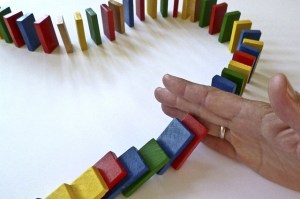
They worked us in and, after a quick look, suggested we come back in a week or so for some additional tweaking. Then the orthodontist looked at me and said something that’s stuck in my head ever since. “You know, Dr. Roger and I were just talking about Abby the other day. She is such a great patient and we just love seeing her!”

I was floored; not by my daughter’s behavior, but by the fact that she was the subject of conversation by these two professionals. There wasn’t any specific dental issue on the table at the time of their discussion. In fact, neither of them were scheduled to see her any time soon. The dentist wasn’t involved in her care that day aside from a quick check-in after her cleaning. The orthodontist hadn’t seen her in almost a year and no follow-up was planned. We were a last-minute walk-in.

But for some reason, Abby’s name had popped up during a random conversation. She had made an impression on these people. And that impression was significant enough for them to have a pointed discussion about her. In other words, she had a reputation.

Merriam-Webster defines the word reputation as “overall quality or character as seen or judged by people in general.”

Few things are as important as your reputation. Just look at how many public figures have had their careers ruined by allegations of bad behavior. Once your reputation takes a hit, it can be extremely difficult to recover. Entire organizations have folded as a result of one individual’s tarnished reputation.

Of course, a favorable reputation can be an incredible asset. Back in the first century B.C., Publilius Syrus wrote that “a good reputation is more valuable than money.” He would know. Publilius was a Syrian slave who so impressed his master that he was not only freed, but provided a level of education typically reserved for nobility. His good fortune came as a direct result of the reputation he had built.

As I thought about my daughter, and the discussions people were having about her, I was reminded of an email I received from her school just a few weeks ago. The subject line read “Abigail Voland – Incident Report.” As you can imagine, my spirit dropped when I saw that message pop up. It took me back to the years we struggled with Abby’s behavior at school. Her autism had led to all manner of problems during grade school. Over time, she had learned to control her emotions and impulses. She became a model student and now, as a Junior in high school, she seemed to be doing really well. I thought we’d left the behavior issues behind.

I opened the email and read the description of this new “incident.” One of the teachers described her joy at having Abby in class. She shared the pleasure she took in watching my daughter eagerly participate; even to the point of assisting other students who were struggling. My embarrassment turned to pride.

We all have a reputation. People are talking about us, whether we know it or not. It’s up to us to decide what they are saying. It is our behavior, compounded over time, which determine the course of our future. Publilius Syrus understood that. I think my daughter does too.

Work, Interrupted

dominoes-1902622_640I was having one of those days.

My to-do list was maxed out, and I had just closed the office door to start working my way through it. That’s when the phone rang. Forty-five minutes later, I hung up and turned my attention back to the first item on my list. I didn’t get very far, however, before there was a knock on the door. This time, two hours passed before I could once again try to focus on my work.

But the pattern had been established. My day unfolded into a steady game of Wack-a-Mole. Texts, phone calls, walk-ins, and emergency emails – all conspired to keep me from my to-do list. Each time I thought I was free to finally tackle my agenda, a competing priority would appear. I would get interrupted.

Don’t you just hate interruptions? Doesn’t it drive you nuts when other people decide they need your assistance to move their agenda forward? In fact, wouldn’t work be a whole lot easier if we could just get rid of the people?

I read once that the company of the future will only have two employees; a man and a dog. The man’s job is to feed the dog. The dog’s job is to keep the man from touching the equipment. It seems like any time work (or life for that matter) gets messy, there are people involved. We’re just so needy. So, we keep interrupting other people. And we keep getting interrupted.

But what if we’re looking at this the wrong way? What if we shifted our perspective just a little bit? What if we viewed people as the priority instead of the problem? What kind of impact would that have on them, on our business, and on us?

What if we welcomed the interruption?

We work so hard to automate and digitize. We focus on the numbers and the checklists. We manage by policy and procedure. I’m afraid that, if we’re not careful, we’re going to wind up working for that company of the future. If we keep treating customers and coworkers as problems to be fixed or nuisances to be removed from the equation, we might just succeed.

Here’s the thing – people are the point.

It’s in the middle of the interruptions that real work gets done. That’s where the meaningful discussions take place. That’s where ideas are born, decisions are made, and problems are solved. It’s in those fleeting moments of actual human interaction that connections are made and lives are improved.

Isn’t that why we work in the first place?

Now that I think about it, the days I feel like nothing gets done are some of my best days. When I leave the office, my to-do list might be full, but so is my soul. I’m exhausted because my energy has been expended in the best possible way. Yet somehow, I’m energized. I’m excited about the possibilities that have emerged because of my interactions with other people.

Work isn’t about spreadsheets and call reports and items on a project plan. Those things are the real interruptions.

I’m not suggesting that you ignore your to-do list. I still have mine, and I plan on completing it. But should you feel the need to interrupt me, that’s OK. I won’t complain.

5%

boy-scout-1897050_640It’s 10:25 in the morning, Saturday, September 30th. My son Alex just walked into one of the most important interviews of his life. He’s a Boy Scout and this is his board of review for the rank of Eagle.

Eagle is the highest rank in scouting. Those who reach this level have spent years working their way through a myriad of requirements. Along the way, they learn outdoor skills, demonstrate leadership within their troop, and participate in numerous service activities that benefit their community.

Each year, thousands of boys enter the scouting program, but statistics show that only five percent become Eagles. Out of every 100 scouts, 95 will fall short of the ultimate goal.

While I am extremely proud of what Alex has accomplished, I can’t help but think of all those who fall short of reaching their goal. Why is it that so many start, but so few finish? What is it about the 5% that allows them to succeed where the majority fail?

Some boys get distracted by other things. Alex did. As he got old enough, he got a job. He got involved in extracurricular activities at school. He picked up hobbies that ate into his limited time and attention span. He was forced to reduce his involvement in scouting. Still, he achieved his goal.

Some find the obstacles in their path are greater than they anticipated. Alex did. His final requirement, the Eagle Scout Service Project, fell completely apart due to circumstances beyond his control. He had to start over, reaching and developing an entirely new concept – not an easy task for a teenage boy. Still, he achieved his goal.

Some start to think the reward doesn’t justify the effort. Alex did. In the beginning, progress was easy. But as he grew older, he grew frustrated with the level of focus and detail required to complete the final steps. This caused him to question his participation in the scouting program. Still, he achieved his goal.

Many will argue that they lacked the resources and guidance necessary to succeed. While I concede that Alex benefited from an active scout troop and men who willingly acted as mentors along his journey, these factors alone did not make the difference. I know of numerous scouts who earned their Eagle rank despite a weak troop structure and a lack of support from family members. And I know of plenty who had a wealth of resources at their disposal, yet failed to finish what they started.

What made the difference for Alex, and for the rest of the 5%, was the decision to be successful.

You face a million choices every day; what to wear, what to eat, what to say and do. It is your choices that define you. You decide the kind of man or woman you want to be. Victor or victim, success or failure, one of the select few or just another face in the crowd.

The sad fact is that most people are ok with being ok. They aspire to get by. Their goal is to blend in. They’ve chosen to be part of the 95%. I wish I could take credit for Alex’s achievement, but I can’t. Yes, I encouraged him. I made myself available and helped where I could, but you can’t drag an Eagle across the finish line. The program is designed such that the boy must make a series of conscious decisions on his own. It’s a lot like life in that respect.

Wasted potential is a sad fact of life. It’s a shame to want success for someone far more than they seem to want it for themselves. But I see it every day. The lure of average is incredibly strong.

Thirty-five minutes after he walked into his board of review, Alex emerged. He was visibly nervous and waited anxiously while the committee deliberated over his body of work and his responses to their questions. When he was finally called back and given the good news, Alex was visibly relieved. However, I never had a doubt he would be successful. He’d decided long ago that he would be.

Take Your Seat

sun-2367320_640I had just wrapped up a visit to Corpus Christi, Texas; visiting with managers about their goals and hammering out strategic plans for the quarter. It had been a busy week, and now I was waiting in the airport for my flight home to board. I felt good about the work we had done and excited about the possibilities. And I relished the thought of getting back to my family and enjoying the weekend.

I overheard someone speaking to the gate agent about securing a seat. They were scheduled on a later flight, but wanted to see if they could get home earlier. “Sorry,” they were told. “This is going to be a full flight. Every seat has been sold.”

I thought about that. Something like 140 people had chosen not just the same destination, but the same flight. We all wanted to move in the same direction at the same time. Whatever our reasons for traveling on this particular day, in this particular way, we all had the same goal. And if all went according to plan, we’d get there together.

Then it struck me … the plane couldn’t take off until everyone was in their seat.

I was anxious to get moving, and I know my traveling companions were as well. But none of us could fly until everyone else found their place. The passengers, the pilots, even the flight attendants all have to be in their assigned spots with their seat belts fastened before anyone can fly.

Oh, we might pull away from the gate. We might taxi away from the terminal and line up on the runway; but the plane simply cannot leave the ground until everyone takes their seat.

Your team is like an airplane. It’s designed to fly – to soar high and travel far. But in order for that to happen, everyone has to assume their proper place. Each individual has to embrace their role. If even one person isn’t ready – on board and doing their part – they plane won’t be able to take off like it should. At best, the journey will be delayed, forcing everyone else to work harder and wait longer for a successful flight.

As we prepare to enter the 4th quarter of 2017, I don’t know what challenges stand in the way of your success. But I bet you do. Your team has goals to accomplish – you have a shared destination. And you no doubt know what it will take to win. You know what you need to do in order to be successful.

Have you taken your seat?

Are you prepared to do your part so that the team achieves its goal? Are you ready to embrace your particular role to make this final leg of the journey a successful one? Remember, you signed up for this. You purchased a ticket for this specific flight.

Take your seat. Strap yourself in. Let’s get this baby in the air and fly!

Stay Centered

cyclone-62957_640As hurricane Irma approached the coast of Florida, meteorologists tracking the storm noticed something peculiar on the radar images. In the eye of the hurricane, were birds – lots of birds. Entire flocks were just flying along, seemingly unaffected by the devastating winds and rain surrounding them.

It seems this is not an unusual phenomenon. Radar imagery from past years show the same thing, flocks of birds moving in tandem with a hurricane by staying close to the center. They aren’t in distress at all. They’re simply going about their business in the midst of chaos. It seems that birds who can’t escape the storm instinctively move as close as possible to the center.

Smart birds.

There are so many times when I feel like I’m caught in a storm. My plate is overloaded, demands on my time come from all sides, and I feel stressed. There are a few things I can say “NO” to (the equivalent of avoiding the storm), but often I can’t. I have to endure the storm until the winds die down. Perhaps, instead of fighting against the storm, I should act more like these birds and move closer to the center, where it’s calm.

My center is my core purpose. It’s my mission – the reason I’m here. I find the closer I stick to my central goal, the easier it is move forward. Any time I allow myself to drift away from the center, I wind up struggling.

We see this reflected in a number of ways. The automotive industry has been trending toward smaller, simpler vehicles because they are more affordable and easier to maintain. Tiny house communities are popping up all over the country as people look to simplify their lives and remove the stress that comes with managing a larger home. Even software companies have shifted to producing simple apps that focus on doing one or two things extremely well.

It’s not unusual for a corporation to diversify in an attempt to spur rapid growth, only to find things spiraling out of control. Those that survive usually do so by trimming off business lines that don’t fit with their core mission. They move back to the center.

We humans have a way of complicating things. We’re continuously looking to do more, be more, and achieve more. But every time we add something new to our to-do list, we take away from our ability to do any one thing well. The more we become a “jack of all trades,” the more we become a “master of none.”

The tension that scenario creates knocks us around. It drags us down and makes us feel like we’re at the mercy of our circumstances. We find ourselves in a hurricane. Making progress is hard because of all the extra demands pulling at us. So we hunker down. We do our best to check things off the list and ride out the storm.

But if we’ll just stay centered, we’ll not only survive the storm, but thrive despite it. By keeping to what makes us great (as an organization, a team, or an individual), we can move forward even as others battle the winds around us.

So, what’s your center? What are the things that you and your team should really be focused on? What needs to be let go?