
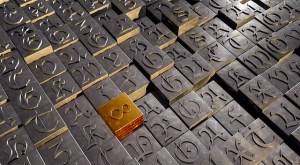
 In November of 1990, a new sculpture titled “Kryptos” was installed on the grounds of CIA headquarters in Langley. Created by artist Jim Sanborn, the 12 block of copper is covered with 1,800 characters carved in four sections. Each section is written in a different code and, together, they form a riddle. It took eight years for the first three section to be decoded. Despite attempts by the CIA, NSA, and others around the world – not to mention a handful of clues provided by the artist – the fourth code has yet to be cracked. And it’s only 97 characters long.
I guess some puzzles are just really hard to solve.
Most of us aren’t analysts with the government, nor do we have sophisticated computer systems at our fingertips that can run decryption algorithms; but we still have riddles to solve. We wrestle with personal puzzles like “How do I lose weight?” or “Why can’t I seem to get motivated?” In the workplace we struggle to crack the codes of leadership, performance, and growth strategy.
And we struggle with these things despite the abundance of clues at our disposal. Type the word leadership into Google’s search engine for example, and you’ll find:
178,000,000 news articles
1,160,000,000 videos
4,210,000,000 total results
Shouldn’t we have cracked the leadership code by now? (For what it’s worth, I asked Google that exact question and got 10,800,000 answers.) Maybe some codes just aren’t meant to be cracked. Perhaps in some cases, the struggle is the point.
What if the fight to become a better leader is what actually makes you better?
What if the struggle to improve my performance is what causes my performance to improve?
What if wrestling with growing the business is what actually results in sustained growth?
I was talking with a friend about the issues he was having some members of his team. He threw up his hands and asked “Why does it all have to be so difficult?” (Google has 1,110,000,000 answers to that question by the way.) I think the real answer is “because it has to be.” The struggle is what makes us better. If “it” – whatever your “it” is – was easy, everyone would be doing it.
So keep fighting. Keep working on the puzzle. Keep trying to crack the code. Know that the attempt itself is what matters. Google doesn’t have the answer because the question is the answer.
Jim Sanborn says the answer to his sculpture/code/riddle is on a piece of paper locked in a safe deposit box. Should someone claim to have figured it out, he stands ready to open the box and verify that their work has paid off. I’m starting to wonder if there’s anything written on that piece of paper at all.
 Over the weekend I ran into a former coworker, Greg. It’s been close to 20 years since we worked together, and we spent several minutes catching up. We talked about our current work situations, gave family updates, and laughed about the old times. We eventually parted ways, promising to do a better job of keeping in touch.
 Leaders ask questions.
 What if you could do away with deadlines, appointments, and alarms? What if you could do what you want, when you want to do it? Would you be more productive since you’d be able to focus energy on the truly important things? Or would your output plummet, giving way to procrastination?
 Last month, a Pittsburgh woman (her name has not been released), discovered an abusive ex-boyfriend hiding in her attic. She lived in the house with her two daughters and began to notice small things out of place. She thought about calling the police, but thought she would sound crazy for reporting a “blanket in my basement.” On April 20th though, she heard a noise upstairs and went to investigate.
 As far back as 577 AD, primitive matches were used to start fires in China. In 1805, Jean Chancel developed the first self-igniting match. His required dipping the match head into sulfuric acid though, and never really caught on. Like so many great ideas, the common friction match was discovered by accident. English chemist John Walker was testing different chemical mixtures, dropped a match on his hearth, and was delighted when it lit upon being struck.
 Some of my favorite memories from childhood revolve around Field Day. Each spring, as the weather began to warm up, officials at my elementary school would announce a date for the event and the entire student body would erupt in cheers. Field Day meant class was cancelled so that everyone could spend the day outside competing in a variety of games. There were individual events like the 50-yard dash and the egg race. I preferred the team competitions, though. I would scramble to find just the right partners in order to sign up for relays, the wheelbarrow race, and my favorite – the three-legged race.
 Sports have always provided excellent metaphors for success, and at this time of year college basketball takes center stage. Here in Lubbock, we’re celebrating the new NCAA Division II Women’s National Champions (Lubbock Christian University’s Lady Chaparrals), and the first trip ever to the Division I Final Four for the Texas Tech Red Raiders. Obviously, basketball fever is running high in West Texas.
 With March Madness in full swing, much of the country has basketball fever. Television schedules have been adjusted to account for viewership pulled to the college games, and other sports take a back seat this time every year. For those who aren’t fans of basketball, it can be hard to find something other than reruns to watch.
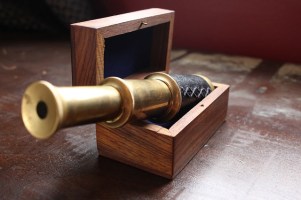 During the Battle of Copenhagen in 1801, part of the French Revolutionary War, British Naval forces descended on Denmark. The intent was to prevent the Danish fleet from joining with ships from Russia, Sweden, and Denmark. Britain maintained a superior navy, but a newly formed alliance of these four countries, called the League of Armed Neutrality, would threaten that position and negatively impact Britain’s ability to negotiate favorable trade agreements. By decimating Denmark’s contingent of ships, Britain would stave off a potential threat.
 scottvoland.com