What Are You Waiting For?

words-679914_640“A year from now, you will wish you had started today.”  Karen Lamb

I’ve probably shared this quote before. It’s been my favorite for a long time now, as it never fails to provide me with the motivation to break out of a rut, start a project I’ve been putting off, or rededicate myself to a previously identified goal. Like most people, the current state of affairs in our country has a tendency to drain my mental and emotional energy, so having a quote like this as a rallying cry reminds me that while I can’t always control my circumstances, I can always control how I act in light of them.

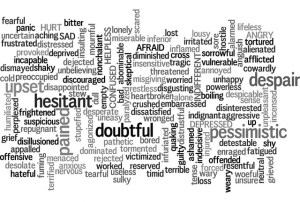
A lot of people still seem to have their finger on the pause button right now. They’re living a life of hesitation – waiting for circumstances to change so that they can resume (or begin) a “normal” relationship with the world around them. The thing is, there will always be a reason to hesitate.

The political climate isn’t right.

The market doesn’t seem ready.

The staff don’t possess the skills.

The technology can’t support it.

There will always be barriers to success. There will always be a reason why we should wait. But rather than adopting a position of hesitation, maybe we should choose one of anticipation. Instead of resigning ourselves to the fact that things might not be going our way, what if we chose to prepare ourselves to take advantage of favorable circumstances when they do appear. Where hesitation is a cessation of activity in reaction to current circumstances, anticipation is a proactive set of activities that continues to move things forward.

Instead of hesitating, learn a new skill.

Instead of hesitating, coach the team.

Instead of hesitating, create something new.

Instead of hesitating, find a way to circumvent the barrier or use it to your advantage.

Where others see roadblocks, leaders see opportunities. While others wait for the environment to change, leaders adapt and overcome. When others decide to step back, leaders step up.

So many things are uncertain right now, and there’s really no way of predicting when the uncertainty will end. The only thing can control is how we act. So, stop hesitating and start anticipating. After all, a year from now, you will wish you had started today.

The Benefits of Gratitude

thank-you-515514_640Last year, I shared the results of a Gratitude Survey I posted on my company’s intranet. It was encouraging to read the various expressions of gratitude submitted by employees across the organization, and each of them reminded me of things I am thankful for. Thanksgiving is, after all, meant to be a time of reflection.

We work so hard throughout the year to get “more.” More customers, accounts, revenue, profit, recognition… The list could go on forever.

It’s easy to forget how much we already have. I think it’s important to stop once in a while and take stock of the great things, and great people, surrounding us right now. What’s the point of working so hard if we never pause to enjoy what we’ve received?

In that same article, I shared seven physical and psychological benefits that stem from cultivating a sense of gratitude. What I didn’t address then was the impact that expressing gratitude has on other people. We benefit from the feeling of gratitude, but we benefit others when we take the time to express our thankfulness for them and for what they mean to us.

When someone says “Thank You” to me, three things always happen:

I experience a boost in energy. It’s always a rush when someone expresses genuine appreciation for something specific I have done for them. It’s like a shot of adrenaline. It makes me feel good about myself and the work I do.

My level of productivity rises. Because of my heightened awareness of the positive impact I have on others, I’m driven to do more. I like feeling useful and valued, so I seek to produce more of this meaningful work in order to replicate that feeling.

I pour more into my next project. Not only does my output increase, but the quality of work I produce improves. Someone is actually paying attention to my efforts, so I want to ensure my game is on point. I want my next contribution to really stand out. 

This year, I’m once again hosting the Gratitude Survey, and I invite you to initiate one of your own. Beyond that though, I hope you’ll take some time this week to act on your gratitude. Shoot an email or make a phone call to let someone know how grateful you are for them. Be specific, and be sincere. You’ll both be better off for it.

Thirsty?

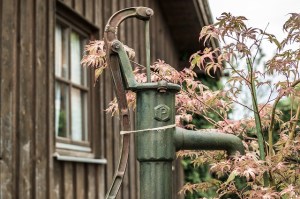
pump-950235_640Early in my sales career, I spent a lot of time on the road. Thankfully, I had books on cassette tape to keep me company. One of my favorites was by the great Zig Ziglar. I got to thinking about that recently and looked up a transcript of one his stories that’s stuck with me through the years. Enjoy.

Got a couple of good friends down in South Alabama. Their names are Bernard Haygood and Jimmy Glynn. They were out riding through the South Alabama foothills one day and they got a little bit thirsty. They pulled behind this old abandoned farmhouse. Bernard hopped out, he ran over to this old pump and he grabbed the handle and he started to pump. Now just as a matter of curiosity, how many of you good folks up here in the big city have ever used one of these old water pumps? Hey, that’s fantastic.

Okay. Well, it was hot. It was August. Old Bernard wanted to drink the water. After he’s been pumping a couple of minutes he said, “Jimmy, better get that old bucket over there and dip some water out of that creek. “We’re going to have to prime the pump.” How many of you know what I’m talking about when I say you got to prime the pump?

Well, for you non-pumpers, that just means that you got to put something in before you can get something out. See a lot of people stand in front of the stove of life and say “Stove, now give me some heat, then I’ll put some wood in you.” Lot of times the secretary says “Boss, give me a raise, then I’ll start coming to work on time.” So many times a student will say “Teacher, just give me a passing grade this semester. My parent’s going to tear me up if I don’t have a passing grade. Then next semester I’ll guarantee you I’ll study.” Can you imagine the farmer saying “Lord, give me a crop this year and I promise I’ll plant next year.”

No, it doesn’t work that way. First of all, you got to put something in before you can get something out. Well, Old Bernard wanted that drink of water. I mean it gets hot in South Alabama and he was just pumping away and pumping away and I’ll tell you that sweat was beginning to come off. He said “You know, Jimmy, I just don’t believe there is any water down there.” “No!” Jimmy said. “Bernard, you know in South Alabama the wells are deep and we’re glad they are, because you see the deeper the well, the cooler, the cleaner, the sweeter, the purer, the better taste in that water is.”

And isn’t that the story of life? Isn’t it true that that prospect that you really have to work on the most – when you finally do make that sale, isn’t it true that that’s the one that really gives you the most satisfaction?

Isn’t that the one — isn’t it true, ladies and gentlemen, that the boy or the girl who was available to every Tom, Dick and Harry or Mary Sue and Jane come down the pike, those boys and those girls are not the ones that make the kind of husband you want and the kind of wife that you want? Isn’t it true that the things in life that have value that you got to do some pumping?

Well, Oh Bernard, man, he wanted that drink of water. I mean, by then he was really working up the sweat. But you know there’s always that question: just how much pumping are you willing to give just for a drink of water? Finally Oh Bernard just threw up his hands and said “Jimmy, they’re just isn’t any water down there.” Jimmy said “Don’t stop Barnard, don’t stop. If you stop, it goes all the way back down and then you’ll have to start all over.”

And isn’t that true? See, there’s no way you can look at that pump and say “Yeah, just two more strokes and I got it” because you might have to pump another ten minutes. There’s no way you can look in the head of that prospect and say “Yep, just two more closes and I got him” because you know it might really take a lot of pumping. But this we know — we know that if we pump long enough and hard enough and enthusiastically enough, that eventually the effort will always bring forth the reward.

And if you notice that once you get it to pump in, then all you got to do is just keep a little easy steady pressure on it and man, you’re going to get more water than you know what to do with.

Isn’t it true that when things are good, they get better  – and when they’re bad they get worse? And it’s got nothing to do with what’s going on out there; it’s got everything to do with what’s going on between your ears. You see your business is never good or bad out there. Your business is good right here between your own two ears.

And if you’re thinking is stinking, your business is going to be in exactly the same shape.

Look for the Gap

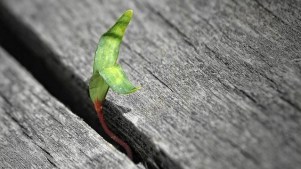
plant-714583_640In the 1920’s, two-tone automobiles were popular. Body shop employees, however, were often frustrated with the process of painting the vehicles. To mask off the cars, they used newspaper or butcher paper glued to the vehicle. The process was messy and the paper was difficult to remove once the painting was completed.

As a salesman, Richard Drew was regularly subjected to the complaints (and profanities) of those involved in the work. Drew worked for the Minnesota Mining and Manufacturing Company and sold the sandpaper used to prepare automobiles for painting. Identifying a gap, he went to work on developing a better solution to the paper and glue method of masking vehicles.

For two years, Drew worked on perfecting a new tape that would make the masking process easier. An executive at the company told him to “stop messing around” and focus on his job of selling sandpaper; but Drew continued working on his idea in his spare time after hours. Eventually he delivered a sample for the body shop employees to try out.

Drew’s tape had adhesive along one edge and didn’t hold very well. The workers told him to go back to the drawing board. They had no use for his “Scotch” tape. At the time, “scotch” was a term used to describe something cheaply made and not worth much.

Drew perfected his design and created what we now know as masking tape. The name Scotch Tape stuck and he received a patent for his work in 1930. His success prompted him to continue working on a clear, cellophane-backed tape still widely used today. You probably have some sitting on your desk.

Success often lies in identifying a gap and finding a way to fill the need that’s represented. It takes time, dedication, a desire to learn from failure, and even the ability to persevere in spite of opposition from others. If the idea is sound, it can take on a life of its own and create even more opportunities for growth.

Drew went on to be a division head at his company, which changed its name to 3M. He encouraged his team to experiment, saying “If it’s a dumb idea, you’ll find out. You’ll smack into that brick wall, then you’ll stagger back and see another opportunity that you wouldn’t have seen otherwise.” By 2000, products originating from Drew’s small department had earned 30 patents and accounted for 20% of all sales.

Drew referred his Scotch tape experience “the gift of finding something valuable in something not even sought out.” William McKnight, the executive who told him to stop pursuing his idea, became chairman of 3M’s board of directors. He created a policy that allowed engineers to spend 15% of their time on passion projects. That same policy has been implemented by numerous other organizations and has resulted in innumerable new innovations across many different industries.

How much does your team value innovation?

The Abby Influence

AbbySenior-127This Saturday afternoon, my daughter Abby will graduate high school. It’s an interesting road that she’s traveled, with plenty of twists and turns along the way. She left an orphanage in Ternopil, Ukraine for the wide open skies of Lubbock Texas. She battled the setbacks presented by her Autism to attain the confidence of an “A” student. She’s grown from a sweet child into beautiful young woman.
During the graduation ceremony, we’ll listen to prepared remarks from several speakers. Administrators and the top-ranked students will share their words of wisdom and offer advice the graduating class. I won’t remember a word of what they say. Instead my mind will wander to the lessons I’ve learned from watching my daughter. She’s taught me all I need to know about success.

Ask questions. Abby asks lots of questions. She’s innately curious. She wants to know how things work, what words mean, why some things exist and others don’t. She wants to know why people act the way that they do and questions her own behavioral motivations. In addition, she is keenly observant and pays attention to the answers to her questions. She remembers what she’s learned and uses it going forward.

Get comfortable asking questions. We should be curious about the world and people around us. There is so much to learn about our customers, our coworkers, and our business. We should read and watch and research those little questions we ask about others and ourselves instead of just letting them skip across our minds. And then we should remember. That’s how we grow.

Be excited. Abby goes all-in, just about all the time. She loves holidays and wants to experience every aspect of them she can. She loves music and television and soaks up her favorite actors and musicians. She enjoys working with me in the shop and willingly dives into whatever project we’re working on together. She loves school and diligently completes her work. As that experience comes to a close, she’s excited about the prospect of working and taking on new challenges.

Get excited about whatever it is that you’re doing. Mundane task or fantastic adventure; both can be exciting if we make them so. It’s our attitude that determines our effort, nothing else. It’s our perspective that matters, not our circumstance. When we choose to be excited, we will be; and others will be too.

Seek improvement. Abby is a hard worker. She wants to do well and be told “good job!” She gives just about everything she does her best effort, sometimes going back and revisiting a project she’s already completed in order to make it better. She’s rarely satisfied with the status quo.

Get better. There’s always a next level. There’s always something that can be done to perfect your craft, no matter what it is. Let perfection be your goal and excellence your calling card. Push “good enough” to the side and seek to break new ground.

Build relationships. Abby doesn’t know a stranger. If she’s met you, she knows you – and you know her. Because she asks questions, gets excited about things, and is always trying to improve herself, she’s a magnet for others. We’ve been blessed to have teachers and friends and a host of others who have rallied around her over the years. Because she makes an effort to reach out, people respond to her and both lives are enriched.

Get involved. Building relationships can be messy. Learning about other people and bearing your own soul a little bit can reveal some things you’d prefer to leave uncovered. However, the reward of developing strong, long-term relationships with others is well worth the effort.

My little girl has grown a lot since I first laid eyes on her, but she’s not finished growing yet. On Saturday I’ll proudly watch her walk across the stage, accept her diploma, and enter into a new phase of exploration and discovery. I’m somewhat anxious for her, but confident that she has the tools she needs to tackle anything that comes her way.

Layers

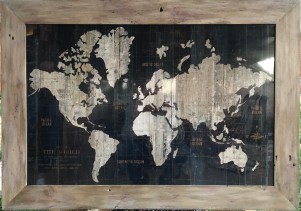
frameMy son Alex recently purchased a new piece of artwork for his room. It’s a picture of the world map, seemingly cut out of weathered boards. It has a very old word, rustic feel to it and he wanted a suitable frame for it – something that complemented the style rather than the sleek and modern options he found within his budget at retail outlets. So this weekend, we went out to the shop to build something custom together.

Finding the material was easy enough. I have a sizable stock of old wood from prior projects. He identified some old fence pickets that were straight and solid but with the right amount of character for his chosen aesthetic. After cleaning them up, milling them to accept the artwork, and cutting everything to size, it was time to address the look of the frame. Running the boards through my planer had revealed the fresh wood underneath the surface. They needed to be aged again.

I pulled out a variety of wood stains and we set to work. I’d lay down a color and Alex would follow behind me; blending each coat into the prior one to his liking. We repeated this process several times, mixing blues, reds, browns, and whites. Sometimes we used a brush, and sometimes a rag seemed like the appropriate tool to work with. Eventually, he felt like the right balance of colors was achieved and we left the pieces to dry overnight. Yesterday afternoon we assembled everything for the result you see in the picture above.

Note: It actually looks a lot better than this image represents. I need a photographer friend to give me pointers on taking pictures of artwork without getting reflections on the glass.

As we admired our handiwork last night and showed it off to the rest of the family, I couldn’t help but reflect on the process we went through… and how much it mirrors our journey through life. Each of us is a custom work of art. We are who we are as the result of a unique sequence of events. We’re just like this frame – made up of several colors, layered and blended repeatedly in a pattern of events that could never be replicated.

You have been exposed to circumstances and people that shaped who you are today. You’ve made innumerable decisions that have brought you to where you are right now. It’s the culmination of countless influences that now frame your world. And in turn, you have played a part in framing the world of those you’ve come in contact with.

Think about that last concept for just a minute. Everyone you have ever met is different because of your influence. In some way, you influence people. How you influence them is up to you. Will you provide a foundation; a basecoat upon which others will build? Will you be the splash of color that brightens up an otherwise dull corner? Or will you be the brush that helps blend various elements into a beautiful masterpiece?

Every person you meet is an opportunity to contribute to something special; to play a part in the creation of a masterpiece. No one else will ever create a piece of work like the one Alex now owns. He is extremely proud of it. And I’m proud to have played a part in helping it come to be.

The Quest for Joy

person-731243_1920The hottest title on Netflix right now is Tidying Up with Marie Kondo. Based on the professional organizer’s 2014 book, and introduced to coincide with New Year’s resolutions, the show has everyone talking. Fans are quick to share how Kondo’s KonMari method has changed their lives. Detractors will tell you why it simply doesn’t work for Americans. And everyone is talking about joy.
I was introduced to this phenomenon one recent evening when I walked in on my wife watching the premier episode of Tidying Up. At the center of the show, and the KonMari method, is the idea of joy. When you hold an item, say a sweater from your closet, does it “spark joy?” If that sweater sparks joy, then keep it. Store it in a way that allows you to access it and benefit from the joy it brings. If there’s no spark, then respectfully let it go and move on.

That word “joy” is key. It’s a noun, meaning a feeling of great pleasure and happiness. The KonMari method of organizing is all about surrounding yourself with those things – and only those things – that make you feel positive emotions. If something sparks negative emotions, like anxiety, fear, or even sadness, then remove it.

But few people realize that joy is also a verb. It stems from the Latin word gaudēre, or rejoice. When the things around us spark joy they cause us to take action. We feel encouraged and affirmed; and act in order to repeat those feelings. We take further action to continue the process of sparking joy.

I spent part of the last long weekend tidying up my workshop. As I did so, I reflected on this idea of surrounding myself with things that spark joy. I wound up throwing out a lot of stuff. There were tools that didn’t work, and that I’ll likely never get around to repairing. There were wood scraps and fasteners that I’d been telling myself (for far too long) might come in handy. I kept those items that I felt brought me joy – tools that I like using because they work well and allow me to accomplish a job effectively, and materials that I plan on using in specific projects during the upcoming weeks. My next step is to organize them in ways that honor their purpose and allow me to access the joy they represent.

Back in the office, I’ve still been thinking about this idea of sparking joy. Only now, my thoughts have turned to the people around me. Have I surrounded myself with people who spark joy? Do they make me smile? Do they cause me to feel encouraged? Does their presence motivate me to take action; to contribute in meaningful ways? Am I happy to be in this space because of them?

And more importantly, what about me? Do I spark joy in others? Given the choice, would the people I interact with choose to honor me and the feelings I generate in them? Or would they decide to respectfully part ways? Would they tidy up by eliminating the clutter I represent?

Before you answer, give me some time to work on a few things. The KonMari method is an introspective process, and it takes time. Decisions this significant aren’t meant to be made lightly. I suspect there are changes I need to make in order to be capable of sparking joy in others. I believe I have a little more tidying up of my own to do.

The Incredible Power of Tradition

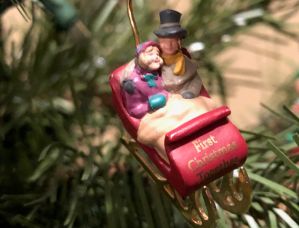
ornamentWhen Susan and I got married (November of 1991), we knew Christmas was just around the corner. There wasn’t a lot of time to set up a joint household and figure out how we were going to decorate our new place for the holidays. It was stressful enough thinking about how we were going to navigate all of the family, work, and other gatherings; let alone establish some kind of celebration of our own. We knew that our own traditions would evolve over time, particularly once we added children to the mix. But there was one tradition we decided to start right from the beginning, and I’m so glad that we did.

We bought a small, table-top tree and an ornament commemorating our first Christmas as a married couple. The ornament is from the Hallmark Miniature series and features a Victorian-era couple in a sleigh. It has the words “First Christmas” and the year printed on it. The idea was that each year, we’d find a new ornament to celebrate our new family and place only those items on this particular tree.

As you can imagine, the tree looked pretty bare at first. That single ornament looked rather sad floating in the sea of pine needles. But a short year later it was joined by a second one. Then came a third and a fourth and so on. The tree began to fill out with ornaments and memories. Now, twenty-seven years and twenty-eight Christmases later, we’ve got a nice little collection assembled. It’s gotten harder to find the miniature ornaments, and we’ve had to hand-write the dates on a few; but even those elements add something to our shared story.

Traditions are important, as they serve as markers for us to orient ourselves to. Each time we engage in meaningful traditions, we reinforce values that define who we are and what we stand for. As Susan and I look at our marriage tree, and either put the ornaments on or remove them for storage, our commitment to each other is strengthened in a variety of ways.

Obviously, there’s the connection to the past. Each ornament signifies a chapter in our life as a couple. We can pick up an ornament and recall significant events that happened during the 12-month period it represents. Recalling the good times (and yes, the bad ones as well) helps to cement our history and what our family stands for.

There’s the anticipation of searching for and selecting each new season’s ornament. Participation in the tradition brings us together in a time when our schedules pull us apart more often than not. As we look for the next addition to the tree, we engage with each other and rediscover what it is that we have in common.

And there’s also the joy of sharing the tradition with others. Back in 1991, I envisioned a future where our children would open each ornament; counting the years to ensure all were accounted for and identifying the year when they first entered the story. That came to pass. Just this weekend, my daughter Abby sat down and decorated the tree, strategically placing each ornament for maximum effect.

I’m sure you have traditions of your own. Some may be heartfelt while others are corny and cause eyes to roll. But know that each of them are meaningful. Each of them are important.

Don’t let this season disappear in a blur. Rather, grab hold of your traditions, and create new ones, so that you and those you care about have a reason to come together. Make a point to celebrate, anticipate, and engage this Christmas.

A Day in the Life

circus-2885542_640Howard Tibbals began playing with dioramas around the time he turned seven, back in 1943. You’re familiar with dioramas, right? They’re three dimensional models depicting a scene, often used in grade school classes to help kids learn about history or nature. At some point, each of my three children came home declaring their need for a shoebox so they could build a diorama of the coral reef, or the old west.

Tibbals dioramas weren’t the result of a school assignment, but rather his fascination with the circus. He began by recreating a single scene and then added to it. He kept adding to it for over 30 years, finishing the majority of it in 1974. By this time, it was huge – around 3,800 square feet. It made its public premiere at the 1982 World Fair in Knoxville, Tennessee. (I remember going to that fair, though I don’t recall seeing the giant circus diorama.)

The Howard Bros. Circus (so labeled because management of the Ringling Bros. and Barnum & Bailey Circus refused his request to use their name) is built ¾ inch to one foot and includes over 42,000 individual pieces. There are eight tents including behind-the-scenes depictions of 1,500 workers and over 500 animals. Every item included with his depiction of the circus can be loaded into the 55 scale train cars included. The attention to detail is meticulous. Looking at the display is like seeing the operation suddenly frozen in time.

What if someone created a diorama of your average work day? Imagine that, at any given moment, time froze and whatever you and your coworkers were engaged in was captured in realistic detail for future generations to see. What would you be doing? What would you be saying? What would your diorama depict?

Would you be serving customers or neglecting them?

Would you be assisting coworkers or avoiding them?

Would you be coaching those you lead or demanding something from them?

Would you be contributing or complaining?

Life is made up of moments; any one of which can define us to someone else. They say that first impressions are formed in a matter of seconds. So are second and third impressions. Our perception of the world, and the people, around us changes constantly. So how we choose to spend the minutes and hours of our day can have long-lasting implications.

We live in a world where attention is fleeting and loyalties change on a whim. We cannot afford to sit idly by and assume that things will work out. We can’t hope that the numbers will swing in our favor or that circumstances will bring success our way. It’s our own actions, moment by moment, that determine whether we succeed or fail. Periodically, take a mental snapshot of yourself – envision yourself in a diorama – and see if you’re happy with the image.

Howard Tibbals spent a large portion of his life faithfully crafting the world he wanted to convey. His final creation was the result of numerous moments in time, stitched together in a fascinating scene for others to see. Today, the entire exhibit is part of the John and Mable Ringling Museum of Art in Sarasota, Florida.

While You Wait…

waiting-410328_640According to a Timex survey conducted last year, Americans spend an average of 32 minutes waiting each time they visit the doctor. We spend 28 minutes waiting in security lines at the airport, and almost as long (21 minutes) waiting for our significant other to get ready for an evening out. We spend 13 hours each year on hold waiting for a customer service agent, and 38 hours annually waiting in traffic – that’s actually closer to 50 hours for those of you in big cities.

To wait is to “stay where one is or delay action until a particular time or until something else happens.” When we wait, we’re standing by, marking the time, and holding back until some circumstance outside of our control is satisfied. It’s this lack of control that makes waiting so infuriating. There’s something we want or need to do, but we’re forced into inactivity because of something or someone else. It’s no wonder that we hate waiting.

What if we didn’t have to wait? What if we could take back control of our time and our future? What if we could do that simply by changing a single word? The next time you find yourself in a holding pattern, mentally change the experience from one of “waiting” to one of “anticipating.”

To anticipate is to “regard as probable, to look forward to, and to take action in order to be prepared.” The state of anticipating is the opposite of waiting. We’re not standing by; we’re moving forward. We’re not marking time; we’re making use of it. We’re not holding back; we’re pouring ourselves into activities so that, when the circumstances we can’t control work themselves out, we leap forward without hesitation.

Think about the days and weeks leading up to a vacation. You’re likely looking up hot spots at the target destination, and researching fun things to do. If it’s a road trip, you’re cleaning out the car and addressing any necessary maintenance issues. You’re going through your closet to make sure the clothes you have are appropriate and desirable for the trip. Hopefully, you’re making sure everything at the office is up-to-date so that you can leave for vacation without leaving any loose ends behind you.

You’re not waiting for the start of your vacation; you’re anticipating it. The calendar is out of your control. There’s simply nothing you can do to make the days go by faster. However your mental focus is on maximizing the things you can control. And by anticipating the coming start of your vacation, you ensure it’s as rewarding as possible.

Contrast that approach to the “waiting” we do at work. There’s so much we depend on other people for: information from customers, resources from coworkers, approvals from supervisors. How do you spend the time that passes while they are in control? How much time do you spend waiting on others vs. anticipating their eventual involvement?

I spend far too much of my time waiting. I get frustrated when other people or departments aren’t moving as fast as I feel they should. Instead, I should be anticipating. I should be moving forward in expectation that my actions are propelling me closer and closer to success. When the parts outside of my control fall into place, I’ll be ready.

Robert Kiyosaki had this to say about waiting. “If you are the kind of person who waiting for the ‘right’ thing to happen, you might wait for a long time. It’s like waiting for all the traffic lights to be green for five miles before starting the trip.”

Let’s adjust our mental focus and engage in more anticipating. What are we waiting for?