

A Matter of Respect

uluruIn central Australia, there’s a huge sandstone formation called Uluru. It rises 1,142 feet above the surrounding flatlands of the outback. Discovered in 1873 by surveyor William Gosse, it was given the English name Ayer’s Rock; in honor of Sir Henry Ayers, the Chief Secretary of Australia at the time. At almost six miles in circumference, Uluru is striking landmark; seemingly changing colors depending on the day and time of day you view it. Since the 1950’s, Uluru has been sought out by tourists wanting to see it for themselves.

Many also want to climb it. It’s a steep climb and a chain handrail was added in 1964 to aid those making the trek to the top. About a third of visitors to Uluru have decided to climb, despite opposition from the locals. Uluru has great cultural and spiritual significance to the indigenous people, the Pitjantjatjara Anangu. Archeologists have found evidence of human habitation at Uluru dating back more than 10,000 years. The route of the tourist climb crosses a sacred dreamtime track, a route used by the Aborigines to commune with their ancestors.

As you can imagine, opinions differ on the morality of climbing Uluru. Some choose to honor the feelings of the Anangu. They are sensitive to how their actions impact others and seek out ways to enjoy the area without disrespecting those with strong ties to the land. Others see only their own interests. They view access to Uluru as a right and can’t understand why the simple act of climbing a rock would upset anyone.

Empathy is the ability to feel someone else’s emotions, and taking action to help. Those who can empathize with Anangu for example, can understand the pain of watching others treat a sacred place of worship as a tourist attraction. They can see how their own actions could easily add to the pain being felt, and so they alter their behavior in order to ease that pain.

Empathy is one component of emotional intelligence, and plays a key role in interpersonal relationships. At home, at work, and in the community – empathy is what connects us to other people and makes it possible for us to interact in mutually beneficial ways. A lack of empathy is often the cause of dysfunctional relationships and has been shown to be a factor in many studies of productivity and workplace satisfaction.

Experts offer the following tips to help develop your empathy muscle:

  • Put yourself in the other person’s shoes.
  • Show care and concern.
  • Acknowledge the other person’s feelings.
  • Ask questions to help you understand.
  • Mirror aspects of their behavior to build rapport.
  • Don’t run ahead of the conversation.
  • Don’t judge.
  • Show emotional support (trust and affirmation).

This past Friday, the last climbers descended from Uluru just after sunset. As part of an agreement with tribal elders, and bolstered by growing public support, this particular tourist attraction is now permanently closed. You can still hike around the base of Uluru, and there are plans for additional attractions that will help showcase the rock and its historical impact; but climbing is illegal and subject to hefty fines.

The reclusive indigenous people of central Australia are excited about the future; for all who visit Uluru. They feel a connection to the land that runs deep. It’s a connection they feel can and should be shared – with those willing to listen.

The Three-Legged Leader

shoes-2060519_640Some of my favorite memories from childhood revolve around Field Day. Each spring, as the weather began to warm up, officials at my elementary school would announce a date for the event and the entire student body would erupt in cheers. Field Day meant class was cancelled so that everyone could spend the day outside competing in a variety of games. There were individual events like the 50-yard dash and the egg race. I preferred the team competitions, though. I would scramble to find just the right partners in order to sign up for relays, the wheelbarrow race, and my favorite – the three-legged race.

The three-legged race always included a number of spectacular wipe outs. You’d think the most athletic kids would have a leg up in this event (pardon my pun), but they didn’t. Typically, it was their overconfidence that did them in. They would always get off to fast start, sneak a glance back at the rest of us, and then trip over their own feet. In an instant they went from front-runners to speed bumps.

Winning a three-legged race isn’t about physical prowess. It’s about strategy, teamwork, and leadership. Focusing on the same techniques can help us overcome stronger competitors in the world of business. You don’t have to be the biggest, the fastest, or the most experienced to be successful. You just need to be a three-legged leader.

Start by choosing the right partner and tying yourselves together tightly. In a three-legged race, you want someone who’s about the same height and weight as you so that your movements are coordinated. Too much of a mismatch and you’ll have a hard time finding a rhythm. Tie your legs together at the ankle and again just below the knee. Make sure your legs are together; avoid a loose connection because too much independent movement will quickly send you on different trajectories.

As a three-legged leader, choose teammates who share the same goals, instincts, and work ethic. Take time to get this right, and identify strategies that align people with in ways that complement each other. Teams win when teams work together.

Each three-legged race team needs a leader; someone who will dictate the strategy. Which leg do we start with – the tied one, or the free one? The leader is the one who monitors the competition and looks for obstacles. They may even call out a cadence to ensure both parties are operating at the same speed. The person who leads this particular race may be different than the leader for other competitions. It depends on who is best suited for the circumstance.

As a three-legged leader, identify the team member with the skills, experience, and drive necessary for a particular initiative. This means you will have to step back into a support role, following their lead in order to position the team for victory. The best leaders understand when it’s time to let someone else take point.

Communication plays a big part in a three-legged race. Any team-based effort does. If the pace is too fast or too slow for one, then both need to adjust. Encouragement is essential, as is a healthy dose of fun. No one likes being part of a team where the only communication is derision and blame.

Three-legged leaders understand that when a team is having fun, they’re more likely to succeed. They encourage team members to communicate freely. A healthy team involves plenty of debate, discovery, and evaluation. All of this is done within a culture that promotes team success above individual achievement. When the team wins, everyone wins.

Try a little three-legged leadership and see how far your team can go.

Alone

man-1246233_640I’m currently binge-watching season five of Alone. This History Channel program follows 10 survival experts as they each survive alone (that’s where the name comes from) in the wilderness. Separated from each other by several miles and with no contact with the outside world, they are left to carve out an existence using limited resources, their experience, and whatever internal fortitude they can muster. The participant who lasts the longest wins.

This season features a collection of prior contestants. Each failed to win their respective season and are now looking for redemption. It’s been very interesting to see what lessons were learned the first time around and how their approach changes given a second chance.

Take Randy Champagne from Boulder, Utah. In Season two the wilderness instructor lasted 21 days before tapping out. He handled every aspect of the challenge well, but ultimately grew lonely without human contact for three weeks. Obtaining food and creating shelter, what most would consider the core obstacles of the challenge, were handled masterfully. He simply starved from lack of community.

Coming into season five, Champagne recognized this would be the hurdle he’d need to overcome in order to win. His plan was to keep his mind busy with hunting and bush craft projects in order to ward off the loneliness. This time around he lasted 35 days.

Humans are inherently social animals. We’re geared to operate as part of a unit, not as individuals. In order to function properly, we require the give-and-take that comes with interaction. Each of us needs what others have to offer – and we need to provide them with what we bring to the table. Removing us from the social construct is like removing pieces from a machine. The parts simply don’t function on their own.

Science has proven this out through thousands of studies over decades of research. But you don’t need a PHD to understand the importance of community. The pull to be a part of something bigger is hard-wired into each of us from birth.

That’s why the social aspect of work is so crucial. The connections we make with coworkers and customers is necessary for the organization to function well. The more siloed we become – the more we retreat behind email and rely on policies to communicate for us – the more our work suffers. Work, just like any other endeavor, is improved by socialization. Despite all our technological advances, work works best within the context of community.

Even the hardiest among us fall victim to the hunger for companionship. The longer we attempt to operate in isolation, the stronger the pull becomes; and the harder it is to go on. Surrounded by other people, we can still find ourselves struggling to find real connection. Without it, we feel lost. Work continues, but the passion is gone. The desire to continue slowly evaporates. Or, as Randy Champagne explained after calling for rescue “It’s not being out here and surviving. It’s being out here and surviving alone.”

A Slap in the Face

child-1099770_640With March Madness in full swing, much of the country has basketball fever. Television schedules have been adjusted to account for viewership pulled to the college games, and other sports take a back seat this time every year. For those who aren’t fans of basketball, it can be hard to find something other than reruns to watch.
Or maybe not.

I’ve stumbled across a new sport that offers a little bit of everything. There’s drama, suspense, and hard-hitting action…literally. The sport in question is competitive slapping. That’s right, grown men have made a sport out of slapping each other. Last weekend in the Russian town of Krasnoyarsk, Vasily Pelmen (a 370-pound walk-on competitor nicknamed “Dumpling”) decimated the competition as part of the Siberian Power Show. He walked away with a purse of 30,000 rubles – the equivalent of $470.

The rules of the contest are simple. Two men face each other across a small table. They take turns delivering an open-handed slap to the other’s face. The contest continues until one of them cannot continue or the judge calls the match out of safety. Even though they can clearly see the slap coming, many of the competitors I saw on video were knocked off their feet by a blow from their opponent. They clearly weren’t prepared for what was coming.

Workplace slaps to the face rarely come with physical contact, but they can still sting; and they usually involve communication issues. Last-minute demands, surprise assignments, and sudden changes to strategy – they hurt, but can be avoided with a little forethought. Here are some tips to help keep you and your teammates from getting knocked out.

Look across the table. Today’s businesses can’t succeed without teamwork. Individuals and business units alike must consider others who may be impacted by their work. Look beyond your role in the project. Who else plays a part in the process? Who will pick up where you leave off? Think in terms of all who will be affected, even far down the road, so that you avoid blindsiding someone.

Plan your strike. Before you communicate, think about how your words will be received. Ask others to help you anticipate reactions from those on the receiving end. Who will be excited by it? Who will be disappointed, or surprised? Take some time to choose your words so that teammates are set up for success, not reeling from shock.

Expect the unexpected. No amount of planning will eliminate the occasional surprise. How we respond to surprise news is important. Understand that you will occasionally be caught off guard. Do your best to stay connected with other parts of the organization to minimize surprises when they occur. Stay on top of your regularly-assigned work duties so that you can more easily absorb unexpected demands. And if you happen to be the one delivering the surprise, be ready for the inevitable reaction.

A slap to the face may be fun to watch; but nobody wants to be on the receiving end, even if it does come with a title and prize money. The real reward lies in being part of a smoothly operating team. Up your communication game and leave the red, stinging face to Dumpling and his buddies.

Turning a Blind Eye

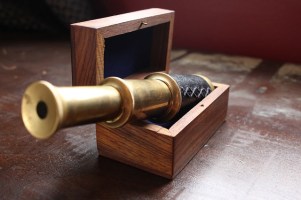
telescope-971430_640During the Battle of Copenhagen in 1801, part of the French Revolutionary War, British Naval forces descended on Denmark. The intent was to prevent the Danish fleet from joining with ships from Russia, Sweden, and Denmark. Britain maintained a superior navy, but a newly formed alliance of these four countries, called the League of Armed Neutrality, would threaten that position and negatively impact Britain’s ability to negotiate favorable trade agreements. By decimating Denmark’s contingent of ships, Britain would stave off a potential threat.

The fleet arrived on March 30th under the command of Admiral Hyde Parker and his second-in-command Vice Admiral Horatio Nelson. Parker had a reputation as a cautious strategist and moved slowly, in stark contrast to Nelson; a man who preferred quick, decisive action. Nelson’s exploits had made him a war hero, and he remained a highly trusted officer, despite having been blinded in one eye during one of his earlier battles.

The British found the Danish fleet well prepared for their arrival thanks to Parker’s delay. They had moored their ships just off the cost, creating a defensive wall which would prevent any single ship from being targeted. The arrangement of ships in the harbor allowed their forts, armed with twice the guns of a typical ship, to join in the battle as well. In addition, this allowed for supplies and repairs to be coordinated from land without fear of attack.

It was decided that Nelson would lead the attack on April 2nd with 12 ships. These were smaller, and more maneuverable in the shallower water, but less heavily armed. Parker would command the heavier ships in deeper water preventing any Danish allies who might arrive from cutting off retreat. He would also engage the forts and other land defenses with his more formidable artillery.

Almost before the battle began though, three of Nelson’s ships ran aground. Without charts of the area, they had only last-minute soundings to gauge the depth of the channel. There was no time to regroup though as Danish forces began firing. Soon, Nelson’s ships were fully engaged and by 1 pm the battle was in raging all along the line.

Outside the channel, Admiral Parker could see little. The smoke made it difficult to tell what was going on, though he could see flag signals from the three grounded ships. Given Nelson’s depleted fleet, the lack of visibility to the front, and his inherently cautious nature, Parker ordered his flag captain to signal retreat at 1:30 pm.

However, retreating at this point in the battle would have exposed Nelson to heavy fire and would undoubtedly been disastrous. Informed of Parker’s order, Nelson turned to his own flag captain, Thomas Foley, and said “You know Foley, I only have one eye – I have the right to be blind sometimes.” He then raised his own telescope to his blind eye, saying “I really do not see the signal,” and continued the attack. By 2 pm, The Danish were defeated.

Nelson had triumphed, and in the process provided us with a commonly used idiom. Today, we use the phrase “turning a blind eye” when describing someone who ignores undesirable information.

The Conversation

conversationIn 2008, the city of Perth in Western Australia adopted a program called “Forgotten Spaces.” Focused on the city’s central business district, the plan focused on revitalizing the downtown area by updating its laneways and arcades; the narrow streets and alleys located between the towering office buildings. These spaces offered intimate potential settings for small shops and bistros – just the kind of environment city officials hoped would bring people (and their money) back to the city at the end of the workday.

As part of the plan, the laneways needed a facelift. At the time, they were used by delivery vehicles, for storage, and as trash dumps. They were dirty and uninviting; definitely not the kind of place you’d want to spend your evening. After addressing these logistical issues, officials invited local street artists in to paint murals in these forgotten spaces. This move helped to spur curiosity and the laneways slowly transitioned into desirable hangouts.

I recently toured some of these laneways and saw firsthand the results of this revitalization effort, including the artwork. On a wall overlooking Howard Lane, this piece drew my attention and really made me think. It was created by local artist Stormie Mills and is called “The Conversation.”

I don’t know about you, but there doesn’t look to be much conversation taking place in this scene. Given the goal of the “Forgotten Spaces” project, to bring people together, this piece of art appears to represent the opposite. One character isn’t even part of the discussion, while the two that are don’t appear to be very happy about it. Rather than conversation, it seems to depict isolation and exclusion. But perhaps that was the artist’s point.

Much of what passes for conversation today is anything but. In my opinion, most interactions with other people are short, one-sided, and do little to bring people together. In our rush to accomplish the next task, we’ve stopped talking with other people in favor of talking at them. In other words, we’ve forgotten what real conversation is.

When I think of meaningful conversation, here’s what comes to mind:

  • It starts with an invitation. All of the great conversations I’ve been a part of began with someone asking me to participate. They’re kicked off by one person expressing a desire to share in discourse with another. They aren’t demands, or official meeting requests; they are invitation to explore ideas with someone else.
  • It includes good questions. In a meaningful conversation, I’m asked what I think, how I feel, and how I would like to proceed. I’m not merely subjected to someone else’s ideas or given a task list. My thoughts matter.
  • It involves a lot of listening. When I’m engaged in a meaningful conversation, I’m allowed to share my thoughts without interruption. I’m not talked over, shouted down, or ignored. The other party doesn’t just hear me, they listen. That means they aren’t simply waiting for me to stop talking so they can voice their next point. They’re actively engaged in processing what I’m saying so that they understand me.
  • It’s a two-way street. A conversation is a dance. It’s a give and take. I ask a question, and you share your thoughts. Then I share some information as well. Conversations are not one-sided, so both parties honor the obligation to balance the speak/listen dynamic.
  • It’s positive. Great conversations leave you happy they took place. You walk away enriched in some way – educated, inspired, affirmed. Meaningful conversations end with both parties looking forward to the next encounter.

Perhaps Mills was trying to spark meaningful conversation through this piece of art. Maybe the intent is to create a spark so that people visiting this particular laneway would stop to think about their interactions with others. I invite you to share this image with your team and see what conversation takes place.

About Face

unhappy-389944_640.jpgIf you drive down a particular stretch of Interstate 80 outside Iowa City, you may be surprised to find a trio of giant faces staring at you from a cornfield. Angry Guy, Befuddled Guy, and Disappointed Gal are 12-foot tall cutouts created by artist John Cerney about eight years ago – an installation he calls Emoticons. Similar works can be found in fields along interstates winding through 23 other states.

Cerney took photographs of friends modeling different emotions, enlarged them, and then painted one-foot square panels that were assembled into the final art pieces. His inspiration came from an emerging online trend. He says “people were starting to use emoji’s online at that time, so I thought I would create three faces expressing those kinds of emotions.” It’s been one of the most negatively-received artworks he’s ever created. It seems people don’t like seeing faces that depict confusing or negative emotions.

Go figure.

Cognitive scientist Aleix Martinez says there 21 basic emotions. Six of these (happiness, sadness, fear, anger, surprise, and disgust) are called basic emotions, while the rest are combinations of these. A few years ago, Martinez’ team began researching facial expressions across cultures. In particular, they wanted to know if there was a common facial expression that signaled disapproval regardless of the spoken language used. It turns out there is.

They dubbed it the “not face” – furrowed brow, lifted chin, and lips that are pressed together. A mixture of anger, disgust, and contempt, this expression was repeatedly manifested in their research without prompting and across all cultural and language differences. In some cases, such as with those who communicate using sign language, the “not face” is the primary method for voicing displeasure. Speakers could use signing, or just shake their head, but even they tend to rely on the facial expression automatically.

During interactions, we gain more information from a person’s non-verbal behavior than we do their words. When we encounter a negative facial expression, for instance, we give more emotional weight to that than any positive statements the person might be sharing. In fact, we often pick up on facial expressions from several feet away; long before any words are exchanged and adjust our own emotional state (and our behavior) accordingly.

Burned into my memory is an encounter I had with an employee of mine many years ago. She timidly knocked on my door and asked if she could speak with me for a minute. She said “I’ve been wanting to talk to you for a couple of days, but the look on your face told me the time just wasn’t right.” I was shocked. I hadn’t been angry, or preoccupied. There was no reason why I wouldn’t have welcomed an interaction with her. Thinking about it now, it’s obvious that I’d just been walking around with my “not face” on.

So here’s what’s really been on my mind as I thought about this. What emotion does your face communicate at any given moment? Is it happiness, or the “not face?” How would people react to seeing a 12-foot tall rendition of your face on the side of the road?

Choosing the Right [K]not

rope-1333314_640As a Boy Scout, you learn many useful things. From day one, you are taught a variety of skills from first aid, to cooking, to outdoor survival. With over 100 merit badges available, the amount of knowledge you can acquire is overwhelming. And a common thread through many of these pursuits is the use of knots.

Knot tying is a core scout skill. Whether it’s setting up a tent, or securing a load to your backpack, understanding how knots work (and what they’re used for) goes a long way toward making life easier and more productive. Of course knots are extremely helpful in non-scouting pursuits as well. Still, it’s important to understand which knots to use and which ones to avoid in a given scenario.

For instance, the square knot (or reef knot if you’re a sailor) is the most basic of knots. It’s used to tie the ends of a single rope together securely. It comes in handy when tying down a bundle of objects as it doesn’t slip.

The bowline is a knot that creates a fixed loop in one end of a rope. It is also easy to tie and can be used in a number of situations. One of the most common uses is in first aid recovery scenarios. The loop can be positioned under an injured party’s arms and used to pull them out of a hairy situation. The bowline is perfect for this application because the knot won’t slip and tighten uncomfortably around the person’s chest.

The taught-line hitch is slightly more complicated, but just as useful. This is an adjustable loop knot designed to maintain tension. When you need to set up an awning or tent, this knot can be slid up or down to increase or decrease tension on the rope in order to keep your structure upright and in place.

There are many other useful knots available to use, and any of them could be perfect under the right circumstances. However, there are two nots that I feel should be avoided at all costs. These nots provide little, if any, value and can actually be counterproductive if used. Unfortunately, most of us tend to fall back on them far too often.

The first of these is the “cannot.” I hear this one pretty often. Unfortunately, I also use this one quite bit myself. That’s because it’s such a readily available option. When a task appears difficult, it’s easy to say “I can’t do that.” When policies or procedures present obstacles, “I cannot” quickly slips past our lips. But relying on “cannot” represents a victim mentality. It means we’ve accepted a lack of control and initiative. That’s not the scouting way, and it shouldn’t be ours either.

The “cannot” is often used as a cover for the “will not.” We often rely on “will nots” when personal preferences and biases get in the way. You also see them used when pride and resentment are part of the mix. When I don’t like something or someone, the tendency is to let “will not” be my default response. When I feel like I’ve been wronged, left out, or ignored then “will nots” start dominating my approach to other people.

It’s easy to see how overuse of these two nots can be detrimental. There are times when saying “I cannot” or “I will not” is the right move; but if these become our go-to tools, we’re probably not very successful. Those who “cannot” or “will not,” typically “do not.”

There’s another not that I’d like to suggest using in place of “cannots” and “will nots.” It’s called the “why not.” Why not try something you don’t think you can accomplish? Why not look for a way around that obstacle? Why not prove the naysayers wrong? Why not risk looking foolish? Why not go for the win? Why not practice the “why not” today?

Sticks and Stones

information-3011747_640In the mid 1700’s, English physician Alexander Sutherland encountered a number of patients dissatisfied by what they perceived as his inability to treat their illnesses. In some cases, patients repeatedly insisted that Sutherland provide them a potion or salve to ease their suffering, despite his assurances that there was nothing more to be done. In a desperate attempt to help, and to stop the complaining, Sutherland began prescribing inert drugs – substances which held no medical benefit yet posed no threat to the patient.

Miraculously, many patients immediately displayed improvement. Their pain subsided. Their symptoms faded. Their mood and outlook changed for the better, as did their impression of Sutherland. Other physicians followed his lead. Soon the prescription of placebos became common practice, even though doctors could not explain how the application of sugar pills or ointments made from bread paste could possibly make a difference. Dispensing placebos eventually became a crucial part of the testing process for new drugs and the practice is still used today.

It’s called the placebo effect. Patients who believe that what they are given will have a positive effect tend to experience that effect, even though the placebo has no inherent medical benefit at all. The patient’s own mind takes over the healing process. Because the mind believes good things will follow, it causes the body to experience the benefits in the absence of the actual drug. And as more recent studies have shown, a placebo doesn’t have to be a drug to be effective.

Paul Dieppe of the Exeter Medical School says that “we all have the ability to self-heal in many conditions and that can be activated by our interactions with other people. Experiments have found that placebos provided by a doctor that talks and acts empathetically can be more effective than actual drugs given by one who seem unconcerned with their patient’s welfare. A doctor’s demeanor is as important as their medical competence.

But is the doctor’s office the only place where good bedside manner makes a difference? Don’t we desire improvement in the operation of our businesses? Don’t we long for better relationships with our customers and the members of our organization? If Dieppe and his fellow researchers are right, then the key lies in the way we approach those interactions. Our ability to solve organizational ailments depends as much, if not more, on the way we communicate with each other than on any business strategy.

Think about the last conversation you had with a coworker or supervisor. How did the way they spoke to you impact your feelings about the interaction? How did their behavior influence your desire to work with them further? Did their words and actions have a positive effect on your productivity for the rest of your day? More importantly, what impact do you fell your behavior had on them?

You see, there’s a dark side to the placebo effect. Patients in drug trials alerted to possible side effects have up to a 25% chance of experiencing the symptoms of those side effects, even when they’ve only ingested a sugar pill or other harmless substance. It seems that the mind, focused on negative inputs, can manifest ailments as easily as it can cure them. And the same doctors whose encouraging bedside manner aids in patient healing? Well, all they have to do is adopt a negative or apathetic outlook and patients begin taking a turn for the worse. It’s a phenomenon called the nocebo effect, and it’s just as real.

You may not have taken a Hippocratic Oath – a vow to “do no harm.” Yet, by taking on the mantle of leadership, you’ve promised to act for the good of the organization. You’ve taken on a responsibility to behave in ways that positively impact the minds and hearts of the people you serve and work with. When you fulfill that promise, you become more powerful than any drug.

Where’s the White-Out?

typewriter-1248088_640As an executive secretary for Texas Bank and Trust in the 1950’s, Bette Nesmith Graham did a lot of typing. This being before the modern age of computers, any mistakes she made using her typewriter meant starting over. There was no backspace button, and even simple errors in her work could result in thousands of dollars being misplaced.

Working in her kitchen, Graham began mixing tempera paints with other household items in a blender. Before long, she had stumbled upon a concoction she could apply to the paper, covering a mistake and allowing her to type over it. She called it “Mistake Out” and began handing out small bottles of it to her coworkers.

A couple of years later, Graham started the Mistake Out Company and started selling her product, which was still made in her kitchen. When she accidentally put her own company’s name on a letter from the bank, she was let go and devoted herself full-time to growing the business. She sold the company and its flagship product, renamed Liquid Paper, to the Gillette Corporation in 1979.

Not many people use liquid paper these days. Digital communication makes is easy to correct mistakes in emails, documents, and even social media posts. But that doesn’t mean we’ve gotten any better at preventing mistakes from slipping out. I make plenty of them each and every day.

Oh, tools like Spell Check and AutoCorrect may catch the easy stuff; but it’s still up to us to correct the most important aspects of our communication before hitting the send button. Things like tone, clarity of language, and audience selection have replaced “i before e” and “who vs. whom” as the top faux pas. Communicating in the digital age requires more attention than ever, even as attention spans continue to shrink.

Here are three of the most common modern-day mistakes and some thoughts on how to correct them.

  • The premature send – You accidentally hit Send before completing your message, and have to follow up with another email or text to finish the thought or correct an error.
    • Try composing your message before adding names in the To: line. Any accidental Send will fail without an addressee, providing you with a safety net.
    • Re-read your email for clarity and tone. I often find reading an email out loud helps identify awkward sentences and incomplete thoughts.
    • Ask a trusted coworker to read your message before you send. They can help spot issues you may be blind to.
  • The unintended audience – Your message goes out to people it shouldn’t.
    • Double-check the names added in the To: field. Auto Complete sometimes grabs the wrong ones.
    • Before using a distribution list, verify who is in it. These are convenient, but can easily flood email boxes with unnecessary emails, so use sparingly.
    • Avoid the Reply To All option whenever possible. Make sure your message only goes to those who need to receive it.
  • The War and Peace message – Your message is simply too long.
    • Identify the specific action you want the receiver to take and start with that. Any part of the email that doesn’t support this objective is fluff.
    • If you find yourself needing to provide lots of detail, break things up. Use bullets, numbered lists, or headings to separate big chunks of text into more digestible pieces.
    • Consider just picking up the phone. It’s hard to convey emotion and nuance in an email. Sometimes and old-fashioned discussion is the best way to communicate.

Liquid Paper is still made today, though it’s used primarily for covering up mistakes in handwritten correspondence than anything else. It seems we can’t get away from the occasional goof-up no matter what medium we communicate in. Thankfully, we can all learn from our mistakes correct them ourselves.