

See the Need

toilet-paper-3675180_640Service has never been so important.

“Self-isolation” and “social distancing” are the new norm. Doors everywhere are being shut. People are hoarding supplies and preparing for the worst. It’s in times like these that our true nature is revealed. For some it’s an excuse to withdraw, to do less, to focus on self and ignore the needs of others. It’s justified. It’s understandable. It’s expected.

But these are the times when heroes step forward. Instead of giving in to fear, they rise above it. They look outward, seeing the needs of others, and boldly step up to the plate. They don’t wait for someone to ask for help. They see a need and act to fill it.

Cue my parents. They’ve always been heroes to me, but I couldn’t have been prouder to see this Facebook post.

Sunday, March 15, 2020 – 7:26 PM
This afternoon the mayor of Nashville, in issuing some corona virus guidelines, made this statement, “as a community we must come together and take care of one another.” Earlier today we stopped at the Walgreens close to our house to pick up an over- the-counter allergy medicine. As I walked past one aisle I heard someone say, “Oh, they don’t have any either.” I noticed the empty shelf and stopped. I asked the older lady if she was looking for toilet paper. She said yes and she had been to four other places and couldn’t find any. Her husband was in the car as she had just checked him out of St. Thomas Midtown for congestive heart failure. They needed toilet paper. I told her that I lived just down the street and if she wanted to follow me home I had some extra she could have. She took me up on the offer and we sent her home with 4 rolls. Turns out she had been to my house before at my yard sale. She recognized my house! Who would have guessed that taking care of your neighbor would come down to sharing toilet paper with a stranger.

I’ve always felt that the best acts of service are the small gestures. It can be inspiring to read about super-human acts of bravery and self-sacrifice, but those opportunities are (thankfully) few and far between. The real service heroes are those who find small ways to help those around them. It might be a small word, a small act of service, or a small donation of toilet paper that makes the biggest difference.

As a species, we are designed for community. We need meaningful interaction with others to remain healthy, productive, and fulfilled. That’s actually what service is. Service is looking beyond yourself to see others and their needs – and then acting on it. It’s not waiting for someone to ask for help. It’s proactively offering what you have to give as a means of addressing that need for connection. Time and again we see that community trumps isolation, especially in the worst of times.

In the days ahead, let’s be mindful to keep our eyes, ears, and hearts open to those around us. Let’s seek out opportunities to lend a hand vs. pulling it back. We need to stay safe, but that doesn’t mean we can’t remain neighborly. We need each other now more than ever.
The Rest of the Story

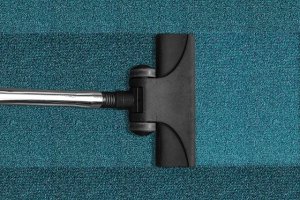
vacuum-cleaner-268179_640When Brian Tatro first saw Cathy Rodriguez, he didn’t know what to think. Tatro, a Yakima, Washington resident was driving through a residential neighborhood when he saw Rodriguez out in front of her house. She was busy cleaning her sidewalk – with a vacuum cleaner. Tatro pulled out his phone and began recording the scene.

He posted the video to his Facebook account and can be heard commenting “Guess no one’s heard of a broom before” as the scene unfolds. Friends began weighing in, with most making jokes about Rodriguez. “She must go through a lot of vacuums…a trend setter for sure!” shared one. Another referenced the recent Broom Challenge trend, “Her broom must be in the kitchen standing up by itself.” More hateful comments soon followed. Commenters suggested that Rodriguez was using drugs or suffered from mental illness. The jokes had taken a sinister turn.

Counselor Mateo Sol calls this classic judgmentalism. “We all generally prefer to see ourselves as smart, generous, kind, patient, and forgiving people most of the time. But the truth is that we aren’t.” He says that being judgmental is “critically nitpicking and finding fault with another person, group of people, idea, or situation.” We all do it to some extent because it’s an unconscious act.

Judgmental people expect others to be consistent all the time. They struggle to see beyond a person’s flaws. They easily jump to conclusions about someone’s behavior. They have a hard time with ambiguity. They find it difficult to see and appreciate the beauty in others. According to Sol, these behaviors are common (I know I’m guilty of each myself) and the result of poor self-esteem.

Sol says we often feel like others are out to get us and feel anxious around others. There’s a strong critic inside that’s judging us, so as a defense mechanism we judge others in an effort to make us feel better. And because it’s unconscious, we don’t even realize we’re doing it.

To counteract our own judgmentalism, Sol offers these tips:

  • Explore your own self-talk. Look for patterns in the way you feel and the way those feelings manifest themselves in your inner voice.
  • Accept the ugly, weird, messy parts. Try to see yourself realistically and embrace the good as well as the imperfect.
  • Look deeper into people and situations. Look beyond initial appearances. Ask questions and avoid jumping to conclusions.
  • Be critical about your judgmentalism. Learn to question your own feelings and assumptions. Ask yourself “Am I seeing the whole picture?”
  • Ground yourself with mindfulness. When you start to feel the urge to judge someone, try to refocus on what’s going on around you. Cut off the judgmental thoughts by being present in the moment.

Had anyone bothered to ask Cathy Rodriguez, they would have found out that she was cleaning up glass from her van. It had been hit by a drunk driver while it sat in front of the house and three windows had shattered. Furthermore, the van was totaled. The driver didn’t have any insurance, and Rodriguez was left without a means of transportation for her family. By using her vacuum on the sidewalk, Rodriguez was simply trying protect pedestrians and pets from being injured. “I didn’t want them to get hurt,” she said.

When Tatro learned the story behind what he had witnessed, he was humbled. He immediately took to Facebook to address the negative comments and apologize for his own quick judgment. Finding that a GoFundMe page had been created to help buy the Rodriguez family a new vehicle, he was the first to contribute.

Of Turtles and Trains

turtle-182121_640Japan has a turtle problem. Specifically, the West Japan Railway Company has a problem with turtles in the Nara Prefecture. Here, the track runs close to the ocean and turtles periodically fall between the rails at switch points as they try to reach the water. They become trapped and are killed when the track switch is thrown to reroute trains onto a different section of track. This is obviously bad for the turtle, but it’s bad for the railway too. When the switch can’t close properly, it causes delays that cost the company and its customers time and money.

Working with the Suma Aqualife Aquarium in Kobe, the railway recently installed five u-shaped concrete tunnels beneath the tracks around the most heavily trafficked sections. These artificial ditches allow turtles to pass safely under the rails, and the company can operate on schedule without fear of disruption. Railway workers collect any strays who miss the tunnels and hand them off to the aquarium.

Don’t you find that the most ingenious solutions typically wind up being rather simple? These concrete tunnels cost very little to manufacture, but result in significant savings for the company and conservation of wildlife. And all it took was a little collaboration and creative thinking.

So many times I think we see customers like these turtles. They’re slow, easily confused, and often get in our way; causing us to waste time and money. It’s not intentional, they’re just trying to get from point A to point B. Sometimes they just fall victim to the fast-moving train of our business processes. We sigh and write off the cost of dealing with it as a necessary part of doing business.

Occasionally though, we get the right people together and come up with a simple, yet magical solution. We can prevent the customer from getting trapped AND save ourselves some time and money by working together and thinking outside the box. Win-wins like this are rare, but they don’t have to be. The Harvard Business Review suggests we take three steps to encourage new ways of thinking.

  1. Question the status quo. Don’t accept things as the way they are. Ask “Why?” “How could we…?” What if…?” Make challenging the way we do ______ today part of everyday conversation.
  2. Take a wider perspective. Expand your view of the problem to draw in related issues and other potential stakeholders. Don’t assume others aren’t connected or don’t have a stake in the outcome.
  3. Draw a picture as a team. Pull people together and capture all ideas on a white-board. Visualization helps keep everyone on the same page, yet allows for each individual to process the problem in their own distinctive way.

The railway tunnels were just installed in November, but already the West Japan Railway team has counted multiple turtles taking advantage of the solution. Each one represents a service interruption avoided and a turtle life saved. However, the full impact of the plan won’t be felt until later this year. The largest migration of turtles takes place between May and September.

The Space Between

tools-2536159_640I’ve needed to update the workbench in my shop for a while now. The same one has been in use for years and it shows. It’s banged up, stained, and bit too small for many of the projects I’ve been working on lately. It sits next to my table saw, but because of how the saw’s motor is positioned, there’s about a foot of unused space between the two. This “space between” is a black hole. I can’t use it for anything, and it manages to suck up dropped tools, materials, and (inevitably) my time. Recovering this space represents a significant improvement in my workflow.

We’ve all got some “space between” that we work around. In some cases, it’s literal space like the square footage between my saw and workbench. In others, it’s figurative space – chunks of time that exist between productive parts of our day. In either case, we have a choice. We can choose to utilize this space, disciplining ourselves to leverage the time and resources available to us to improve. Or we can choose to waste the space, squandering the opportunity to make things better and suffering the negative impact created by the void.

But what does utilizing the “space between” look like? How can we take advantage of the little chunks of time that might seem insignificant and unusable? Here are a few ideas.

  • Brush up on your product knowledge.
  • Take advantage of a training opportunity to enhance your leadership skills.
  • Brainstorm potential solutions to customer service gaps.
  • Organize or reorganize your workspace to increase productivity.
  • Create a new resource to benefit the team.
  • Engage in conversation with a customer or coworker to build the relationship.
  • Research an aspect of your industry that lies outside of your scope of responsibility.
  • Practice/roleplay rusty skills to stay on top of your game.

There’s always a use for the “space between.” We just have to identify one and act on it.

This weekend, my daughter and I took advantage of the nice weather and an extra day off from work to tackle the workbench situation. We fabricated a new top that spans the unused space behind the saw. The new top we built is thicker and protected by a few coats of finish to improve its durability. In addition to eliminating the gap, we increased our usable work area by over 50%. Work pieces coming off of the saw are now better supported, making use of that tool much safer. And we did it all without impacting the normal workflow or other operations within the shop.

What I didn’t count on was the impact of this decision on my attitude. Addressing the “space between” has renewed my appreciation for the workshop. I’m excited about using my bench and creating new projects. I’m looking forward to getting my hands dirty and will be less likely to take shortcuts having experienced what making just a small improvement can do.

And, as you can imagine, I’m looking for others wasted spaces to utilize.

Unqualified

footprint-2353510_640Back in 2013, Bhagwan Kare fell gravely ill. In order to diagnose his condition, doctors said they needed to perform an MRI. The procedure would cost the resident of Maharashtra India about 5,000 rupees, money he and his wife Lata simply did not have. With no way to borrow the funds, the future looked dim for the couple.

Some friends jokingly suggested that Lata enter an upcoming race. The prize for first place just happened to be 5,000 rupees. Lata felt she had to give it a shot, despite some obvious disadvantages.

She wasn’t a runner. Lata had never taken part in a race before. She didn’t own any equipment or have access to training facilities. She walked daily, but that was the extent of her physical activity.

She didn’t know anything about running. Lata admitted to her friends that she didn’t even know that running was a competitive sport. Technique, proper form, nutrition – it was all foreign to her.

She wasn’t in any shape to run. At the time, Lata was 68 years old, hardly the best stage of life to take on such a strenuous burden. Worried that she might catch her sandals on something and trip, she decided to run barefoot.

Don’t you just love an underdog? There’s something inherently inspiring about people who stare down a ridiculously difficult task and say “What the heck, I’ll give it my best shot.” Win or lose, we can’t help but get behind the underdog – probably because it’s easy to see ourselves in their situation.

We’ve all been there. We’ve all come up against circumstances that seemed to be insurmountable. We’ve all had the odds stacked against us at one time or another. Most people fold. They decide to cut their losses and hope for better days ahead. What draws us to the underdog is the spirit that says “despite the odds, I think I can win.”

Lack of experience doesn’t matter to the underdog.

Lack of education doesn’t matter to the underdog.

Lack of ability doesn’t matter to the underdog.

What drives them forward is a belief in their mission and an unwavering desire to succeed. Contrast that mentality with the multitude of professionals who obviously dial it in because they don’t feel like performing. So often what turns an underdog into a champion is the decision to perform at your best day in and day out.

As Lata Kare approached the finish line of her first-ever race, she began to hear cheers. They carried her through the tape and into first place. She won the prize money and her husband got the treatment he needed. Lata continued to enter, and win, additional races; using the proceeds to support her family.

There Is No Try

snail-1447233_640I’ve mentioned before that I’m a Star Wars fan. I’ve seen the original trilogy of movies so many times that I can practically recite each line along with the actors. Sometimes I find myself thinking about a random scene and a quote just sticks in my head. There are so many great quotes from Star Wars – you don’t have to be a fan to be familiar with some of them. Take this one for example:

“Do. Or do not. There is no try.”

That’s Jedi Master Yoda speaking to Luke Skywalker in The Empire Strikes Back. Yoda has been training Luke in the ways of the Force, but Luke is distracted. His mind keeps wandering to thoughts of his friends and he’s impatient to leave and get back to them. As a result, he finds it difficult to concentrate on even simple, mundane tasks.

Then Yoda gives Luke a new challenge, and it’s a big one. It’s bigger than anything the young apprentice has taken on and Luke simply cannot fathom anyone being able to accomplish what’s being asked of him. He is scared. He hems and haws before but finally gives in to his mentor’s prodding. “I’ll try” he says. And that’s when Yoda drops this famous line.

“Do. Or do not. There is no try.”

For the longest time, I had the wrong idea about what Yoda was saying. I thought he was telling Luke, and by extension me, that it’s the result that matters. You either succeed or you fail. You get the job done, or you don’t. There is nothing in between. Close does not count and winners don’t settle for second place.

But I was wrong.

Yoda wasn’t talking about results. He was talking about effort. In Yoda’s mind, success isn’t a matter of winning versus losing. It’s a matter of dedication – the application of your whole self to the problem at hand. Luke wasn’t giving the job his best effort. He wasn’t giving his all. Succeed or fail, Yoda just wanted him to stop trying and start trying.

You see, when we approach our work as if it’s optional, we aren’t really trying. When we take shortcuts because we just want to get the task off our plate, we aren’t really trying. When we allow ourselves to check out, we aren’t really trying. When Luke said, “I’ll try,” what he meant was “I’ll pretend to try – just enough to get you off my back, but not enough to show that I’m truly committed to the job.”

No wonder Yoda was frustrated. When we give less than our best effort, we fail not just those depending on the results of our work; we fail ourselves. Ask anyone at the top of their game and they’ll tell you the road to success is paved with failure. The key to success isn’t a lack of failure, but a dedication to expending maximum effort. It’s developing a habit of truly trying.

Star Wars is just a movie. Yoda and Luke Skywalker are just figments of the imagination. Yet these words still make me think…maybe I should try a little harder.

Clearing the Air

gas-mask-469217_640I have a small workshop in the backyard. I learned woodworking from my grandfather and I get a great deal of satisfaction from creating something with my own hands. I spend a lot of time out there and have made several improvements to the shop over the past several months in order to make it a safer and more enjoyable space.

This weekend I added a piece of equipment that I’ve needed for years – an air filtration system. Working with wood creates a lot of dust, especially when you are sanding a finished piece. Much of this dust can be captured by filters or vacuums attached to the tool, but the most dangerous particles aren’t picked up by these methods.

I’m talking about invisible dust particles. These are so small and light (1-5 microns) that they float around the shop and linger long after the tools have been turned off. This dust does eventually settle, leaving a fine powder everywhere; but not before causing itchy eyes and a runny nose. When you inhale these particles, they cause tiny wounds and scars on the lungs. Our bodies have a difficult time expelling these microscopic bits and the long-term damage can be significant.

Isn’t it true that the tiniest things often cause the most hurt? Ever had a paper cut or a splinter? These smallest of injuries create a lot of pain. What about a derogatory comment or a backhanded compliment? Ever been the recipient of one of those?

Workplace offenses are rarely huge, show-stopping events. More typically, they are every day slights, indignities, put downs and insults experienced during day-today interactions with others. Often the offenders are well-intentioned individuals who have no idea that their behavior has caused any harm. But for the recipient, they can be very damaging; leading to lower levels of self-esteem, job satisfaction, employer loyalty, and performance.

As with micro-sawdust particles, an effective filtration system can help minimize the impact of these actions. I recently read an article by David Mayer in Fast Company magazine that offers four strategies for processing workplace offenses.

  1. Walk back from the conclusions you’ve jumped to. We tend to make assumptions about the intentions of others and allow negative feelings to morph into worry about our own place in the organization. Confiding in a trusted colleague can help us gain some perspective before taking action.
  2. Take the moral high ground. The natural reaction to a perceived attack is to respond in kind. We need to resist this urge and look at the situation critically. Doing so allows us to learn and grow, a much more productive option than creating or escalating conflict.
  3. Look for what’s still good, fair, and right. Human nature is to dwell on the negative – what we stand to lose versus what we have to gain. Taking stock of the positives can help bring some level-headed context to our emotional reaction.
  4. Forgive whoever’s responsible. This is probably the hardest step offered by this article, at least for me. It’s been said that holding a grudge is like drinking poison and expecting someone else to die. You don’t necessarily have to verbally forgive the one who slighted you; but in order to recover, you need to find it within yourself to let things go.

It didn’t take long for my new air filtration unit to make a difference. It had only been running for a short while before I noticed a lack of dust particles floating in the air of my shop. A glance at the filters showed that the damaging bits were being swallowed by the machine, rather than accumulating in my lungs. I am already breathing a lot easier about spending time in my work space.

Seamless

film-512132_640This weekend I had the opportunity to see “1917,” the new film by director Sam Mendes. It’s an intriguing story about a couple of young soldiers sent to deliver a crucial message to troops on the front lines of World War I in France. Mendes wrote the story after hearing tales of his grandfather who himself served as a messenger during that conflict.

The movie has received a lot of press because it was shot in such a way as to give the impression of being filmed in one continuous shot. Mendes wanted to give his audience the sensation of moving through real time with the characters, experiencing events as they did without the safety of quick cuts or flashbacks for exposition. I was blown away by both the intimacy this approach achieved and the amount of effort it must have required to pull it off.

I’ve since watched several interviews and featurettes about the making of the film, and my amazement has only grown. I’ve seen movies with long cuts before, but never anything as sophisticated as this. Without giving away anything about the movie, here a few aspects of its production that really stood out.

First, there was an incredible amount of planning that went into this film prior to shooting. Because the camera follows the characters continuously, each scene had to be meticulously prepped. Typically, sets are built long before the actors show up on set, but this production necessitated a different approach. Rehearsals took place in an empty field so that dialog could be timed and camera movements could be choreographed. Once the precise movements of each element was nailed down, then the set was created to accommodate the desired experience.

Filming required an incredible amount of teamwork between the actors and crew. Cinematographer Roger Deakins interacted with the actors as much as Mendes did, in order to direct his team to support the nuances of the performance. Editors, typically brought after filming is completed, were on set from the beginning; building the film on the go so that one day’s filming could be blended seamlessly with the next.

The two actors at the center of the film, George MacKay and Dean-Charles Chapman, spent so much time in character prior to filming that when it was time to shoot, their movements were second nature. They didn’t have to worry about where the camera was or when to hit their marks, because they’d rehearsed each scene so many times. This enabled them to live in the moment, often embodying the characters so fully, they forgot they were acting.

Innovations in camera work were also at play. Because the camera doesn’t break away, transitions between key shots meant new techniques had to be developed. The camera might start off being held by hand, then smoothly hooked to a crane for a soaring aerial view. As it came back down, the camera was unattached form the crane and handed to another crew member on the back of a motorcycle for a thrilling chase scene. A staggering number of these hand-offs took place behind the scenes in order to create the seamless experience for the audience.

We often talk about customer service in terms of a seamless experience. Customers should interact with us in a way that appears fluid and effortless. Moving between in in-person interaction and our online presence should represent a single, meaningful story. At least that’s the goal. Watching 1917, and the work that went into bringing it to the big screen encourages me to seek out new ways to make that seamless experience happen. And I look forward to what 2020 has to offer, I’m excited about taking on that challenge with each of you!

What’s Your Next Milestone?

district-3670200_640Depending on which source you look at, between 60 and 80 percent of New Years resolutions fail. By February first, people have either abandoned or forgotten about the goals they set for themselves. For most, it seems, the bar that is set turns out to be a bit too high.

Resolutions aren’t the only goals that cause us to stumble though. We often set goals and fail to meet them. We regularly bite off more than we can chew. While it is admirable to think big, to succeed we must act small.

The key to achieving big goals is to break them down into smaller, easily achievable milestones. As we string more and more of these together, the unattainable goal becomes ever more manageable. In this way, you can stairstep your way to success.

Psychologically, this method provides other benefits:

  • Pursuing small milestones promotes a better work ethic. When the task before you appears difficult or the time required seems overwhelming, there’s a temptation to cut corners. Goal achievement can become a race to the finish or an exercise in “checking the box” just to mark the job complete. Breaking the job into smaller pieces provides you the freedom to perform your best. Without the pressure of getting to the next stage, you transfer that extra effort into better output.
  • Pursuing small milestones leads to greater productivity. Ironically, completing one task propels you into the next. You know the feeling – crossing one item off your to-do list sparks a desire to tackle the next one. In the same way, achieving one milestone on the path to a larger goal gives you a boost of energy that can be applied to the next. You wind up making more progress than you expected to at the outset.
  • Pursuing small milestones improves the way you think about yourself. Reaching a small milestone sends a positive signal to your brain – “I am a person of action. I get things done.” Each successive step you complete reinforces this positive self-image. The confidence you gain from a track record of success makes it easier to take on larger and more complex goals.

Make 2020 the year you get more done. Learn to chase milestones instead of goals.

Big Plans

new-years-eve-1953253_640Do you have big plans to ring in the New Year? Maybe a party to attend, with friends and a band and confetti at midnight? Maybe you prefer something quieter – staying home with family to watch the ball drop on television. Or perhaps you plan to be in bed long before the celebration begins, sleeping your way into 2020. All seem like perfectly acceptable options to me.

I’m more interested in what your plans are starting January first. Once the party’s over, will it be just another slog through the next 365 days, or will there be something different about it? What will be new about this new year? Here are a few ideas for you to consider.

Collaborate with NEW people.
Listen to NEW ideas.
Try a NEW perspective.
Develop a NEW relationship.
Strengthen an old one in NEW ways.

Set a NEW goal.
Learn a NEW skill.
Accept a NEW challenge.
Stretch yourself in a NEW direction.
Reach a NEW level of performance.

Adopt a NEW attitude toward the task in front of you.
Approach your work as if you were NEW to the job.
Greet your customers with a NEW spirit of service.
Treat your coworkers to a NEW level of teamwork.
Go about each NEW day with intention.

Why does the party have to stop when the sun comes up Wednesday morning? It should really just be getting started. Let’s approach 2020 as the year of NEW, and keep the celebration going all year long.

Happy New Year!