

A Matter of Commitment

result-3236280_1920This weekend I attended the wedding of one of one of my son’s best friends. It was a simple ceremony but there were a lot of emotions on display; as is the case with any wedding. And like all weddings there was a recitation of vows followed by the exchange of rings – the tangible reminders of those vows.

Outside of the marriage pact, you don’t see this kind of public commitment being made very often. Public servants (politicians, police officers, etc.) make a public vow to their new roles as they are sworn in; but the majority of us accept a job or promotion without much fanfare. In rare cases there may be an employment contract involved, but even those are typically confidential agreements. Most people simply accept a job after negotiating what they expect to receive rather than what they promise to give.

Nothing great is ever achieved without commitment. Until you commit yourself to a cause, participation is optional. Whether it’s a short-term goal, such as climbing a mountain, or a long term like marriage; it’s commitment that makes all the difference. Once you’ve committed yourself to the end game, then the path forward becomes clear. Decisions become easier to make. Every choice is determined by how it will impact the goal you have committed to.

Athletes committed to being number one are easy to spot. They follow the necessary training regimen, whether they feel like it or not. They avoid eating foods and engaging in activities that are extremely desirable because they would get in the way of achieving the goal. They fill their minds with information and imagery that propels them closer to achieving that which they are committed to.

Look around. Sales people, actors, chefs, musicians, service providers, medical professionals – the best of the best are those who have made a commitment to excellence. They are the ones who have identified what success looks like and refuse to settle for anything less. They are unwavering in their commitment, so they put in the effort. They go through the training, they put in the hours, they practice their craft to the point that they cannot fail.

The rest of us are merely bystanders. We’re Sunday drivers on a NASCAR speedway. We’re casual joggers on the Olympic sprint track, ready to bow out as soon as the going gets tough.

It’s so easy to bail on our commitments. It’s so easy to justify why we stop giving our all to the things we once felt were so important. The marriage hits a rough spot. The training gets tough. The job isn’t quite what we thought it would be. Maybe we made a mistake. Perhaps we should just coast for a bit.

Commitments are hard to keep. Vows are easy to break. Even those made in public often don’t stand the test of time. I guess that’s why there are so few people who ever reach the mountain top. Only one can stand at the top of the medal podium. So few know the joy of true success.

I’m convinced my life would be better if only I were more committed to certain aspects of it. Sadly, the list is far too short. Maybe I should fix that.

Jaded

shoes-3397628_1920Last week police in the Japanese city of Himeji were called to the house of an elderly woman. Her son, over for a visit was cooking dinner and heard strange noises coming from the second floor. When he went to investigate, he found a 20 year old man asleep in a vacant room. The owner of the home had no idea who this man was, and he was arrested for trespassing.

What makes this story so interesting is that the young man had been quietly living in the house for over five months. Despite his presence under the same roof since early December, he and the owner had never crossed paths. He entered and exited regularly, leaving his shoes by the front door, and managed to go unnoticed for almost half a year.

As incredible as it sounds, this same scenario plays out every day – right under our noses. Oh, we may know every aspect of what happens inside of our personal homes, but our business is a totally different story. Thousands of customers live under our roof, coming and going on a regular basis, without us ever knowing who they are.

The good news is, our customers don’t have to be strangers to us. There are some very easy steps we can take to avoid being surprised when we bump into an invisible houseguest.

  • Look around once in a while. The homeowner in last week’s news story admitted that she never really went upstairs. She lived comfortably on the first floor and really didn’t see the need to expend the effort.

    Aren’t we just as comfortable? The customers that come in on a regular basis are familiar and provide us with an acceptable volume of work. Who needs the effort required to investigate other accounts that may be on the books. Maybe “out of sight” really is “out of mind.”

  • Pay attention to clues. You’d think that a pair of unfamiliar shoes by the front door would be a dead give-away, but not for this resident. She walked past them day after day (and likely a number of other hints) without raising an eyebrow.

    Aren’t we just as myopic? We get so focused on what’s right in front of us that we too miss obvious clues that should draw our attention. Who needs the effort required to look any further than the task at hand? Maybe we really can’t see “the forest for the trees.”

  • Listen for clues. Strange noises coming from the second floor didn’t faze this lady. She might have though she was hearing things, or maybe the footsteps from above had just become part of the home’s familiar background noise.

    Aren’t we just as tuned out? Don’t we listen with the intent to respond rather than understand? Who needs the effort required to create relationships when there are items on the to-do list that must be checked off? Maybe “in one ear” really is “out the other.”

Police are still trying to ascertain what the young squatter’s intentions were. So far though, he’s not talking. I guess he figures “Why bother? No one’s really paying attention anyway.”

Stacking Rocks

rocksWhile out for a hike recently, I came across this stack of rocks. It reminded me of something I heard once about the Scottish Highland clans. According to legend, as armies would march to battle, each soldier would place a rock onto a pile. Those who returned home removed a rock, with the rest forming a memorial to the fallen.

Stacks of rocks like this, traditionally called cairns, have been around since the beginning of recorded time. In addition to memorials, assembled rock formations like this have been used to indicate buried supply locations or to mark trailheads and pathways, as in the case of the one I came across. The Inuit people of the Arctic in particular used them as landmarks given the vast, bleak terrain.

More recently, stacks of rocks have been used for more introspective reasons. Climbers add to cairns when they reach a mountain summit as a celebration of the accomplishment. Some people find the act of balancing rocks to aid in meditation. Others ascribe religious meaning to the practice. For some, it’s seen as a form of art.

We all stack rocks, don’t we? We all engage in labor that can feel like we’re just picking up stones and piling one on top of the other. Work can often feel monotonous. We answer the same questions. We make the same phone calls. We process the same transactions and have the same conversations with the same people. It can be rather frustrating at times, can’t it?

But regardless of which rocks we’re stacking, it’s important to periodically focus on why we’re stacking them. What we’re working for – and toward – is as important as the work itself. Take a moment and ask yourself…

  • Are you building a memorial – working to continue the legacy of those who have come before you?
  • Are you marking the path – working to make things easier for someone else?
  • Are you leaving supplies – working to provide resources so others can continue their journey?
  • Is work a celebration for you? A meditation? Do you see it as a work of art?

In Aruba, the act of stacking rocks became so prevalent that last year The Island Hotel & Tourism Association officially asked visitors to stop. Somehow the idea of stacking rocks became associated with making a wish. Beaches and trails have become littered with these formations, to the point that the natural habitat of indigenous wildlife is being disrupted.

In some cases, you see, stacking rocks is a meaningless exercise. It’s a waste of effort – just like making wishes. Pictures I’ve seen of the rock stacks in Aruba indicate that they were hastily thrown together. They aren’t very big and it looks like very little effort went into building them. No thought was given to the impact these cairns would have on the environment or those who would come after.

Work without purpose isn’t just an empty exercise for the laborer, it can actually be detrimental to the team and the organization. When someone else is simply going through the motions, errors occur. Details are missed. Repairs have to be made and work has to be redone. Everyone stacks rocks; but not everyone is building something.

Apart From the Crowd

lemon-3303842_640Amid a crowd, she stood apart. Without making a sound, she spoke volumes. I’d never seen her before but knew I would like her.

Last week I traveled to Austin for a couple of meetings. In the conference room of the hotel where I stayed, a soon-to-open local business was conducting interviews. Given the number of applicants waiting their turn in the hallway, this must be a great place to work.

I approached the elevator after checking in and scanned the candidates as it made its way to the first floor. Most were engrossed in their phones – their attention focused on the familiar world offered by the tiny screen. Others fidgeted with resumes and squirmed in their seats attempting to get comfortable.

And then one young lady caught my eye. She sat upright in her seat, her eyes trained straight ahead. If she had a phone with her, it was put away. Her face held a mixture of emotions. I thought I detected confidence and anticipation – and just a hint of a smile.

Do you remember your first interview – the excitement you felt, the desire to join your skills and abilities with those of others in pursuit of a common cause? If we could bottle the nervous energy that accompanies the typical job interview, we could power a small city. Those who harness the energy and channel it properly often ace the interview and find themselves ushered into a new phase of their career.

Did you know that new employees tend to outperform their peers by a factor of ten over their first 90 days? As time goes by though, the new hire’s energy wanes. The new wears off and they let their guard down. By the time that eager new employee reaches their six-month anniversary, their performance is indistinguishable from their more tenured peers.

I think that’s a shame. Time and experience should be an asset, not a liability. Performance should improve with time, not worsen. Imagine combining the focus and determination of a new hire with the know-how and wisdom of a veteran. Now imagine a team full of these people. Oh, the wonders they could accomplish.

The real challenge of business isn’t coming up with new products. It isn’t driving efficiency or improving customer service. No, the real challenge is keeping employees fired up and engaged. It’s figuring out how to retain the attitude of the new hire – and infecting others with it. Solve that equation and the other issues will fix themselves.

Upstairs, I unpacked, changed clothes, and took care of a few emails. About an hour after I arrived I headed out for dinner. As a left, I saw the stand-out candidate rise and enter the conference room. Her name had been called and it was time for her interview. I never saw her again, but the fire in her eyes has stayed with me. I hope it stays with her too.

All That Matters

american-football-2940149_640In case you haven’t heard, the Philadelphia Eagles beat the New England Patriots to win the Super Bowl last night. The final score was 41-33 in a game full of surprises and new football records. While many were rooting for the Eagles, the seemed stacked against them.

This was only the third Super Bowl appearance for the Eagles; they’d lost the first two. By contrast, the Patriots were playing in their 10th championship game, having won five of the previous nine.

Eagles quarterback Nick Foles was a backup player. He’d replaced Philadelphia’s injured starter just before the playoffs started. He had no Super Bowl experience. In fact, just a few years ago he almost quit the game. New England quarterback Tom Brady, on the other hand, walked in with loads of experience. Each of those five Patriot titles were won with him at the QB spot. He’s often referred to as the “GOAT” – the greatest of all time.

Las Vegas odd-makers didn’t expect the Eagles to win; the Patriots were favored by 4.5 points. Although many people said they were ready to see the Patriot dynasty come to a close, but most predicted a New England victory.

Yes, it seems like everything and everyone had lines up against the Eagles – everyone except for the Eagles that is.

To them, the odds didn’t matter. History didn’t matter. Public opinion didn’t matter. All that mattered was their shared desire to succeed. They scored quickly and they scored often. They came up with an answer for everything the competition threw at them. They kept their eyes on the prize and moved steadily toward it.

There are million reasons why you should fall short of your goal this year. There are obstacles in your path, shortages of resources, and gaps in experience. There are setbacks around every corner. And yet, none of that matters.

All that matters is the desire to be successful. Do you have it?

In or Out?

yes-2167843_640I was recently asked to participate in a focus group at church; selected to provide input on a potential new ministry. Due to my background, my experience, education, and contributions to date; my involvement was seen as valuable. Yesterday, I entered a room and, with a handful of other men, gave my opinion on a variety of topics. For about an hour, we engaged in conversation about what this endeavor might look like. We shared dreams, fears, and asked questions of our own.

At the end of the conversation, the leader of the group asked one final question: “Are you in, or out?”

Have you ever thought about the number of decisions you make every single day? Most of them are fairly easy and have minimal impact. What we eat for breakfast, what we wear to work, what route we travel, or which radio station we listen to on the way – all of these decisions get made, typically without much thought. And there’s little danger in choosing one option over another.

But there’s another decision you have to make every day, and I hope you are much more intentional about it. Are you in, or are you out?

You see, most people get up every day and go to work. It’s once they get there that the decision has to be made. Those who decide they are “in” approach their work intentionally. They seek to their best, regardless of the circumstances and view their occupation as something important. They engage in work that matters – to their customers, their coworkers, and their teams.

Other people show up for work and engage in work that leaves them unfulfilled. They grumble about the new policy that’s been introduced, or the lack of good products, or the goals that are set too high. Even though they show up every day, their mission isn’t to make things better, it’s to make others just as miserable as they are. These people say they’re “in,” but their actions tell you they are decidedly “out.”

There’s a third group that seem to be on the fence. They need a paycheck, or they need insurance, and so they accept the best offer presented to them in the moment. They go through the motions day to day, but don’t really feel any attachment to the work they do. Their performance bounces up and down because they produce good work when they feel like it (or when they’re actually held accountable), and coast when they don’t. These people may not feel like they’ve made a choice, but they have. They are “out.” They just haven’t said it out load.

December is always a month of reflection for me. It’s the threshold of a new year, and my birthday occurs on the 22nd. I always wind up thinking about where I’ve been, where I am currently, and where I want to be. And I make decisions, decisions that communicate how I will spend my precious time and energy going forward.

In the past couple of weeks, I’ve decided to opt-out of some optional aspects of my life. I’ve pulled away from commitments that I can’t get passionate about in order to devote myself fully to those that excite me. I’m also looking at the various aspects of my job and identifying those where I need to do a better job of being “in.”

I don’t want just a job. I don’t to just go through the motions. I want to be inspired, involved in control innovative, integral, and incredible at what I do. It all starts with deciding that I’m in!

Are you in or out?

Worth the Effort

snail-1447233_640Thanksgiving weekend at the Voland house is typically full of activity – and I’m not talking about the kind that results from Black Friday shopping. We stay far away from that madness. No, the activity I’m talking about involves a lot of yard work and home updates. Naturally, the kids don’t like it.
First, the leaves have to be taken care of. Our handful of trees seem to produce a forest full of leaves. Our pecan tree also adds an extra element to deal with as the nuts fall like missiles during the cleanup. There’s nothing like finishing a long day’s work in the yard only to see it covered once again by another layer of leaves (they just keep falling).

Then we put up the Christmas lights. There are strings on the house and others lining the front sidewalk. No matter how carefully they were put away the year before, everything manages to get tangled up coming out of the box. We have to deal with replacing bulbs and finding extension cords. Of course, my meticulously drawn map, meant to make laying things out effortless, looks like Egyptian hieroglyphics when viewed from the top of a ladder.

Finally, we turn our attention to the inside. The tree goes up and the decorations are set out. Furniture has to be moved so that everything can find its perfect holiday location. Often, this also results in some kind of major remodeling project. Through it all, the dogs watch us fight and argue with bewildered looks on their faces.

Despite the bickering and complaining, we managed to survive the decorating ordeal. You’d think that we’d give up and just stop engaging in the behavior that causes so much stress and tension. It’s surely not worth it, right?

Ah, but it is. Once the sun goes down and the Christmas lights come on, the smiles appear. We marvel at the sight. The arguments are forgotten and everyone enjoys the warm glow. Even the boys eventually agree that the struggle was worth it.

Sometimes, in the midst of the struggle, it’s easy to lose sight of the end goal. Whether it’s completing a big work project, pushing to make your sales targets, or simply decorating the house for Christmas, our tendency is to develop a short-term focus toward a long-term goal. It can be hard to see past the immediate hardship.

But we have to remember that just on the other side of difficulty lies the reward. You have to endure the struggle to reach the payoff. The things worth fighting for do indeed require a fight.

At one point during the weekend, one of the kids noted that some of our best memories are from family trips and projects that went horribly wrong. At the time, all we wanted was for the hardship to end. Looking back though, we wouldn’t trade those times for anything. I guess that means we’ll be putting up the Christmas lights again next year.

5%

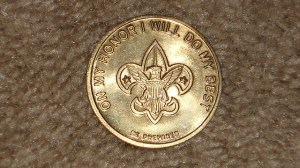
boy-scout-1897050_640It’s 10:25 in the morning, Saturday, September 30th. My son Alex just walked into one of the most important interviews of his life. He’s a Boy Scout and this is his board of review for the rank of Eagle.

Eagle is the highest rank in scouting. Those who reach this level have spent years working their way through a myriad of requirements. Along the way, they learn outdoor skills, demonstrate leadership within their troop, and participate in numerous service activities that benefit their community.

Each year, thousands of boys enter the scouting program, but statistics show that only five percent become Eagles. Out of every 100 scouts, 95 will fall short of the ultimate goal.

While I am extremely proud of what Alex has accomplished, I can’t help but think of all those who fall short of reaching their goal. Why is it that so many start, but so few finish? What is it about the 5% that allows them to succeed where the majority fail?

Some boys get distracted by other things. Alex did. As he got old enough, he got a job. He got involved in extracurricular activities at school. He picked up hobbies that ate into his limited time and attention span. He was forced to reduce his involvement in scouting. Still, he achieved his goal.

Some find the obstacles in their path are greater than they anticipated. Alex did. His final requirement, the Eagle Scout Service Project, fell completely apart due to circumstances beyond his control. He had to start over, reaching and developing an entirely new concept – not an easy task for a teenage boy. Still, he achieved his goal.

Some start to think the reward doesn’t justify the effort. Alex did. In the beginning, progress was easy. But as he grew older, he grew frustrated with the level of focus and detail required to complete the final steps. This caused him to question his participation in the scouting program. Still, he achieved his goal.

Many will argue that they lacked the resources and guidance necessary to succeed. While I concede that Alex benefited from an active scout troop and men who willingly acted as mentors along his journey, these factors alone did not make the difference. I know of numerous scouts who earned their Eagle rank despite a weak troop structure and a lack of support from family members. And I know of plenty who had a wealth of resources at their disposal, yet failed to finish what they started.

What made the difference for Alex, and for the rest of the 5%, was the decision to be successful.

You face a million choices every day; what to wear, what to eat, what to say and do. It is your choices that define you. You decide the kind of man or woman you want to be. Victor or victim, success or failure, one of the select few or just another face in the crowd.

The sad fact is that most people are ok with being ok. They aspire to get by. Their goal is to blend in. They’ve chosen to be part of the 95%. I wish I could take credit for Alex’s achievement, but I can’t. Yes, I encouraged him. I made myself available and helped where I could, but you can’t drag an Eagle across the finish line. The program is designed such that the boy must make a series of conscious decisions on his own. It’s a lot like life in that respect.

Wasted potential is a sad fact of life. It’s a shame to want success for someone far more than they seem to want it for themselves. But I see it every day. The lure of average is incredibly strong.

Thirty-five minutes after he walked into his board of review, Alex emerged. He was visibly nervous and waited anxiously while the committee deliberated over his body of work and his responses to their questions. When he was finally called back and given the good news, Alex was visibly relieved. However, I never had a doubt he would be successful. He’d decided long ago that he would be.

Stay Centered

cyclone-62957_640As hurricane Irma approached the coast of Florida, meteorologists tracking the storm noticed something peculiar on the radar images. In the eye of the hurricane, were birds – lots of birds. Entire flocks were just flying along, seemingly unaffected by the devastating winds and rain surrounding them.

It seems this is not an unusual phenomenon. Radar imagery from past years show the same thing, flocks of birds moving in tandem with a hurricane by staying close to the center. They aren’t in distress at all. They’re simply going about their business in the midst of chaos. It seems that birds who can’t escape the storm instinctively move as close as possible to the center.

Smart birds.

There are so many times when I feel like I’m caught in a storm. My plate is overloaded, demands on my time come from all sides, and I feel stressed. There are a few things I can say “NO” to (the equivalent of avoiding the storm), but often I can’t. I have to endure the storm until the winds die down. Perhaps, instead of fighting against the storm, I should act more like these birds and move closer to the center, where it’s calm.

My center is my core purpose. It’s my mission – the reason I’m here. I find the closer I stick to my central goal, the easier it is move forward. Any time I allow myself to drift away from the center, I wind up struggling.

We see this reflected in a number of ways. The automotive industry has been trending toward smaller, simpler vehicles because they are more affordable and easier to maintain. Tiny house communities are popping up all over the country as people look to simplify their lives and remove the stress that comes with managing a larger home. Even software companies have shifted to producing simple apps that focus on doing one or two things extremely well.

It’s not unusual for a corporation to diversify in an attempt to spur rapid growth, only to find things spiraling out of control. Those that survive usually do so by trimming off business lines that don’t fit with their core mission. They move back to the center.

We humans have a way of complicating things. We’re continuously looking to do more, be more, and achieve more. But every time we add something new to our to-do list, we take away from our ability to do any one thing well. The more we become a “jack of all trades,” the more we become a “master of none.”

The tension that scenario creates knocks us around. It drags us down and makes us feel like we’re at the mercy of our circumstances. We find ourselves in a hurricane. Making progress is hard because of all the extra demands pulling at us. So we hunker down. We do our best to check things off the list and ride out the storm.

But if we’ll just stay centered, we’ll not only survive the storm, but thrive despite it. By keeping to what makes us great (as an organization, a team, or an individual), we can move forward even as others battle the winds around us.

So, what’s your center? What are the things that you and your team should really be focused on? What needs to be let go?

The Keys to Employee Engagement

key-96233_640It’s been widely shown that a strong correlation exists between employee engagement and performance. Engaged employees work harder, producing higher volume and better quality than their disengaged counterparts. Furthermore, organizations with high levels of employee engagement realize higher profitability (through increased revenue and decreased cost) as well as positive growth in both customer satisfaction and retention. Simply put, a motivated workforce is a significant competitive advantage.

While I’m often asked by managers to help them figure out ways to motivate their team, I rarely feel as if they appreciate my answer. That’s because motivation is a loaded word. It’s an external action intended to cause an internal reaction. Managers often look for some kind of silver bullet – some nifty little checklist they can complete that will magically result in engaged employees. But motivation simply doesn’t work that way.

What motivates any given individual at any particular moment in time is difficult to pinpoint from the outside. The factors driving someone to engage and perform at a high level are as unique to them as fingerprints. Sometimes even they cannot verbalize what they’re feeling at any given moment and why their level of engagement fluctuates. People want to feel motivated, but for some reason they often don’t. Since they can’t read minds, managers are left to guess at which motivational tactics work best, hence the frequency of questions hitting my inbox.[Tweet “The factors driving someone to engage & perform at a high level are as unique to them as fingerprints.”]

When it comes to motivating others, the best don’t rely on shotgun approaches or expensive tangible rewards. Top managers work create an environment in which a person’s natural desire to engage can flourish. According to David MacLeod and Nita Clarke, we do this by focusing our efforts in a few specific areas. In 2008, they embarked on a study of organizations that had seen dramatic improvements in employee engagement. After hundreds of interviews, they discovered a common theme they call the Four Enablers of Engagement.

STRATEGIC NARRATIVE
“Visible, empowering leadership providing a strong strategic narrative about the organization, where it’s come from and where it’s going.”

We all love a good story. We want to work for an organization that has a compelling story to tell and, beyond that, want to be part of the story going forward. Organizations that have a great story to tell and invite employees to become part of it enable engagement.

ENGAGING MANAGERS
Leaders “who focus their people and give them scope, treat their people as individuals, and coach and stretch their people.”

We desire leadership. We seek structure, advice, support, and guidance from someone we trust. Managers who abandon their teams to figure things out on their own, or govern from afar using policies, excuses, and intimidation will struggle with engagement and turnover. Those who take an interest in the well-being of the team and get personally involved enable engagement.

EMPLOYEE VOICE
Employees are heard “throughout the organization, for reinforcing and challenging views, between functions and externally. Employees are not seen as the problem, rather as central to the solution, to be involved, listened to, and invited to contribute their experience, expertise, and ideas.”

We need to have a voice. Everyone seeks to exert some level of influence over the work they do; it’s what makes us human. Without some degree of influence and a sense of contribution, we fail to realize our full potential and feel less than we are destined to be. When the individual and collective minds of employees are tapped into, engagement is enabled.

INTEGRITY
“The values on the wall are reflected in day to day behaviors. There is no ‘say-do’ gap. Promises made are promises kept, or there is an explanation as to why not.”

We were meant to be part of something bigger than ourselves. It’s important to feel that we share the same values as those around us and at the helm of the ship. When employees connect with the belief system of the organization (as evidenced by the actions of those in charge), they align themselves with the strategic plan and engagement is enabled.

It’s important to note that these enablers do not inherently suggest specific action steps for leaders to take. Tactics for pursuing strategic narrative, engaging mangers, employee voice, and integrity must be customized depending on the unique circumstances of the organization. There is no silver bullet. There is no magic pill. The pursuit of motivation is hard work. But there’s no doubt that, for those who see employee engagement as key competitive differentiator, the rewards are great.


JOIN THE CONVERSATION:

What drives you to engage?? Share your thoughts on our facebook page.