
See the Need

toilet-paper-3675180_640Service has never been so important.

“Self-isolation” and “social distancing” are the new norm. Doors everywhere are being shut. People are hoarding supplies and preparing for the worst. It’s in times like these that our true nature is revealed. For some it’s an excuse to withdraw, to do less, to focus on self and ignore the needs of others. It’s justified. It’s understandable. It’s expected.

But these are the times when heroes step forward. Instead of giving in to fear, they rise above it. They look outward, seeing the needs of others, and boldly step up to the plate. They don’t wait for someone to ask for help. They see a need and act to fill it.

Cue my parents. They’ve always been heroes to me, but I couldn’t have been prouder to see this Facebook post.

Sunday, March 15, 2020 – 7:26 PM
This afternoon the mayor of Nashville, in issuing some corona virus guidelines, made this statement, “as a community we must come together and take care of one another.” Earlier today we stopped at the Walgreens close to our house to pick up an over- the-counter allergy medicine. As I walked past one aisle I heard someone say, “Oh, they don’t have any either.” I noticed the empty shelf and stopped. I asked the older lady if she was looking for toilet paper. She said yes and she had been to four other places and couldn’t find any. Her husband was in the car as she had just checked him out of St. Thomas Midtown for congestive heart failure. They needed toilet paper. I told her that I lived just down the street and if she wanted to follow me home I had some extra she could have. She took me up on the offer and we sent her home with 4 rolls. Turns out she had been to my house before at my yard sale. She recognized my house! Who would have guessed that taking care of your neighbor would come down to sharing toilet paper with a stranger.

I’ve always felt that the best acts of service are the small gestures. It can be inspiring to read about super-human acts of bravery and self-sacrifice, but those opportunities are (thankfully) few and far between. The real service heroes are those who find small ways to help those around them. It might be a small word, a small act of service, or a small donation of toilet paper that makes the biggest difference.

As a species, we are designed for community. We need meaningful interaction with others to remain healthy, productive, and fulfilled. That’s actually what service is. Service is looking beyond yourself to see others and their needs – and then acting on it. It’s not waiting for someone to ask for help. It’s proactively offering what you have to give as a means of addressing that need for connection. Time and again we see that community trumps isolation, especially in the worst of times.

In the days ahead, let’s be mindful to keep our eyes, ears, and hearts open to those around us. Let’s seek out opportunities to lend a hand vs. pulling it back. We need to stay safe, but that doesn’t mean we can’t remain neighborly. We need each other now more than ever.

Of Turtles and Trains

turtle-182121_640Japan has a turtle problem. Specifically, the West Japan Railway Company has a problem with turtles in the Nara Prefecture. Here, the track runs close to the ocean and turtles periodically fall between the rails at switch points as they try to reach the water. They become trapped and are killed when the track switch is thrown to reroute trains onto a different section of track. This is obviously bad for the turtle, but it’s bad for the railway too. When the switch can’t close properly, it causes delays that cost the company and its customers time and money.

Working with the Suma Aqualife Aquarium in Kobe, the railway recently installed five u-shaped concrete tunnels beneath the tracks around the most heavily trafficked sections. These artificial ditches allow turtles to pass safely under the rails, and the company can operate on schedule without fear of disruption. Railway workers collect any strays who miss the tunnels and hand them off to the aquarium.

Don’t you find that the most ingenious solutions typically wind up being rather simple? These concrete tunnels cost very little to manufacture, but result in significant savings for the company and conservation of wildlife. And all it took was a little collaboration and creative thinking.

So many times I think we see customers like these turtles. They’re slow, easily confused, and often get in our way; causing us to waste time and money. It’s not intentional, they’re just trying to get from point A to point B. Sometimes they just fall victim to the fast-moving train of our business processes. We sigh and write off the cost of dealing with it as a necessary part of doing business.

Occasionally though, we get the right people together and come up with a simple, yet magical solution. We can prevent the customer from getting trapped AND save ourselves some time and money by working together and thinking outside the box. Win-wins like this are rare, but they don’t have to be. The Harvard Business Review suggests we take three steps to encourage new ways of thinking.

  1. Question the status quo. Don’t accept things as the way they are. Ask “Why?” “How could we…?” What if…?” Make challenging the way we do ______ today part of everyday conversation.
  2. Take a wider perspective. Expand your view of the problem to draw in related issues and other potential stakeholders. Don’t assume others aren’t connected or don’t have a stake in the outcome.
  3. Draw a picture as a team. Pull people together and capture all ideas on a white-board. Visualization helps keep everyone on the same page, yet allows for each individual to process the problem in their own distinctive way.

The railway tunnels were just installed in November, but already the West Japan Railway team has counted multiple turtles taking advantage of the solution. Each one represents a service interruption avoided and a turtle life saved. However, the full impact of the plan won’t be felt until later this year. The largest migration of turtles takes place between May and September.

Seamless

film-512132_640This weekend I had the opportunity to see “1917,” the new film by director Sam Mendes. It’s an intriguing story about a couple of young soldiers sent to deliver a crucial message to troops on the front lines of World War I in France. Mendes wrote the story after hearing tales of his grandfather who himself served as a messenger during that conflict.
The movie has received a lot of press because it was shot in such a way as to give the impression of being filmed in one continuous shot. Mendes wanted to give his audience the sensation of moving through real time with the characters, experiencing events as they did without the safety of quick cuts or flashbacks for exposition. I was blown away by both the intimacy this approach achieved and the amount of effort it must have required to pull it off.

I’ve since watched several interviews and featurettes about the making of the film, and my amazement has only grown. I’ve seen movies with long cuts before, but never anything as sophisticated as this. Without giving away anything about the movie, here a few aspects of its production that really stood out.

First, there was an incredible amount of planning that went into this film prior to shooting. Because the camera follows the characters continuously, each scene had to be meticulously prepped. Typically, sets are built long before the actors show up on set, but this production necessitated a different approach. Rehearsals took place in an empty field so that dialog could be timed and camera movements could be choreographed. Once the precise movements of each element was nailed down, then the set was created to accommodate the desired experience.

Filming required an incredible amount of teamwork between the actors and crew. Cinematographer Roger Deakins interacted with the actors as much as Mendes did, in order to direct his team to support the nuances of the performance. Editors, typically brought after filming is completed, were on set from the beginning; building the film on the go so that one day’s filming could be blended seamlessly with the next.

The two actors at the center of the film, George MacKay and Dean-Charles Chapman, spent so much time in character prior to filming that when it was time to shoot, their movements were second nature. They didn’t have to worry about where the camera was or when to hit their marks, because they’d rehearsed each scene so many times. This enabled them to live in the moment, often embodying the characters so fully, they forgot they were acting.

Innovations in camera work were also at play. Because the camera doesn’t break away, transitions between key shots meant new techniques had to be developed. The camera might start off being held by hand, then smoothly hooked to a crane for a soaring aerial view. As it came back down, the camera was unattached form the crane and handed to another crew member on the back of a motorcycle for a thrilling chase scene. A staggering number of these hand-offs took place behind the scenes in order to create the seamless experience for the audience.

We often talk about customer service in terms of a seamless experience. Customers should interact with us in a way that appears fluid and effortless. Moving between in in-person interaction and our online presence should represent a single, meaningful story. At least that’s the goal. Watching 1917, and the work that went into bringing it to the big screen encourages me to seek out new ways to make that seamless experience happen. And I look forward to what 2020 has to offer, I’m excited about taking on that challenge with each of you!

The Continuous Thread

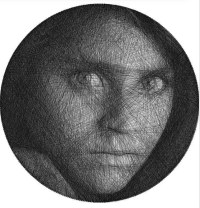
ChengI recently came across an article about Alfred Cheng. He’s an artist from Hong Kong who uses thread to create realistic portraits of celebrities. What’s amazing about Cheng’s art is that he uses a single thread to craft each of his masterpieces; and that thread is 5,000 meters long. That’s 15,000 feet of thread!

Cheng starts with a digital version of the photograph he wants to recreate. He converts it to grayscale, adjusts the contrast to create the right mix of highlights and shadows. Then he uses an algorithm to map out the precise method of wrapping his thread around over 300 nails he’s hammered into a circular frame.

As Cheng spends weeks wrapping the black thread around the nails in an intricate pattern, layers of dark begin to outline the portrait and fill in shadows to create the stunningly realistic images. His work requires incredible focus as a single mistake can ruin the work. He could get out of sequence, warping the image, or break the thread; wasting all of the work that came before that point.

I watched a video of Cheng working, and it occurred to me that we are all in the business of creating art.

  • Cheng works to create a portrait while we work toward creating profitable customer relationships.
  • Cheng analyses each piece to determine the correct spacing of nails and wrapping pattern. We approach each customer as an individual with their own specific needs.
  • Cheng depends on layers of thread to create a masterpiece. We layer positive experiences to build trust and loyalty.
  • Cheng uses nails to anchor his thread, linking one to another to reveal an image. We use various touchpoints (face-to-face, telephone, email, online) to weave an intricate web of service.
  • A single mistake by Cheng can ruin weeks of painstaking work. A single misstep on our part can damage or destroy a relationship.

We do have one advantage over Cheng though. While he labors alone, we have an incredible team working alongside us every day. I’ve never thought of myself as an artist, but I am proud to be associated with so many of you who dedicate yourselves to the art of improving the lives of your customers and coworkers.  Together, we create some amazing works of art.

The Bar is Low

customer-1253483_640Last week we had to have a tree removed from our front yard. It had contracted some form of disease and sections were dying off, eliminating the shade it provided and rendering it an eyesore. I hated losing that tree – it anchored one side of the house and the curb appeal has been negatively impacted by its removal. Nevertheless, we knew it had to be done, so on Thursday morning the crew we’d contracted for the job arrived.
After conferring with my wife about the job and marking the location of two sprinkler heads in the vicinity with orange cones, they set to work. By the time I arrived home from work that afternoon the work was done. It was a real shock seeing the empty space. The larger shock was finding out that the sprinkler heads which had been so meticulously located and marked were now broken.

Of course accidents happen. When felling a tree it can be difficult to control everything and I understand that there may be some collateral damage. What I didn’t understand was the reaction my wife received when she asked the business owner about the plan to repair the sprinklers. There was no plan. He denied that one was even broken and argued that the other would operate just fine in its damaged state. There was no offer to repair the damage and no discount for the inconvenience and extra expense that we had incurred.

When discussing customer service, we often talk about “raising the bar,” going “the extra mile,” or performance that’s “above and beyond.” Yet all too often I’m left wondering what bar it is that are we are supposedly raising. Despite the advances in technology over the years – advances that have brought us incredible levels of personalization – service seems to actually be getting worse.

Phone calls go unanswered.

Emails aren’t returned.

Promises aren’t kept.

Staff is unavailable.

And few seem bothered by it.

From my perspective, you don’t need to raise the bar in order to stand out. The bar of service is so low, all we have to do is walk over it. We don’t have to go the “extra mile” because no one else is willing to walk the first one. And “above and beyond?” Well, it isn’t all that far away. To be recognized as a superior service provider these days, all you really have to do is hit the basic marks the majority of others aren’t willing to.

  1. Do what you say you are going to do.
  2. Make things better, not worse.
  3. Correct the mistakes you cause.

Customer service isn’t always about finding the next innovation or performing over-the-top acts of kindness. Most of the time, it’s simply a matter of doing right by others. If we just keep that as our focus, everything else will fall into place.

Leading Questions

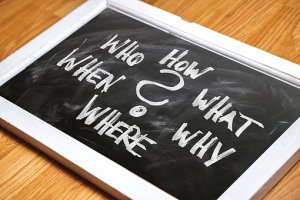
questions-2212771__340Leaders ask questions.

Leading managers ask questions to help them guide the team to grow.

Leading service providers ask questions to help them solve customer problems.

Leading salespeople ask questions to help them meet unspoken needs.

We should all be asking more (and better) questions, but we don’t. They may enter our mind, but we stop short of actually asking because we’re afraid – afraid that people will get upset with us for prying into places we don’t belong. We’re afraid of coming across as pushy or nosy or a busybody.

Here’s a news flash – you won’t.

As a leader, my team expects me to ask questions – how else can I lead them effectively?

As a service provider, my customer expects me to ask questions – how else can I serve them properly?

As a salesperson, my prospects expect me to ask questions – how else can I propose meaningful solutions?

Asking questions is an expected behavior. Think about the last time you went to the doctor. Did they ask you about your symptoms? Of course they did. They also asked about your exercise habits, your diet, and your family history.

Talk about being nosy. But did you take offense? No. Because you know that in order to do the best job they can for you, they have to ask questions. You’d be crazy to trust any doctor who started prescribing a course of treatment without first doing a bit of fact-finding.

Why is your business any different?

If you’re not asking questions, you’re simply not doing your job very well. Your team is heading in the wrong direction. Your customers are confused. Your sales are below goal.

Now let me suggest that you ask yourself a question or two. Are you ready for a change? Are you ready to turn things around? Are you ready to take control and make the second half of 2019 the start of a new era?

Are you ready to lead?

Let’s get curious, and in the process we’ll become better bosses, customer advocates, and even better salespeople. Let’s ask more questions and see where the answers can take us.

Alone

man-1246233_640I’m currently binge-watching season five of Alone. This History Channel program follows 10 survival experts as they each survive alone (that’s where the name comes from) in the wilderness. Separated from each other by several miles and with no contact with the outside world, they are left to carve out an existence using limited resources, their experience, and whatever internal fortitude they can muster. The participant who lasts the longest wins.
This season features a collection of prior contestants. Each failed to win their respective season and are now looking for redemption. It’s been very interesting to see what lessons were learned the first time around and how their approach changes given a second chance.

Take Randy Champagne from Boulder, Utah. In Season two the wilderness instructor lasted 21 days before tapping out. He handled every aspect of the challenge well, but ultimately grew lonely without human contact for three weeks. Obtaining food and creating shelter, what most would consider the core obstacles of the challenge, were handled masterfully. He simply starved from lack of community.

Coming into season five, Champagne recognized this would be the hurdle he’d need to overcome in order to win. His plan was to keep his mind busy with hunting and bush craft projects in order to ward off the loneliness. This time around he lasted 35 days.

Humans are inherently social animals. We’re geared to operate as part of a unit, not as individuals. In order to function properly, we require the give-and-take that comes with interaction. Each of us needs what others have to offer – and we need to provide them with what we bring to the table. Removing us from the social construct is like removing pieces from a machine. The parts simply don’t function on their own.

Science has proven this out through thousands of studies over decades of research. But you don’t need a PHD to understand the importance of community. The pull to be a part of something bigger is hard-wired into each of us from birth.

That’s why the social aspect of work is so crucial. The connections we make with coworkers and customers is necessary for the organization to function well. The more siloed we become – the more we retreat behind email and rely on policies to communicate for us – the more our work suffers. Work, just like any other endeavor, is improved by socialization. Despite all our technological advances, work works best within the context of community.

Even the hardiest among us fall victim to the hunger for companionship. The longer we attempt to operate in isolation, the stronger the pull becomes; and the harder it is to go on. Surrounded by other people, we can still find ourselves struggling to find real connection. Without it, we feel lost. Work continues, but the passion is gone. The desire to continue slowly evaporates. Or, as Randy Champagne explained after calling for rescue “It’s not being out here and surviving. It’s being out here and surviving alone.”

At First Blush

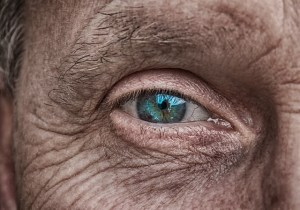
skin-3358873_640While traveling last week, I popped into Dairy Queen for a post-meeting milkshake. As I approached the counter, the cashier looked up and asked “How can I help you?” Before I could answer however, he spoke again. “You know, I can give you the senior discount.”
At first I was surprised, then amused, and finally more than a little bit offended. Yes, I have gray hair. That, combined with the suit I was wearing no doubt signaled “old guy” to the young man standing before me. I don’t feel old; at least I didn’t until this encounter.

In the days since, my mind keeps going back to that interaction. I’ve been wondering how often I make snap judgments about people based on split-second observations. We all do it. Research shows that first impressions are formed within the first three seconds. One study from Princeton conducted in 2006 found that 100 milliseconds (one tenth of a second) is all it takes – a single glance is enough to form an opinion. It happens so quickly that neither party realizes it.

As soon as you see someone, your mind forms an opinion based on their appearance: their body language, demeanor, mannerisms, and the way they are dressed. Before a single word is exchanged, the impression is created. And that impressions colors the behaviors that follow.

How we treat someone depends more on our initial impression of them than anything else that follows.

What’s truly frightening is just how strong first impressions can be. Time doesn’t necessarily make much difference. Even when confronted with contradictory evidence, first impressions form our dominant opinion about someone for months after the initial encounter. That fraction of a second sets the stage for the entire relationship.

Look for information on impacting first impressions and you’ll find plenty of tips on how to dress, act, and speak. But all of these suggestions put the responsibility for managing first impressions on the wrong person. I believe the real challenge isn’t to work harder at creating better first impressions, but to change the way we look at people.

When a customer or coworker approaches, what do I see? An interruption, a nuisance, a problem? An opportunity, a challenge, a possibility?

Looking back, I can see that I too formed a split-second opinion about the cashier. His youthful appearance and casual demeanor instantaneously created an image of a disrespectful, uncaring employee. Maybe I was wrong. Maybe he was just trying to be friendly and helpful by offering what he thought was a kind gesture.

Is it possible to train our minds to remain open for longer than a fraction of a second? Could we choose to ignore the initial mental image that’s formed in order to pursue something more meaningful? I’d like to think so. The answer lies in challenging our first impressions; in believing there’s more to the story than can be revealed in a single glance.

Perhaps a second opinion is needed.

Making Memories

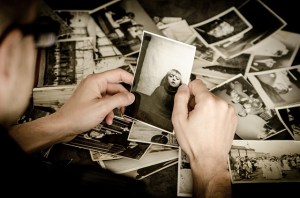
photo-256887_640If you are of a certain age, you may be familiar with the name Marilu Henner. A film and television actress, Henner became famous for her role as Elaine Nardo in the sitcom Taxi during the late 1970’s and early 1980’s. In the 90’s she went on to host her own talk show and has written several books on diet and health; but it is her role on Taxi for which she is most remembered.
Henner also remembers her time on the show. In fact, she remembers just about every detail from every episode; from what she wore to what each actor’s lines were, and even what the weather was like on each day of filming. She remembers the minutiae from other days of her life as well, because she is one a handful of people around the world diagnosed with hyperthymesia. This condition is also known as “total recall syndrome.” Henner can remember just about every detail from every day of her life since she was 11 years old.

Imagine having every moment of your past available for recall instantly; everything you ate, wore, and did played back in your mind as if it had just happened. Would that be a blessing or a curse? You’d be able to relive all the best moments of your life any time you wanted, but then you’d also be subject to the worst of times suddenly flooding back as well. My wife often jokes about my poor memory, but I’m starting to think there are some details of my past I’d just as soon forget.

Scientists say that, for most of us, emotion plays a huge role in what we remember. It’s why I can’t recall what I had for lunch yesterday, but remember in vivid detail where I was and what I was doing on September 11, 2001. Lunch didn’t make much of an emotional impression on me. The raw emotions I experienced on 9/11 anchored the events of that day firmly in my mind.

Dr. Shahram Heshmat of the University of Illinois at Springfield says that “emotion acts like a highlighter pen that emphasizes certain aspects of experiences to make them more memorable.” In other words, strong emotion equals strong memory. The stronger the emotion associated with an event, the more starkly the details of that event are highlighted in the memory centers of our brain.

Knowing this, can’t we use the power of emotion to influence how people remember their interactions with us? Shouldn’t we? After all, if our goal is remain top of mind – if we want customers to return for more business and coworkers to act in ways that make our jobs easier – shouldn’t we do our best to create strong positive emotions associated with our time together? It seems to be me that this very concept is the strongest competitive advantage we could develop.

Think about it. What if every time a customer thinks about our organization, positive emotions were to flood over them? They may not be able to recall exactly what we said or did to make them feel so good, but that’s OK. It’s the emotional aspect of the memory that counts. It’s the positive feelings, more than any specific detail that makes us want to continue in any relationship.

In 2012, Henner published Total Memory Makeover: Uncover Your Past, Take Charge of Your Future. In an interview about her book, she described her own feelings about her unusual gift. “Your past is in you and on your mental hard drive … whether you remember it or not. It’s what makes you behave and do things in your present. So why not explore it for all it’s worth?” She’s learned to use the power of memory as a resource, utilizing it to craft the future. I find that a tip worth remembering.

Say Cheese!

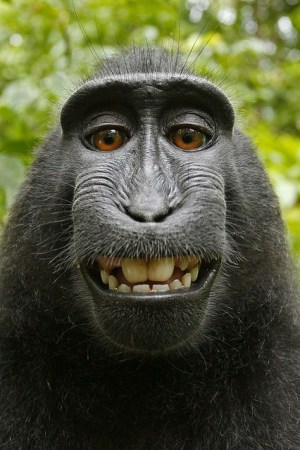
macaca-nigra-536991_640On April 27, 1981, John Eric Hastrick was visiting the Grand Canyon. In an effort to get the perfect picture to commemorate his time there, Hastrick climbed over the rock wall intended to keep tourists from venturing too close to the edge. He turned his back to the canyon and focused on his camera, continued backing up while trying to frame his shot. He soon lost his footing and plunged 330 feet to his death.

In their 2001 book Over the Edge: Death in Grand Canyon, Michael P. Ghiglieri and Thomas M. Myers document this and numerous other instances of people who met their demise while posing for photographs from the rim. According to their records, roughly 20% of those who died from a fall at the National Park did so during the act of photography. In trying to get just the right shot, they ignored safety warnings, crossed barriers, and put themselves into precarious positions.

Although self-portraits date back to the early days of photography, the term “selfie” didn’t appear until 2004. Once the iPhone 4 debuted in 2010 with a front facing camera, the trend took off. Soon people were posting ever more elaborate selfies. To be noteworthy these days, you have to be doing something interesting in an interesting place; a trend that often leads to disastrous results. And the selfie trend has only increased as new tools and smartphone apps provide new ways to frame ourselves.

A recent study published by the Journal of Family Medicine and Primary Care cites death by selfie as a growing concern. Self-absorbed individuals have died in increasingly bizarre ways while chasing their next selfie. People have been hit by trains, drowned, run over by cars, and, just like John Eric Hastrick, fallen from significant heights – all while focused on themselves as opposed to what’s going on around them. This led the authors of the study to suggest we establish “no-selfie zones” at potentially dangerous tourist locations to protect individuals from harming themselves in this way.

Do you have a no-selfie zone?

What’s the focus of your day… yourself, or others?

It’s so easy to get wrapped up in our own agendas. We worry about what makes us comfortable or happy. We fret about who likes us or recognizes our work. We spend our days in selfie mode when all around us are opportunities to do something more worthwhile. We could serve others. Yet we lose sight of the good we could be doing and instead chase after the next selfie moment – the next chance to satisfy our own egos.

What if we declared our own no-selfie zones? What if we decided to focus our attention on those around us who really deserve it?

Our customers.

Our coworkers.

Our team members.

Taking a selfie is not inherently a bad thing. I’ve been known to pose for one or two myself; but to be honest, I’m really not that interesting. Many of my fondest memories involve focusing on someone else; helping them. It’s my acts of service that actually frame me the best. It’s then that I’m shown in the best possible light. My proudest moments are those in which I’m able to assist a customer or a member of my team in accomplishing their goals. Those are memories worthy of a picture.