
 While traveling last week, I popped into Dairy Queen for a post-meeting milkshake. As I approached the counter, the cashier looked up and asked “How can I help you?” Before I could answer however, he spoke again. “You know, I can give you the senior discount.”
At first I was surprised, then amused, and finally more than a little bit offended. Yes, I have gray hair. That, combined with the suit I was wearing no doubt signaled “old guy” to the young man standing before me. I don’t feel old; at least I didn’t until this encounter.
In the days since, my mind keeps going back to that interaction. I’ve been wondering how often I make snap judgments about people based on split-second observations. We all do it. Research shows that first impressions are formed within the first three seconds. One study from Princeton conducted in 2006 found that 100 milliseconds (one tenth of a second) is all it takes – a single glance is enough to form an opinion. It happens so quickly that neither party realizes it.
As soon as you see someone, your mind forms an opinion based on their appearance: their body language, demeanor, mannerisms, and the way they are dressed. Before a single word is exchanged, the impression is created. And that impressions colors the behaviors that follow.
How we treat someone depends more on our initial impression of them than anything else that follows.
What’s truly frightening is just how strong first impressions can be. Time doesn’t necessarily make much difference. Even when confronted with contradictory evidence, first impressions form our dominant opinion about someone for months after the initial encounter. That fraction of a second sets the stage for the entire relationship.
Look for information on impacting first impressions and you’ll find plenty of tips on how to dress, act, and speak. But all of these suggestions put the responsibility for managing first impressions on the wrong person. I believe the real challenge isn’t to work harder at creating better first impressions, but to change the way we look at people.
When a customer or coworker approaches, what do I see? An interruption, a nuisance, a problem? An opportunity, a challenge, a possibility?
Looking back, I can see that I too formed a split-second opinion about the cashier. His youthful appearance and casual demeanor instantaneously created an image of a disrespectful, uncaring employee. Maybe I was wrong. Maybe he was just trying to be friendly and helpful by offering what he thought was a kind gesture.
Is it possible to train our minds to remain open for longer than a fraction of a second? Could we choose to ignore the initial mental image that’s formed in order to pursue something more meaningful? I’d like to think so. The answer lies in challenging our first impressions; in believing there’s more to the story than can be revealed in a single glance.
Perhaps a second opinion is needed.
 On January 2nd, I got behind the wheel of a Kia minivan, fired up the ignition, and pulled out onto the wrong side of the road. Well, at least it felt wrong to me. I was in Perth Australia where, it being a former British colony, people drive on the left side of the road. As the driver, I sat on the right hand side of the vehicle; all of the van’s knobs and switches were located on the opposite side of what I was used to.
 The hottest title on Netflix right now is Tidying Up with Marie Kondo. Based on the professional organizer’s 2014 book, and introduced to coincide with New Year’s resolutions, the show has everyone talking. Fans are quick to share how Kondo’s KonMari method has changed their lives. Detractors will tell you why it simply doesn’t work for Americans. And everyone is talking about joy.
 In 2008, the city of Perth in Western Australia adopted a program called “Forgotten Spaces.” Focused on the city’s central business district, the plan focused on revitalizing the downtown area by updating its laneways and arcades; the narrow streets and alleys located between the towering office buildings. These spaces offered intimate potential settings for small shops and bistros – just the kind of environment city officials hoped would bring people (and their money) back to the city at the end of the workday.
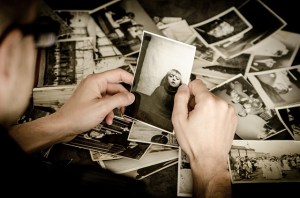 If you are of a certain age, you may be familiar with the name Marilu Henner. A film and television actress, Henner became famous for her role as Elaine Nardo in the sitcom Taxi during the late 1970’s and early 1980’s. In the 90’s she went on to host her own talk show and has written several books on diet and health; but it is her role on Taxi for which she is most remembered.
 On April 27, 1981, John Eric Hastrick was visiting the Grand Canyon. In an effort to get the perfect picture to commemorate his time there, Hastrick climbed over the rock wall intended to keep tourists from venturing too close to the edge. He turned his back to the canyon and focused on his camera, continued backing up while trying to frame his shot. He soon lost his footing and plunged 330 feet to his death.
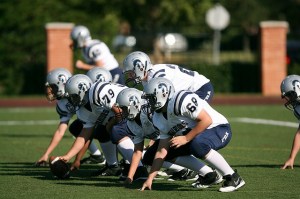 With less than 60 seconds remaining on the game clock, Scripps Ranch High School had the game in the bag. The San Diego squad had the lead and the ball. All they had to do was snap the ball twice, taking a knee on each play, to continue their winning season. Everyone saw the writing on the wall, including their opponent, La Jolla High. From the game’s start, they knew they were in for a rough one. Two of their starters, including the quarterback were in street clothes, having suffered injuries in prior games.
 If you drive down a particular stretch of Interstate 80 outside Iowa City, you may be surprised to find a trio of giant faces staring at you from a cornfield. Angry Guy, Befuddled Guy, and Disappointed Gal are 12-foot tall cutouts created by artist John Cerney about eight years ago – an installation he calls Emoticons. Similar works can be found in fields along interstates winding through 23 other states.
 On Friday night Mother Nature passed through Lubbock, leaving behind our first snowfall of the season. Residents woke up Saturday to between seven and twelve inches of snow, with a steady curtain of the white stuff continuing to drop until mid-day. Cold temperatures and icy conditions led local authorities to recommend staying off of the streets if at all possible. But Christmas shopping, weekend jobs, and other responsibilities forced many people out onto the roads.
 scottvoland.com