
 Last week we had to have a tree removed from our front yard. It had contracted some form of disease and sections were dying off, eliminating the shade it provided and rendering it an eyesore. I hated losing that tree – it anchored one side of the house and the curb appeal has been negatively impacted by its removal. Nevertheless, we knew it had to be done, so on Thursday morning the crew we’d contracted for the job arrived.
After conferring with my wife about the job and marking the location of two sprinkler heads in the vicinity with orange cones, they set to work. By the time I arrived home from work that afternoon the work was done. It was a real shock seeing the empty space. The larger shock was finding out that the sprinkler heads which had been so meticulously located and marked were now broken.
Of course accidents happen. When felling a tree it can be difficult to control everything and I understand that there may be some collateral damage. What I didn’t understand was the reaction my wife received when she asked the business owner about the plan to repair the sprinklers. There was no plan. He denied that one was even broken and argued that the other would operate just fine in its damaged state. There was no offer to repair the damage and no discount for the inconvenience and extra expense that we had incurred.
When discussing customer service, we often talk about “raising the bar,” going “the extra mile,” or performance that’s “above and beyond.” Yet all too often I’m left wondering what bar it is that are we are supposedly raising. Despite the advances in technology over the years – advances that have brought us incredible levels of personalization – service seems to actually be getting worse.
Phone calls go unanswered.
Emails aren’t returned.
Promises aren’t kept.
Staff is unavailable.
And few seem bothered by it.
From my perspective, you don’t need to raise the bar in order to stand out. The bar of service is so low, all we have to do is walk over it. We don’t have to go the “extra mile” because no one else is willing to walk the first one. And “above and beyond?” Well, it isn’t all that far away. To be recognized as a superior service provider these days, all you really have to do is hit the basic marks the majority of others aren’t willing to.
- Do what you say you are going to do.
- Make things better, not worse.
- Correct the mistakes you cause.
Customer service isn’t always about finding the next innovation or performing over-the-top acts of kindness. Most of the time, it’s simply a matter of doing right by others. If we just keep that as our focus, everything else will fall into place.
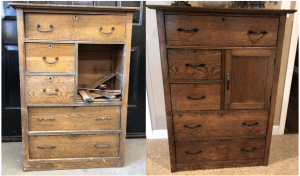 One Saturday last May, my wife Susan went to a local flea market with a friend. They hadn’t been gone long when I received a phone call. Susan had bought something and needed me to bring the truck in order to get it home. It was an old chest, beaten and neglected for years. My first thought was that she’d wasted $50 and a chunk of my time, because this thing needed to be put out of its misery. Of course, Susan wanted me to restore it.
 I’ve got to do some work on my sprinkler system. Out here in West Texas, we don’t get a lot of rain. In fact, it can go months without any precipitation and, with summer temperatures over 100 degrees, the landscape starts to get a bit crispy. Many plants have either evolved or been bred to withstand the lack of moisture, but even the hardiest, need watering once in a while.
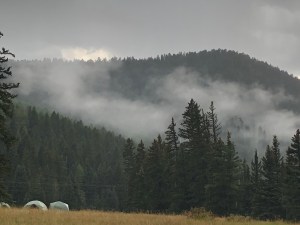 I hope you had an enjoyable Labor Day weekend; full of either rest or excitement, depending on which of those you were hoping for. I spent mine camping in the Carson National Forest near Tres Ritos, New Mexico. From my campsite in a meadow next to a babbling brook, I had the most incredible view. I watched as thunderstorms moved across the mountains followed by mist rising up through the pine trees as the sun came back out. I had no internet or cell service, but it didn’t bother me at all. I had plenty to see and do in every direction.
 Last week, my daughter Abby started a new internship at Covenant Hospital here in Lubbock. Over the next several months, she’ll rotate through different departments to learn about what they do and potential employment opportunities they have. There’s also a classroom training aspect where she and the other interns (all young adults with developmental disabilities) will learn about important work-related behaviors, personal management techniques, and other “real life” skills. If she impresses a department manager, she could be offered a position at any time and become a full-time employee.
 In the wee hours of the morning on Sunday, August 11th, someone left an old television set on the front porch of a house in Henrico County, Virginia. In fact, according to Police Lieutenant Matt Pecka, the mystery deliveryman visited 50 different houses that night, leaving TV sets outside the door of each one. Nothing was stolen or disturbed, and no foul play is suspected.
 Early in my sales career, I spent a lot of time on the road. Thankfully, I had books on cassette tape to keep me company. One of my favorites was by the great Zig Ziglar. I got to thinking about that recently and looked up a transcript of one his stories that’s stuck with me through the years. Enjoy.
 At 25, Sara Blakely found herself working for Danka selling fax machines door-to-door in the hot summer sun of Florida. The one-time lawyer want-to-be discovered that she was pretty good at selling. She had a knack for it and quickly began moving up the ranks, training others to sell the way she did. What she wasn’t good at though, was handling the summer heat.
 In the 1920’s, two-tone automobiles were popular. Body shop employees, however, were often frustrated with the process of painting the vehicles. To mask off the cars, they used newspaper or butcher paper glued to the vehicle. The process was messy and the paper was difficult to remove once the painting was completed.
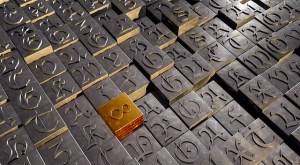 In November of 1990, a new sculpture titled “Kryptos” was installed on the grounds of CIA headquarters in Langley. Created by artist Jim Sanborn, the 12 block of copper is covered with 1,800 characters carved in four sections. Each section is written in a different code and, together, they form a riddle. It took eight years for the first three section to be decoded. Despite attempts by the CIA, NSA, and others around the world – not to mention a handful of clues provided by the artist – the fourth code has yet to be cracked. And it’s only 97 characters long.
 scottvoland.com