Do Unto Others

puzzle-1721592_640When Chris Kyle’s daughter Ava received a new kitchen playset, she invited him to come for a meal at her restaurant, Ava’s Kitchen. The dutiful dad agreed and soon after he posted a review of his visit. The Instagram post went viral.

So I tried to support another Black Owned Business for lunch today. It’s called Ava’s Kitchen, just opened end of April. It’s a very clean establishment, but whewww let me tell you about this owner.

First off, I asked why there are balloons on my chair, and it’s not my birthday? She talm’bout, mind yah business; those are Mommy’s.

I been waiting on my order to get done for 45 minutes, and I’m the only customer here. She was making good progress at first, then she stopped for 20 minutes to go watch Paw Patrol.

Overall the customer service could be better, but the cook is a cutie; so I’ll give her another chance. Let’s not give up on Black businesses so fast after one mistake.

Kyle obviously has a soft spot for this particular business, but reading his post made me think about our reactions to those struggling to operate in the world around us right now. How often do we fail to give them the benefit of the doubt? It’s so easy to find fault with others when we all want something different. Just think about the various expectations organizations are faced with right now.

Opening your business invites condemnation from those you feel it should stay closed. Staying closed angers those who feel you should open back up.

Limiting how many can enter at once? Get ready for the backlash. Of course the same would happen if you opened to full capacity.

If you enforcing social distancing and ask customers to wear masks then you’d better prepare for bad reviews and name-calling.  Relax those standards though, and others will call for a boycott of your business.

Navigating the current economic environment is difficult for everyone involved. Now, more than ever, we need to adopt an attitude of tolerance and support. Regardless of your political beliefs or personal preferences, keep this in mind – It’s not about you. It’s about all of us. We rise and fall together. When we work as one, we rise. When we argue and stay in the way of someone who’s trying to do their job, we fall.

I love Chris Kyle’s tongue-in-cheek review because it’s clearly underwritten with love for his daughter. What if each time we interact with others struggling to make their way through the current business landscape, we imagined our own children were the ones in charge? Wouldn’t we replace our impatience with compassion? Our disdain with understanding?

It doesn’t take much to be part of the solution. Just don’t be part of the problem. Picture your son or daughter on the other side of the issue and serve as a role model. Let’s work together and we’ll all come out stronger for the effort.
Character Study

smiley-2979107_640On March 12th, just as the coronavirus pandemic began impacting the United States, an all-too-familiar scene played out in Hiram, Georgia. In the wine aisle of the local Sam’s Club, a man in a motorized scooter bumped into the shopping cart holding a child. The parents confronted the man, who tried to back away from them. Tempers flared, words were exchanged, and a fight broke out. As bystander video shows, wine bottles were broken and used as weapons. By the time police arrived to break up the scene, there was wine all over the floor and one individual had to be carried out on a stretcher. While initial reports indicated that the fight erupted during a fight over toilet paper and other supplies, the truth is far uglier. This was simply human nature on display.
Novelist James Lane Allen once wrote that “adversity does not build character, it reveals it.” As a youth, Allen lived through the American Civil War, seeing first-hand the impact that slavery, war, and societal reconstruction had on his fellow man. His experiences formed the background of his writing and this quote undoubtedly stems from watching those around him react to the unprecedented struggles of the time. Thanks to social media, and a 24-hour news cycle, we have the opportunity to witness countless reactions to adversity from those in our immediate vicinity and around the world.

Some raise their voices, while others rise to the occasion.

Some choose to attack, while others choose to assist.

Some take charge, while others take advantage.

As we stand on the eve of Memorial Day, I can’t help but wonder what those we supposedly honor this weekend would think about their fellow man. Memorial Day is dedicated to those who have died while serving in the United States Armed Forces. Through our country’s various conflicts, these men and women paved the way for our current standard of living. How we respond to discomfort and inconvenience, much less true adversity, speaks to how much we value their sacrifice.

I think about the child sitting in that shopping cart in Hiram, Georgia. What went through their mind as they watched these grown-ups, including their parents – people they look to as models of acceptable behavior – slash away at each other with broken bottles of wine. And I think of my own adult children who still look to me as an example. What character do they see being revealed by my reaction to the adversities I face?

Memorial Day is considered the unofficial start of summer here in the U.S. Many will spend the day outside enjoying the weather and time away from work, but never thinking of those we have to thank for our freedom. Speaking of Memorial Day, President John F. Kennedy said “As we appreciate our gratitude, we must never forget that the highest appreciation is not to utter the words, but to live by them.” I hope you will take some time this weekend to think about the sacrifices made by those who have gone before us, and your response to their legacy.

What Are You Looking For?

skin-3358873_640Rebecca was nineteen, but had the intellect of an eight year old. She was clumsy and uncoordinated, often having trouble putting her clothes on correctly. She could not navigate around the block or properly use a key to open a door. Her grandmother described her as having “no sense of space.”

She wore thick glasses, as she suffered from degenerative myopia. Her fingers were stumpy with deformed nails, and she had partial cleft palate, causing her to whistle when she spoke. She could not count change, and never learned to read or write. Painfully aware of her differences, Rebecca was extremely shy, preferring solitude to the disgust and ridicule often projected her way.

When Dr. Oliver Sacks, a neurologist, first met Rebecca, he described her as “a poor thing.” He writes about her in his book The Man Who Mistook His Wife for Hat. “I saw her merely, or wholly, as a casualty, a broken creature, whose neurological impairments I could pick out and dissect with precision.”

However, their next encounter was entirely different. Walking the grounds of the hospital where he worked (and where Rebecca now lived), he spied her sitting on a bench in the garden. She was soaking in the sun and intently observing the nature around her. Her posture was relaxed and her face betrayed no sign of her many deficits.

She spied Sacks, smiled and exclaimed “Look at the world. How beautiful it is.” She then began to describe what she saw in a stream of poetic words and phrases. While she struggled with what we consider “normal” cognitive abilities, she seemed to excel at abstract thought and artistic expression.

Suddenly it dawned on Sacks that the vey tests used to categorize her impairments were useless in gauging her strengths. Trained himself to identify deficiencies, Sacks’ first inclination was to seek out what was wrong with his patient, not what was right. He concluded that “our test, our approaches, our ‘evaluations’, are ridiculously inadequate. They only show us deficits, they do not show us powers.”

Seeing Rebecca from a different perspective allowed Dr. Sacks to reassess her treatment. She was removed from the standard classes and workshops prescribed to address her deficiencies. They weren’t working anyway. Instead, she was enrolled in music and theater classes where she did remarkably well. Seeing her on the stage, Dr. Sacks remarked, “One would never even guess that she was mentally defective.”

It occurs to me that neurologists aren’t the only ones who would do well to expand their methods of evaluation. Everywhere you turn, there are mindsets and systems designed to look for exclusions rather than inclusions. Negative headlines make the news because what someone has done wrong is more interesting than what someone has done well. Pranks and jokes intended to embarrass others receive more play than inclusive activities. And sadly, my own tendency is to look for the inadequacies in others as opposed to their superlatives. I have to remind myself that, even as I like to see myself as the evaluator – as a Dr. Sacks, there are others evaluating me – seeing me as a Rebecca. It’s a humbling thought.

How do I see my customers?

Through what criteria do I evaluate my coworkers?

Am I looking for deficits or powers?

Close Encounters of the Human Kind

michelangelo-71282_640This weekend, I ventured out of the house to pick up a new washing machine. We’d been trying to get by with an older unit that was clearly on its last legs. Because laundry for five is a never-ending process, we finally went online and ordered a new one. Lowes made it easy, and I didn’t even have to go inside; they brought it out and helped me lift it into the truck.
But this story isn’t about Lowes or my new washing machine.

On the way to Lowes Saturday morning, I stopped by Chic-fil-A to grab some breakfast. They’re known for their amazing service, and seemed to be ahead of the curve when it came to their coronavirus response. I wasn’t disappointed, as my wait in the drive-thru was short and the food was as tasty as always.

But this story isn’t about Chic-fil-A.

What’s been on my mind is an encounter with someone I’ve never met. You see, when I got to the pick-up window, the Chic-fil-A employee informed me that my order had been paid for by the customer ahead of me. Another human being decided to make a small sacrifice just to be nice. The act interrupted my train of thought – in a good way. No longer thinking about the inconvenience of replacing my home appliance, I was now contemplating the various ways in which I’ve seen people reach out to each other over the past few weeks.

  • People have given up their free time to sew face masks for health care workers.
  • Others have donated their money to provide food for truck drivers delivering badly needed supplies.
  • Teachers have gone out of their way to create resources for students working to finish school from home.
  • Neighbors have volunteered to go grocery shopping for those most at risk of infection.
  • Families have set up tables in front of their homes offering free toilet paper and cleaning supplies to those who can’t find any in the store.
  • Companies are providing online services for free to help people make use of their time indoors.
  • Business owners are sacrificing their own pay to keep their employees on the payroll.
  • Children are writing cards to those in nursing homes who aren’t allowed visitors, but desperately need connection.

The list goes on and on. I think of these as “close encounters of the human kind.” Lives are intersecting in ways that are new and unusual. But they are also fascinating and welcome. It seems the more life drives to drive us apart, the more people look for ways to come together. We are social creatures by design after all. We simply have to have connection. Without it, we suffer. With it, we thrive.

Since this whole crazy thing started, I’ve spent more quality time with my wife and kids. I’ve had longer and more meaningful conversations with other family and friends. Work has taken on a different level of purpose because I see more clearly the underlying connections being forged. I bet you feel the same way.

All of this went through my head in a fraction of a second at the Chic-fil-A window. Then I handed over my debit card and happily covered the meal for the people behind me. A small gesture, to be sure; but it made me feel connected. And I as I drove off, I couldn’t help but wonder… why does it take some kind of tragedy to bring out the best in us humans? And how do we continue to stay connected once the isolation ends?

Open for Business

illuminated-1853924_640All around the world, doors have closed.

The doors to schools are closed. The doors to churches are closed. Restaurants have closed their doors too. Every day, more and more businesses are closing their doors, many of them for good. Inside those still open for business, employees are being told to keep their distance from each and work behind closed doors. The public is being advised to stay home, and close the door.

In the midst of all these closed doors, I happened last week to run across an anonymous YubeTuber who’s made a habit of opening doors. About a year ago, a nameless Swede started the channel “I open doors.” In each video, approximately 10 seconds long, his left hand reaches out and opens a door. To date, there are over 300 videos posted.

The owner of this unusual channel said he started it as a way of unifying people, a social experiment to see if a community could be created around something as simple as the idea of opening doors. He says “I’m hoping that it will feel like a safe anchor for people. If you had a bad or a good day, I will be there opening a door for you because I upload every day, and I will continue to do so no matter what happened in your life. I will film the same door from time to time, of course, but I think that can also provide some familiarity. You recognize the door. You maybe feel at home with the door.”

It may not be safe to open physical doors right now, but I can’t help but think that we should be looking for ways to open as many figurative ones as possible. The phrase “open the door” is an idiom with several meanings. When you “open the door,” you

  • Invite the possibility of something new.
  • Permit someone else access to something.
  • Make passage easier for someone else.

As sales and service professionals, we are in the business of opening doors, even when the slabs of wood, glass, or metal separating us from other people happen to be closed. We should each be looking for ways to open up possibilities for those we serve. We should be identifying ways to make their lives easier despite the barriers that have been placed in our path.

Though he started his project well in advance of the current COVID-19 scare, the unnamed YouTuber seems to agree. “I want anyone to feel like they can open a door and everyone to be part of this experience. All of my videos are from the point-of-view perspective, so basically it’s you opening the door. There are doors everywhere.”

See the Need

toilet-paper-3675180_640Service has never been so important.

“Self-isolation” and “social distancing” are the new norm. Doors everywhere are being shut. People are hoarding supplies and preparing for the worst. It’s in times like these that our true nature is revealed. For some it’s an excuse to withdraw, to do less, to focus on self and ignore the needs of others. It’s justified. It’s understandable. It’s expected.

But these are the times when heroes step forward. Instead of giving in to fear, they rise above it. They look outward, seeing the needs of others, and boldly step up to the plate. They don’t wait for someone to ask for help. They see a need and act to fill it.

Cue my parents. They’ve always been heroes to me, but I couldn’t have been prouder to see this Facebook post.

Sunday, March 15, 2020 – 7:26 PM
This afternoon the mayor of Nashville, in issuing some corona virus guidelines, made this statement, “as a community we must come together and take care of one another.” Earlier today we stopped at the Walgreens close to our house to pick up an over- the-counter allergy medicine. As I walked past one aisle I heard someone say, “Oh, they don’t have any either.” I noticed the empty shelf and stopped. I asked the older lady if she was looking for toilet paper. She said yes and she had been to four other places and couldn’t find any. Her husband was in the car as she had just checked him out of St. Thomas Midtown for congestive heart failure. They needed toilet paper. I told her that I lived just down the street and if she wanted to follow me home I had some extra she could have. She took me up on the offer and we sent her home with 4 rolls. Turns out she had been to my house before at my yard sale. She recognized my house! Who would have guessed that taking care of your neighbor would come down to sharing toilet paper with a stranger.

I’ve always felt that the best acts of service are the small gestures. It can be inspiring to read about super-human acts of bravery and self-sacrifice, but those opportunities are (thankfully) few and far between. The real service heroes are those who find small ways to help those around them. It might be a small word, a small act of service, or a small donation of toilet paper that makes the biggest difference.

As a species, we are designed for community. We need meaningful interaction with others to remain healthy, productive, and fulfilled. That’s actually what service is. Service is looking beyond yourself to see others and their needs – and then acting on it. It’s not waiting for someone to ask for help. It’s proactively offering what you have to give as a means of addressing that need for connection. Time and again we see that community trumps isolation, especially in the worst of times.

In the days ahead, let’s be mindful to keep our eyes, ears, and hearts open to those around us. Let’s seek out opportunities to lend a hand vs. pulling it back. We need to stay safe, but that doesn’t mean we can’t remain neighborly. We need each other now more than ever.

The Rest of the Story

vacuum-cleaner-268179_640When Brian Tatro first saw Cathy Rodriguez, he didn’t know what to think. Tatro, a Yakima, Washington resident was driving through a residential neighborhood when he saw Rodriguez out in front of her house. She was busy cleaning her sidewalk – with a vacuum cleaner. Tatro pulled out his phone and began recording the scene.
He posted the video to his Facebook account and can be heard commenting “Guess no one’s heard of a broom before” as the scene unfolds. Friends began weighing in, with most making jokes about Rodriguez. “She must go through a lot of vacuums…a trend setter for sure!” shared one. Another referenced the recent Broom Challenge trend, “Her broom must be in the kitchen standing up by itself.” More hateful comments soon followed. Commenters suggested that Rodriguez was using drugs or suffered from mental illness. The jokes had taken a sinister turn.

Counselor Mateo Sol calls this classic judgmentalism. “We all generally prefer to see ourselves as smart, generous, kind, patient, and forgiving people most of the time. But the truth is that we aren’t.” He says that being judgmental is “critically nitpicking and finding fault with another person, group of people, idea, or situation.” We all do it to some extent because it’s an unconscious act.

Judgmental people expect others to be consistent all the time. They struggle to see beyond a person’s flaws. They easily jump to conclusions about someone’s behavior. They have a hard time with ambiguity. They find it difficult to see and appreciate the beauty in others. According to Sol, these behaviors are common (I know I’m guilty of each myself) and the result of poor self-esteem.

Sol says we often feel like others are out to get us and feel anxious around others. There’s a strong critic inside that’s judging us, so as a defense mechanism we judge others in an effort to make us feel better. And because it’s unconscious, we don’t even realize we’re doing it.

To counteract our own judgmentalism, Sol offers these tips:

  • Explore your own self-talk. Look for patterns in the way you feel and the way those feelings manifest themselves in your inner voice.
  • Accept the ugly, weird, messy parts. Try to see yourself realistically and embrace the good as well as the imperfect.
  • Look deeper into people and situations. Look beyond initial appearances. Ask questions and avoid jumping to conclusions.
  • Be critical about your judgmentalism. Learn to question your own feelings and assumptions. Ask yourself “Am I seeing the whole picture?”
  • Ground yourself with mindfulness. When you start to feel the urge to judge someone, try to refocus on what’s going on around you. Cut off the judgmental thoughts by being present in the moment.

Had anyone bothered to ask Cathy Rodriguez, they would have found out that she was cleaning up glass from her van. It had been hit by a drunk driver while it sat in front of the house and three windows had shattered. Furthermore, the van was totaled. The driver didn’t have any insurance, and Rodriguez was left without a means of transportation for her family. By using her vacuum on the sidewalk, Rodriguez was simply trying protect pedestrians and pets from being injured. “I didn’t want them to get hurt,” she said.

When Tatro learned the story behind what he had witnessed, he was humbled. He immediately took to Facebook to address the negative comments and apologize for his own quick judgment. Finding that a GoFundMe page had been created to help buy the Rodriguez family a new vehicle, he was the first to contribute.

The Space Between

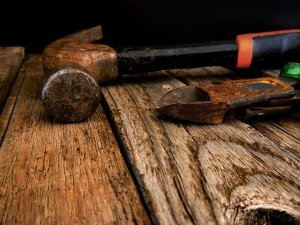
tools-2536159_640I’ve needed to update the workbench in my shop for a while now. The same one has been in use for years and it shows. It’s banged up, stained, and bit too small for many of the projects I’ve been working on lately. It sits next to my table saw, but because of how the saw’s motor is positioned, there’s about a foot of unused space between the two. This “space between” is a black hole. I can’t use it for anything, and it manages to suck up dropped tools, materials, and (inevitably) my time. Recovering this space represents a significant improvement in my workflow.

We’ve all got some “space between” that we work around. In some cases, it’s literal space like the square footage between my saw and workbench. In others, it’s figurative space – chunks of time that exist between productive parts of our day. In either case, we have a choice. We can choose to utilize this space, disciplining ourselves to leverage the time and resources available to us to improve. Or we can choose to waste the space, squandering the opportunity to make things better and suffering the negative impact created by the void.

But what does utilizing the “space between” look like? How can we take advantage of the little chunks of time that might seem insignificant and unusable? Here are a few ideas.

  • Brush up on your product knowledge.
  • Take advantage of a training opportunity to enhance your leadership skills.
  • Brainstorm potential solutions to customer service gaps.
  • Organize or reorganize your workspace to increase productivity.
  • Create a new resource to benefit the team.
  • Engage in conversation with a customer or coworker to build the relationship.
  • Research an aspect of your industry that lies outside of your scope of responsibility.
  • Practice/roleplay rusty skills to stay on top of your game.

There’s always a use for the “space between.” We just have to identify one and act on it.

This weekend, my daughter and I took advantage of the nice weather and an extra day off from work to tackle the workbench situation. We fabricated a new top that spans the unused space behind the saw. The new top we built is thicker and protected by a few coats of finish to improve its durability. In addition to eliminating the gap, we increased our usable work area by over 50%. Work pieces coming off of the saw are now better supported, making use of that tool much safer. And we did it all without impacting the normal workflow or other operations within the shop.

What I didn’t count on was the impact of this decision on my attitude. Addressing the “space between” has renewed my appreciation for the workshop. I’m excited about using my bench and creating new projects. I’m looking forward to getting my hands dirty and will be less likely to take shortcuts having experienced what making just a small improvement can do.

And, as you can imagine, I’m looking for others wasted spaces to utilize.

There Is No Try

snail-1447233_640I’ve mentioned before that I’m a Star Wars fan. I’ve seen the original trilogy of movies so many times that I can practically recite each line along with the actors. Sometimes I find myself thinking about a random scene and a quote just sticks in my head. There are so many great quotes from Star Wars – you don’t have to be a fan to be familiar with some of them. Take this one for example:

“Do. Or do not. There is no try.”

That’s Jedi Master Yoda speaking to Luke Skywalker in The Empire Strikes Back. Yoda has been training Luke in the ways of the Force, but Luke is distracted. His mind keeps wandering to thoughts of his friends and he’s impatient to leave and get back to them. As a result, he finds it difficult to concentrate on even simple, mundane tasks.

Then Yoda gives Luke a new challenge, and it’s a big one. It’s bigger than anything the young apprentice has taken on and Luke simply cannot fathom anyone being able to accomplish what’s being asked of him. He is scared. He hems and haws before but finally gives in to his mentor’s prodding. “I’ll try” he says. And that’s when Yoda drops this famous line.

“Do. Or do not. There is no try.”

For the longest time, I had the wrong idea about what Yoda was saying. I thought he was telling Luke, and by extension me, that it’s the result that matters. You either succeed or you fail. You get the job done, or you don’t. There is nothing in between. Close does not count and winners don’t settle for second place.

But I was wrong.

Yoda wasn’t talking about results. He was talking about effort. In Yoda’s mind, success isn’t a matter of winning versus losing. It’s a matter of dedication – the application of your whole self to the problem at hand. Luke wasn’t giving the job his best effort. He wasn’t giving his all. Succeed or fail, Yoda just wanted him to stop trying and start trying.

You see, when we approach our work as if it’s optional, we aren’t really trying. When we take shortcuts because we just want to get the task off our plate, we aren’t really trying. When we allow ourselves to check out, we aren’t really trying. When Luke said, “I’ll try,” what he meant was “I’ll pretend to try – just enough to get you off my back, but not enough to show that I’m truly committed to the job.”

No wonder Yoda was frustrated. When we give less than our best effort, we fail not just those depending on the results of our work; we fail ourselves. Ask anyone at the top of their game and they’ll tell you the road to success is paved with failure. The key to success isn’t a lack of failure, but a dedication to expending maximum effort. It’s developing a habit of truly trying.

Star Wars is just a movie. Yoda and Luke Skywalker are just figments of the imagination. Yet these words still make me think…maybe I should try a little harder.

What Your Brand Can Learn From Star Wars

milky-way-451599_640Last week, Disney launched its long-awaited streaming service, Disney +. In addition to classic Disney movies and television shows, subscribers can access top blockbusters from the Marvel universe, documentaries, nature programs from National Geographic, and new content created specifically for the new platform. As a Star Wars fan, I was particularly anxious to see how Disney handled The Mandalorian, a series that has been the focus of advertising for Disney +.

Star Wars fans can be hard to please, and I admit to having issues with some of the direction those in charge have taken since the original film first appeared in 1977. I was nine years old when the movie came out, and it immediately captured a part of my soul. It was different and changed the way movies were made, including those outside of the sci-fi genre. The influences of Star Wars in numerous aspects of film making can still be felt to this day.

With millions of devotees around the globe, Star Wars set the standard for creating a business that resonates with people. Why else do fans attend conventions, create original artwork, and write their own stories based on the concept? Star Wars is more than a series of movies, television shows, and merchandise. Star Wars is a brand that has surpassed the original goal of making a little bit of money for 20th Century Fox. Other brands looking to develop the kind of cult following that Star Wars has would do well to learn from the successes and mistakes made over the past 42 years.

  • Listen to your audience. The last thing a brand wants to do is alienate the faithful. Pay attention to what they ask for. Watch how they interact with your product. Take note when they complain. When you listen to the customer, you make decisions that make them happy and bring you more business. Rogue One was a success because it filled a need Star Wars fans had expressed. Solo bombed because it answered a question no one cared about.
  • Continue to break new ground. You can’t rely on the same old product and services to continue generating interest. You have to innovate. Star Wars is at its best when it introduces new characters and new worlds that connect seamlessly with what came before. When something doesn’t seem to fit, or breaks from patterns that the customer has come to depend on, the brand hits a speed bump. Animated series like The Clone Wars and Star Wars Rebels succeeded because they filled in gaps that begged for new stories. The 1978 Star Wars Christmas Special failed because it held no connection to the world that had been created.
  • Don’t mess with what’s working. Customers rebel against unneeded change. When George Lucas began tinkering with the original Star Wars movie, replacing original scenes with new computer-generated characters, and even altering the story in some cases, fans voiced their discontent. If the product works, and customers are happy, it’s probably best to leave things alone. Focus on furthering the relationship, rather than tinkering with issues that don’t exist.

It takes a lot of effort to create customers for life and there will naturally be missteps along the way. The secret to success is learning as you grow. So last Tuesday night, as I settled in to watch the premiere episode of The Mandalorian, my mind mulled over these thoughts. Would this show help build the brand? Or, like The Last Jedi, leave me sorely disappointed with the direction of my beloved franchise?

Thankfully, the creators of this new entry seem to have paid attention. We’re two episodes in and so far, the show is fantastic. It has new characters and an original story, but remains grounded in the core elements that keep this fan coming back for more.