
Out of Touch

meeting-1702638_640Inspiration can come from anywhere. For Dr. Benjamin Tee, it was a scene from the second Star Wars movie, The Empire Strikes Back. “There was a scene when Luke Skywalker lost his hand, and towards the end a robot surgeon repaired his hand, complete with full sensations. And I really wanted to recreate this science fiction scene into scientific reality.”

Dr. Tee and his colleagues at the National University of Singapore have created ACES – Asynchronous Coded Electronic Skin – a collection of 100 sensors packed into a patch only 1 square centimeter big. Their goal is to create a synthetic skin for robotic and prosthetic applications that will mimic the sensation of human touch. Tee explains that “Humans use our sense of touch to accomplish almost every daily task, such as picking up a cup of coffee or making a handshake. Without it, we will even lose our sense of balance when walking.”

Though still in the experimental stage, ACES can already accurately detect the shape, texture, and density of objects, and does so 10 times faster than the human eye can blink. It can read Braille letters with an accuracy rate of better than 90%. Small wonder then that the medical community has shown “tremendous interest” in Tee’s work.

Dr. Elizabeth Segal of Arizona State University has also studied the lack of touch, although her work takes a somewhat different angle. As a psychologist, she’s interested in leaders who lose touch with their teams. She cites two specific reasons why leaders tend to lose empathy for those around them.

The first is lack of personal experience. People in charge often have no idea what life is like for most of the people working for them. Even if someone “came up through the ranks,” time and distance have a way of muting memories of what that early work experience was like.

Secondly, Segal says that “power blocks empathy.” The more layers there are in an organization, the less those at the top need to attend to the behaviors of those lower in the hierarchy. Because their success depends on attending to the moods and needs of those higher up the chain, workers lower in the organization are better at reading other people. “People in power can be empathetic, but they need to work at it, to want to feel for others.”

Fortunately, there are some easy ways for leaders to stay connected with their teams. The Refresh Leadership Blog offers these simple tips.

Take an employee to lunch. Let your guard down and ask some questions. Allow them to ask questions of their own. Relate on a personal level vs. a strictly business one.

Walk in their shoes. Schedule time to shadow an employee to see what they face during an average day. Don’t interfere or of offer feedback. Just observe, listen, and learn.

Hold regular team meetings. Create time where employees can discuss issues and ideas. Let them share concerns freely and engage with them without passing judgement.

Staying connected with your team is critical maintaining a healthy work environment. Leaders who lose touch run the risk of damaging morale and productivity. Like skin, trust is easy to damage and takes a long time to repair. Just ask Dr. Tee – his team is also working to develop a self-healing artificial skin.
What Are You Waiting For?

words-679914_640“A year from now, you will wish you had started today.”  Karen Lamb

I’ve probably shared this quote before. It’s been my favorite for a long time now, as it never fails to provide me with the motivation to break out of a rut, start a project I’ve been putting off, or rededicate myself to a previously identified goal. Like most people, the current state of affairs in our country has a tendency to drain my mental and emotional energy, so having a quote like this as a rallying cry reminds me that while I can’t always control my circumstances, I can always control how I act in light of them.

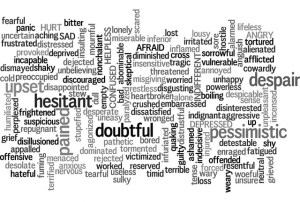
A lot of people still seem to have their finger on the pause button right now. They’re living a life of hesitation – waiting for circumstances to change so that they can resume (or begin) a “normal” relationship with the world around them. The thing is, there will always be a reason to hesitate.

The political climate isn’t right.

The market doesn’t seem ready.

The staff don’t possess the skills.

The technology can’t support it.

There will always be barriers to success. There will always be a reason why we should wait. But rather than adopting a position of hesitation, maybe we should choose one of anticipation. Instead of resigning ourselves to the fact that things might not be going our way, what if we chose to prepare ourselves to take advantage of favorable circumstances when they do appear. Where hesitation is a cessation of activity in reaction to current circumstances, anticipation is a proactive set of activities that continues to move things forward.

Instead of hesitating, learn a new skill.

Instead of hesitating, coach the team.

Instead of hesitating, create something new.

Instead of hesitating, find a way to circumvent the barrier or use it to your advantage.

Where others see roadblocks, leaders see opportunities. While others wait for the environment to change, leaders adapt and overcome. When others decide to step back, leaders step up.

So many things are uncertain right now, and there’s really no way of predicting when the uncertainty will end. The only thing can control is how we act. So, stop hesitating and start anticipating. After all, a year from now, you will wish you had started today.

Sure-Footed

volcano-1784658_640My daughter and I have taken to watching a new Netflix show called Floor is Lava. It’s a reality competition based on a game many can identify with. As kids, my brothers and I would pretend the floors of our house were covered in lava (or quicksand, or shark-infested water) and would role-play various adventures that required us to navigate the house by climbing on the furniture. We’d jump from bed to bed, crawl over tables, and use couch cushions as islands – anything to avoid touching the floor. Netflix has taken this concept and created an adult-sized obstacle course.
Filmed in an old Ikea building (because no studio wanted their property covered in 80,000 gallons of pretend lava), the show pits teams of three in a race from one end of a room to the other. One point is scored for each member who makes it to the exit, with ties decided by the fastest time. There’s only one rule – don’t touch the floor. This means that everything in the room is a potential asset. With multiple routes at their disposal, teams must figure out the best way to navigate the room and escape. The winners take home a trophy and $10,000.

The show is simple and somewhat cheesy – some might even call it stupid – buts it’s a huge hit for Netflix. It’s also turned into an interesting character study for me. After watching contestants work their way through a variety of themed rooms, I’ve noticed that those who do well tend to operate very differently from their less-successful counterparts.

Winning teams get busy. The teams that win don’t spend a lot of time thinking about their moves. They identify a way forward and get started. When things don’t work out, they try something different. Losing teams tend to wait longer before getting started and waste a lot of time debating even the simplest maneuvers.

Winning teams work together. While viewers can see the entire course laid out, contestants have limited sight-lines. They can’t always judge the distance between objects or see where footholds are located. Teams that do well communicate with each other, shouting encouragement and advice even as they each navigate their way around the course. They support each other (literally) when necessary to ensure the team stays together and on track.

Winning teams have fun. At first, I was frustrated with the way some teams seemed to be more interested in chatting with each other than in getting the job done. I soon realized that these teams were still moving forward, they were just enjoying the process rather than agonizing over it. They view the experience as an adventure, not a chore. Completing the course takes concentration and effort, but it doesn’t have to be work.

Creators Irad Eyal and Megan McGrath are already working on plans for a second season of Floor is Lava. Given the success of the first few episodes, I imagine the sets will be larger and the obstacles more daring. One thing I bet doesn’t change though, is the formula winning teams use to get from point A to point B.

Reaction/Response

newtons-cradle-256213_640What a wild ride the past few weeks have been. I haven’t written since May 27th, and while I could blame the gap on being busy (who hasn’t been?), the truth is I just haven’t been able to find the words. So much has happened in our country this year that has shaped each of our lives. Every one of us has found ourselves thinking, and speaking, and acting in ways we never thought we would. It’s frightening how quickly things can change – and just as scary to realize how quickly we get used to the chaos.

We’re living through a time of unprecedented change. There’s a pandemic impacting the way we interact and do business. Racial tensions have reached a boiling point. Our economy is being stressed beyond belief. The political climate is as raw as it’s ever been. It’s as if we’re standing in the eye of a hurricane, watching everything around us crash and burn and disintegrate.

There’s so much we can’t control; but there’s one thing we can – how we act.

Regardless of what’s going on around us, it’s always been our decisions that have the biggest impact on our future. How we choose to behave in times of uncertainty ultimately determines the outcomes we face. Leaders act with intention. Now, more than ever, we have to be mindful of the steps we take and the implications our deeds have on those around us.

Dr. Matthew B James, president of The Empowerment Partnership in Hawaii, suggests that we practice the art of responding rather than reacting. In an article for Psychology Today, he explains the difference.

“A reaction is instant. It’s driven by the beliefs, biases, and prejudices of the unconscious mind. When you say or do something ‘without thinking,’ that’s the unconscious mind running the show. A reaction is based in the moment and doesn’t take into consideration long term effects of what you do or say. A reaction is survival-oriented and on some level a defense mechanism. It might turn out okay but often a reaction is something you regret later.

A response on the other hand usually comes more slowly. It’s based on information from both the conscious and unconscious mind. A response will be more ‘ecological,’ meaning that it takes into consideration the well-being of not only you but those around you. It weighs the long term effects and stays in line with your core values.

We all know the difference. The point is that the more reacting we do, the less empowered we are. We’re operating from underlying assumptions and beliefs we’re not even aware of. And the results of doing that are somewhere between horrendous and less than stellar.”

As I look back in time and examine my own behavior, it’s easy to see where I’ve reacted and where I’ve responded. Without exception, I’m prouder of my behavior when I take the time to respond. It isn’t easy – the temptation to do or say something in the moment can be overwhelming at times.

We’re not quite half-way through 2020. Who knows what the rest of the year will bring? I imagine there are plenty of stressful events to come. Here’s hoping we’ll choose to respond appropriately.

Do Unto Others

puzzle-1721592_640When Chris Kyle’s daughter Ava received a new kitchen playset, she invited him to come for a meal at her restaurant, Ava’s Kitchen. The dutiful dad agreed and soon after he posted a review of his visit. The Instagram post went viral.
So I tried to support another Black Owned Business for lunch today. It’s called Ava’s Kitchen, just opened end of April. It’s a very clean establishment, but whewww let me tell you about this owner.

First off, I asked why there are balloons on my chair, and it’s not my birthday? She talm’bout, mind yah business; those are Mommy’s.

I been waiting on my order to get done for 45 minutes, and I’m the only customer here. She was making good progress at first, then she stopped for 20 minutes to go watch Paw Patrol.

Overall the customer service could be better, but the cook is a cutie; so I’ll give her another chance. Let’s not give up on Black businesses so fast after one mistake.

Kyle obviously has a soft spot for this particular business, but reading his post made me think about our reactions to those struggling to operate in the world around us right now. How often do we fail to give them the benefit of the doubt? It’s so easy to find fault with others when we all want something different. Just think about the various expectations organizations are faced with right now.

Opening your business invites condemnation from those you feel it should stay closed. Staying closed angers those who feel you should open back up.

Limiting how many can enter at once? Get ready for the backlash. Of course the same would happen if you opened to full capacity.

If you enforcing social distancing and ask customers to wear masks then you’d better prepare for bad reviews and name-calling.  Relax those standards though, and others will call for a boycott of your business.

Navigating the current economic environment is difficult for everyone involved. Now, more than ever, we need to adopt an attitude of tolerance and support. Regardless of your political beliefs or personal preferences, keep this in mind – It’s not about you. It’s about all of us. We rise and fall together. When we work as one, we rise. When we argue and stay in the way of someone who’s trying to do their job, we fall.

I love Chris Kyle’s tongue-in-cheek review because it’s clearly underwritten with love for his daughter. What if each time we interact with others struggling to make their way through the current business landscape, we imagined our own children were the ones in charge? Wouldn’t we replace our impatience with compassion? Our disdain with understanding?

It doesn’t take much to be part of the solution. Just don’t be part of the problem. Picture your son or daughter on the other side of the issue and serve as a role model. Let’s work together and we’ll all come out stronger for the effort.

Character Study

smiley-2979107_640On March 12th, just as the coronavirus pandemic began impacting the United States, an all-too-familiar scene played out in Hiram, Georgia. In the wine aisle of the local Sam’s Club, a man in a motorized scooter bumped into the shopping cart holding a child. The parents confronted the man, who tried to back away from them. Tempers flared, words were exchanged, and a fight broke out. As bystander video shows, wine bottles were broken and used as weapons. By the time police arrived to break up the scene, there was wine all over the floor and one individual had to be carried out on a stretcher. While initial reports indicated that the fight erupted during a fight over toilet paper and other supplies, the truth is far uglier. This was simply human nature on display.

Novelist James Lane Allen once wrote that “adversity does not build character, it reveals it.” As a youth, Allen lived through the American Civil War, seeing first-hand the impact that slavery, war, and societal reconstruction had on his fellow man. His experiences formed the background of his writing and this quote undoubtedly stems from watching those around him react to the unprecedented struggles of the time. Thanks to social media, and a 24-hour news cycle, we have the opportunity to witness countless reactions to adversity from those in our immediate vicinity and around the world.

Some raise their voices, while others rise to the occasion.

Some choose to attack, while others choose to assist.

Some take charge, while others take advantage.

As we stand on the eve of Memorial Day, I can’t help but wonder what those we supposedly honor this weekend would think about their fellow man. Memorial Day is dedicated to those who have died while serving in the United States Armed Forces. Through our country’s various conflicts, these men and women paved the way for our current standard of living. How we respond to discomfort and inconvenience, much less true adversity, speaks to how much we value their sacrifice.

I think about the child sitting in that shopping cart in Hiram, Georgia. What went through their mind as they watched these grown-ups, including their parents – people they look to as models of acceptable behavior – slash away at each other with broken bottles of wine. And I think of my own adult children who still look to me as an example. What character do they see being revealed by my reaction to the adversities I face?

Memorial Day is considered the unofficial start of summer here in the U.S. Many will spend the day outside enjoying the weather and time away from work, but never thinking of those we have to thank for our freedom. Speaking of Memorial Day, President John F. Kennedy said “As we appreciate our gratitude, we must never forget that the highest appreciation is not to utter the words, but to live by them.” I hope you will take some time this weekend to think about the sacrifices made by those who have gone before us, and your response to their legacy.

A Change of Course

swAs a young Star Wars fan, I diligently saved each week’s allowance in order to add to my collection of action figures. I had all of the most popular ones like Han Solo, Princes Leia, and Darth Vader, but my favorites were always the more obscure characters. Many of these were hard to find, and some required special effort to acquire.
Kenner, the original manufacturer of Star Wars action figures, implemented a mail-in program even prior to the first film coming out. As the franchise’s popularity grew, they continued this practice; allowing fans like me to obtain special figures not offered in stores. All you had to do was clip the UPC symbol (Proof of Purchase) from the packaging of a few purchased toys, mail them in with a shipping fee, and then wait for your special-edition figure to arrive.

Not too long ago, I came across one of these in a box of my childhood toys. It’s a figure of Admiral Ackbar, a character introduced in 1983’s Return of the Jedi. The toy was accompanied by a slip of paper with a brief bio and a teaser for the new movie. This piece of paper is actually more unique than the action figure because the film referenced in the text is Revenge of the Jedi.

This wasn’t a typo. The third installment of the Star Wars saga was originally titled Revenge of the Jedi. That title was printed on movie posters and listed in press releases. However, George Lucas decided that revenge wasn’t a very Jedi-esque character trait and changed the title just prior to the film’s release. Items with the original title are hard to find, as the studio attempted to recall anything and everything without the new and improved moniker.

Changing the title of a guaranteed blockbuster at the last minute no doubt required a lot of money and effort. There were plenty of people in Lucas’ inner circle who saw this as a fool’s errand advised him to abandon the idea.

“It’s too late.”

“You can’t take back what’s already been done.”

“There’s no way this will work.”

Ironically, this sounds a lot like the inner voices I struggle with on a regular basis. Despite my desire to leave a positive legacy, I find myself struggling against the mistakes and missteps of my past. At times it seems as if there’s no way to overcome negative perceptions I may have created. Maybe I should just give up and embrace my dark side.

But if there’s anything I’ve learned from my favorite movie franchise, it’s that you can always change your path. The heroes in Star Wars aren’t perfect. They make mistakes. They feel doubt. They struggle with doing the right thing, but ultimately they prevail because they refuse to give in to those negative voices. So every time I slip, I do my best to overcome it and take another step toward the future I desire for myself.

George Lucas resisted the negative voices and his efforts were ultimately successful. Few even recall that Revenge was part of the original movie title. Those that do agree that the change created a more fitting legacy for the franchise and the mythology of Star Wars. Turns out it’s never too late to change your future. The best time to create a positive change is always…right now.

May the Fourth be with you!

What Are You Looking For?

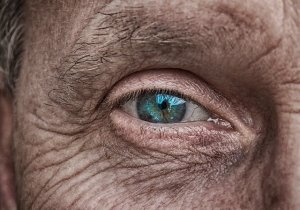
skin-3358873_640Rebecca was nineteen, but had the intellect of an eight year old. She was clumsy and uncoordinated, often having trouble putting her clothes on correctly. She could not navigate around the block or properly use a key to open a door. Her grandmother described her as having “no sense of space.”

She wore thick glasses, as she suffered from degenerative myopia. Her fingers were stumpy with deformed nails, and she had partial cleft palate, causing her to whistle when she spoke. She could not count change, and never learned to read or write. Painfully aware of her differences, Rebecca was extremely shy, preferring solitude to the disgust and ridicule often projected her way.

When Dr. Oliver Sacks, a neurologist, first met Rebecca, he described her as “a poor thing.” He writes about her in his book The Man Who Mistook His Wife for Hat. “I saw her merely, or wholly, as a casualty, a broken creature, whose neurological impairments I could pick out and dissect with precision.”

However, their next encounter was entirely different. Walking the grounds of the hospital where he worked (and where Rebecca now lived), he spied her sitting on a bench in the garden. She was soaking in the sun and intently observing the nature around her. Her posture was relaxed and her face betrayed no sign of her many deficits.

She spied Sacks, smiled and exclaimed “Look at the world. How beautiful it is.” She then began to describe what she saw in a stream of poetic words and phrases. While she struggled with what we consider “normal” cognitive abilities, she seemed to excel at abstract thought and artistic expression.

Suddenly it dawned on Sacks that the vey tests used to categorize her impairments were useless in gauging her strengths. Trained himself to identify deficiencies, Sacks’ first inclination was to seek out what was wrong with his patient, not what was right. He concluded that “our test, our approaches, our ‘evaluations’, are ridiculously inadequate. They only show us deficits, they do not show us powers.”

Seeing Rebecca from a different perspective allowed Dr. Sacks to reassess her treatment. She was removed from the standard classes and workshops prescribed to address her deficiencies. They weren’t working anyway. Instead, she was enrolled in music and theater classes where she did remarkably well. Seeing her on the stage, Dr. Sacks remarked, “One would never even guess that she was mentally defective.”

It occurs to me that neurologists aren’t the only ones who would do well to expand their methods of evaluation. Everywhere you turn, there are mindsets and systems designed to look for exclusions rather than inclusions. Negative headlines make the news because what someone has done wrong is more interesting than what someone has done well. Pranks and jokes intended to embarrass others receive more play than inclusive activities. And sadly, my own tendency is to look for the inadequacies in others as opposed to their superlatives. I have to remind myself that, even as I like to see myself as the evaluator – as a Dr. Sacks, there are others evaluating me – seeing me as a Rebecca. It’s a humbling thought.

How do I see my customers?

Through what criteria do I evaluate my coworkers?

Am I looking for deficits or powers?

Close Encounters of the Human Kind

michelangelo-71282_640This weekend, I ventured out of the house to pick up a new washing machine. We’d been trying to get by with an older unit that was clearly on its last legs. Because laundry for five is a never-ending process, we finally went online and ordered a new one. Lowes made it easy, and I didn’t even have to go inside; they brought it out and helped me lift it into the truck.

But this story isn’t about Lowes or my new washing machine.

On the way to Lowes Saturday morning, I stopped by Chic-fil-A to grab some breakfast. They’re known for their amazing service, and seemed to be ahead of the curve when it came to their coronavirus response. I wasn’t disappointed, as my wait in the drive-thru was short and the food was as tasty as always.

But this story isn’t about Chic-fil-A.

What’s been on my mind is an encounter with someone I’ve never met. You see, when I got to the pick-up window, the Chic-fil-A employee informed me that my order had been paid for by the customer ahead of me. Another human being decided to make a small sacrifice just to be nice. The act interrupted my train of thought – in a good way. No longer thinking about the inconvenience of replacing my home appliance, I was now contemplating the various ways in which I’ve seen people reach out to each other over the past few weeks.

  • People have given up their free time to sew face masks for health care workers.
  • Others have donated their money to provide food for truck drivers delivering badly needed supplies.
  • Teachers have gone out of their way to create resources for students working to finish school from home.
  • Neighbors have volunteered to go grocery shopping for those most at risk of infection.
  • Families have set up tables in front of their homes offering free toilet paper and cleaning supplies to those who can’t find any in the store.
  • Companies are providing online services for free to help people make use of their time indoors.
  • Business owners are sacrificing their own pay to keep their employees on the payroll.
  • Children are writing cards to those in nursing homes who aren’t allowed visitors, but desperately need connection.

The list goes on and on. I think of these as “close encounters of the human kind.” Lives are intersecting in ways that are new and unusual. But they are also fascinating and welcome. It seems the more life drives to drive us apart, the more people look for ways to come together. We are social creatures by design after all. We simply have to have connection. Without it, we suffer. With it, we thrive.

Since this whole crazy thing started, I’ve spent more quality time with my wife and kids. I’ve had longer and more meaningful conversations with other family and friends. Work has taken on a different level of purpose because I see more clearly the underlying connections being forged. I bet you feel the same way.

All of this went through my head in a fraction of a second at the Chic-fil-A window. Then I handed over my debit card and happily covered the meal for the people behind me. A small gesture, to be sure; but it made me feel connected. And I as I drove off, I couldn’t help but wonder… why does it take some kind of tragedy to bring out the best in us humans? And how do we continue to stay connected once the isolation ends?

Open for Business

illuminated-1853924_640All around the world, doors have closed.

The doors to schools are closed. The doors to churches are closed. Restaurants have closed their doors too. Every day, more and more businesses are closing their doors, many of them for good. Inside those still open for business, employees are being told to keep their distance from each and work behind closed doors. The public is being advised to stay home, and close the door.

In the midst of all these closed doors, I happened last week to run across an anonymous YubeTuber who’s made a habit of opening doors. About a year ago, a nameless Swede started the channel “I open doors.” In each video, approximately 10 seconds long, his left hand reaches out and opens a door. To date, there are over 300 videos posted.

The owner of this unusual channel said he started it as a way of unifying people, a social experiment to see if a community could be created around something as simple as the idea of opening doors. He says “I’m hoping that it will feel like a safe anchor for people. If you had a bad or a good day, I will be there opening a door for you because I upload every day, and I will continue to do so no matter what happened in your life. I will film the same door from time to time, of course, but I think that can also provide some familiarity. You recognize the door. You maybe feel at home with the door.”

It may not be safe to open physical doors right now, but I can’t help but think that we should be looking for ways to open as many figurative ones as possible. The phrase “open the door” is an idiom with several meanings. When you “open the door,” you

  • Invite the possibility of something new.
  • Permit someone else access to something.
  • Make passage easier for someone else.

As sales and service professionals, we are in the business of opening doors, even when the slabs of wood, glass, or metal separating us from other people happen to be closed. We should each be looking for ways to open up possibilities for those we serve. We should be identifying ways to make their lives easier despite the barriers that have been placed in our path.

Though he started his project well in advance of the current COVID-19 scare, the unnamed YouTuber seems to agree. “I want anyone to feel like they can open a door and everyone to be part of this experience. All of my videos are from the point-of-view perspective, so basically it’s you opening the door. There are doors everywhere.”