
What Goes Around Comes Around: Why You Should Give First

adventure-1807524_640In December of 1974, Phillip Kunz and his wife sat down to write their annual Christmas cards. To some people, they wrote short notes. Other cards included a family photograph. Each envelope included their return address in the upper left hand corner. The Kuntz’s mailed hundreds of Christmas cards that year – most of them to complete strangers.

At the time, Kunz was employed as a sociologist with Brigham Young University. The 600 cards he mailed to people he had never met were part of an experiment. Their names were pulled at random from the phone books of nearby towns. “It was just, you know, a shot in the dark,” he said. He simply wanted to know what would happen.

A few days later, Kunz got his answer. A Christmas card from one of the random strangers appeared in his mailbox. Then another showed up, and another. Soon he was receiving around a dozen cards each day. Some people sent photos of their own, while others took the time to write expressions of friendship. A few included letters; page after page of updates on families he didn’t even know.

What Kunz had experienced was a phenomena called the Law of Reciprocity. It’s one of the unwritten rules that govern human interactions. This law says that we are obligated to repay a kindness that someone else shows to us. And this rule is universal – there’s not a culture on the planet that doesn’t subscribe to it.

From an early age, we are all trained to reciprocate when someone does something nice for us. When someone greets us in the hallway, we’re taught to say hello in return. If a door is held open for us, we seek to hold the next one open in return. It’s so ingrained in us, that we usually don’t even think about it. We just react.

Psychologist Robert Cialdini has done extensive research into the power of subtle triggers like this. He’s found that the law of reciprocation extends beyond our social interactions into business ones as well. For instance, he found that restaurant servers who provide a mint along with the check receive tips that are about 3% higher than those who just deliver the check. What he found particularly interesting was that a second mint, presented personally while looking the customer in the eye, sent tips “through the roof.” Those servers received 20% more in tips than their counterparts.

Cialdini’s research illuminates an interesting aspect of this law. Not only are we driven to repay a kindness that’s been extended to us, but our repayment tends to be exponentially higher than that which we received. Think about it, does a dinner mint really warrant a tip 20% larger than normal? Apparently, it does.

As a kid, I was told “It’s better to give than receive.” My parents said it, my grandparents did too. I heard it in Sunday school and from most of the people I trusted.

I didn’t understand that until I got older and found myself in a position to help out friends, family, and kids of my own. But it feels good to give. Various scientific studies have even confirmed the existence of the “helper’s high.” When we extend a kindness to someone else, our brains light up in the same regions that are activated when we receive a gift ourselves. And the effect is actually more intense than what we experience as a recipient.

Naturally, there’s a catch. In order for the law of reciprocity to kick in, the initial gift has to be perceived as genuine. The second we realize that the extra mint isn’t a sincere act on the part of our server, but rather a ploy to encourage larger tips, all bets are off. The gift actually works against you at this point. I’m likely to leave smaller tip (a lot smaller) than normal if I perceive the server is attempting to manipulate me.

But there’s more…

There’s another phenomenon at play here called the Halo Effect. When we take the initiative to offer a kind gesture, it naturally makes the recipient feel good. They not only appreciate the gift, but their view of the giver in that moment is extremely positive. The Halo Effect means that the positive impression we’ve made carries over to other actions we take. The initial act of kindness makes everything else we do appear that much more significant.

Let’s recap for a second:

  • Receiving a gift feels good.
  • Sincere giving feels better than receiving.
  • Receiving creates positive general feelings about the giver.
  • Receiving creates a sense of obligation to repay the giver.
  • The reciprocal benefit is likely to be of much greater value than what we gave.

What goes around, comes around – big time. Can you imagine the impact on our business if we’d all focus less on what we had to gain from a prospect or a customer, and put our focus on what have to offer them? I’m not talking about giving away the store here. Small acts of sincere kindness result in huge returns.

Why isn’t this our business model? Why aren’t we all giving more?
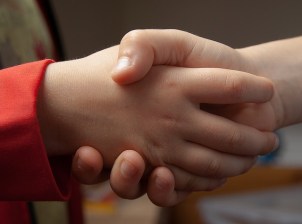
Get a Grip: Master the Handshake

handshake-1471563_640Technically, it’s called dexiosis. That’s the short ritual in which “two people grasp one of each other’s like hands,” typically the right ones. In most cases, it’s accompanied by a brief up and down movement of the grasped hands.
What we refer to as a handshake is thought to have originated in ancient Greece. Ruins from as far back as the 5th century BC show soldiers shaking hands. Scholars believe the gesture began as a way for two strangers to greet each other in peace. Extending your empty hand for a handshake proved you were unarmed, and therefore not an immediate threat.

These days, handshakes are used in a variety of situations beyond an initial greeting. They can take place when parties part ways, to offer congratulations for an achievement, to express gratitude, or to seal an agreement. Handshakes are a staple of business interactions.

Despite the common use of handshakes, there remains a great deal of confusion about them. How tight should I grip? How long should I hold the other person’s hand before letting go? Should women shake hands? Uncertainty has resulted in a plethora of unsatisfying, even gross, handshake exchanges.

If you’ve ever been on the receiving end of a dead fish, a clammy palm, or a bone-crusher, you know how easily handshakes can go wrong. Since a good handshake goes a long way toward making a great first impression, let’s clear up some misconceptions. Here are a few tips for delivering good handshakes.

  1. Anyone can initiate a handshake but, as the business professional, you should make the effort to recognize the customer or prospect and make the first move.
  1. Start and end business conversations with a handshake. The first serves as a formal greeting and a sign of trust. The second indicates agreement and a mutually beneficial conclusion.
  1. Make sure your hands are clean and dry. If you are prone to cold or clammy hands, anticipate the need to address it before extending your hand.
  1. Face the person directly with your shoulders facing theirs. Don’t approach from the side or attempt to shake hands while on the move.
  1. Assume the right hand will be used. Someone who needs to use their left will let you know. I have a friend with a prosthetic right hand. He’s always the first to extend his hand (the left) so things aren’t awkward.
  1. Extend your hand and make full contact with the other person’s hand, aiming for web to web contact. Avoid grasping just the fingers.
  1. Use a firm grip. Squeezing too hard doesn’t make you appear powerful, just disrespectful. A limp hand comes across as timid or nervous.
  1. Give two or three pumps and loosen your grip to indicate you are ready to let go. Shaking for more than a few seconds is generally considered awkward.
  1. Maintain eye contact throughout the handshake. Don’t look over their shoulder or to the side. This is usually when a stranger offers their name, so pay attention.
  1. The same rules apply whether shaking hands with a man or woman. Treat everyone with the same level of respect and professionalism.

There are a lot of customs that have somehow fallen out of common business practice. It’s rare that you see someone holding the door for another, using courtesy words, or shaking hands. Sad as this may be, it provides an advantage for those of us seeking a competitive advantage over the competition. Making use of good business etiquette is an easy way to stand out from the crowd. Use the power of a good handshake to signal you’re someone worth doing business with.

Crack the Code: How to Design Emails People Want to Read

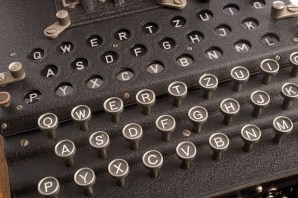
rotor-cipher-machine-1147801_640In 2011, an international team came together to try and decipher a manuscript written almost 300 years earlier. The document was penned in the 1730’s and contained 105 pages covered in Roman letters, mathematical symbols, shapes, and unrecognizable runes. There were no spaces to indicate word breaks. No previously known documents matched the style of writing and there was no key to help understand what they meant. The entire book was written in code.
It took months of heavy-duty computing and manual guess-work to finally crack the cypher. What the team revealed was the membership manual for a secret society called the Oculists. The book detailed some of their rituals and bylaws. This was a group of free-thinkers, people who challenged the established religious and political powers of the day. To protect themselves from persecution, they met in secret and communicated using complex codes.

I often receive emails that are written in what looks like Oculist code. You now the ones I’m talking about. You open them up, but close them after only a cursory glance. What you’ve seen is either a jumbled mess, or so hard to read, you quickly decide to move on to something easier to digest.

If you write many emails, and you do, this should worry you. We send emails with the expectation that they will be read and understood by the recipient. We don’t want our message to be a mystery. Yet, the way we design an email can make it seem more like a puzzle to be solved than a critical piece of business intel.

When people open an email and what they see looks more like an ancient coded manuscript than relevant information, they’ll click “close” (or even worse, “delete”). Your email needs to be easy on the eyes if you want people to read it. Start with these tips:

  • Stick to a single topic. Keep your emails focused. The more ground you try to cover in an email, the more you’ll have to write. And long emails are among the first pushed into the “read it later” category. That’s ok if your sharing information that’s not time-sensitive, but be honest – you’re looking for a quick turnaround when you hit send, aren’t you? Keep your message simple, and you’ll keep the email focused. When it comes email, focus is a good thing.
  • Keep the paragraphs short. When reading, our eyes seek out white space. White space lets our brain anticipate a break in the action and gives it a chance to rest. Smaller paragraphs are easier to process, which is what we want, right? We want the content to be understood, assimilated, and acted on. Small bites provide the reader an opportunity to absorb the information. When it comes to email, brevity is a good thing.
  • Use bullets, numbers, and pictures. When you find yourself needing to share a series of related items, break up the page to make it easier for scanners (like me) to find the important stuff quickly. Bullets help highlight key points. Numbered lists are great for illustrating a series of steps. Headings separate chunks of text into more manageable sections. Pictures, such as a computer screen shot, aid in recall. These techniques also add variety to the page. When it comes to email, variety is a good thing.
  • Choose the right font. There are somewhere in the neighborhood of 250 different fonts available for use in Microsoft Outlook. Most of them are horrible for email, including the default: Calibri. I’d never thought about the effect an email font has on readability until I sat down to write this article.

I’m switching to Verdana. The extra space between letters makes it easier on my eyes, even at a smaller font size (I’ve set mine at 10 point). Different fonts may look cool, but we’re not trying to be cool – we’re trying to be read and understood. Oh, while you’re at it, stick to black or dark blue for the font color. They’re the most readable. When it comes email, readability is a good thing.

  • Lose the background. Your message is the point of the email. Anything that doesn’t add to the message, distracts from it. This goes for colored backgrounds or patterns. All that extra fluff adds unnecessary weight to your email. You wouldn’t have a serious conversation with someone and intentionally invite a group of toddlers into the room would you? Allow your message the freedom it needs to be understood. When it comes to email, distractions are a bad thing.

Unless you’re writing the manual for a secret society, it’s best to keep your email formatted for easy reading. Or you could follow the Oculists and allow your message to remain a mystery for some adventurous sleuths to decipher. Just be ready to wait. It could take a few hundred years.

How to Keep Your Email Out of the Junk Yard

spam-964521_640Since January 1st, I have received more than 3,400 emails that have been classified as “junk.” That means every day, my email account automatically detects and quarantines somewhere in the neighborhood of 40 undesirable messages. And that doesn’t count the SPAM that slips by the filter or is caught by my ISP before it ever gets to my account.

The first iterations of what we call email looked very different. Back in the mid 1960’s an MIT program called MAILBOX allowed electronic messages to be placed on a single computer for the next user to find and read. As technology progressed, point to point connections (like the U.S. Department of Defense’s ARPANET) allowed two machines to communicate back and forth. It took the advent of computer networks before our modern concept of email to arrive.

Today, email is the default method of communication for organizations around the world. Just last month, 430 billion emails were sent world-wide. According to SenderBase, an email monitoring service, 86% of was junk. That’s 369 billion emails – an average of 13 billion per day – that we didn’t ask for and that hold no value for us as the recipient.

Of course, not all junk email can be classified as SPAM. There are plenty of legitimate emails from people we know that we mentally classify as junk. My inbox sees a constant flow of messages from people vying for my attention. Some of them have valuable things to say, others are a waste of time. The sheer volume of email is difficult to manage. I’m constantly working to prioritize what comes my way, sifting through the flood of information to find those bits that best deserve my attention.

As a sender of email, I’m fully aware that my audience fights this same battle. Whether I’m communicating to customers or coworkers, my message enters the same boxing ring as the others. I can’t take for granted that the emails I send will even be opened. Ultimately my goal is for them to be read and responded to as opposed to deleted and forgotten. To win this war of the Inbox, I need a strategy.

  • I need to send selectively. Email is scarily easy to use. That means we use it a lot. The volume is the first hurdle to overcome. So I try to be selective when using email as a communication medium. Here are a few cases when I feel email is the wrong answer:
    • When your entire message would fit in the subject line.
    • When your topic involves confidential or sensitive information.
    • When a phone call will do.
  • I need to pick the right audience. It’s tempting to include the world in your email message, but unless what you have to communicate has broad appeal, it pays to limit the number of names in the To: or Cc: section. If the message is directed toward me, my name should be on the To: line. If it’s important that I be informed, maybe I belong on the Cc: line. Other than that, I don’t need to be involved.
    • Don’t select Reply All unless everyone needs to see you response.
    • Don’t include someone as a Cc: as a form of name dropping or intimidation.
    • Don’t use the Bcc: field. Just don’t.
  • I need to use a good subject line. Once you’ve decided an email is appropriate, and identified the correct audience, the next battle you have to win is for attention. Your subject line is like the title of a magazine article or a newspaper headline. It should give me a sense of what the content involves and pique my interest so that I choose to read more.
    • Save funny or mysterious subject lines for non-work topics.
    • Communicate the purpose of the email clearly.
    • Make it easy to scan; stick to no more than 10 words.
  • I need to make the content worthy of the reader’s time. The last thing I want is for a reader to feel like I have wasted their time. What I send needs to be relevant, helpful, and/or necessary. If people view my communication as amateurish or unnecessary, then I lose credibility. I don’t want to do that.
    • Keep it short – shorter emails are read sooner and the information is retained longer.
    • Use the spelling and grammar check options. Please.
    • Periodically check for feedback to make sure your emails are having the desired impact.
  • I need to include a clear call to action. I often read emails and find myself wondering “What is it they want me to do?” Your email should communicate how the reader is supposed to react to the information. If you want the reader to take some particular action, tell them what it is.
    • List specific calls to action in the first paragraph.
    • Provide a time frame for response and/or next steps.
    • Allow adequate time for response – your readers already have jobs to do.

When texting came on the scene, many took it as a sign that email was on the way out. Something tells me we’ll be managing our inboxes for a while longer. Make sure your emails get read – design them to be appropriate, informative, and welcomed. SPAM belongs in a can.