

There Is No Try

snail-1447233_640I’ve mentioned before that I’m a Star Wars fan. I’ve seen the original trilogy of movies so many times that I can practically recite each line along with the actors. Sometimes I find myself thinking about a random scene and a quote just sticks in my head. There are so many great quotes from Star Wars – you don’t have to be a fan to be familiar with some of them. Take this one for example:

“Do. Or do not. There is no try.”

That’s Jedi Master Yoda speaking to Luke Skywalker in The Empire Strikes Back. Yoda has been training Luke in the ways of the Force, but Luke is distracted. His mind keeps wandering to thoughts of his friends and he’s impatient to leave and get back to them. As a result, he finds it difficult to concentrate on even simple, mundane tasks.

Then Yoda gives Luke a new challenge, and it’s a big one. It’s bigger than anything the young apprentice has taken on and Luke simply cannot fathom anyone being able to accomplish what’s being asked of him. He is scared. He hems and haws before but finally gives in to his mentor’s prodding. “I’ll try” he says. And that’s when Yoda drops this famous line.

“Do. Or do not. There is no try.”

For the longest time, I had the wrong idea about what Yoda was saying. I thought he was telling Luke, and by extension me, that it’s the result that matters. You either succeed or you fail. You get the job done, or you don’t. There is nothing in between. Close does not count and winners don’t settle for second place.

But I was wrong.

Yoda wasn’t talking about results. He was talking about effort. In Yoda’s mind, success isn’t a matter of winning versus losing. It’s a matter of dedication – the application of your whole self to the problem at hand. Luke wasn’t giving the job his best effort. He wasn’t giving his all. Succeed or fail, Yoda just wanted him to stop trying and start trying.

You see, when we approach our work as if it’s optional, we aren’t really trying. When we take shortcuts because we just want to get the task off our plate, we aren’t really trying. When we allow ourselves to check out, we aren’t really trying. When Luke said, “I’ll try,” what he meant was “I’ll pretend to try – just enough to get you off my back, but not enough to show that I’m truly committed to the job.”

No wonder Yoda was frustrated. When we give less than our best effort, we fail not just those depending on the results of our work; we fail ourselves. Ask anyone at the top of their game and they’ll tell you the road to success is paved with failure. The key to success isn’t a lack of failure, but a dedication to expending maximum effort. It’s developing a habit of truly trying.

Star Wars is just a movie. Yoda and Luke Skywalker are just figments of the imagination. Yet these words still make me think…maybe I should try a little harder.

Don’t Stop Now

ad-1238450_640It happens every year at about this time. With Thanksgiving over, and the weather turning colder, people start looking toward Christmas and the start of a new year. The goals that were set for the current year are set aside as if time has run out. They assume nothing of significance can be accomplished in the time that’s left, so they take their foot off of the gas and decide to just coast through December.

Author Jason Selk calls this the “Holiday Slack-Off.” We choose to downshift because we figure everyone else has checked out for the year. Customers aren’t buying right now. Coworkers are focused on tidying up loose ends. Management is busy planning for the next 12 month cycle. Even the most productive have a tendency to sit back and ease their way into the holidays.

But there’s still an entire month of 2019 left. There are still four full weeks we can put to use. Why let this valuable time go to waste when we can close out the year on a high note? Selk offers this three step process for resisting the Holiday Slack-Off.

  1. Pick one goal to focus on over the next month. Don’t try to address everything that’s been left unfinished. Rather, pour your energy into a single project; a single goal and attack it with everything you’ve got.
  2. Create a daily plan to maximize the time that’s left. Selk recommends asking yourself “What is one thing I can do each day to have a positive effect on the most important influencer of my success?” Figure out the small action steps you need to take and map out a plan to tackle them over the next four weeks.
  3. Put these actions into your calendar. Create dedicated time to focus your mind and energy on these identified steps. Don’t assume it will happen just because you want it to. Block out the time to eliminate distractions and excuses.

We often hear sports figures – athletes, coaches, and analysts – talk about playing through the end of the game. As fans, we bemoan teams who seemingly give up as the clock runs down. We know that so many games are won in the final minutes, so we expect our heroes to fight until the end.

Why should we be any different?

Tuned In

wild-865296_640In the wee hours of the morning on Sunday, August 11th, someone left an old television set on the front porch of a house in Henrico County, Virginia. In fact, according to Police Lieutenant Matt Pecka, the mystery deliveryman visited 50 different houses that night, leaving TV sets outside the door of each one. Nothing was stolen or disturbed, and no foul play is suspected.
Who made the late-night deliveries? Why did they come by? And why leave an old TV as a calling card? Some recipients took to their smart doorbells for answers, but found only more questions. Footage shows a man dressed in “a blue jumpsuit, brown boots, black gloves, and a big mask shaped like an old TV set.” He walks up to each house, sets a TV down, and leaves.

We can’t always explain why someone acts the way they do, and we’ve all witnessed behavior from a colleague that leaves us shaking our heads. But people are an inescapable part of any business. Without people, and their desirable behavioral traits, things simply wouldn’t get done. That’s why Forbes magazine recently published a list of 15 behaviors that make people virtually “irreplaceable in the workplace.

  1. They do more than asked.
  2. They have exceptional communication skills.
  3. They are one step ahead instead of behind.
  4. They are good listeners and observers.
  5. They are trustworthy, accountable, and reliable.
  6. They initiate.
  7. They fill the room with good energy.
  8. They are adaptable.
  9. They are problem solvers, not complainers.
  10. They are self-motivated and can motivate others.
  11. They don’t need to be micromanaged.
  12. They embrace new challenges.
  13. They are fast learners and fast thinkers.
  14. They love their job.
  15. They are well organized and efficient.

Think about the members of your team. Are they tuned in? How many of these behaviors do they exhibit on a regular basis? Odds are, the ones you most want to be around have a lot of check marks on this list. These are all traits I want to see from the people I work with.

Behavior is the outward manifestation of character. Despite what people say and all the good intentions in the world, behavior is what other people see. It’s what determines real outcomes. It’s what matters.

Now look at the list again. If a coworker was asked to describe you, how many of these sentences would they use? Or are there other, less desirable traits that would make your list? Perhaps we all have a little work to do.

Lieutenant Pecka said authorities determined that Henrico County’s TV Santa Claus posed no credible threat. While confusing and inconvenient, the television deliveries aren’t something law enforcement is concerned about. Some residents aren’t so sure about the motives behind the act; though unless the mystery man comes forward, there will likely be no explanation for his strange and unwelcome behavior. County officials plan to collect and recycle the unexpected gifts.

Sailing Into the Unknown

sailing_cart
Photo: Amber Word

In 2016, accomplished sailor Falcon Riley began dreaming of a different kind of voyage. He was in the middle of the Pacific Ocean, traveling from San Francisco to Guam when he began fantasizing about Mongolia. He’d written a report about Genghis Khan as a child and had been drawn to the idea of visiting ever since.

A trip across the wilds of Mongolia sounded like an interesting adventure; but how to navigate the terrain? The long stretches of bleak, uninhabited landscape would make hiking it almost impossible. If only he could sail across the country, he’d be able to match his dream with his expertise. Unfortunately, Mongolia is landlocked, so sailing was out of the question. Or was it?

Riley began sketching out a simple box with wheels and a sail, in essence a sailing cart. Over the next year and a half, we returned periodically to his design, trying to factor in elements like a sleeping space, storage for food and gear, and a steering mechanism. Finally, in April of 2018, Riley and his girlfriend Amber Word (whom he’d met in Guam) arrived in Mongolia.

With just $200 and a huge language barrier, they began sourcing materials to build their cross-country vehicle. After several days they’d scrounged up enough plywood and other materials to begin construction. They befriended a local builder who loaned them his tools and some shop space. With his help, the couple soon had a workable “ship.” They caught a ride to the end of a dirt road and set off.

Like so many of the stories I share, I believe this journey holds valuable lessons for us. Regardless of your goal, whether it’s setting off on a wild adventure or achieving annual growth goals, the transition from dream to reality can seem daunting. I’m always encouraged by learning how others managed the process. Here are a few ideas I pulled from Riley and Word.

Start with what you have. Two hundred dollars and a sketch. That’s all Riley and Word had when they set foot in Mongolia. They didn’t have a support team. They didn’t have a wealth of resources or the means to acquire them. They didn’t even speak the native language. Yet they had a goal to reach and the will to achieve it. So using what they had at their disposal, they went to work. They didn’t wait for perfect conditions; they just got started.

Seek out others who will help. A successful mission meant partnering with other people – people who had knowledge and resources and skills the travelers did not possess. It began with a carpenter who allowed them to use his shop and tools. Other partnerships occurred along the way. Riley and Word encountered families who took them in and offered food. They were helped out by total strangers who offered to assist with repairs. In each instance, the couple attempted to repay the help by performing household chores. They didn’t look for handouts; they accepted partnerships.

Keep moving forward. Completing their trip meant crossing 300 kilometers in a three by nine foot cart. That’s less than 190 miles, but the journey took 46 days. Without lights, they couldn’t travel at night. Frequent breakdowns caused by hitting gopher holes created delays while they sought out tools, materials, and help. And the wind wasn’t always kind. One particularly windy day allowed them to travel 70 kilometers, which means on the other 45 days, they only averaged five. The cart was barely wide enough for them to sleep shoulder to shoulder. They didn’t dwell on the problems; they focused on the goal.

As you embark on this journey called 2019, I hope you will adopt the attitude of an adventurer. Start with what you have. Seek out other who will help you. And above all else, keep moving forward. Keep your eyes on the goal. I’ll see you at the finish line.

Toe-tally On Board

socks-1322489_640I’ll understand if you’ve never heard of Alan ‘Nasty’ Nash. Until just a few days ago, I didn’t know the name myself. The 59 year old from Staffordshire, England is a 15 time world champion in the sport of toe wrestling. Yeah, I’d never heard of that either.
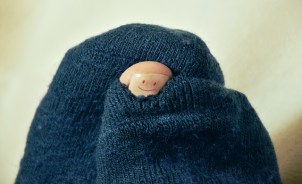
Toe wrestling is a sport in which two competitors lock toes, the flats of their feet against each other, and then each attempts to twist their opponent’s foot to the ground. Just picture arm wrestling with a different part. There’s just as much grunting and sweat, but a lot more odor.

Recently, Nash tried to insure his big toe for £1 million. He’s broken the other nine before and had two of them surgically removed due to injuries suffered during matches. It was his unusual insurance coverage request that caught my eye, but it’s his approach to his sport that piqued my interest. I think we can learn a few things from his journey to the top of the toe wrestling world.

Zero In
Nash has always had a lot of nervous energy. For many years, he drifted from one interest to another in order to occupy his time. He’s always been attracted to the new… the different… even the weird (he was voted Britain’s 2nd most eccentric man in 2002). He’s tried all manner of strange pastimes, including chicken whispering and egg breaking, for which he holds the world record. But while working for band at a toe wrestling competition, he signed up to kill time. He won and immediately knew he’d found his niche. Everything else gave way to his pursuit of toe wrestling dominance. He considers it his calling. What’s your calling, the one thing you want your team to pursue above all else?

Double Down
There are only so many toe wrestling competitions one can enter each year, and only one world championship. When show time comes around, Nash goes all out to earn his nickname. However, he takes his time outside the ring, officially called a “toe-dium,” just as seriously. In addition to his toe-strengthening exercises, he works to train his legs, back, and shoulders. He performs around two hundred squats a day to keep himself in shape. While most matches last seconds, he once locked up with an opponent for an hour, so trains for endurance as well. In other words, winning is always on his mind. What’s your strategy, the plan your team follows all year long to ensure success?

Have Fun
With 23 awards in his trophy case, Nash has a lot to brag about, but it’s other aspects of the experience that brings him the most joy. He’s traveled the world and established friendships with other who share the same passion. He said “I’ve enjoyed every minute of this. I’ve got to go on shows and do all kinds of things I would have never had the chance to do. I like to think of myself as an ambassador of the sport.” Nash has introduced his step-daughter to tow wrestling and applied to have toe wrestling added as an Olympic sport. His enthusiasm is unmistakable. What’s your spark, that aspect of your job that excites you and makes the effort worthwhile?

‘Nasty’ Nash is set to retire soon; I guess toe wrestling is a young man’s game.  Yet, to the end, he retains the mindset of a champion. “I don’t believe anyone can beat me,” he said. “It gives me a psychological edge. I would say I have the world’s strongest toe. I won’t lose.” I can honestly say I believe him.

Don’t Give Up

kops-lake-1610739_640In 2009, three friends from Karawara, Western Australia started a YouTube Channel. They called it “How Ridiculous.” Derek, Brett, and Scott began posting videos of trick shots using basketballs and footballs; a hobby they developed as a way to avoid schoolwork. Over time, the shots became more and more, well ridiculous. Props got bigger, distances grew longer, and heights increased. Each successful stunt caused them to think up ever more creative and entertaining tricks to attempt.

You may think that watching someone shoot a basketball into a hoop from the roof of a building seems like a complete waste of time. That’s what I thought as well, at least until one of their recent videos showed up in my feed. I clicked it, watched it, and instantly thought “you know, there’s a lesson to be learned here.” Allow me to explain.

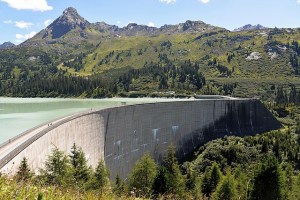
In the October 12th video, the team travels to Luzzone Dam in Ticino, Switzerland. As a follow-up to an earlier video, in which they’d dropped a bowling ball onto a trampoline from a 45 meter tower, they wanted to see if they could hit the same target from an even higher starting point. Luzzone Dam is 165 meters high. That’s almost four times as high and, as you can imagine, much more complex. To hit the target, they’d have to place the trampoline in the right spot, release the ball the right distance from the edge of the dam, and account for any other variables they might encounter. Here’s what I noticed about their approach.

  1. They had a simple, clearly defined goal. The team’s objective was to have the bowling ball bounce off of the trampoline. Despite the challenges and distractions they encountered, they kept returning to what they had defined as their goal. Other interesting things happened in over the course of the experiment, but even shattered bowling balls and craters in the ground didn’t deter them. These results made for spectacular video, but they didn’t allow themselves to deter from the original plan.
  2. They tried different approaches. When the first attempt missed the target entirely, and destroyed the bowling ball, they discussed what went wrong and made adjustments before moving on. They made note of what happened, including things they didn’t expect, and made subtle shifts to keep getting closer and closer to what they wanted to accomplish.
  3. They didn’t give up. The team arrived in Switzerland with two bowling balls. The first was destroyed during attempt number one. The second only made it through two drops before it was destroyed as well. Because the objective hadn’t been reached though, the team regrouped and came back the next day ready to try again. On the fifth drop of day two, another bowling ball was shattered against the side of the dam. Still, the team plunged ahead.

Finally, on the 12th drop, the team was successful. The 4th bowling, their last, hit the trampoline and rocketed back up into the air. It peaked and fell back onto the trampoline for a second bounce before veering off the side. The frustration expressed during earlier attempts gave way to huge smiles and shouts of joy.

Yes, this may be a frivolous exercise, but how many times have you been in the midst of working on a project only to encounter setback after setback. Rejection, delays, equipment failures, and any number of other impediments to success often make me feel like my efforts are a waste of time. Still, I’m encouraged by Brett’s thoughts as he summed up his team’s latest stunt. He said they were inspired by this victory to move on to even greater tricks and reminded us all to pause from time to time to enjoy the view from the top.

Somebody’s Knockin’

door-3296644_640Opportunity is defined as “a set of circumstances that makes it possible to do something.” The word first came into use during the 14th century, and was derived from the Latin phrase “ob portum veniens,” or “coming toward a port.” The implied imagery is of a ship taking advantage of favorable winds to approach and enter the harbor.
Today, we tend to think of opportunities as chances to favorable advance some aspect of our lives or business. Astute leaders will take advantage of opportunities to learn, grow, and improve. This thought came to mind Friday night as I opened up a fortune cookie to find this phrase printed on the slip of paper inside: “When opportunity knocks, it’s up to you to answer it.”

I think it’s safe to say, we’re all looking for opportunities to expand the reach of our business. We seek out opportunities for new customers and expanded relationships with existing ones. We welcome opportunities to partner with other people and organizations who share the same goals and values that we do. However, when opportunity knocks, we don’t always answer.

Too often we miss out on opportunities because we aren’t able or willing to answer the door when that knock comes. These missed opportunities represent chances to impact lives, discover new territories, and secure new business. And I believe there are three key reasons why we let these opportunities pass us by.

Many times, we miss out because we aren’t open to a particular opportunity. We spend our time looking for just the right circumstances – looking so intently that other good opportunities are ignored. We want the stars to align perfectly before we move forward. We want the market to be the most profitable, the product to be one we like, and the work involved to be minimal. We forget that opportunity usually involves hard work. We have to act when conditions are favorable, not necessarily perfect. If we’re not open to those opportunities when they come around, we’ll miss the chance to answer.

We can also let opportunity pass by because we aren’t prepared to answer the call when it comes. Even if conditions are perfect, we may lose out because we aren’t in a position to capitalize on the opportunity. If the team isn’t on top of day-to-day business or lacks basic skills needed to be successful, then we can be forced to great opportunities go. It’s important to take care of the basics and coach the team so that when the wind blows in our favor, we can quickly shift to take advantage of it.

I also believe opportunities slip away because we are afraid of failure. I’m all for minimizing risk, but there comes a time when you simply have to jump in. Some leaders try to cover every contingency before acting, and the longer they wait, the more circumstances have a tendency to change. A mentor once told me to think in terms of “Ready, Fire, Aim.” That is, be ready to act when the opportunity comes, but be comfortable with making adjustments as you move forward.

In 1911, businesses began using the term “opportunity cost” as a way to quantify the value of missed opportunities. By not acting when conditions are favorable, we risk missing out. And we never know when, or even if, opportunity will ever knock again.

Tales From the Volcano

U.S. Geological Survey/photo by R.D. Miller

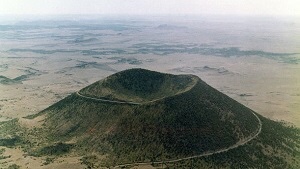
Rising above the flat grassland plains of Northeastern New Mexico, stands Capulin Volcano. This formation is relatively young at somewhere between 58,000 and 62,000 years old. It sports a well-defined crater about 400 feet deep and an irregular rim. It’s a rare example of a nearly perfectly shaped cinder cone, rising 1,000 feet above the surrounding flatlands.

When you think about volcanos, you likely picture one in the midst of eruption. Video of lava flows and molten magma are indeed fascinating to watch. However, extinct volcanos still have a lot to teach us. Scientists continue to expand their knowledge of our planet and its ecosystems by studying these long dormant structures. I believe volcanos, especially ones like Capulin, can teach us a lot about success.


You can stand out without being the biggest. At 8,182 feet, Capulin is by no means the largest volcano. Rising over 1,200 feet above the surrounding plains, it’s not even the tallest mountain in New Mexico. Yet, Capulin stands alone. It rises proudly from the flatlands rather than blending in with the peaks of the distant Sangre de Cristo Mountains. Because of its nearly perfectly shaped cone, and the lack of competing formations nearby, Capulin is a striking site to behold.


You can inspire without making a scene. You wouldn’t think a dormant volcano would have much to offer, yet standing at the top of Capulin Volcano, it’s easy to see why this is a popular tourist stop. Hiking trails along the rim, and even into the crater itself, include stops with information about the formation of volcanos and the history of the area. From the rim, the view stretches for miles in all directions, providing glimpses of wildlife and five states. The experience leaves you wanting to learn more and visit other natural wonders.


You can have an impact long after your work is done. Capulin last erupted 56,000 years ago, but it still has lessons to share. The lava flows are still evident, providing volcanologists with valuable data about how volcanos form. The distinct geology made Capulin a base for the training of Apollo 16‘s astronauts. Over 30 species of mammals have been recorded in the region, using the lava fields as a primary habit or foraging ground. And comments from visitors routinely make note of the unexpected thrill of visiting the location, designated a National Monument in 1916.

So much of life, including work, is a matter of perspective. Though I may feel small at times, in many ways I am unique. My work, though it might seem dull and routine to me, may create fascinating opportunities for others. The actions I take today, will ripple through time; impacting people I’ll never know.

Pedaling Through It

cycling-655565_640Are you familiar with the Big Red Gravel Run? No? That’s OK, I hadn’t heard of it either until this week. The Run is a 100 kilometer (62.1371 miles) bicycle race held each August in Harrington, Quebec. This race only came to my attention because of the man who won it this year. It was Kyle Messier, a bicycle mechanic from Waterloo.

Here’s what’s so amazing about Messier’s win. He was completely new to bicycle racing. And he won the race after riding his bike from Waterloo to Harrington; a distance of more than 650 kilometers. That journey took him three and a half days. Shortly after finishing the race, he turned around and started the ride back home. Oh, and he did all of this while suffering from an abscessed tooth.

I am constantly amazed by stories of people who overcome incredible odds to achieve great things. They inspire me to move beyond the small obstacles I find in my path; obstacles that could easily cause me to quit, give less than sincere effort, or just decide not to participate in the first place. I’m always particularly interested in learning how people overcome their obstacles. What techniques do they use to succeed that I can apply to my own circumstances?

Messier shared a few thoughts on his accomplishment and his approach reveled three tactics I believe we can use to win, especially when the race is long, difficult, and not particularly pleasant.

  1. He got in the zone. Messier practiced what is known as “active meditation.”  This is when the mind essentially shuts out external distractions and focuses solely on the mechanics of the task at hand. It’s particularly suited for repetitive activities like cycling or running. When you get in the zone, your mind can’t focus on how difficult the task is, or what you’d rather be doing. You live in the moment, giving everything you have to completing the next step.
  2. He set small goals. Just to arrive at the starting line, Messier had to travel over 400 miles on his bike; almost 100 miles per day. But instead of focusing on end of the journey, he created shorter, intermittent milestones. By training himself to work toward smaller goals, he was able to build up momentum. Each little success propelled him into the next and, instead of thinking about how little ground he had covered, he celebrated the wins as they accumulated.
  3. He kept the end-game in mind. Messier trained himself to pursue the positive aspects of achieving his goal, rather than dwelling on the pain he was feeling or the distance he had to cover. He visualized crossing the finish line, receiving his medal, and enjoying a pizza after the race was over. Reminding himself of the positive, kept the negative at bay and allowed him to enjoy the experience.

I don’t see myself competing in anything like the Big Red Gravel Run anytime soon. However, I do have days when my own journey feels long and painful. I have projects where the ends seems too far away to see. And I have days where it feels like circumstances are working against me and success is unlikely. Thankfully though, I also have stories, like that of Kyle Messier, that keep me pedaling on.

Failing Forward

mistake-876597_640It was 1903 and French scientist Edouard Benedictus, reaching across his desk, accidentally knocked over a flask. It was empty, but the glass bottle fell to the floor shattered. Rather than breaking into thousands of jagged pieces though, this flask kept its form. It was broken, but retained its shape. Upon further investigation, Benedictus discovered that the bottle had previously contained plastic cellulose nitrate. The substance had dried and coated the inside, forming a film that held the broken pieces together. Thanks to the Frenchman’s clumsiness, the world was introduced to safety glass.

_________________________________________

Like the rest of us, Alexander Fleming was anxious to start his vacation. The scientist was so anxious in fact, that he left work early and headed out of town for Labor Day weekend in 1928. Behind him, Fleming left a pile of dirty equipment, including several petri dishes containing bacteria he had been studying. When he returned and started cleaning up the mess, he noticed something strange about one of the dishes.  Like the other samples he’d left, the staphylococcus bacteria had grown unchecked in his absence. However, this particular dish had a spot of mold; and around the mold, the dish was clear – as if the mold had prevented the bacteria from propagating. Testing revealed that the mold also blocked other kinds of bacteria from growing as well. Thanks to his carelessness, Fleming had discovered penicillin.

_________________________________________

In 1968, 3M employee Spencer Silver was working on a new formula for the adhesive company. He had been tasked with developing a super strong industrial glue. Silver’s most famous effort resulted in a glue that coagulated in to tiny spheres which, as desired, wouldn’t dissolve or melt and were very sticky. Unfortunately, the spheres didn’t provide much surface are for contact and the glue pulled away easily. A colleague saw potential in Silver’s failure though as a “temporarily permanent” adhesive. As a result, 3M’s Post-it Notes became a must-have in every office across America.

_________________________________________

Accidents, oversights, and missteps aren’t something most of us look forward to. We’ve missed the mark and see it as failure. However, as these and countless others have discovered through the years, our failures often lead to our biggest triumphs. That is, if we know how to approach them. Mistakes aren’t so bad if we approach them the right way. The next time you goof up, try working through these steps.

  1. Accept it. Don’t try to deny the mistake, cover it up, or shift blame for it. Instead, acknowledge that mistakes will happen and treat them as a natural part of the success journey.

    How is this mistake helpful? What is the opportunity here?

  2. Study it. Take time to analyze the circumstances surrounding the error. Every attempt is useful so long as we expand our knowledge base and/or skill set.

    What events led up to this point? What can I learn from this?

  3. Act on it. Instead of retreating from mistakes and using them as reasons to give up, keep moving forward. Take the lessons learned from the attempt and either renew your efforts or modify tactics to zero in on the desired goal.

    What must I do differently? How can I reset and start again?

_________________________________________

When asked about his repeated failures in inventing the light bulb, Thomas Edison famously said “I have not failed. I’ve just found 10,000 ways that won’t work.” Edison was constantly experimenting and developed many conveniences we still benefit from today. Eventually he held over 1,000 patents on his work, including the phonograph – which was invented by accident while trying to solve another problem. Aren’t you glad he messed up?