

Reaction/Response

newtons-cradle-256213_640What a wild ride the past few weeks have been. I haven’t written since May 27th, and while I could blame the gap on being busy (who hasn’t been?), the truth is I just haven’t been able to find the words. So much has happened in our country this year that has shaped each of our lives. Every one of us has found ourselves thinking, and speaking, and acting in ways we never thought we would. It’s frightening how quickly things can change – and just as scary to realize how quickly we get used to the chaos.

We’re living through a time of unprecedented change. There’s a pandemic impacting the way we interact and do business. Racial tensions have reached a boiling point. Our economy is being stressed beyond belief. The political climate is as raw as it’s ever been. It’s as if we’re standing in the eye of a hurricane, watching everything around us crash and burn and disintegrate.

There’s so much we can’t control; but there’s one thing we can – how we act.

Regardless of what’s going on around us, it’s always been our decisions that have the biggest impact on our future. How we choose to behave in times of uncertainty ultimately determines the outcomes we face. Leaders act with intention. Now, more than ever, we have to be mindful of the steps we take and the implications our deeds have on those around us.

Dr. Matthew B James, president of The Empowerment Partnership in Hawaii, suggests that we practice the art of responding rather than reacting. In an article for Psychology Today, he explains the difference.

“A reaction is instant. It’s driven by the beliefs, biases, and prejudices of the unconscious mind. When you say or do something ‘without thinking,’ that’s the unconscious mind running the show. A reaction is based in the moment and doesn’t take into consideration long term effects of what you do or say. A reaction is survival-oriented and on some level a defense mechanism. It might turn out okay but often a reaction is something you regret later.

A response on the other hand usually comes more slowly. It’s based on information from both the conscious and unconscious mind. A response will be more ‘ecological,’ meaning that it takes into consideration the well-being of not only you but those around you. It weighs the long term effects and stays in line with your core values.

We all know the difference. The point is that the more reacting we do, the less empowered we are. We’re operating from underlying assumptions and beliefs we’re not even aware of. And the results of doing that are somewhere between horrendous and less than stellar.”

As I look back in time and examine my own behavior, it’s easy to see where I’ve reacted and where I’ve responded. Without exception, I’m prouder of my behavior when I take the time to respond. It isn’t easy – the temptation to do or say something in the moment can be overwhelming at times.

We’re not quite half-way through 2020. Who knows what the rest of the year will bring? I imagine there are plenty of stressful events to come. Here’s hoping we’ll choose to respond appropriately.

Do Unto Others

puzzle-1721592_640When Chris Kyle’s daughter Ava received a new kitchen playset, she invited him to come for a meal at her restaurant, Ava’s Kitchen. The dutiful dad agreed and soon after he posted a review of his visit. The Instagram post went viral.
So I tried to support another Black Owned Business for lunch today. It’s called Ava’s Kitchen, just opened end of April. It’s a very clean establishment, but whewww let me tell you about this owner.

First off, I asked why there are balloons on my chair, and it’s not my birthday? She talm’bout, mind yah business; those are Mommy’s.

I been waiting on my order to get done for 45 minutes, and I’m the only customer here. She was making good progress at first, then she stopped for 20 minutes to go watch Paw Patrol.

Overall the customer service could be better, but the cook is a cutie; so I’ll give her another chance. Let’s not give up on Black businesses so fast after one mistake.

Kyle obviously has a soft spot for this particular business, but reading his post made me think about our reactions to those struggling to operate in the world around us right now. How often do we fail to give them the benefit of the doubt? It’s so easy to find fault with others when we all want something different. Just think about the various expectations organizations are faced with right now.

Opening your business invites condemnation from those you feel it should stay closed. Staying closed angers those who feel you should open back up.

Limiting how many can enter at once? Get ready for the backlash. Of course the same would happen if you opened to full capacity.

If you enforcing social distancing and ask customers to wear masks then you’d better prepare for bad reviews and name-calling.  Relax those standards though, and others will call for a boycott of your business.

Navigating the current economic environment is difficult for everyone involved. Now, more than ever, we need to adopt an attitude of tolerance and support. Regardless of your political beliefs or personal preferences, keep this in mind – It’s not about you. It’s about all of us. We rise and fall together. When we work as one, we rise. When we argue and stay in the way of someone who’s trying to do their job, we fall.

I love Chris Kyle’s tongue-in-cheek review because it’s clearly underwritten with love for his daughter. What if each time we interact with others struggling to make their way through the current business landscape, we imagined our own children were the ones in charge? Wouldn’t we replace our impatience with compassion? Our disdain with understanding?

It doesn’t take much to be part of the solution. Just don’t be part of the problem. Picture your son or daughter on the other side of the issue and serve as a role model. Let’s work together and we’ll all come out stronger for the effort.

Character Study

smiley-2979107_640On March 12th, just as the coronavirus pandemic began impacting the United States, an all-too-familiar scene played out in Hiram, Georgia. In the wine aisle of the local Sam’s Club, a man in a motorized scooter bumped into the shopping cart holding a child. The parents confronted the man, who tried to back away from them. Tempers flared, words were exchanged, and a fight broke out. As bystander video shows, wine bottles were broken and used as weapons. By the time police arrived to break up the scene, there was wine all over the floor and one individual had to be carried out on a stretcher. While initial reports indicated that the fight erupted during a fight over toilet paper and other supplies, the truth is far uglier. This was simply human nature on display.
Novelist James Lane Allen once wrote that “adversity does not build character, it reveals it.” As a youth, Allen lived through the American Civil War, seeing first-hand the impact that slavery, war, and societal reconstruction had on his fellow man. His experiences formed the background of his writing and this quote undoubtedly stems from watching those around him react to the unprecedented struggles of the time. Thanks to social media, and a 24-hour news cycle, we have the opportunity to witness countless reactions to adversity from those in our immediate vicinity and around the world.

Some raise their voices, while others rise to the occasion.

Some choose to attack, while others choose to assist.

Some take charge, while others take advantage.

As we stand on the eve of Memorial Day, I can’t help but wonder what those we supposedly honor this weekend would think about their fellow man. Memorial Day is dedicated to those who have died while serving in the United States Armed Forces. Through our country’s various conflicts, these men and women paved the way for our current standard of living. How we respond to discomfort and inconvenience, much less true adversity, speaks to how much we value their sacrifice.

I think about the child sitting in that shopping cart in Hiram, Georgia. What went through their mind as they watched these grown-ups, including their parents – people they look to as models of acceptable behavior – slash away at each other with broken bottles of wine. And I think of my own adult children who still look to me as an example. What character do they see being revealed by my reaction to the adversities I face?

Memorial Day is considered the unofficial start of summer here in the U.S. Many will spend the day outside enjoying the weather and time away from work, but never thinking of those we have to thank for our freedom. Speaking of Memorial Day, President John F. Kennedy said “As we appreciate our gratitude, we must never forget that the highest appreciation is not to utter the words, but to live by them.” I hope you will take some time this weekend to think about the sacrifices made by those who have gone before us, and your response to their legacy.

Clearing the Air

gas-mask-469217_640I have a small workshop in the backyard. I learned woodworking from my grandfather and I get a great deal of satisfaction from creating something with my own hands. I spend a lot of time out there and have made several improvements to the shop over the past several months in order to make it a safer and more enjoyable space.
This weekend I added a piece of equipment that I’ve needed for years – an air filtration system. Working with wood creates a lot of dust, especially when you are sanding a finished piece. Much of this dust can be captured by filters or vacuums attached to the tool, but the most dangerous particles aren’t picked up by these methods.

I’m talking about invisible dust particles. These are so small and light (1-5 microns) that they float around the shop and linger long after the tools have been turned off. This dust does eventually settle, leaving a fine powder everywhere; but not before causing itchy eyes and a runny nose. When you inhale these particles, they cause tiny wounds and scars on the lungs. Our bodies have a difficult time expelling these microscopic bits and the long-term damage can be significant.

Isn’t it true that the tiniest things often cause the most hurt? Ever had a paper cut or a splinter? These smallest of injuries create a lot of pain. What about a derogatory comment or a backhanded compliment? Ever been the recipient of one of those?

Workplace offenses are rarely huge, show-stopping events. More typically, they are every day slights, indignities, put downs and insults experienced during day-today interactions with others. Often the offenders are well-intentioned individuals who have no idea that their behavior has caused any harm. But for the recipient, they can be very damaging; leading to lower levels of self-esteem, job satisfaction, employer loyalty, and performance.

As with micro-sawdust particles, an effective filtration system can help minimize the impact of these actions. I recently read an article by David Mayer in Fast Company magazine that offers four strategies for processing workplace offenses.

  1. Walk back from the conclusions you’ve jumped to. We tend to make assumptions about the intentions of others and allow negative feelings to morph into worry about our own place in the organization. Confiding in a trusted colleague can help us gain some perspective before taking action.
  2. Take the moral high ground. The natural reaction to a perceived attack is to respond in kind. We need to resist this urge and look at the situation critically. Doing so allows us to learn and grow, a much more productive option than creating or escalating conflict.
  3. Look for what’s still good, fair, and right. Human nature is to dwell on the negative – what we stand to lose versus what we have to gain. Taking stock of the positives can help bring some level-headed context to our emotional reaction.
  4. Forgive whoever’s responsible. This is probably the hardest step offered by this article, at least for me. It’s been said that holding a grudge is like drinking poison and expecting someone else to die. You don’t necessarily have to verbally forgive the one who slighted you; but in order to recover, you need to find it within yourself to let things go.

It didn’t take long for my new air filtration unit to make a difference. It had only been running for a short while before I noticed a lack of dust particles floating in the air of my shop. A glance at the filters showed that the damaging bits were being swallowed by the machine, rather than accumulating in my lungs. I am already breathing a lot easier about spending time in my work space.

Words Have Power

board-1106649_640Yesterday was my birthday. Like most people do, I received a number of well-wishes in the form of cards, social media greetings, and even gifts. And like most people do, I’ll forget who said what after a few days have passed.

Except for one.

This year, I received a card that stood out from the rest. It isn’t funny, like the ones I received from friends. It isn’t sentimental, like the ones I received from family. It wasn’t hastily written, like the ones I received from those on the fringes of my circle. No, this one is different.

The requisite “Happy Birthday” is part of the message, but the rest was an affirmation such as I have never received before. This simple card contains words that lift me up, give me hope for the future, and inspire me to be a better man.

We use words so casually these days. We use them to hurt, to insult, or to deride those who are different from us. We use them to convince, cajole, or embarrass others into acting the way we want them to. We often use too many words, and we often use too few. Rarely though, do we use the right ones.

I believe that words matter. When we speak, we expect to be heard and remembered. It’s imperative that we choose our words carefully then, as if the words we speak or write are being engraved in stone as a memorial to our legacy. Our words should be something we gladly stand behind, not something we quickly apologize for and hope to forget.

This card I received yesterday convicts me to think about the words I use. And while the others I’ve received will likely be thrown away, I think I’ll hang onto this one as a reminder to choose my words more carefully in the days ahead.

Here’s hoping you receive some encouraging words this holiday season.

Merry Christmas!

Just Keep Running

jogging-2343558_640On September 21st, nine year old Kade Lovell was entered into the St. Frances Franny Flyer 5k race in Sartell, Minnesota. Kade loves to run and had competed in other races, including cross country since the age of six. This particular 5k was part of his training for the upcoming Junior Olympics in Wisconsin.
Things didn’t go as planned for Kade, however. He started the race well, and had the lead as he approached the turnaround point. He saw the sign, but a spectator urged him to keep going. He did and inadvertently the 10k race which shared the same route. He later admitted “I was a little confused.”

Kade’s mother Heather was waiting on the sidelines near the finish line. When Kade failed to appear at his anticipated time, she wasn’t worried. Everyone has an off day and perhaps he just wasn’t running his best this time. But as the minutes ticked by, she grew frantic. When driving the race route failed to turn up any signs of Kade, she enlisted help to search for her son.

Sometimes, the small tasks turn into big ones. What we thought was a short, relatively easy run turns out to be much longer than anticipated. Maybe we took a wrong turn. Maybe we got some bad advice along the way. Maybe we just weren’t paying attention and forgot to stop running. And then suddenly we find ourselves in unfamiliar territory.

I don’t know about you, but my first instinct is usually to stop. I get a little confused because things are a little harder than I thought they would be. The road seems longer than I anticipated. I’m all alone and thinking “what went wrong?” Everything in my brain is screaming “This isn’t right. Bail out now before you go too far.”

But what if we didn’t stop at the first sign of adversity? What if we simply accepted the larger challenge that’s been presented to us and just kept going? Would we surprise ourselves? Could we accomplish something even bigger than what we’d set our sights on initially?

Kade’s uncle, a participant in the 10k event, heard from a spectator that a young boy was running the same race, and doing “really well.” It was Kade, running like the wind – spurred on by a combination of panic and fear that his mother would be angry with him for the mistake. As it turns out, Kade ran so well he won the 10k race. He finished with a time of 48 minutes, more than a minute faster than the closest competition.

When the Going Gets Tough

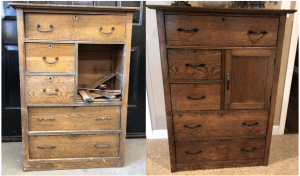
chestOne Saturday last May, my wife Susan went to a local flea market with a friend. They hadn’t been gone long when I received a phone call. Susan had bought something and needed me to bring the truck in order to get it home. It was an old chest, beaten and neglected for years. My first thought was that she’d wasted $50 and a chunk of my time, because this thing needed to be put out of its misery. Of course, Susan wanted me to restore it.

I’m by no means a professional, but I believe I did a decent job. This chest will serve us well for years to come, and may even become an heirloom piece in our family. I learned a lot while tackling this project, not all of it about restoring furniture.

I’ve learned to wait for the best results. It’s taken me well over a year to complete this project. To be honest, the chest sat ignored in the shop for a few months. I worked around it while completing other, easier-to-finish, tasks. When I finally turned my attention to it, I just wanted it done and out of my way. I considered patching what I could and painting it. Looking back, that would have been a huge mistake.

We’ve become so accustomed to the quick fix. We want everything done now. We want to check items off of our to-do list so badly that we’re often willing to settle. We text when we should call. We give partial effort to a dozen responsibilities at once and never really do any of them justice. We’ve become a drive-by culture, unwilling to take our time to enjoy the work we’re engaged in.

Everything changes when we decide to settle for nothing less than the best.

I’ve learned to lean into tough jobs. Every completed step of this project revealed something else that needed to be addressed. When I removed the top to square up the frame of the chest, it fell apart. When I began stripping away the old finish, I found decades old repair jobs that needed correcting. And take a look at the door in the first picture. It’s that jumble of wood shards piled in the opening. I wanted to repair the original, but it was so badly damaged, I decided to build a new one from scratch. Each of these issues became mini projects of their own. And each completed step motivated me to tackle the next.

We’ve learned to shy away from tough jobs. If something looks overwhelming, we decide it’s not worth the effort regardless of the potential benefits. We convince ourselves that we don’t have the time, when really we just don’t have the fortitude to take on the difficult challenges.

Everything changes when we focus on what’s really important.

I’ve learned to appreciate scars. The more I worked on this chest, the more I began to value its history. There’s a corner missing from the top. There’s a mouse hole chewed in the back of the bottom drawer. There are deep scratches and stains on the inside. I decided to leave some of these imperfections because I believe that not everything has to be perfect in order to be valuable. In fact, value often comes from the hard knocks.

We’ve adopted a disposable approach to life. If something doesn’t work perfectly, we dispose of it. We don’t take care of what we have because we know we can just replace it if things go bad. When something, or someone, doesn’t fit our idea of perfection, we pass them by. We’ve lost the ability to see the beauty in imperfection.

Everything changes when our point of view does.

Yeah, I’d say my initial thoughts about this chest were a little off-base. It took a lot of time and work, but the result was worth it. I’m proud of the finished product and my woodworking skills have improved a few notches. I’ll take what I’ve learned and apply those lessons to the next project – which my wife has already identified for me. Stay tuned.

Parched (An Allegory)

irrigation-2402568_640I’ve got to do some work on my sprinkler system. Out here in West Texas, we don’t get a lot of rain. In fact, it can go months without any precipitation and, with summer temperatures over 100 degrees, the landscape starts to get a bit crispy. Many plants have either evolved or been bred to withstand the lack of moisture, but even the hardiest, need watering once in a while.
I am by no means an irrigation expert. It would make my life a lot easier if things would magically take care of themselves, but that’s not how these things work. I have to be intentional about maintaining my yard and flower beds if I expect them to thrive. In looking over my system, I’ve identified three distinct issues that need to be addressed.

To start with, it looks like I have some sprinkler heads that aren’t even pointing in the right direction. As I walked out the mailbox the other evening, my system kicked on and I noticed that two spray nozzles had twisted around so that they were spraying water on the street rather than on my grass. They pop up perfectly, right on cue. The spray is strong and covers a large area. However, the focus of the attention is not where it needs to be. There’s a lot of resources being wasted here because unless the water is pointed in the right direction, the grass won’t grow.

A few other sprinkler heads don’t seem to have the necessary range. They are pointed in the right direction, but only the area right around the nozzle gets any water. At the Source, everything is green and looks great, but move just a few feet out and the grass is yellowed. Because these spots aren’t getting any water, that part of the yard is in obvious distress. To work properly, each sprinkler head needs to cover every part of the ground it’s designed to cover.

In some of my flower beds, there are micro-sprinkler heads. These are designed to deliver water right at the root, so that it sinks deep and gets absorbed by the plant rather than evaporating in the heat. Yet, when I pulled back the wilting leaves to check on the sprinklers, I found that some of them aren’t delivering any water at all. Several had gotten clogged with dirt and debris. The flow of water was being blocked by foreign bodies. Others were twisted shut. They were in the perfect spot to deliver what the plants need, but the flow had been completely shut off. In both cases, these sources of precious water has been rendered useless.

Thankfully, these problems are easily rectified. It will take some work on my part, and I’ll have to monitor the system to ensure that it functions properly going forward. I can’t assume that because I address an issue once that everything will work out fine. In order for me to have a healthy and beautiful landscape, I have to be willing to focus some time and energy on the systems that help it grow.

We got some rain yesterday. The afternoon sky clouded over and a steady rain, the first we’ve had in over two months, soaked into the ground. There’s cooler weather and possibly even more rain in the forecast for this week; but I’ve still got to address my irrigation system. Harsh weather will return, and it’s up to me to ensure my yard gets what it needs.

Be Prepared

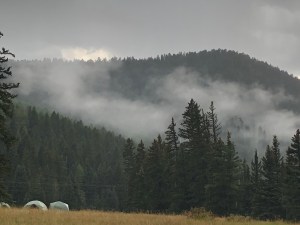
Tres RitosI hope you had an enjoyable Labor Day weekend; full of either rest or excitement, depending on which of those you were hoping for. I spent mine camping in the Carson National Forest near Tres Ritos, New Mexico. From my campsite in a meadow next to a babbling brook, I had the most incredible view. I watched as thunderstorms moved across the mountains followed by mist rising up through the pine trees as the sun came back out. I had no internet or cell service, but it didn’t bother me at all. I had plenty to see and do in every direction.

I wasn’t alone, although I would have been just as happy. This was a scout camp out, and a chance for young men and women to test or acquire a number of skills in the great outdoors. Between the weather and the activity schedule, there were plenty of opportunities for them learn valuable lessons for the future.

The Scout motto is “Be Prepared.” We preach it from the time a young person first joins our troop. We do our best to model it for them and even end every meeting with those two words as a parting commitment to excellence. In fact, the entire scouting experience is really built around this principle. If one is prepared, one can succeed, at just about anything.

Before you strike a match to light a fire, you should be prepared with enough tinder, kindling, and fuel wood to maintain it. Otherwise, the flame will die and you’ll find yourself sitting in the cold. Before starting out on a hike, you should be prepared with proper attire, a defined route, and enough water for the journey. Otherwise, you may become lost, thirsty, or injured. Simply thinking through your activity or project before getting started can prepare you to tackle each step as it come up.

Launching a new product? The time to think about marketing, employee communication, and tracking mechanisms is before the technical development begins.

Bringing someone new onto the team? Think through the onboarding process (training, system setup, and physical resource needs) before their first day.

Heading into a meeting? Review the agenda, complete any assignments, and try to anticipate any questions that may come up regarding your area of responsibility.

When you make a habit out of being prepared, you not only become more organized, but you become more flexible as well. Having the known bases covered allows you the ability to more easily shift to handle the unanticipated. I planned for overnight temperatures in the mid 40’s, so I made sure to take along a good fleece jacket. I only wore it for an hour or so each morning and evening; but it became a second pillow at night, providing me with much more restful sleep. Being prepared allowed me to think creatively in the moment rather than bemoaning my lack of resources.

As always, we had a few scouts (and even some adults) who didn’t adequately prepare. Some didn’t have the proper clothing. Others didn’t bring a mess kit to eat form. But because so many others were prepared, we were able to step in and ensure an enjoyable weekend for all. The next time we go camping, everyone will have learned from this experience. Next time, even more will be prepared.

Tuned In

wild-865296_640In the wee hours of the morning on Sunday, August 11th, someone left an old television set on the front porch of a house in Henrico County, Virginia. In fact, according to Police Lieutenant Matt Pecka, the mystery deliveryman visited 50 different houses that night, leaving TV sets outside the door of each one. Nothing was stolen or disturbed, and no foul play is suspected.

Who made the late-night deliveries? Why did they come by? And why leave an old TV as a calling card? Some recipients took to their smart doorbells for answers, but found only more questions. Footage shows a man dressed in “a blue jumpsuit, brown boots, black gloves, and a big mask shaped like an old TV set.” He walks up to each house, sets a TV down, and leaves.

We can’t always explain why someone acts the way they do, and we’ve all witnessed behavior from a colleague that leaves us shaking our heads. But people are an inescapable part of any business. Without people, and their desirable behavioral traits, things simply wouldn’t get done. That’s why Forbes magazine recently published a list of 15 behaviors that make people virtually “irreplaceable in the workplace.

  1. They do more than asked.
  2. They have exceptional communication skills.
  3. They are one step ahead instead of behind.
  4. They are good listeners and observers.
  5. They are trustworthy, accountable, and reliable.
  6. They initiate.
  7. They fill the room with good energy.
  8. They are adaptable.
  9. They are problem solvers, not complainers.
  10. They are self-motivated and can motivate others.
  11. They don’t need to be micromanaged.
  12. They embrace new challenges.
  13. They are fast learners and fast thinkers.
  14. They love their job.
  15. They are well organized and efficient.

Think about the members of your team. Are they tuned in? How many of these behaviors do they exhibit on a regular basis? Odds are, the ones you most want to be around have a lot of check marks on this list. These are all traits I want to see from the people I work with.

Behavior is the outward manifestation of character. Despite what people say and all the good intentions in the world, behavior is what other people see. It’s what determines real outcomes. It’s what matters.

Now look at the list again. If a coworker was asked to describe you, how many of these sentences would they use? Or are there other, less desirable traits that would make your list? Perhaps we all have a little work to do.

Lieutenant Pecka said authorities determined that Henrico County’s TV Santa Claus posed no credible threat. While confusing and inconvenient, the television deliveries aren’t something law enforcement is concerned about. Some residents aren’t so sure about the motives behind the act; though unless the mystery man comes forward, there will likely be no explanation for his strange and unwelcome behavior. County officials plan to collect and recycle the unexpected gifts.