Out of Touch

meeting-1702638_640Inspiration can come from anywhere. For Dr. Benjamin Tee, it was a scene from the second Star Wars movie, The Empire Strikes Back. “There was a scene when Luke Skywalker lost his hand, and towards the end a robot surgeon repaired his hand, complete with full sensations. And I really wanted to recreate this science fiction scene into scientific reality.”

Dr. Tee and his colleagues at the National University of Singapore have created ACES – Asynchronous Coded Electronic Skin – a collection of 100 sensors packed into a patch only 1 square centimeter big. Their goal is to create a synthetic skin for robotic and prosthetic applications that will mimic the sensation of human touch. Tee explains that “Humans use our sense of touch to accomplish almost every daily task, such as picking up a cup of coffee or making a handshake. Without it, we will even lose our sense of balance when walking.”

Though still in the experimental stage, ACES can already accurately detect the shape, texture, and density of objects, and does so 10 times faster than the human eye can blink. It can read Braille letters with an accuracy rate of better than 90%. Small wonder then that the medical community has shown “tremendous interest” in Tee’s work.

Dr. Elizabeth Segal of Arizona State University has also studied the lack of touch, although her work takes a somewhat different angle. As a psychologist, she’s interested in leaders who lose touch with their teams. She cites two specific reasons why leaders tend to lose empathy for those around them.

The first is lack of personal experience. People in charge often have no idea what life is like for most of the people working for them. Even if someone “came up through the ranks,” time and distance have a way of muting memories of what that early work experience was like.

Secondly, Segal says that “power blocks empathy.” The more layers there are in an organization, the less those at the top need to attend to the behaviors of those lower in the hierarchy. Because their success depends on attending to the moods and needs of those higher up the chain, workers lower in the organization are better at reading other people. “People in power can be empathetic, but they need to work at it, to want to feel for others.”

Fortunately, there are some easy ways for leaders to stay connected with their teams. The Refresh Leadership Blog offers these simple tips.

Take an employee to lunch. Let your guard down and ask some questions. Allow them to ask questions of their own. Relate on a personal level vs. a strictly business one.

Walk in their shoes. Schedule time to shadow an employee to see what they face during an average day. Don’t interfere or of offer feedback. Just observe, listen, and learn.

Hold regular team meetings. Create time where employees can discuss issues and ideas. Let them share concerns freely and engage with them without passing judgement.

Staying connected with your team is critical maintaining a healthy work environment. Leaders who lose touch run the risk of damaging morale and productivity. Like skin, trust is easy to damage and takes a long time to repair. Just ask Dr. Tee – his team is also working to develop a self-healing artificial skin.

Unqualified

footprint-2353510_640Back in 2013, Bhagwan Kare fell gravely ill. In order to diagnose his condition, doctors said they needed to perform an MRI. The procedure would cost the resident of Maharashtra India about 5,000 rupees, money he and his wife Lata simply did not have. With no way to borrow the funds, the future looked dim for the couple.

Some friends jokingly suggested that Lata enter an upcoming race. The prize for first place just happened to be 5,000 rupees. Lata felt she had to give it a shot, despite some obvious disadvantages.

She wasn’t a runner. Lata had never taken part in a race before. She didn’t own any equipment or have access to training facilities. She walked daily, but that was the extent of her physical activity.

She didn’t know anything about running. Lata admitted to her friends that she didn’t even know that running was a competitive sport. Technique, proper form, nutrition – it was all foreign to her.

She wasn’t in any shape to run. At the time, Lata was 68 years old, hardly the best stage of life to take on such a strenuous burden. Worried that she might catch her sandals on something and trip, she decided to run barefoot.

Don’t you just love an underdog? There’s something inherently inspiring about people who stare down a ridiculously difficult task and say “What the heck, I’ll give it my best shot.” Win or lose, we can’t help but get behind the underdog – probably because it’s easy to see ourselves in their situation.

We’ve all been there. We’ve all come up against circumstances that seemed to be insurmountable. We’ve all had the odds stacked against us at one time or another. Most people fold. They decide to cut their losses and hope for better days ahead. What draws us to the underdog is the spirit that says “despite the odds, I think I can win.”

Lack of experience doesn’t matter to the underdog.

Lack of education doesn’t matter to the underdog.

Lack of ability doesn’t matter to the underdog.

What drives them forward is a belief in their mission and an unwavering desire to succeed. Contrast that mentality with the multitude of professionals who obviously dial it in because they don’t feel like performing. So often what turns an underdog into a champion is the decision to perform at your best day in and day out.

As Lata Kare approached the finish line of her first-ever race, she began to hear cheers. They carried her through the tape and into first place. She won the prize money and her husband got the treatment he needed. Lata continued to enter, and win, additional races; using the proceeds to support her family.

Drive On

rocket-launch-67643_640Almost two years ago, a Tesla convertible was launched into space by Elon Musk and Space X. At the time, I remarked that the experiment/stunt served as an object lesson in how to approach goal achievement. The logistics of getting a car into space represented new ways of thinking and a commitment to pushing the boundaries of what is possible.

Despite the uniqueness of this event, the story soon faded from the headlines. People forgot about the Heavy Falcon rocket and the empty spacesuit listening to David Bowie. Life resumed its normal course and we all went about our daily lives without giving another thought to the launch.

But Rocketman is still up there. That convertible is still moving; having traveled far enough to drive all of the world’s roads almost 40 times. Currently, the car is just under 202,627,000 miles from Earth, and is raveling at a speed of 13,150 miles an hour. While the rest of us returned to business as usual, Starman has stayed true to his intended course and shows no sign of stopping.

Think about the plans you had last February. What if you had stayed true to achieving those goals? What if life hadn’t intervened, pulling you back down to Earth with all of its worries and distractions? Just how far could you have gone?

I think Rocketman and his Tesla convertible still have something to teach us. I believe that the circumstances that have allowed him to stay on course could also help us stay on track to reach our goals.

  • A simple mission increases the chances of success. Starman isn’t collecting any data. He isn’t broadcasting any message or mapping the solar system. None of that was art of the plan. Sticking to a simple mission (launching the payload into a sustained orbit around the sun) helped reduce the variables that had to be managed in order for the mission to succeed. Although simple, the launch in and of itself was risky. The rocket was untested and odds of a successful orbit were placed at 50-50. Without the burden of additional goals, the team could focus on the core mission.
  • Getting off the ground is the hardest part. The Falcon heavy rocket that propelled the Tesla roadster into space was the most powerful operational rocket in the world. Over 57 metric tons of lift were used to escape Earth’s atmosphere and start the journey toward Mars. But once the pull of gravity was overcome, there has been no need for additional power. There’s no resistance in open space and the car speeds along unencumbered. It took a lot of effort to get started, but once the ship was off the ground, moving forward became automatic.
  • A goal achieved leads to new goals. The successful launch of Starman and his Tesla wasn’t the end of the road. Data from the launch has led to new innovations in rocket technology, including the further advancement of reusable fuel cells. Starman’s tenure in orbit led Space X to announce new goals for heavier, more important cargo placements into space. And I have no doubt that as Rocketman continues his journey, we’ll benefit from new lessons learned in the years to come.

If you’d like to track Rocketman’s trajectory around the sun, visit whereisroadster.com.

Making Memories

photo-256887_640If you are of a certain age, you may be familiar with the name Marilu Henner. A film and television actress, Henner became famous for her role as Elaine Nardo in the sitcom Taxi during the late 1970’s and early 1980’s. In the 90’s she went on to host her own talk show and has written several books on diet and health; but it is her role on Taxi for which she is most remembered.

Henner also remembers her time on the show. In fact, she remembers just about every detail from every episode; from what she wore to what each actor’s lines were, and even what the weather was like on each day of filming. She remembers the minutiae from other days of her life as well, because she is one a handful of people around the world diagnosed with hyperthymesia. This condition is also known as “total recall syndrome.” Henner can remember just about every detail from every day of her life since she was 11 years old.

Imagine having every moment of your past available for recall instantly; everything you ate, wore, and did played back in your mind as if it had just happened. Would that be a blessing or a curse? You’d be able to relive all the best moments of your life any time you wanted, but then you’d also be subject to the worst of times suddenly flooding back as well. My wife often jokes about my poor memory, but I’m starting to think there are some details of my past I’d just as soon forget.

Scientists say that, for most of us, emotion plays a huge role in what we remember. It’s why I can’t recall what I had for lunch yesterday, but remember in vivid detail where I was and what I was doing on September 11, 2001. Lunch didn’t make much of an emotional impression on me. The raw emotions I experienced on 9/11 anchored the events of that day firmly in my mind.

Dr. Shahram Heshmat of the University of Illinois at Springfield says that “emotion acts like a highlighter pen that emphasizes certain aspects of experiences to make them more memorable.” In other words, strong emotion equals strong memory. The stronger the emotion associated with an event, the more starkly the details of that event are highlighted in the memory centers of our brain.

Knowing this, can’t we use the power of emotion to influence how people remember their interactions with us? Shouldn’t we? After all, if our goal is remain top of mind – if we want customers to return for more business and coworkers to act in ways that make our jobs easier – shouldn’t we do our best to create strong positive emotions associated with our time together? It seems to be me that this very concept is the strongest competitive advantage we could develop.

Think about it. What if every time a customer thinks about our organization, positive emotions were to flood over them? They may not be able to recall exactly what we said or did to make them feel so good, but that’s OK. It’s the emotional aspect of the memory that counts. It’s the positive feelings, more than any specific detail that makes us want to continue in any relationship.

In 2012, Henner published Total Memory Makeover: Uncover Your Past, Take Charge of Your Future. In an interview about her book, she described her own feelings about her unusual gift. “Your past is in you and on your mental hard drive … whether you remember it or not. It’s what makes you behave and do things in your present. So why not explore it for all it’s worth?” She’s learned to use the power of memory as a resource, utilizing it to craft the future. I find that a tip worth remembering.

Of Forests and Trees

nature-3294681_640I saw a commercial for Disney World the other day, and it brought to mind memories of a family trip we took there many years ago. I’ve always loved Disney World. Growing up, I lived close enough that our family went several times. As an adult, I was just as excited to take my own kids to this Magic Kingdom.

As we were walking between attractions, my eyes drifted from one scene to another. I marveled at the architectural details incorporated into the park. I wondered about the conversations I witnessed taking place all around me in numerous different languages. I smiled as I watched my children’s excitement constantly overwhelm them.

And then my eyes caught something different.

There on the ground just in front of me was a twenty dollar bill. People were stepping over it and on it as they walked. It was impossible to know who had dropped it. I picked it up and announced my find to the rest of the family. I remember making some remark about the magic of Disney and we walked on.

But then it happened again. This time, my eye spotted a folded up bit of cash. I went to throw away my empty drink cup and there it was, on the ground right next to the trash can. Close to $50 was added to my wallet this time.

In that moment, my kids were transformed. No longer were they interested in the rides, gift shops, or costumed characters. They weren’t even in interested in watching where they were going. All eyes were trained downward; searching for potential money on the ground. They ran into people. They scrambled to examine every bit of paper they saw. And because they were looking so hard, they couldn’t possibly see what they were looking for.

So many people walk through life with a narrow field of view. They are so focused on looking for one specific thing that they become blind to the possibilities around them. I didn’t find money that day because I was looking for it. I found it because my eyes were simply open. I was drinking in everything around me, enjoying the variety of scenery and activity in the moment. Because I wasn’t intent on finding any specific thing, I was open to seeing them all.

You’ve no doubt heard the phrase “Can’t see the forest for the trees.” This is often used to describe someone who is good at detail work, but tends to miss the bigger picture. They are too focused to understand what the team is trying to accomplish or how a particular task fits into the master plan. Their eyes aren’t open to possibilities that might lie right in front of them.

Our challenge as sales people, as customer service agents, and as leaders is to operate with eyes wide open. As we move through the day, we need to allow our senses to drink in what’s going on around us so that we can act on those opportunities others tend to miss. Subtle cues and clues can lead to sales. Unspoken needs can provide windows to serve. Casual interactions can open the door to meaningful mentoring.

Yes, we have tasks to perform. Yes, we have priorities that have been laid out. But we can’t be so singularly focused that we fail to pick up on fleeting chances to do something significant. The more we allow ourselves to enjoy the moment, the more able we are to see the magic.

After a while, my kids stopped looking for money on the ground and the joy returned to our vacation experience. That afternoon, we stopped and sat on a bench in order to review the park map and determine our next activity. Suddenly one of the kids jumped up and ran to the opposite side of the walkway. Something had caught his eye. He returned with a big grin on his face and a shiny quarter in his hand. “I wasn’t looking for it,” he said. “I was just looking around and there it was.”

Take Your Seat

sun-2367320_640I had just wrapped up a visit to Corpus Christi, Texas; visiting with managers about their goals and hammering out strategic plans for the quarter. It had been a busy week, and now I was waiting in the airport for my flight home to board. I felt good about the work we had done and excited about the possibilities. And I relished the thought of getting back to my family and enjoying the weekend.

I overheard someone speaking to the gate agent about securing a seat. They were scheduled on a later flight, but wanted to see if they could get home earlier. “Sorry,” they were told. “This is going to be a full flight. Every seat has been sold.”

I thought about that. Something like 140 people had chosen not just the same destination, but the same flight. We all wanted to move in the same direction at the same time. Whatever our reasons for traveling on this particular day, in this particular way, we all had the same goal. And if all went according to plan, we’d get there together.

Then it struck me … the plane couldn’t take off until everyone was in their seat.

I was anxious to get moving, and I know my traveling companions were as well. But none of us could fly until everyone else found their place. The passengers, the pilots, even the flight attendants all have to be in their assigned spots with their seat belts fastened before anyone can fly.

Oh, we might pull away from the gate. We might taxi away from the terminal and line up on the runway; but the plane simply cannot leave the ground until everyone takes their seat.

Your team is like an airplane. It’s designed to fly – to soar high and travel far. But in order for that to happen, everyone has to assume their proper place. Each individual has to embrace their role. If even one person isn’t ready – on board and doing their part – they plane won’t be able to take off like it should. At best, the journey will be delayed, forcing everyone else to work harder and wait longer for a successful flight.

As we prepare to enter the 4th quarter of 2017, I don’t know what challenges stand in the way of your success. But I bet you do. Your team has goals to accomplish – you have a shared destination. And you no doubt know what it will take to win. You know what you need to do in order to be successful.

Have you taken your seat?

Are you prepared to do your part so that the team achieves its goal? Are you ready to embrace your particular role to make this final leg of the journey a successful one? Remember, you signed up for this. You purchased a ticket for this specific flight.

Take your seat. Strap yourself in. Let’s get this baby in the air and fly!

Stay Centered

cyclone-62957_640As hurricane Irma approached the coast of Florida, meteorologists tracking the storm noticed something peculiar on the radar images. In the eye of the hurricane, were birds – lots of birds. Entire flocks were just flying along, seemingly unaffected by the devastating winds and rain surrounding them.

It seems this is not an unusual phenomenon. Radar imagery from past years show the same thing, flocks of birds moving in tandem with a hurricane by staying close to the center. They aren’t in distress at all. They’re simply going about their business in the midst of chaos. It seems that birds who can’t escape the storm instinctively move as close as possible to the center.

Smart birds.

There are so many times when I feel like I’m caught in a storm. My plate is overloaded, demands on my time come from all sides, and I feel stressed. There are a few things I can say “NO” to (the equivalent of avoiding the storm), but often I can’t. I have to endure the storm until the winds die down. Perhaps, instead of fighting against the storm, I should act more like these birds and move closer to the center, where it’s calm.

My center is my core purpose. It’s my mission – the reason I’m here. I find the closer I stick to my central goal, the easier it is move forward. Any time I allow myself to drift away from the center, I wind up struggling.

We see this reflected in a number of ways. The automotive industry has been trending toward smaller, simpler vehicles because they are more affordable and easier to maintain. Tiny house communities are popping up all over the country as people look to simplify their lives and remove the stress that comes with managing a larger home. Even software companies have shifted to producing simple apps that focus on doing one or two things extremely well.

It’s not unusual for a corporation to diversify in an attempt to spur rapid growth, only to find things spiraling out of control. Those that survive usually do so by trimming off business lines that don’t fit with their core mission. They move back to the center.

We humans have a way of complicating things. We’re continuously looking to do more, be more, and achieve more. But every time we add something new to our to-do list, we take away from our ability to do any one thing well. The more we become a “jack of all trades,” the more we become a “master of none.”

The tension that scenario creates knocks us around. It drags us down and makes us feel like we’re at the mercy of our circumstances. We find ourselves in a hurricane. Making progress is hard because of all the extra demands pulling at us. So we hunker down. We do our best to check things off the list and ride out the storm.

But if we’ll just stay centered, we’ll not only survive the storm, but thrive despite it. By keeping to what makes us great (as an organization, a team, or an individual), we can move forward even as others battle the winds around us.

So, what’s your center? What are the things that you and your team should really be focused on? What needs to be let go?

Use It Or Lose It

superhero-2503808_640One of my favorite movies of all time is The Incredibles. It’s the story of a family of superheroes who are forced to live ordinary lives and suppress their abilities. The world has grown weary of heroes and the main character, Mr. Incredible, struggles to adjust to a life defined by mind-numbing routine. He longs for something more. He dreams about a world in which he can make use of his unique gifts.
And the frustration he feels is palpable.

But when they time comes for him to don his superhero outfit and spring into action, Mr. Incredible finds that his powers aren’t quite what they used to be. Years of inactivity have diminished his ability. He has lost much of his strength and isn’t sure he has what it takes to win the day.

Sadly, I feel many of us are like Mr. Incredible. Each of us has been blessed with specific talents and interests, but we let them lie dormant. We deny ourselves the joy of fulfilling our true purpose and others the benefits of our gifts. Everyone loses because we try to be something we’re not. Something less.

Talent is perishable. Skills that aren’t used diminish. The inner drive you feel to achieve greatness will fade if you don’t tap into it.

I’ve heard that houses left empty degrade faster than houses that are lived in. Ships that stay in port too long collect barnacles more quickly than those on the open ocean. Even our own muscles will atrophy if we don’t exercise them regularly enough.

The truth is that houses were meant to be lived in. Ships were meant to sail, and we are meant to move. Our calling is not to ignore our talents, but to maximize them – to share them. We were designed to do great things, each of us in our own way. Why do so many of us hold back? Why do we shy away from greatness?

Is it because we are afraid? Is it because we feel a need to fit in? Is it because someone else doesn’t appreciate the gifts we bring to the table? Are saving our best for something else?

How dare we!

I know people who wouldn’t waste a dollar, but they throw away talents that are infinitely more valuable. They let opportunity after opportunity to do something great pass them by. And every time I see them, they look miserable. Just like Mr. Incredible.

Fortunately though, his abilities haven’t completely disappeared. As he begins to exercise his muscles, his body falls more and more comfortably into moving the way it was supposed to all along. And as they follow his example, each member of the Incredible family discovers their own unique gift. They combine their very different talents together in pursuit of a common goal, and emerge victorious.

What’s your superpower? What incredible ability do you bring to the table? What’s keeping you from realizing your full potential?

Take a look at your team’s goal. Identify how you are uniquely positioned to add value, and remove the barriers keeping you from success. Be the hero. Save the day. Use your gift. Otherwise, you’ll lose it.

I dare you to be incredible.

Pistols at Twenty Paces: When Leaders Collide

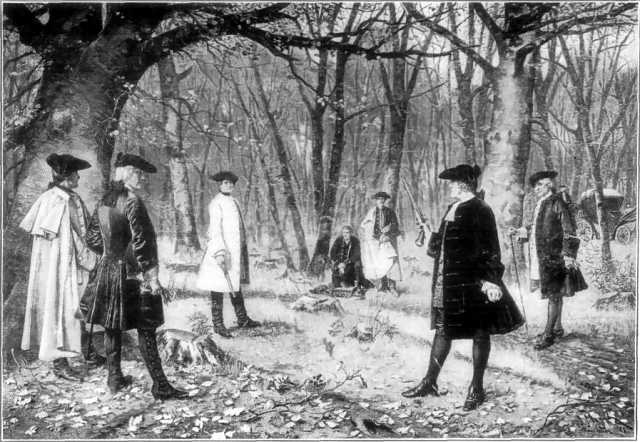
On this day, back in 1804, Aaron Burr shot Alexander Hamilton during a duel to settle their long-standing feud. The two had been political enemies since 1791 when Burr won a U.S. Senate race, defeating Hamilton’s father-in-law Philip Schuyler. While their disagreement stemmed from differing opinions on issues of policy, it festered and eventually grew into a public exchange of personal attacks.

After a newspaper published a letter including disparaging remarks from Hamilton, Burr felt he had had enough. He challenged Hamilton to an “affair of honor.” At 7 am the two, along with witnesses, met at a common dueling ground in New Jersey. Following a last minute exchange, the two fired. Hamilton missed. Burr did not. Hamilton died the next day.

Public disagreements between leaders are common, especially in politics. We’ve become used to televised muckraking and character assassinations. But when personality clashes invade the office, they can quickly spin out of control – resulting in hugely detrimental effects on the entire organization. Here are three ways a clash between leaders can wreak throughout the workplace.

Drama displaces productivity.
Hamilton had issues with Burr’s political views. But instead of debating the issues, he publicly campaigned against Burr by citing what he viewed as character flaws. Burr was compelled to retaliate in defense of his honor. As the years wore on, the clash in personalities took center stage, pushing reasonable discourse out of the spotlight.

It’s easy to let a disagreement regarding work turn personal. The problem is that once things cross that line, work starts to slows down (or even comes to a halt) when the two people at odds are involved. It’s even worse when the two protagonists are leaders in the organization. If they make unrealistic demands because their idea didn’t win or start dragging their feet on projects that involve a political rival, the organization can lose momentum and even money. Seemingly petty issues can easily turn into battleground stances that affect the ability to move forward.

Bystanders get impacted.
Because of their positions in the country’s political system, the dispute between Hamilton and Burr created havoc for a large number of people around them. Fellow politicians were forced to take sides. Families, friends and aides were drawn into the debacle, delivering messages between the two parties and their representatives. Citizens following the political scene were treated to a regular diet of dirt as the personality clash played out in the press.

Office clashes are no different. When two leaders find themselves at odds, everyone pays the price. Suddenly every project team involving the two has to navigate the murky waters of their dispute. Coworkers with no stake in the game are forced to deal with an uncomfortable situation. Sadly, even customers often feel the impact.

Both sides lose.
As a result of his feud with Aaron Burr, Alexander Hamilton took a shot to the stomach and lost his life. Burr didn’t die, but his reputation was shot. Instead of leaving a legacy as one of our country’s great leaders, Burr was labeled a murderer and his political career was cut short.

Regardless of the outcome, there are no “winners” when it comes to workplace feuds based on conflicts of personality between leaders. Jobs can be lost; reputations ruined. At the very least, two people with the ability to produce great results by working together cause division and frustration.

Everyone loves a good bit of gossip and a little water cooler chatter makes for good social dynamics in the office. However, when a clash between two power players goes public, it’s rarely a good thing. Everyone pays the price when leaders face off.

A Life Lesson From A 12 Year Old

A couple of weekends ago, my youngest son, Alex, and I went camping. He’d been bugging me for over a month to take a father/son trip. No brother or sister. No Mom. Just Alex and Dad.

I love camping. I really enjoy getting out of the house and away from the office to a place where the day-to-day grind fades out of sight for a while. But while I was eager to grant Alex’s request, I was also hesitant.

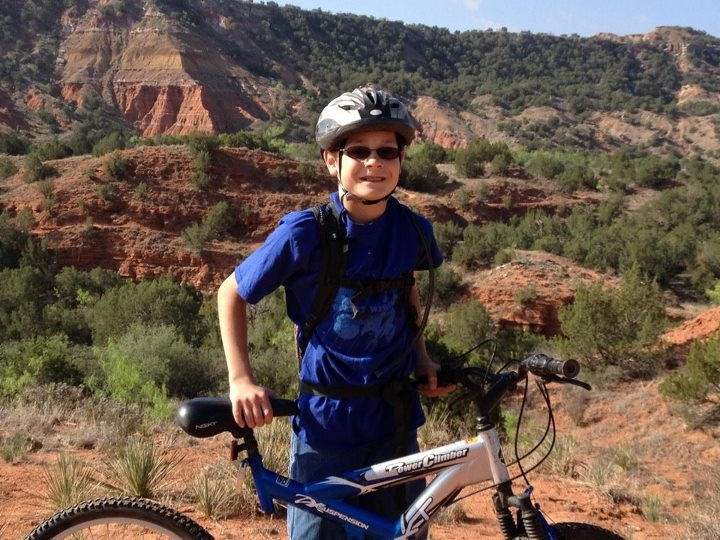
You see, Alex didn’t just want to go camping, he wanted to go mountain biking. And he had it all planned out. He knew the state park we were to visit. And he even had a couple of trails in mind, including a long rugged one to a geological formation in a remote part of the park.

While I’m no expert, I have been mountain biking a few times. But it had been a while and I’m a little out of shape. Truth be told, I was worried about looking foolish. After all, I’m Dad. I’m the man who has all the answers and can fix anything, right? So I was somewhat relieved when the weather caused us to pass up the first available weekend. And then the next weekend was already booked with other events. Too bad.

Of course, there was never any question about me going mountain biking. As 12 year olds do, Alex kept asking when we were going on our trip. He obviously wasn’t going to forget about it, so I broke down and booked a campsite for the weekend after Easter.

We had a great time. We talked about manly things and performed manly deeds. We made the long mountain bike trek and no airlift was required. We ate camping food and didn’t take a shower until we got back home. We laughed and bonded over inside jokes. Before I knew it, the weekend was over.

Looking back, I had a hard time believing I was so apprehensive about the trip. Alex, on the other hand, never had a doubt. He’s not an experienced biker, but was super-eager to hit the trail. As I thought about it, I was able to identify some key differences in our approach to the weekend.

~ While I focused on what could go wrong, Alex focused on what could go right. I fretted about the weather, my health and our gear. Alex thought about the trails he wanted to ride, the wildlife he hoped to see, and what we’d have for dinner. For our trip to be successful, someone had to attend to the details; but I’d let the little things keep me from enjoying the lead-up to the weekend.

~ While I worried about the effort required, Alex anticipated the journey. In the days leading up to our trip, I couldn’t stop thinking about work and home maintenance projects that could be accomplished with the time. I thought about the high price of gas and the hassle of setting up camp. Alex couldn’t stop talking about the lead-up either. But he saw the preparation as part of the adventure.

~ While I stressed about the details, Alex looked at the big picture. Left to my own devices, I probably would have never scheduled the trip. Too many things to do at home, too many responsibilities to face when I got back. Alex saw the opportunity to have fun and make memories. With that as his focus, why would we not go?

Positive attitude, work-life balance, and big-picture thinking. These are ideas I regularly emphasize to my team and customers. And while I’m a little embarrassed that I failed to follow my own advice, I was proud of the way my son not only created a vision of the weekend, but inspired me to help make it a reality. Way to go Alex. I’m already looking forward to the next trip.